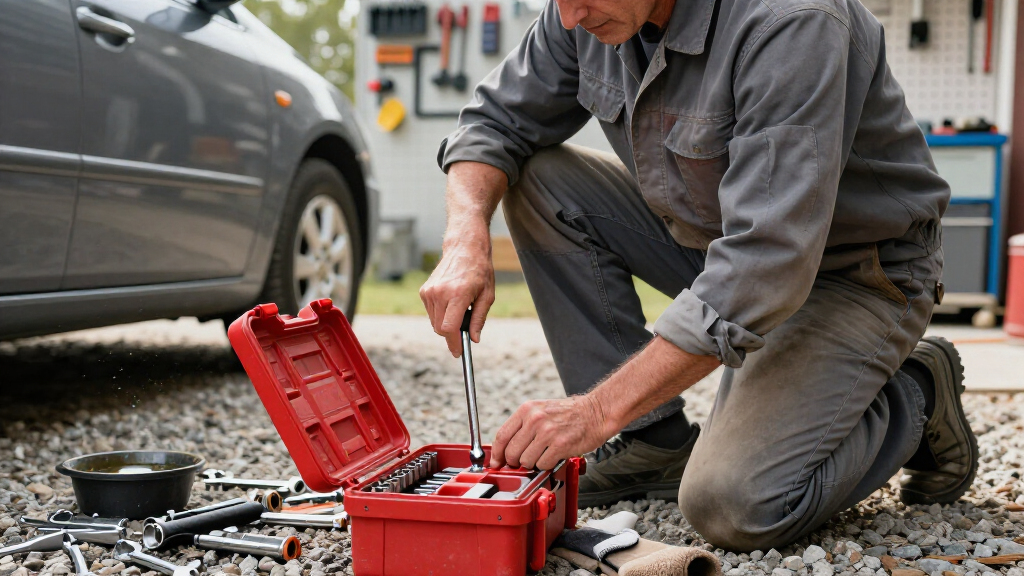

This guide walks you through buying, setting up, and using an auto repair tool set so you can handle common vehicle maintenance yourself: oil changes, battery replacement, brake pad swaps, belt checks, and general tightening and loosening work around the car. It is written for beginners and casual DIYers — people who can identify a bolt but have never rebuilt an engine. You will end up with a matched, organized tool set, a storage system that keeps it usable, and the ability to complete a basic repair job without rounding bolts or stripping threads. Expect to spend 2-4 hours on selection and setup, then 30 minutes to 2 hours per repair depending on the job.

Get business pricing on garage and car supplies
- Business-only prices and quantity discounts
- Tax-exempt purchasing
- Multiple users, one account, clear invoices
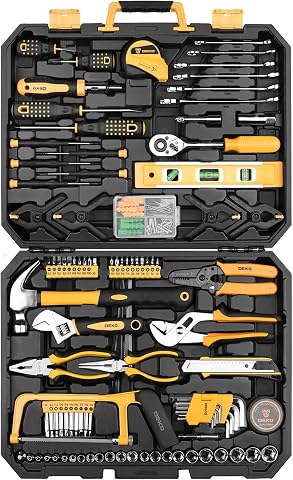
DEKOPRO 228 Piece Socket Wrench Auto Repair Tool Combination Package
- ✔ Piece count: 228
- ✔ Drive sizes: 1/4-inch and 3/8-inch
- ✔ Ratchet: 72-tooth, 5-degree swing arc

TLGREEN 95-Piece Car Tool Kit with Storage Case
- ✔ Piece count: 95
- ✔ Material: Heat-treated carbon steel
- ✔ Storage: Compact carrying case

Eastvolt 218-Piece Household Tool Kit with Storage Case
- ✔ Piece count: 218
- ✔ Material: Heat-treated chrome steel
- ✔ Ratchet: 3/8-inch, 72-tooth, 5-degree swing
Difficulty: Beginner | Time: 2-4 hours for selection and setup; 30 minutes to 2 hours per repair job
What You’ll Need
Tools & Materials:
- A workspace with light: garage, driveway, or well-lit parking area
- A flat, level surface to park the vehicle (never work on a slope)
- Wheel chocks or wooden blocks
- A floor jack and jack stands rated above your vehicle’s weight (for any work under the car)
- Work gloves and safety glasses
- A parts tray, magnetic bowl, or tray for holding removed fasteners
- Your vehicle’s owner’s manual (paper or digital)
Knowledge:
- Ability to locate basic components under the hood (battery, oil filler cap, dipstick)
- Familiarity with metric vs. imperial bolt sizes at a basic level
- Willingness to stop and consult the owner’s manual or a repair manual when unsure
Before buying anything, check your vehicle’s fastener types. Most modern cars built after roughly 1980 use metric fasteners (8mm to 19mm covers most passenger cars). Buy a metric-first set unless you work on older American vehicles. Also confirm whether you need specialty bits: many European and some American cars use Torx (star-shaped) or hex (Allen) fasteners for brakes and interior trim.
DEKOPRO 228 Piece Socket Wrench Auto Repair Tool Combination Package
The DEKOPRO 228-piece set earns our top spot because it is the only kit here that genuinely covers both the automotive and general-repair sides of the ledger without obvious gaps. Its full range of 1/4-inch and 3/8-inch metric sockets paired with a 72-tooth ratchet gives you the fastener coverage needed for most maintenance tasks — oil changes, battery swaps, alternator bolts, interior trim — and the 5-degree swing arc matters more than it sounds when you’re working in a tight engine bay where a coarse ratchet simply can’t rotate. The chrome-plated forged steel construction meets ANSI standards, which puts it a step above generic unbranded kits in corrosion resistance and long-term durability.Where this set separates itself from the Eastvolt is breadth: DEKOPRO includes a hammer, tape measure, wire stripper, pliers, and precision screwdrivers alongside the socket array, so it functions as a standalone garage toolkit rather than something you need to supplement immediately. Compared with the TLGREEN, it simply covers far more fastener sizes. The honest tradeoff is weight and size — at nearly 13 pounds in a wide blow-molded case, this is a bench-or-shelf kit, not something you toss in the trunk every day. And like every consumer-grade set here, the ratchets and wrenches are fine for weekend work but will frustrate someone wrenching professionally every day.
Pros:
- Broadest socket and wrench coverage in this lineup, in both 1/4-inch and 3/8-inch drive
- 72-tooth ratchets with a 5-degree swing arc for tight spaces
- ANSI-certified, chrome-plated forged steel for corrosion resistance
- Includes genuinely useful extras like a hammer, pliers, wire stripper, and tape measure
Cons:
- At nearly 13 pounds with a large case, it is not portable enough for trunk storage
- Consumer-grade tools won’t survive constant professional abuse
- No 1/2-inch drive for larger suspension and axle fasteners
Best for: Home mechanics and DIYers who want one comprehensive kit that handles car maintenance and household repairs
Not ideal for: Professional technicians or anyone who needs a lightweight trunk-mounted emergency kit
Bottom line: If you’re buying one kit to anchor your garage, the DEKOPRO 228-piece set offers the most complete and capable package of the three.
“If you’re buying one kit to anchor your garage, the DEKOPRO 228-piece set offers the most complete and capable package of the three.”
TLGREEN 95-Piece Car Tool Kit with Storage Case
The TLGREEN 95-piece kit plays a completely different role from the other two, and that’s exactly why it’s here. Its case measures just 16.5 by 10.2 by 2.8 inches and weighs under 10 pounds, making it the only set in this group that realistically lives in a car trunk full-time. For roadside scenarios — a loose battery terminal, a failing accessory you need to remove, a bicycle adjustment on the go — having tools physically present beats a bigger kit sitting at home. The heat-treated carbon steel construction is adequate for occasional use, and the two-year manufacturer warranty is a welcome safety net at this tier.The comparison with DEKOPRO is stark, though: you give up significant socket depth and drive options, so anything involving larger fasteners — brake caliper bolts, suspension hardware — will likely exceed this kit. Where the Eastvolt tries to be a full household-and-auto solution, TLGREEN wisely stays focused on small common repairs, and that restraint keeps the case slim. Our main criticism beyond coverage is that carbon steel, while tough, is more prone to rust than the chrome-finished steel in the DEKOPRO and Eastvolt sets — a real consideration for a kit exposed to trunk humidity through the seasons.
Pros:
- Slim, lightweight case is the most portable option here by a wide margin
- Covers the common small fasteners needed for roadside and household fixes
- Heat-treated carbon steel holds up to occasional use
- Backed by a 2-year manufacturer warranty
Cons:
- Limited socket range won’t handle larger automotive fasteners
- Carbon steel is more rust-prone than chrome-plated alternatives
- Not suited for heavy-duty or frequent use
Best for: Drivers who want a ready-for-anything toolkit in the trunk for roadside and small repairs
Not ideal for: Anyone planning real garage maintenance like brake jobs or suspension work
Bottom line: The TLGREEN 95-piece kit is the smart pick if portability is the priority — just accept that big jobs are off the table.
“The TLGREEN 95-piece kit is the smart pick if portability is the priority — just accept that big jobs are off the table.”
Eastvolt 218-Piece Household Tool Kit with Storage Case
The Eastvolt 218-piece kit lands in a useful middle ground: nearly the piece count of the DEKOPRO, but with a toolkit composition that leans harder into household and DIY coverage. You get a 9-inch torpedo level, a hack saw, an 8-oz claw hammer, a utility knife, and 50 screwdriver bits in six tip styles — an assortment that makes this the better choice if your projects split between hanging shelves and changing a serpentine belt. Mechanically, it matches the DEKOPRO’s key spec: a 3/8-inch 72-tooth ratchet with a 5-degree swing, plus 22 metric sockets spanning 4mm to 19mm across two drive sizes, so basic auto maintenance is well within reach.Against the TLGREEN, it’s simply far more capable — double the socket coverage plus real wrenches in six metric sizes — at the cost of a bigger, garage-bound case. Against the DEKOPRO, the differences are subtler: Eastvolt’s chrome steel is corrosion-resistant, but its overall positioning is beginner-to-intermediate grade, and a chunk of the 218-piece count comes from bits and small accessories rather than core automotive tools. If you already own household tools, DEKOPRO’s more wrench-and-socket-weighted assortment is the stronger auto buy; if you’re starting from zero, Eastvolt’s broader spread makes more sense.
Pros:
- 218 pieces span auto, home, and DIY tasks with tools like a level, hack saw, and utility knife
- 72-tooth ratchet with 5-degree swing matches our top pick’s key mechanical spec
- Heat-treated chrome steel resists corrosion better than carbon steel alternatives
- Molded internal compartments keep every tool visible and secure during transport
Cons:
- Piece count is padded with 50 bits and small accessories rather than core tools
- Beginner-grade build won’t satisfy demanding or frequent use
- Lacks 1/2-inch drive for heavier automotive work
Best for: First-time tool buyers and DIYers who want one kit for both home projects and routine car maintenance
Not ideal for: Buyers who already own household tools and want maximum automotive coverage
Bottom line: The Eastvolt 218-piece kit is the best all-around starter toolkit — ideal if the garage and the house share equal billing on your project list.
“The Eastvolt 218-piece kit is the best all-around starter toolkit — ideal if the garage and the house share equal billing on your project list.”
As an Amazon Associate we earn from qualifying purchases.
Before You Start
Set a realistic budget before shopping. A quality starter mechanic’s tool set for basic auto work runs roughly $100 to $300. Sets below $50 often use soft steel that rounds bolt heads — the single most common complaint with cheap kits. Also decide your scope: if you only plan oil changes and battery swaps, a 100-150 piece set is plenty. If you intend to do brake work and suspension jobs, look for 200+ piece sets that include deeper sockets, extensions, and a torque wrench. Never plan to work under a vehicle supported only by a jack; jack stands are mandatory. Finally, verify your workspace: you need room to open doors fully, kneel beside the car, and lay out tools where you can see them.
Step-by-Step Instructions
Step 1: Match the tool set to your vehicle’s fasteners
Open your owner’s manual and list the service items you plan to do. Inspect the fasteners involved: pop the hood, examine the battery terminals, and check your wheel lug bolts if accessible. Identify whether they are hex nuts (standard six-sided), Torx, or hex-socket bolts. Write down the sizes you can identify — most passenger cars use 10mm, 12mm, 13mm, 14mm, 17mm, and 19mm for common jobs, plus the lug size (often 17mm, 19mm, or 21mm).
Tip: If you cannot identify a fastener size, take a photo of it and bring the phone to the store — most auto parts store staff can identify common sizes on sight. Buying a metric set with a 6-point socket design prevents most rounded-bolt problems.
Check: You have a written list of fastener types (metric hex, Torx, hex-socket) and the sizes your vehicle commonly uses.
Step 2: Buy the core set plus two additions
Purchase a mechanic’s tool set that includes: 3/8-inch drive ratchet with metric sockets (8mm-19mm), 1/4-inch drive ratchet with small sockets, combination wrenches in metric, screwdrivers (flat and Phillips), pliers, and hex/Torx bits if your car needs them. Add two items most starter sets omit: a torque wrench (1/2-inch drive, 20-150 ft-lb range) and a breaker bar (1/2-inch drive, 24 inches long). Use the breaker bar to loosen stubborn bolts without damaging the ratchet; use the torque wrench to tighten them to specification.
Tip: Check that the set comes with a case or rack that holds each tool in a labeled spot. Loose tools in a bag get lost and you will not notice a missing socket until you need it.
Check: Every tool on your list is present in the case, the case latches closed securely, and sockets snap firmly into their rails.
Step 3: Organize the set for fast retrieval
Arrange the case exactly as it shipped — place each socket in its size-labeled slot. Count the pieces against the inventory sheet and write the total on the inside of the lid with a marker. Add a small container of penetrating oil, a roll of mechanic’s wire, and a magnetic parts bowl into the case’s empty compartments or a small tote stored with it. Store the assembled kit in your work area on a bench, shelf, or the trunk of the car if you carry it.
Tip: Photograph the fully stocked open case with your phone. When a socket goes missing mid-job, the photo tells you instantly what is unaccounted for.
Check: You can find any size socket in under 10 seconds, and the piece count matches the inventory.
Step 4: Practice the ratchet technique before touching the car
Take the 3/8-inch ratchet and a 13mm socket, seat the socket on the ratchet’s square drive until it clicks, and practice the motion on a visible, non-critical bolt — a license plate bolt works well. Push the socket fully onto the bolt head. Confirm the ratchet’s direction lever is set to loosen (usually flipped toward you when pulling the handle toward you). Turn smoothly, letting the ratchet’s clicks re-engage on the backstroke. Flip the lever to tighten and run the bolt back in until snug, then stop.
Tip: Always seat the socket fully on the bolt head before applying force. A half-engaged socket under pressure rounds off the corners — the most common self-inflicted tool problem.
Check: The bolt comes out and goes back in cleanly, with no metal shavings and no rounded corners on the bolt head.
Step 5: Set up the vehicle safely
Park on level ground, apply the parking brake, and chock the wheel diagonally opposite your work area. If you must raise the car, place the floor jack at the manufacturer’s jack point (listed in the owner’s manual), raise the vehicle, and position jack stands at the designated support points before getting any part of your body under the car. Lower the vehicle onto the stands and shake the car firmly to confirm stability.
Tip: Never rely on the jack alone to hold the vehicle up. Hydraulic jacks can bleed down without warning. Jack stands are the only safe support.
Check: The car sits solidly on stands and does not rock or shift when you push firmly on a corner of the body.
Step 6: Work the job: loosen, remove, repair, reinstall
Spray penetrating oil on stubborn fasteners and wait 10-15 minutes before attempting removal. Use the breaker bar for tight bolts, switching to the ratchet once the bolt breaks loose. Place every removed fastener in the magnetic bowl or parts tray in removal order. Complete the repair itself, then reinstall fasteners in reverse order. Run bolts in by hand or with the ratchet set to low pressure until seated.
Tip: If a bolt will not break loose, do not keep forcing it. Apply more penetrating oil, try brief clockwise-then-counterclockwise movements to work the oil in, and let it sit longer. Forced bolts snap off, and extracting a broken bolt takes hours.
Check: All fasteners removed are accounted for and reinstalled; none are missing, cross-threaded, or rounded.
Step 7: Torque the fasteners to specification
Look up the torque specification for each fastener you reinstalled — wheel lugs, for example, typically run 80-110 ft-lb on passenger cars, but check your manual. Set the torque wrench by twisting the handle to the specified value. Attach the correct socket, seat it on the bolt, and pull smoothly until the wrench clicks once. Stop pulling at the click — the bolt is at specification. Do not add extra turns after the click.
Tip: Torque wheel lugs in a star or criss-cross pattern, tightening each lug a little at a time over two passes, so the wheel seats evenly.
Check: Each fastener clicks the torque wrench at its specified value, and rechecking any bolt produces a click almost immediately (confirming it is already at spec).
Step 8: Clean, inspect, and store the tools
Wipe sockets, ratchets, and wrenches with a shop towel to remove oil and grime before returning them to the case. Place each tool back in its labeled slot and recount against the inventory number. Dial the torque wrench’s handle down to its lowest setting before storing — this relieves spring tension and keeps it accurate. Store the case in a dry location.
Tip: Recalibrate or replace a torque wrench every 2-5 years of regular use, or immediately after any drop, since accuracy drifts.
Check: The piece count matches the inventory, all tools are dry and clean, and the torque wrench is stored at its lowest setting.
Common Mistakes to Avoid
- Using a 12-point socket on a rusted or tight bolt — Use 6-point sockets for all automotive fasteners. The 6-point design contacts the bolt head’s flat faces instead of its corners, dramatically reducing rounding. Reserve 12-point sockets for tight-clearance spots on clean fasteners.
- Forcing a bolt with the ratchet instead of a breaker bar — Ratchets have fine internal gears that strip or break under high torque. Switch to the breaker bar for any fastener that resists firm hand pressure, and save the ratchet for speed once the bolt is loose.
- Skipping penetrating oil on corroded fasteners — Any bolt showing rust, white corrosion, or road grime gets a spray of penetrating oil and a 10-15 minute wait before removal. This single habit prevents the majority of snapped and rounded bolts.
- Working under a vehicle held up only by a jack — Treat jack stands as mandatory, placed at the manufacturer’s support points, with the vehicle lowered onto them and shaken to test stability before you get underneath.
Troubleshooting
Problem: The bolt head is already rounded off and the socket slips
Solution: Try a slightly smaller socket (for a rounded 14mm, try a worn 13mm or a specialized bolt-extraction socket). Grip the head with locking pliers as a fallback. If the bolt still will not turn, apply penetrating oil, tap the head firmly with a hammer to shock the threads, and retry. Severely damaged bolts may need a professional extraction.
Problem: The ratchet slips or spins freely without turning the bolt
Solution: The direction lever is likely in neutral or the wrong position — flip it fully to one side. If the ratchet still spins in both directions, its internal pawl is damaged; stop using it and replace it, since a failing ratchet can release under load and cause injury.
Problem: The socket will not fit onto the bolt head
Solution: You are likely one size off or dealing with a different fastener type. Check whether the bolt is a Torx or hex-socket design rather than a standard hex nut. If it is a standard hex but the socket barely misses, clean corrosion and paint from the bolt head with a wire brush and try again.
Problem: A bolt snaps off during removal
Solution: Stop immediately and assess. If the broken stub protrudes, grip it with locking pliers or Vise-Grips and try backing it out after penetrating oil. If it is flush or recessed, you will need a bolt extraction set (left-hand drill bits and extractors) or a shop visit. Soak the area with penetrating oil before any extraction attempt.
What Success Looks Like
You have succeeded when the following are all true: your tool set contains every fastener size your vehicle commonly uses and every piece is in its labeled slot; you have completed at least one basic job (an oil change or battery replacement is a good first project) with all fasteners removed, reinstalled, and torqued to the manual’s specification; no bolt heads are rounded and no tools were damaged; the vehicle operates normally after the job — test drive it and listen for rattles or warnings; and the tool case is fully restocked with the piece count matching your recorded inventory.
Next Steps
Once your set is proven on one basic job, expand gradually. Add a serpentine belt tool set and an oil filter wrench if you plan regular maintenance. Pick up the vehicle-specific repair manual (Haynes or Chilton, or a factory service manual) before attempting brakes, sensors, or suspension work. Recheck wheel lug torque after 50 miles following any wheel removal. Recheck your case inventory monthly, and replace any tool that shows wear — a spreading jaw on a wrench or a loose socket retention ring is a future stripped bolt. If a job requires specialty tools that cost more than a shop’s labor rate for the same job, weigh whether DIY still makes sense for that repair.
Frequently Asked Questions
How many pieces do I actually need in a starter auto repair tool set?
Between 100 and 200 pieces covers oil changes, battery replacement, air filter swaps, and most light maintenance for a typical passenger car. The piece count matters less than the contents: you need metric sockets from 8mm to 19mm in 3/8-inch drive, small sockets in 1/4-inch drive, combination wrenches, screwdrivers, pliers, and hex/Torx bits if your car uses them. A 300-piece set full of duplicate sizes adds weight without adding capability.
Do I need metric or imperial (SAE) tools?
Metric for nearly all vehicles built after 1980, including American brands. Imperial sizes appear mainly on older American cars and some aftermarket accessories or trailer parts. If you own one modern vehicle, buy metric. If you also maintain older equipment, add a small SAE socket set separately.
Is a torque wrench really necessary, or can I tighten by feel?
Use a torque wrench whenever a specification exists, especially for wheels, brake components, and anything on the engine. Overtightening stretches or snaps bolts and warps brake rotors; undertightening lets fasteners back out on the road. Feel develops over years of use — a torque wrench gives you correct results on your first job.
Why do my sockets keep rounding off bolt heads?
Almost always one of three causes: a 12-point socket on a tight bolt, a socket not fully seated on the bolt head, or a cheap socket made from soft steel spreading under load. Switch to 6-point sockets, push them fully on before applying force, and replace any socket whose corners look shiny or worn inside — that shine means the fit is already loose.
What is the difference between a breaker bar and a ratchet?
A ratchet has a mechanism that lets you turn a fastener with a back-and-forth motion in a tight space, but that mechanism is its weak point under heavy load. A breaker bar is a solid, non-ratcheting handle that handles far more torque — you use it to break loose stubborn bolts, then switch to the ratchet for speed. Both belong in the kit; neither replaces the other.
Fall Picks
fall essentials
As an affiliate, we earn on qualifying purchases.