
TL;DR
Ford says a team focused on battery abuse, design and testing works on cell failure from the design stage, with the goal of limiting risks to vehicle occupants. The disclosure comes as Ford begins producing LFP battery packs at its Michigan plant for the planned Fathom pickup. The truck’s real-world battery durability is not yet known.
Ford says it has a team dedicated to battery abuse, design and testing, studying how cells fail and how their failure can be prevented from harming vehicle occupants. The disclosure comes as the automaker begins producing lithium iron phosphate (LFP) battery packs at its BlueOval Battery Park Michigan plant for its planned Fathom pickup.

Get business pricing on garage and car supplies
- Business-only prices and quantity discounts
- Tax-exempt purchasing
- Multiple users, one account, clear invoices
Wesley Thibault, Ford’s global chief engineer of battery product development, described the team’s work during a media roundtable at the new Michigan plant. He said the group is involved from the design stage, rather than simply breaking finished cells and trying to make them indestructible. Its focus, he said, is understanding the physics of cell failure and reducing the chance that a failure will endanger occupants.
One area the team studies is how a cell vents when it overheats. Heat can cause the electrolyte inside a battery cell to release gases. Ford’s engineers said those gases need a controlled way out; if they remain trapped, they can contribute to short circuits or thermal runaway. Thibault said computer models let the team analyze venting before cells are validated.
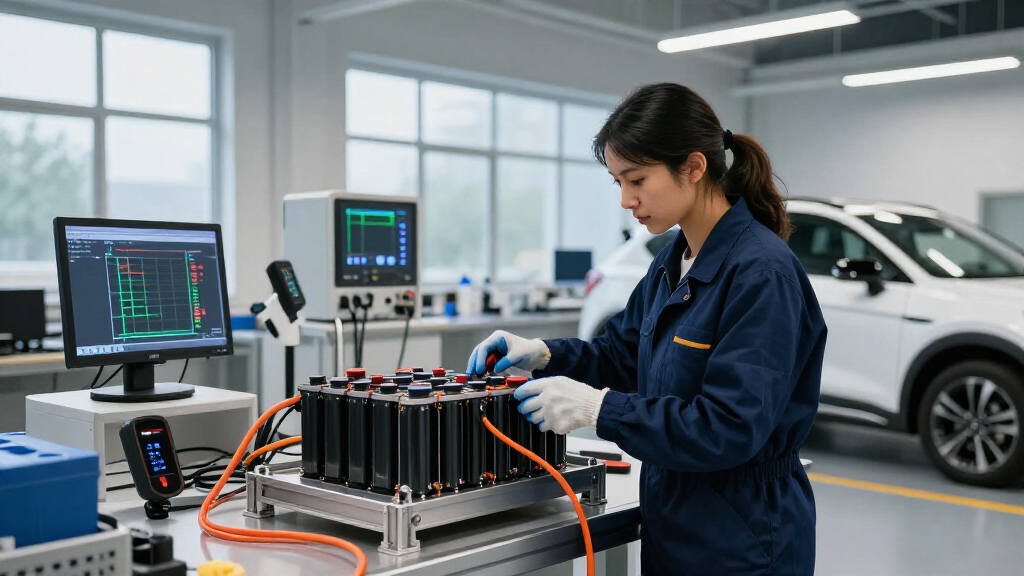
Ford engineers also described production checks that include CT scans, X-rays, lasers, cameras and AI systems. The company says lasers scan the anode coating across the copper foil for defects, and workers can pause production when they see a problem. Ford says affected cells can be quarantined and components traced from manufacturing to the vehicle. It also tests whether inspection systems catch deliberately damaged parts, called “red rabbits,” and checks nearly finished cells for leaks using helium gas.
Battery Quality Before the Fathom
The work matters because a battery defect can affect both vehicle safety and reliability, while battery packs are costly components that automakers need to manufacture consistently. Ford’s testing approach is intended to identify problems during design and production, before packs reach customers. The company’s account describes its procedures; it does not establish that defects have been eliminated or predict how the new packs will perform over years of use.
The stakes are higher as Ford prepares a new electric pickup it hopes will help expand its EV business. The Fathom’s batteries will face road vibration, temperature changes and other demands that factory tests seek to reproduce. Its durability in customer vehicles, however, can only be judged after the truck enters service.
Products Worth Considering

Milwaukee M18 18V Cordless 4-Tool Combo Kit with Hammer Drill, Impact Driver, Reciprocating Saw, Work Light, 2 Batteries, Charger and Case

NOCO Boost X GBX155 4250A 12V Lithium Jump Starter

Autel MaxiCharger 80A Level 2 EV Charger, Hardwired, J1772
As an affiliate, we earn on qualifying purchases.
Michigan LFP Production Begins
Ford has begun making LFP battery packs at BlueOval Battery Park Michigan using technology licensed from China’s CATL, which the source identifies as the world’s largest battery maker. Ford officials said the company was involved in battery development from the outset, with durability among its concerns. The Fathom pickup is planned to enter production toward the end of next year, according to the report.
The focus on testing comes against a history of battery-related issues in Ford EVs. The source reports that some early Mustang Mach-E vehicles were recalled over contactors that could overheat during DC fast charging, and that a small number of F-150 Lightning trucks were recalled in 2023 because of defective cells. Ford has also released data indicating that high-mileage Mach-Es showed little range loss, but those figures do not establish how the new LFP packs will age.
“That team is 100% focused on battery abuse, design, and testing as a function.”
— Wesley Thibault, Ford’s global chief engineer of battery product development
Real-World Battery Life Is Unknown
The report does not provide detailed results from Ford’s cell-abuse models, leak checks or pack-shaker tests, nor does it specify the pass thresholds used. It also does not quantify how often production checks identify defects or how the new packs compare with other battery designs. Ford’s stated testing process is not independent evidence that every defect will be caught.
The Fathom has not yet accumulated real-world service history. Its planned production timing is a forward-looking schedule, and the battery’s long-term durability, range loss and performance across different climates remain unconfirmed.
Fathom Testing Meets Road Use
Ford’s next public milestone is the planned start of Fathom production toward the end of next year. Until then, the company’s described factory inspections and pack tests provide the available picture of how it is preparing the LFP batteries. After deliveries begin, vehicle use over time will provide evidence about how the packs hold up outside the factory.
Key Questions
What does Ford’s battery abuse team do?
Ford says the team studies how battery cells fail and works on design and testing intended to reduce the risk that a failure harms occupants.
Which vehicles are the new LFP packs for?
The Michigan-made packs are intended for Ford’s planned Fathom pickup. The report says the truck is expected to enter production toward the end of next year.
How does Ford inspect batteries during production?
Ford engineers cited CT scans, X-rays, lasers, cameras and AI systems, along with helium leak checks and tests using deliberately damaged components to check inspection systems.
Is the Fathom battery’s long-term reliability known?
No. The truck has not yet built a real-world service record, so long-term durability and range loss for its LFP packs remain unknown.
Source: insideevs.com