
To choose the right coolant for your engine, start by checking your vehicle manufacturer’s specifications and recommended antifreeze type—such as IAT, OAT, or HOAT. Consider your climate; for colder areas, a 50/50 water-to-antifreeze mix works well. Regularly inspect coolant condition, color, and level, replacing it at recommended intervals to prevent overheating and corrosion. If you keep these tips in mind, you’ll help your engine run smoothly and last longer. There’s more to discover to guarantee ideal cooling performance.
Key Takeaways
- Always check your vehicle manufacturer’s specifications for recommended coolant type (IAT, OAT, or HOAT).
- Consider your climate; use suitable coolant to prevent freezing or overheating.
- Match the coolant’s compatibility with existing system components to avoid chemical reactions and clumping.
- Opt for long-lasting coolants like OAT or HOAT for extended service intervals and better corrosion protection.
- Regularly inspect coolant color, clarity, and level to ensure proper engine protection and performance.

Selecting the right coolant is essential for keeping your engine running smoothly and preventing overheating. When it comes to antifreeze types, you have several options, each with its own benefits and considerations. The most common are inorganic acid technology (IAT), organic acid technology (OAT), and hybrid organic acid technology (HOAT). IAT antifreeze, often green, has been used for decades and requires more frequent replacements—usually every 2 years or 30,000 miles. OAT coolants, typically orange or pink, last longer—around 5 years or 150,000 miles—and are designed to be more corrosion-inhibiting. HOAT coolants combine features of both IAT and OAT, offering longer service life and broad compatibility. Your vehicle’s manufacturer will specify which antifreeze types are suitable, so always check your owner’s manual before choosing.
Understanding coolant maintenance is critical to ensuring your engine stays protected. Regularly inspecting your coolant level and condition helps detect leaks or degradation early. Over time, coolant breaks down, becoming less effective at transferring heat and preventing corrosion. This can lead to overheating, radiator damage, or even engine failure. Flushing and replacing your coolant as recommended—typically every 30,000 to 50,000 miles—keeps your cooling system in top condition. During coolant maintenance, it’s also wise to check the radiator cap, hoses, and thermostat for signs of wear or leaks, ensuring the entire system functions properly. Additionally, awareness of regional divorce statistics can help you understand the importance of proper vehicle maintenance during stressful life changes, as vehicle reliability often becomes crucial during these times.
Regular coolant inspections and replacements prevent engine overheating and costly repairs.
Choosing the right coolant isn’t just about picking the right antifreeze types; it’s also about understanding how to maintain it. Using a high-quality coolant suited for your vehicle and climate provides better protection and longer intervals between flushes. Mixing coolant with water is common, but always use the correct ratio specified by your vehicle’s manual, often 50/50, to enhance cooling performance and prevent freezing or boiling issues. Remember, never mix different types of antifreeze unless specified, as incompatible formulas can cause clumping or reduce effectiveness. Keeping an eye on coolant color and clarity during routine checks can help you identify contamination or corrosion early, preventing costly repairs down the line.
Ultimately, investing in proper coolant selection and maintenance will save you money and hassle. Regularly scheduled coolant checks and flushes ensure your engine runs efficiently and stays protected against extreme temperatures. By understanding the different antifreeze types and adhering to recommended maintenance practices, you’ll keep your vehicle’s cooling system in top shape, extending its lifespan and enhancing overall performance.
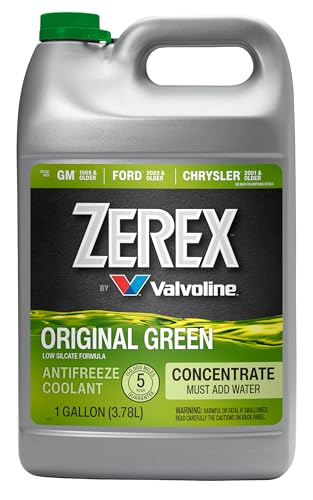
Zerex Original Green Low Silicate Concentrate Antifreeze/Coolant 1 GA, 128 Fl Oz (Pack of 1)
- Temperature Protection: Protects down to -34°F
- Rust and Corrosion Prevention: Helps prevent rust and corrosion
- Extended Engine Protection: Patented organic acid inhibitor
As an affiliate, we earn on qualifying purchases.
As an affiliate, we earn on qualifying purchases.
Frequently Asked Questions
How Often Should I Change My Engine Coolant?
You should change your engine coolant every 30,000 to 50,000 miles or every 2 to 5 years, depending on your vehicle and driving conditions. During coolant recycling, guarantee proper coolant disposal to avoid environmental harm. Regularly checking coolant levels helps prevent overheating, but replacing it on schedule keeps your engine running smoothly. Proper coolant disposal and recycling are essential for eco-friendly maintenance and maintaining ideal engine performance.
Can I Mix Different Brands of Coolants?
Mixing different brands of coolants is like blending oils for a salad dressing—sometimes it works, but often it can cause problems. Coolant compatibility varies, and mixing risks include gel formation or reduced cooling efficiency. To keep your engine running smoothly, stick to one coolant type or brand, and always check your vehicle’s manual. That way, you avoid unexpected corrosion or overheating down the road.
What Are the Signs of a Coolant Leak?
If you notice coolant leak symptoms like puddles under your car, a sweet smell, or overheating, you’re likely detecting coolant leaks. You might also see steam coming from the radiator or a drop in coolant levels. Pay attention to any visible leaks or a slimy residue around hoses and the radiator. Recognizing these signs early helps you prevent engine damage and keeps your vehicle running smoothly.
Is Extended-Life Coolant Suitable for All Engines?
Extended-life coolant is like a superhero for your engine, but it’s not suitable for every vehicle. You need to check antifreeze compatibility and verify the coolant pH levels match your engine’s requirements. Using it in incompatible engines could cause corrosion or overheating, turning your car into a ticking time bomb. Always follow your manufacturer’s recommendations to keep your engine running smoothly and avoid costly damage.
How Does Coolant Color Affect Performance?
Coolant color significance can hint at the type and additives in your coolant, but it doesn’t directly impact performance. Different colors, like green, orange, or pink, often indicate specific formulations suitable for certain engines. While color helps identify the coolant, your focus should be on using the right type for your engine, as mismatched coolants can affect performance and lead to corrosion or overheating.
Conclusion
So, don’t stress about picking the perfect coolant—it’s not as complicated as it seems. Just choose one that matches your vehicle’s requirements and climate, and you’ll be good to go. Some might worry about changing coolant or mixing brands, but as long as you follow the guidelines, it’s a simple task that keeps your engine happy. Remember, regular maintenance is the key to avoiding costly repairs down the road.