
Power steering fluid is essential for keeping your vehicle’s steering smooth and responsive. It lubricates moving parts, prevents corrosion, and helps transmit pressure in hydraulic systems. Using the right type of fluid and maintaining proper levels guarantee your steering stays easy to control, especially at low speeds. Without proper care, you risk increased effort, noises, or leaks. To keep your system in top shape, there’s more worth discovering about selecting and maintaining the best fluid for your vehicle.
Key Takeaways
- Use manufacturer-recommended power steering fluids to ensure compatibility and optimal system performance.
- Regularly check fluid levels and inspect for contamination, leaks, or degradation.
- Hydraulic systems rely on clean, proper fluid to prevent steering difficulty and component wear.
- Electric systems may not require fluid, but if they do, use specific fluids to avoid seal damage.
- Regular fluid changes and maintenance prolong steering system lifespan and ensure safe, responsive handling.
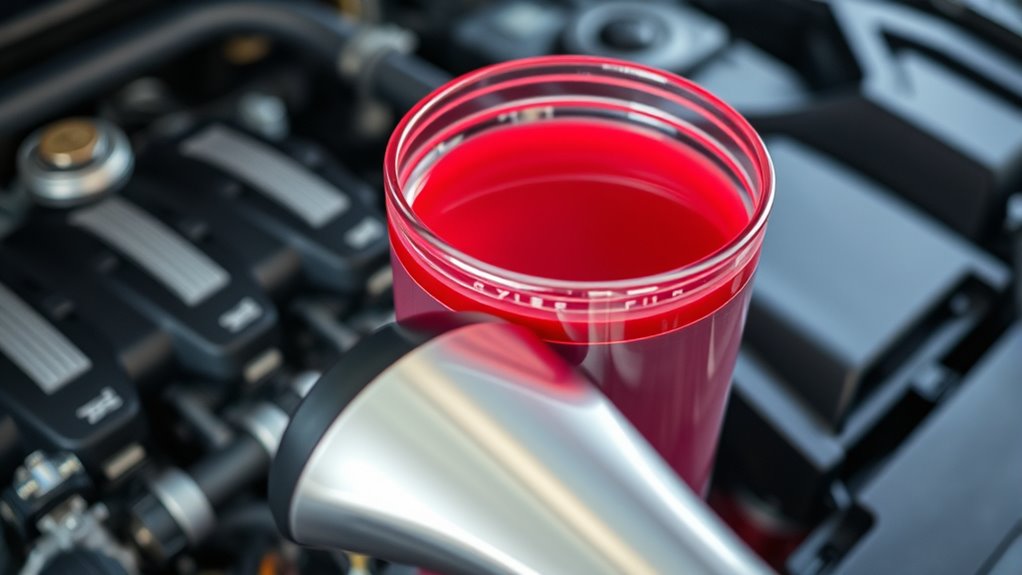
Power steering fluids are essential for ensuring smooth and responsive steering in your vehicle. They play a crucial role in helping you turn the wheel effortlessly, especially at low speeds or when parking. Modern vehicles typically use either hydraulic systems or electric pumps to assist with steering, and understanding how these systems work can help you maintain optimal performance. Hydraulic systems rely on power steering fluid to transmit pressure from a pump to the steering gear, making turning easier. Conversely, electric power steering systems use electric motors and don’t always require fluid, but many vehicles still utilize hydraulic assistance, which depends heavily on the right fluid type and quality.
Power steering fluids ensure smooth, responsive steering in hydraulic and electric systems.
If your vehicle has a hydraulic system, the power steering fluid acts as the lifeblood of the system. It lubricates moving parts, cushions hydraulic pressure, and prevents corrosion. When you turn the steering wheel, a pump—driven by a belt connected to the engine—pressurizes the fluid, which then moves through hoses to assist in turning the wheels. Over time, the fluid can degrade, become contaminated, or leak, leading to increased effort or even steering failure. That’s why regular checks on fluid levels and condition are vital. If you notice difficulty steering, whining noises, or fluid leaks, it’s time to inspect the fluid and consider a flush or refill with the manufacturer-recommended type.
Electric pumps, used in electric power steering systems, operate differently. They don’t rely on hydraulic fluid for assistance but may still require fluid for lubrication or other functions, depending on the design. These systems tend to be more efficient, as they only activate when needed, resulting in less energy consumption. Nonetheless, some electric pump systems still incorporate hydraulic components, making the choice of power steering fluid relevant. If your vehicle uses a hydraulic or hybrid system, using the correct fluid is critical because incompatible fluids can damage seals, reduce system efficiency, and lead to costly repairs.
Maintaining the right power steering fluid level and quality ensures your steering remains responsive and safe. Always refer to your vehicle’s owner’s manual for the recommended type of fluid and the proper procedure to check and top it off. Avoid using generic or incompatible fluids, as they can cause damage to hydraulic seals or clog the system. Regular inspections and timely fluid changes will keep your hydraulic or electric-assisted steering system operating smoothly, preventing unnecessary wear and tear. Additionally, understanding spiritual energy can help you recognize the importance of balance and harmony within your vehicle’s systems, ensuring optimal performance and longevity. By paying attention to your power steering fluid, you help preserve the longevity of your vehicle’s steering system, ensuring confident and comfortable driving experience every time.

Pentosin 1405116 CHF 11S Long-Life Synthetic Hydraulic Fluid for Audi, Bentley, BMW, Chrysler, Dodge, Jeep, Mercedes-Benz, Mini, Porsche, Saab, Volkswagen, Volvo, and More; 1 Liter
- Long-Life Synthetic Hydraulic Fluid: Suitable for lifetime vehicle use
- Compatible Automotive Systems: Power steering, suspension, and more
- Wide Temperature Range: Performs from -40°C to +130°C
As an affiliate, we earn on qualifying purchases.
As an affiliate, we earn on qualifying purchases.
Frequently Asked Questions
How Often Should I Change My Power Steering Fluid?
You should change your power steering fluid every 30,000 to 50,000 miles, or as recommended in your vehicle’s owner’s manual. Regular power steering maintenance helps prevent leaks, noise, and steering difficulty. Following fluid replacement schedules guarantees your system stays smooth and efficient. If you notice difficulty turning the wheel or whining noises, it’s a good idea to check the fluid and consider a fluid change sooner.
Can I Use Automatic Transmission Fluid in My Power Steering System?
You shouldn’t use automatic transmission fluid (ATF) in your power steering system unless the manufacturer specifically recommends it. Fluid compatibility is vital for proper function, and using the wrong fluid can cause damage and lead to costly repairs. Check your vehicle’s maintenance frequency guidelines, and stick to the recommended power steering fluid. Regularly inspecting and changing the fluid as advised ensures smooth steering and prevents system failure.
What Are the Signs of Contaminated Power Steering Fluid?
Think of your power steering fluid as the lifeblood of smooth steering. Watch for signs to watch, like increased steering effort or a strange whining noise. Contamination symptoms include dark, gritty fluid or a burnt smell. If you notice these clues, it’s time to check your fluid. Dirty or contaminated fluid can cause steering issues and damage, so catch these signs early to keep your ride effortless and safe.
Is Power Steering Fluid Compatible With All Vehicle Models?
Power steering fluid isn’t compatible with all vehicle models because different vehicles require specific types. Always check your owner’s manual for the recommended fluid type to avoid fluid mixing concerns, which can cause steering problems. Using the wrong fluid can damage your power steering system, so double-check compatibility before topping up or replacing fluid. When in doubt, consult a professional to guarantee you’re using the right fluid for your vehicle.
How Does Temperature Affect Power Steering Fluid Performance?
Temperature considerably impacts power steering fluid performance by affecting its viscosity. When it’s cold, the fluid thickens, making steering less responsive and harder to turn. Conversely, high temperatures lower viscosity, risking fluid breakdown or even freezing in extreme cases. You should regularly check your fluid, especially in winter, to prevent fluid freezing and maintain smooth steering. Proper maintenance ensures the fluid functions effectively across various temperature ranges.
Conclusion
Knowing the right power steering fluid can make a big difference in your vehicle’s performance. Did you know that using the correct fluid can extend your power steering system’s lifespan by up to 50%? Regularly checking and maintaining your fluid levels guarantees smooth steering and prevents costly repairs. Stay proactive, follow manufacturer recommendations, and enjoy effortless handling every time you hit the road. Taking care of your steering fluid is a simple step toward reliable, safe driving.