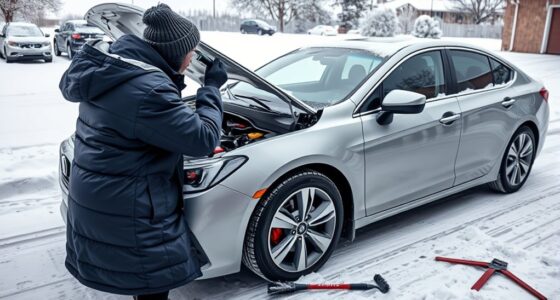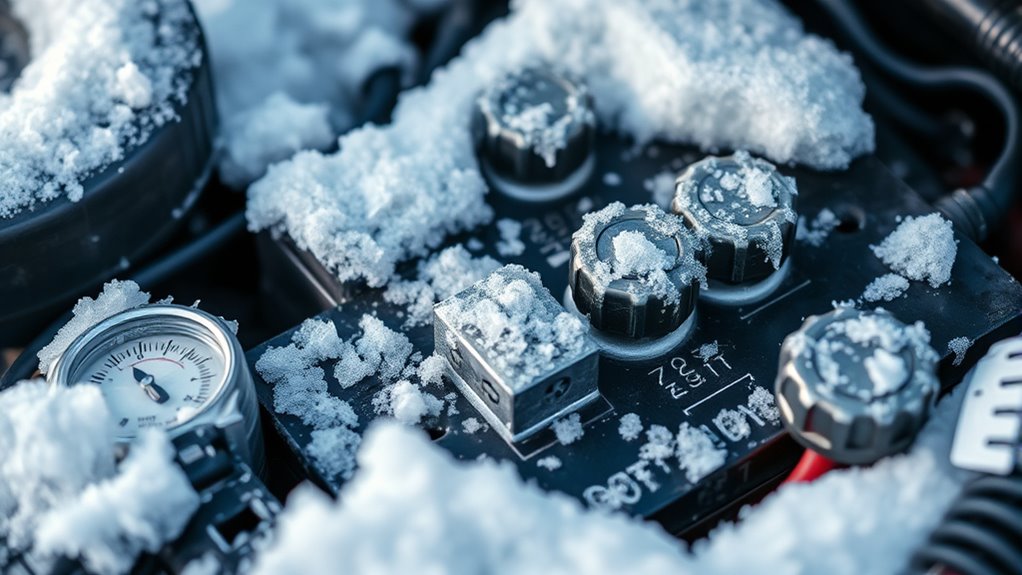

Cold temperatures can seriously impact your battery’s performance by slowing down internal chemical reactions and stifling ion movement. As a result, your device may drain faster, struggle to start, or even fail to operate smoothly outdoors or in colder environments. Lithium-ion, lead-acid, and nickel-based batteries all experience efficiency losses in the cold. If you want to understand how to minimize these effects and keep your devices working well, there’s more to discover.

Get business pricing on garage and car supplies
- Business-only prices and quantity discounts
- Tax-exempt purchasing
- Multiple users, one account, clear invoices
Key Takeaways
- Cold temperatures slow down chemical reactions within batteries, reducing overall efficiency and power output.
- Low temperatures hinder lithium-ion ion movement, decreasing capacity and voltage.
- Battery internal resistance increases in cold conditions, impairing device performance.
- Cold environments shorten battery runtime and can cause devices to fail to start smoothly.
- Thermal management, like insulation and heating, helps maintain optimal battery performance in cold weather.
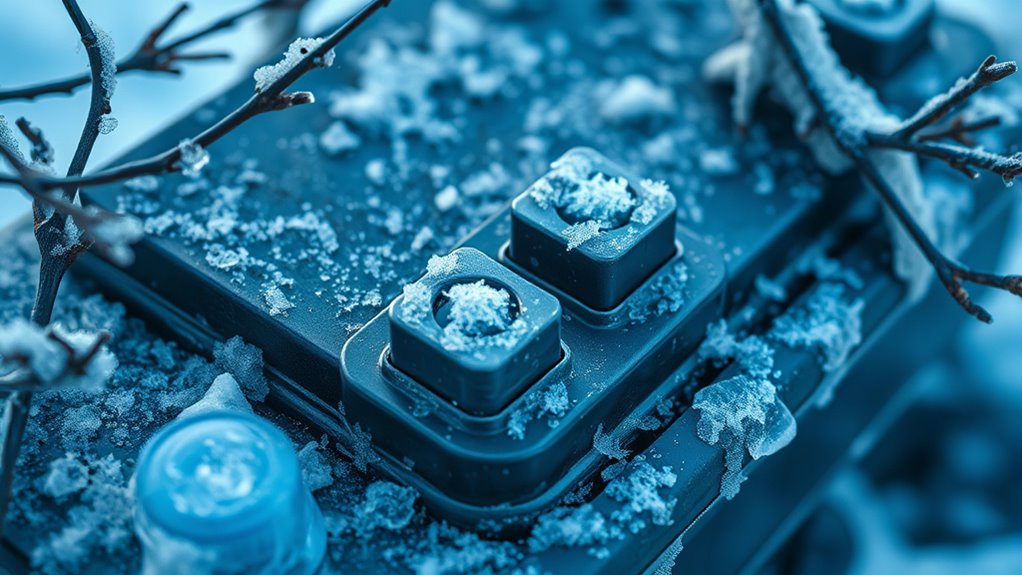
Cold temperatures can considerably reduce a battery’s performance, causing it to deliver less power and drain faster. When the temperature drops, the internal chemical reactions that generate electricity slow down markedly. This slowdown is primarily due to changes in battery chemistry, which become less efficient in cold conditions. For example, in lithium-ion batteries, the movement of lithium ions between the anode and cathode is hampered by the lower temperatures, reducing the overall voltage and capacity. As a result, your device’s runtime shortens, and it may struggle to start or operate smoothly. This is why batteries seem to lose their punch in winter months, especially in outdoor settings or unheated environments.
Understanding battery chemistry is crucial to grasp why cold impacts performance. Different types of batteries rely on specific chemical reactions, and many of these reactions are temperature-dependent. In lead-acid batteries, for instance, cold causes the sulfuric acid electrolyte to become more viscous, slowing ion flow and decreasing current output. Similarly, nickel-based batteries experience increased internal resistance when cold, leading to less available power. The core issue remains that the chemical processes become sluggish, and the energy transfer becomes inefficient. This isn’t just a minor inconvenience; it can greatly affect devices like smartphones, electric vehicles, and backup power systems, especially during winter.
To combat these issues, thermal management becomes critical. Proper thermal management involves controlling the temperature around the battery to keep it within an ideal operating range. This can include insulating the battery pack, using heating elements, or designing enclosures that retain heat. In electric vehicles, for example, sophisticated thermal management systems actively warm the battery before use, ensuring that the chemical reactions proceed efficiently. Without such measures, batteries are more vulnerable to cold damage and performance loss. When you keep your batteries warm, you fundamentally maintain the right environment for the chemistry to work smoothly, preventing the sluggishness caused by low temperatures.
As an affiliate, we earn on qualifying purchases.
Frequently Asked Questions
How Does Temperature Impact Battery Lifespan Over Time?
Cold temperatures accelerate thermal degradation in batteries, causing chemical reactions to slow down and become less efficient. Over time, this leads to reduced capacity and shorter lifespan. You might notice your battery losing charge faster or not holding power as well. To minimize this, keep your batteries warm and avoid prolonged exposure to extreme cold, as it hampers chemical processes essential for peak performance and longevity.
Are Some Battery Types More Resistant to Cold?
Ever wondered if some batteries handle the cold better? Lithium-ion batteries tend to resist cold better due to their chemistry, maintaining power longer in low temperatures. You’ll find that batteries with advanced insulation materials also perform more reliably because they reduce temperature impact. While no battery is completely immune, choosing lithium-ion and insulating well can give you a better shot at enduring cold conditions without losing too much power.
Can Battery Performance Be Improved in Cold Weather?
You can improve battery performance in cold weather through effective thermal management and insulation techniques. By keeping your battery warm with insulated covers or using battery heaters, you reduce the impact of low temperatures. Proper thermal management guarantees the chemical reactions inside your battery occur efficiently, maintaining power output. Implementing these strategies helps prevent capacity loss and extends your battery’s lifespan during cold conditions.
What Are Signs of Cold-Related Battery Failure?
Think of your battery as a delicate plant, wilting in the cold. Signs of cold-related battery failure include slow engine cranking, dim headlights, or electronics shutting down unexpectedly. If your battery lacks proper insulation or thermal management, these issues worsen. You might notice reduced capacity or the battery failing to hold a charge. These symptoms signal that cold temperatures are pushing your battery beyond its limits, risking complete failure.
How Do Cold Temperatures Affect Battery Charging Efficiency?
Cold temperatures slow down chemical reactions inside your battery, which reduces its ability to generate power efficiently. As a result, your battery’s internal resistance increases, making it harder to charge fully. You might notice that it takes longer to charge or the charger struggles to deliver a full charge. To improve performance, keep your battery warm and avoid exposing it to extreme cold, especially during charging.
Conclusion
So, next time you face the chill, remember that cold temperatures can silently sap your battery’s strength, like a thief in the night. By understanding how cold impacts performance, you can take steps to keep your devices running smoothly—like keeping them warm or avoiding extreme cold. Don’t let the cold catch you off guard; instead, stay prepared and keep your batteries energized, because in the battle against winter’s grip, knowledge is your greatest power.
Fall Picks
fall essentials
As an affiliate, we earn on qualifying purchases.