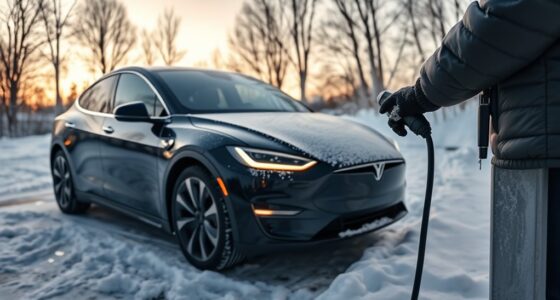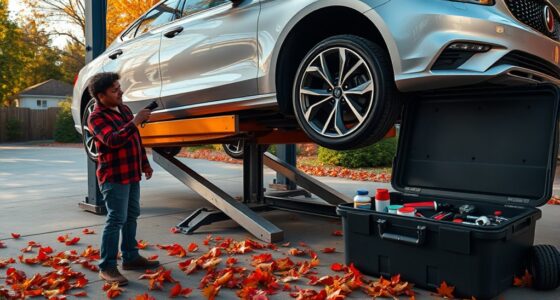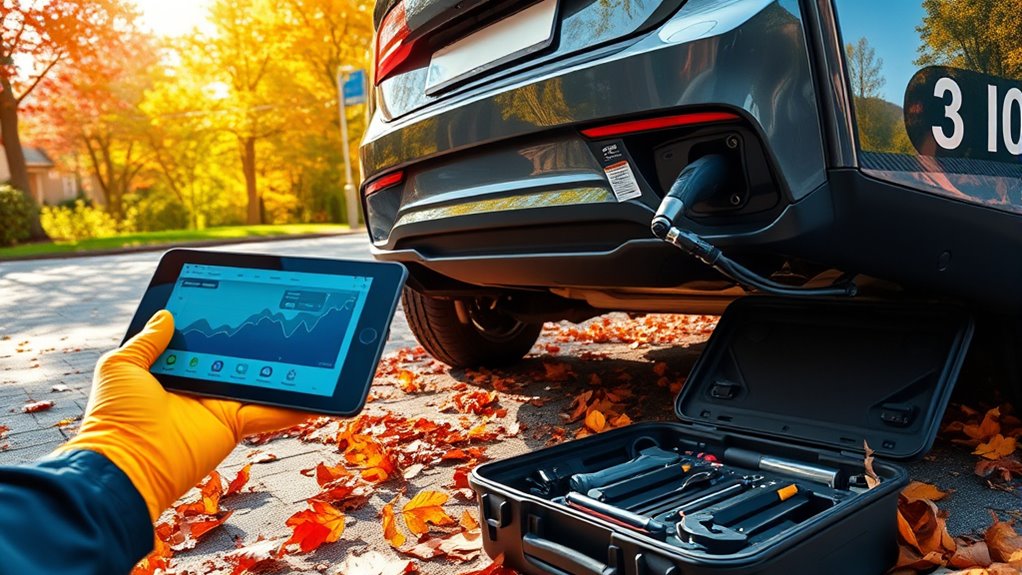
To keep your electric vehicle performing well across seasons, focus on battery health, tire pressure, and system checks. Cold weather can reduce battery capacity and charging speed, so monitor your charge levels and consider professional inspections if needed. Maintain proper tire pressure for safety and efficiency, especially when temperatures drop. Regularly check your heating systems, clear snow from sensors, and adjust for seasonal conditions. Staying proactive helps extend vehicle life—more tips ahead to keep you prepared year-round.
Key Takeaways
- Regularly monitor and adjust battery charge levels and perform professional inspections to maintain optimal cold-weather performance.
- Check and inflate tire pressure to recommended levels before driving, especially during temperature drops for safety and efficiency.
- Use winter tires and verify heating systems like defrosters and cabin heaters for improved traction and comfort.
- Keep sensors, cameras, and vehicle surfaces clear of snow and ice to ensure proper operation and safety.
- Adapt maintenance routines seasonally, including protecting batteries from heat in summer and inspecting for wear caused by road salts in winter.
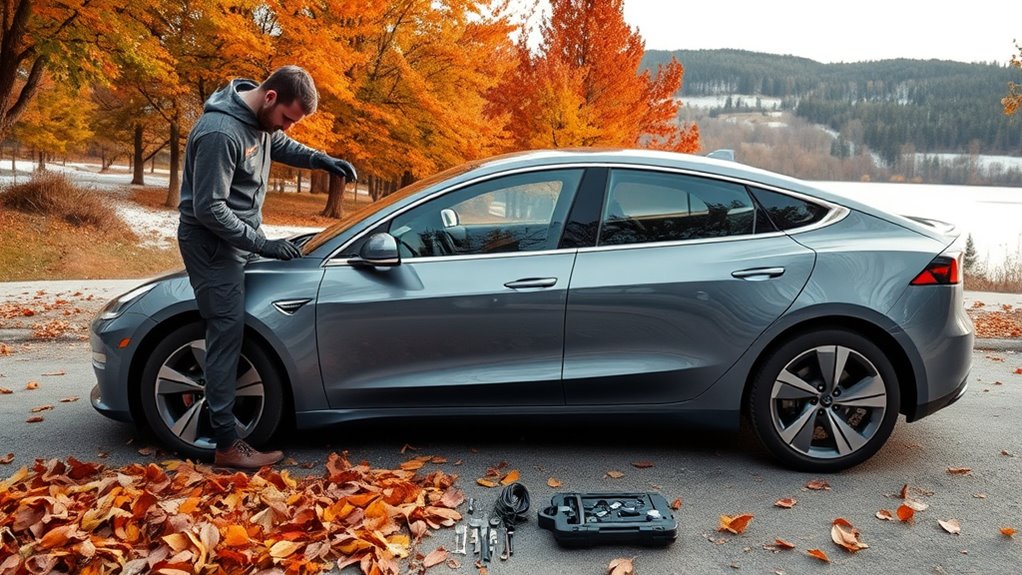
As the seasons change, it is vital to modify your electric vehicle (EV) maintenance routine to guarantee peak performance and safety year-round. Temperature fluctuations, especially moving into colder months, can greatly impact your EV’s battery health and overall efficiency. Cold weather can reduce the battery’s capacity and charging speed, so it’s important to keep an eye on its condition. Regularly check your battery’s state of charge and consider scheduling a professional inspection if you notice it’s depleting faster than usual. Keeping your battery in excellent health ensures longer lifespan and reliable performance, particularly during winter when you rely on your EV more frequently.
Regularly check your EV battery and schedule inspections to maintain performance during colder months.
Tire pressure is another essential factor that varies with the seasons. As temperatures drop, air contracts, causing tire pressure to decrease, which can compromise your vehicle’s safety, range, and handling. Before hitting the road, take a moment to check your tire pressure and inflate your tires to the manufacturer’s recommended levels. Properly inflated tires provide better traction on icy or snowy roads, improve your EV’s efficiency, and extend tire life. Don’t forget to inspect your tires for any signs of wear or damage, especially if you’ve been driving over rough, salted, or slushy roads. Maintaining the correct tire pressure not only boosts safety but also maximizes energy consumption, helping you get the most out of each charge.
In addition to battery health and tire pressure, consider other seasonal adjustments. For winter, you might want to switch to winter tires for better grip, and verify your heating system, including defrosters and cabin heaters, are functioning efficiently without draining your battery excessively. Keeping your EV clean and free of snow and ice buildup helps prevent damage and ensures sensors and cameras work correctly. During warmer months, it’s wise to park in shaded areas or use sunshades to prevent interior overheating and protect your battery from excessive heat, which can degrade its performance over time. Proper maintenance and care are crucial for maximizing your EV’s longevity and safety.
Finally, stay proactive with routine checks. Regularly monitor your EV’s systems and consult your owner’s manual for specific seasonal maintenance tips. Staying vigilant about these details guarantees your EV remains safe, efficient, and reliable throughout every season. By adjusting your maintenance habits to the changing weather, you’ll enjoy smoother drives, longer battery life, and peace of mind no matter the time of year.
Frequently Asked Questions
How Often Should I Schedule Seasonal EV Maintenance?
You should schedule seasonal EV maintenance every 6 months or around 6,000 miles. During this check, you’ll want to get a battery inspection to guarantee peak performance and safety. Also, don’t forget tire rotation, which helps maintain even tire wear and prolongs their life. Regular maintenance like this keeps your electric vehicle running smoothly, boosts efficiency, and prevents unexpected breakdowns.
Are Special Tools Required for EV Seasonal Checks?
No, you don’t need special tools for EV seasonal checks—just some diagnostic equipment you’ll likely already have or can easily borrow. It’s amusing how we think we need fancy gear for simple inspections, isn’t it? In reality, basic tools and a good diagnostic scanner are enough to verify your battery health, cooling systems, and other essentials. So, relax and enjoy the process—you’re more equipped than you think!
Can I Perform Seasonal Maintenance Myself Safely?
Yes, you can perform seasonal maintenance on your electric vehicle safely if you follow DIY safety guidelines. Make sure you understand the tool requirements before starting—most tasks only need basic tools like wrenches and screwdrivers. Always disconnect the battery and work in a dry, well-ventilated area. If you’re unsure about any step, consult your vehicle’s manual or a professional to avoid accidents or damage.
What Are the Signs My EV Needs Seasonal Maintenance?
Think of your EV as a living creature that needs care. You’ll notice your battery health declining if it takes longer to charge or if range drops unexpectedly. Keep an eye on tire pressure—if your tires look flat or uneven, it’s a sign. These signs indicate your vehicle needs seasonal maintenance. Regular checks guarantee your EV runs smoothly and efficiently, just like caring for a beloved pet.
Does Seasonal Maintenance Affect My EV Warranty?
Seasonal maintenance typically doesn’t affect your EV warranty if you follow the manufacturer’s guidelines. Regular seasonal checkups help verify your vehicle runs smoothly and can even prevent costly repairs. However, skipping recommended maintenance could potentially void parts of your warranty, especially if issues arise from neglect. Always keep records of your seasonal checkups and consult your warranty terms to stay protected and maintain your EV’s longevity.
Conclusion
By staying on top of seasonal maintenance, you’ll keep your electric vehicle running smoothly all year round. Some say EVs need less care, but neglecting simple checks can lead to costly problems later. Think of it like tending a garden: consistent care guarantees healthy growth. So, don’t just wait for issues—regular maintenance is your secret weapon for reliable, eco-friendly driving, no matter the season. Trust me, a little effort now saves headaches down the road.