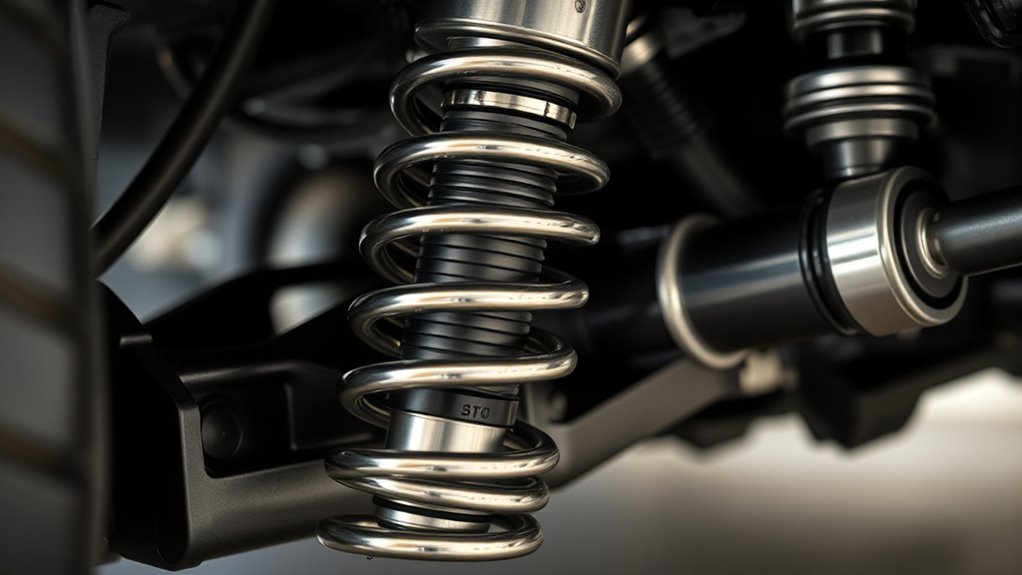

Understanding suspension systems involves knowing how springs and shocks work together to keep your vehicle stable and smooth. Springs support the vehicle’s weight and absorb large bumps, while shock absorbers dampen the springs’ motion, preventing excessive bouncing and vibrations. Regular maintenance of shocks and selecting the right springs based on your load and driving conditions are essential for safety and comfort. Keep exploring to learn more about how these components enhance your driving experience.
Listen free for 30 days with Audible
Thousands of audiobooks and originals — cancel anytime.
As an affiliate, we earn on qualifying purchases.
Key Takeaways
- Suspension systems connect wheels to the vehicle, absorbing shocks to ensure a smooth ride and stability.
- Springs support vehicle weight, maintain ride height, and are made from durable materials like steel alloys.
- Shock absorbers dampen spring oscillations, preventing excessive bouncing and improving handling.
- Regular maintenance of shocks prevents leaks, corrosion, and damage, ensuring optimal suspension performance.
- Proper spring and shock selection enhances safety, comfort, and vehicle control under various load and driving conditions.

A suspension system is a critical component of your vehicle that connects the wheels to the chassis, helping to absorb shocks and provide a smooth ride. When it comes to maintaining this system, paying attention to shock absorber maintenance is essential. Regularly inspecting your shocks for leaks, corrosion, or damage keeps your ride comfortable and safe. Worn or damaged shocks can lead to poor handling, increased stopping distances, and uneven tire wear. So, make it a habit to check them periodically and replace them as needed. Proper shock absorber maintenance ensures your suspension performs at its best, reducing the impact of rough roads and enhancing overall vehicle stability. Additionally, understanding how shock absorber performance relates to overall vehicle safety can help prioritize timely replacements and maintenance routines.
Equally important is understanding how spring material selection influences your suspension’s effectiveness. Springs support your vehicle’s weight, absorb shocks, and maintain proper ride height. They come in various materials, but the most common are steel alloys due to their strength and durability. When selecting spring materials, you want options that can withstand repeated compression and extension without losing their shape. High-quality steel alloys, such as chromoly or alloy steels, offer excellent fatigue resistance, meaning they last longer and perform reliably over time. The right spring material not only impacts ride comfort but also affects handling and safety, especially when carrying heavy loads or driving on uneven terrain.
Choosing the correct springs depends on your driving needs. For instance, if you often carry heavy loads or tow, stiffer springs made from durable alloys can help maintain stability. Conversely, softer springs provide a more comfortable ride on smooth roads but might not handle heavy loads as effectively. When considering spring material selection, also think about environmental factors like corrosion resistance. Some springs are coated or made from stainless steel to prevent rust, extending their lifespan and reducing maintenance needs.
vehicle shock absorbers replacement
As an affiliate, we earn on qualifying purchases.
As an affiliate, we earn on qualifying purchases.
Frequently Asked Questions
How Often Should Suspension Components Be Inspected or Replaced?
You should schedule routine inspections of your suspension components at least once a year or every 12,000 to 15,000 miles. If you notice uneven tire wear, bouncing, or knocking sounds, get them checked sooner. Components like springs and shocks often need replacement every 50,000 to 100,000 miles, depending on driving conditions. Regular inspections help identify issues early, ensuring safe driving and extending the life of your suspension system.
Can Aftermarket Shocks Improve Vehicle Handling Significantly?
Think of aftermarket shocks as giving your vehicle a sports car makeover. They can substantially improve handling by reducing body roll and enhancing stability, especially during sharp turns. Plus, with the right performance upgrades, you’ll enjoy a smoother ride and better control on rough roads. So, yes, upgrading shocks can transform your driving experience, making it more responsive and comfortable, like a finely tuned machine.
What Are the Signs of Worn-Out Suspension Springs?
You’ll notice worn-out suspension springs if your vehicle exhibits spring sag, where it sits lower than usual, or if you see uneven tire wear, especially on one side. Other signs include a bouncy or rough ride, increased body roll during turns, and a feeling of less stability. If you experience these issues, it’s a clear indication that your suspension springs need inspection or replacement to restore proper handling.
How Do Suspension Systems Differ Between Off-Road and On-Road Vehicles?
You’ll notice off-road vehicles have suspension systems designed for terrain adaptation, with increased travel and durable components to handle rough surfaces. On-road vehicles prioritize ride comfort, featuring stiffer suspensions for stability and refined suspension geometry for smooth handling. Off-road setups often have adjustable shocks to adapt to terrain, while on-road systems focus on minimizing body roll and maximizing comfort. This difference guarantees ideal performance whether tackling rugged trails or smooth highways.
Are There Any Maintenance Tips to Extend Suspension Lifespan?
To extend your suspension’s lifespan, regularly check your tire alignment and keep it precise, as misalignment causes uneven wear. Inspect suspension fluid levels and top up or replace as needed to make sure smooth operation. Additionally, schedule routine inspections for shocks and springs, especially after rough rides. These simple steps help prevent premature wear, improve ride quality, and save you money on costly repairs down the line.
Conclusion
Now that you’ve learned about springs and shocks, it’s clear how essential they are to your ride’s comfort and safety. Sometimes, it’s almost like the universe aligns to keep your journey smooth—your suspension working quietly in the background. Next time you hit the road, remember those hidden heroes beneath your car. Whether you’re cruising or tackling bumps, understanding your suspension makes every drive feel just a little more effortless and connected.
Flea & tick season Picks
flea and tick prevention
As an affiliate, we earn on qualifying purchases.