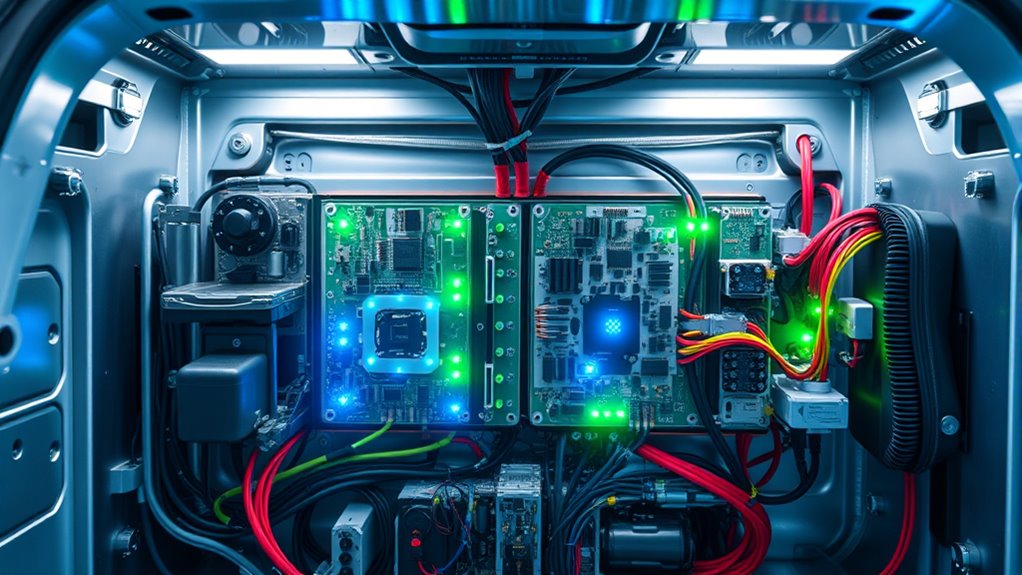

A Battery Management System (BMS) in electric vehicles keeps your battery safe, efficient, and long-lasting. It continuously monitors cell voltages, temperatures, and states of charge, balancing cells to prevent damage from overcharging or deep discharging. The BMS also manages thermal conditions to avoid overheating and disconnects the battery during unsafe conditions. By ensuring everything works smoothly, it extends your battery’s lifespan and performance. Keep going to discover more about how these systems keep your EV reliable.
Key Takeaways
- BMS ensures safe, efficient operation and prolongs battery life in electric vehicles.
- It maintains cell balance to prevent overcharging, deep discharge, and capacity loss.
- Thermal management techniques control heat to prevent overheating and degradation.
- Safety functions monitor voltage, current, and temperature to avoid hazards like thermal runaway.
- Data recording supports diagnostics, maintenance, and system safety over the battery’s lifespan.
Battery Management Systems (BMS) are indispensable for guaranteeing the safe and efficient operation of rechargeable batteries, especially in applications like electric vehicles and renewable energy storage. When you drive an electric vehicle, the BMS plays a critical role in maintaining the health of the battery pack. One of its primary functions is battery cell balancing, which ensures that each individual cell within the pack operates at the same voltage and state of charge. Without proper balancing, some cells may become overcharged or deeply discharged, reducing overall capacity and risking damage or safety issues. You might not see this process happening, but it’s essential for extending the lifespan of your vehicle’s battery and maintaining reliable performance.
Thermal management techniques are another indispensable aspect of a BMS in electric vehicles. Batteries generate heat during charging and discharging, and managing this heat effectively is key to preventing overheating, which can lead to reduced capacity, degradation, or even safety hazards like thermal runaway. The BMS continuously monitors temperature sensors embedded throughout the battery pack to guarantee ideal operating conditions. When temperatures rise beyond safe limits, the system activates cooling methods—such as liquid cooling or air circulation—to dissipate heat and keep the batteries within their perfect temperature range. This proactive thermal regulation helps you get the most out of your battery’s capacity and longevity, especially in extreme weather conditions. Additionally, proper battery maintenance can significantly enhance overall system safety and efficiency.
In addition to balancing and thermal management, your BMS also oversees voltage and current levels, protecting your vehicle from overcharging or excessive discharge. It can disconnect the battery if it detects unsafe conditions, preventing potential fires or damage. The system also records data on battery performance, which helps in diagnostics and future maintenance planning. This way, the BMS not only safeguards your vehicle during operation but also provides valuable insights into battery health over time.

Battery Management Algorithm for Electric Vehicles
As an affiliate, we earn on qualifying purchases.
As an affiliate, we earn on qualifying purchases.
Frequently Asked Questions
How Do BMS Impact Vehicle Range and Efficiency?
A Battery Management System boosts your vehicle’s range and efficiency by optimizing battery performance through smart battery optimization and power management. It guarantees your batteries operate within ideal conditions, preventing overcharging or deep discharging, which can reduce lifespan. By efficiently managing energy flow, the BMS helps you get the most distance on a charge and maintains consistent power, making your EV more reliable and cost-effective over time.
What Are the Latest Advancements in BMS Technology?
You’re witnessing a revolution in BMS technology, transforming the way electric vehicles operate. The latest advancements include wireless connectivity, which streamlines data transfer and diagnostics, and improved thermal management systems that keep batteries safer and more efficient. These innovations guarantee your vehicle’s battery stays ideal longer, considerably boosting range and reliability. Embracing these cutting-edge features means you’re driving the future of electric mobility—faster, smarter, and more dependable than ever before.
How Does BMS Handle Battery Aging Over Time?
Your BMS handles battery aging by continuously monitoring battery health, detecting degradation, and adjusting charging cycles to minimize further damage. It uses thermal management to keep the battery within ideal temperatures, reducing thermal stress that accelerates degradation. By balancing cell charge levels and providing early alerts for potential issues, your BMS extends battery lifespan, ensuring better performance and safety over time.
Are BMS Systems Standardized Across EV Manufacturers?
You’ll find that BMS systems aren’t fully standardized across EV manufacturers, mainly due to standardization challenges and compatibility issues. Each automaker tends to develop its own system tailored to specific battery chemistries and vehicle designs. This lack of uniformity can make it tricky to swap components or upgrade batteries across different brands. While efforts are underway to improve compatibility, it’s still a fragmented landscape, and you may encounter differences between models.
What Safety Protocols Are Integrated Into Modern BMS?
You might think modern BMS forget safety, but they actually prioritize it with robust protocols. They constantly monitor battery safety through fault detection, preventing issues before they escalate. These systems include overcharge, over-discharge, and temperature controls, ensuring your battery stays safe and reliable. So, while it seems like tech is just about performance, these safety protocols quietly work behind the scenes, keeping you safe on every drive.

Enhancing Electric Vehicle Battery Pack Cooling with Nanofluids: "Enhancing EV Battery Pack Cooling: Nanofluids Review & Innovations for Improved Thermal Management"
As an affiliate, we earn on qualifying purchases.
As an affiliate, we earn on qualifying purchases.
Conclusion
As you explore battery management systems, remember they’re the heart that keeps your electric vehicle alive and thriving. They guard your battery’s health like a vigilant sentinel, ensuring safety and longevity. Without these systems, your EV’s promise of sustainability would fade like a distant dream. Think of BMS as the conductor of an orchestra, harmonizing performance and protection—turning your journey into a symphony of efficiency. Embrace it, and let your electric adventure flourish!

100Balance Hardware 1A Active Balancer 14S Equalizer for Lifepo4 or Li-ion Lithium Battery Group BMS Energy Transfer Board with Blue ABS Case
This is an active equalization module for lithium batteries, which can be compatible with all other brands of…
As an affiliate, we earn on qualifying purchases.
As an affiliate, we earn on qualifying purchases.

QMPRKPE Battery Disconnect Switch, Car Battery Disconnect Switch 12V-24V, Adjustable Pure Copper Battery Cut Off Switch – Heavy Duty Power Kill Switch for Car Truck RV Boat Marine Tractor
【Prevents Battery Drain During Storage】 Frustrated with a dead battery after parking your RV, boat, or vehicle for…
As an affiliate, we earn on qualifying purchases.
As an affiliate, we earn on qualifying purchases.