Turbochargers boost power by using exhaust gases to spin a turbine that compresses incoming air, increasing engine efficiency and power without adding much weight. Superchargers, on the other hand, are mechanically driven by your engine’s crankshaft, providing instant boost with no lag. While turbochargers are great for fuel economy and sustained performance, superchargers deliver immediate response and a more aggressive feel. Explore further to understand how each system impacts your driving experience.

Get business pricing on garage and car supplies
- Business-only prices and quantity discounts
- Tax-exempt purchasing
- Multiple users, one account, clear invoices
Key Takeaways
- Turbochargers use exhaust gases to spin a turbine, increasing air intake and power efficiently, but may cause turbo lag.
- Superchargers are belt-driven, providing immediate boost with no lag, for quick acceleration and responsive performance.
- Turbochargers improve fuel economy by enhancing power without adding significant weight or complexity to the engine.
- Superchargers deliver instant power, resulting in a more visceral driving feel but typically consume more engine power and fuel.
- Both systems influence vehicle responsiveness: turbochargers offer efficiency and gradual power, while superchargers provide immediate, aggressive acceleration.
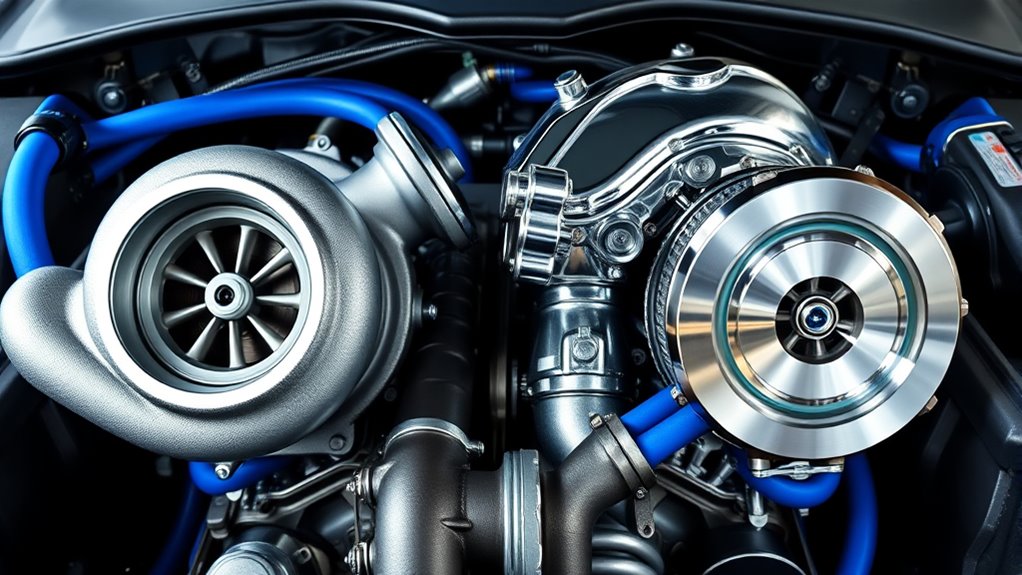
When it comes to boosting engine performance, turbochargers and superchargers are the two main options you’ll encounter. Both aim to increase power by forcing more air into the engine, but they do so differently, affecting how your vehicle responds and how it feels on the road. If you’re interested in electric vehicles, you might think about how turbocharging technology could influence future performance, especially considering issues like turbo lag. Turbo lag is the delay between pressing the accelerator and feeling the boost kick in, which can be noticeable in turbocharged engines. Superchargers, on the other hand, provide instant power because they’re mechanically driven by the engine’s crankshaft, eliminating turbo lag. This difference can be profoundly impact your driving experience, especially if you enjoy quick acceleration.
Turbochargers boost power efficiently but can cause lag; superchargers deliver instant response but may reduce efficiency.
Turbochargers work by using exhaust gases to spin a turbine that compresses incoming air, pushing more air into the engine. This process effectively boosts power output without adding much weight, making turbocharged engines more efficient and often more fuel-friendly. However, because they rely on exhaust heat and pressure, turbochargers tend to have some lag — that slight delay before you feel the extra power. This lag can be frustrating if you’re looking for immediate response, especially in low-speed or city driving. Manufacturers are continuously refining turbo designs to reduce turbo lag, but it remains a common trade-off. Additionally, advancements in turbo technology are helping to minimize this issue and improve responsiveness.
Superchargers, by contrast, are directly belt-driven from the engine, delivering boost almost instantaneously as soon as you press the gas pedal. Because they don’t depend on exhaust gases, superchargers can provide more immediate throttle response, making them ideal for drivers who prioritize quick acceleration and a more visceral feel. However, this comes at a cost: superchargers tend to consume more power from the engine, which can slightly decrease overall efficiency. They also tend to add weight and complexity to the engine bay.
In the domain of electric vehicles, turbocharging is less relevant since electric motors don’t require forced induction to produce power. Still, the principles behind turbochargers influence how automakers think about enhancing traditional engines in hybrid systems. As technology advances, you might see more sophisticated methods of boosting power that aim to minimize turbo lag, making turbocharged engines feel more responsive and more aligned with the instant torque characteristic of electric vehicles. Whether you prefer the immediate response of a supercharger or the efficiency benefits of a turbocharger, understanding these differences helps you choose the right setup for your driving style.
As an affiliate, we earn on qualifying purchases.
Frequently Asked Questions
Which Is More Cost-Effective: Turbocharger or Supercharger Installation?
You’ll find that turbochargers are more cost-effective overall because their installation costs are generally lower. Plus, they offer better long-term savings since they improve fuel efficiency by using exhaust gases to generate power. Superchargers tend to be pricier upfront and may increase fuel consumption. So, if you’re looking for a budget-friendly option with ongoing savings, a turbocharger is the smarter choice.
How Do Turbochargers and Superchargers Affect Fuel Efficiency?
Did you know turbochargers can improve your vehicle’s fuel economy by up to 25%? They boost efficiency by utilizing exhaust gases to increase power without extra fuel, resulting in lower emission levels. Superchargers, however, tend to reduce fuel economy because they draw power directly from the engine. So, if saving fuel and reducing emissions matter to you, turbochargers are the smarter choice for enhancing both.
Can Turbochargers and Superchargers Be Combined in One Vehicle?
Yes, you can combine turbochargers and superchargers in one vehicle through dual boost systems or combined forced induction setups. This approach leverages the quick spool of a supercharger with the high efficiency of a turbocharger, providing more power across a wider RPM range. By integrating both, you optimize performance and responsiveness, making your vehicle more powerful and versatile. However, it requires careful engineering to manage heat and boost control effectively.
What Maintenance Differences Exist Between Turbocharged and Supercharged Engines?
Like tuning a vintage radio, maintaining turbocharged and supercharged engines requires attention. You’ll need to change the oil more frequently—every 3,000 to 5,000 miles—to prevent build-up and keep parts lubricated. Also, intercooler cleaning is essential to sustain cooling efficiency, especially in turbo engines. Supercharged engines generally demand less intercooler upkeep. Regular inspections ensure your boost systems stay in top shape and avoid costly repairs down the road.
How Do Turbochargers and Superchargers Impact Engine Lifespan?
You might notice that turbochargers and superchargers can affect engine durability differently. Turbocharged engines often experience more wear and tear because of higher exhaust temperatures and increased pressure, which can accelerate engine component fatigue. Supercharged engines generally put more mechanical stress on the belt and pulley system, potentially impacting long-term durability. Proper maintenance helps mitigate these effects, ensuring your engine stays reliable despite the added power.
Conclusion
Now that you know the key differences, the real question is— which one will give you that edge on the road? Will you go for the turbocharger’s efficiency or the supercharger’s instant power? The choice isn’t easy, and the decision could change your driving experience forever. Are you ready to take the leap and unleash that next level of performance? The power is in your hands— what will you choose?
Fall Picks
fall essentials
As an affiliate, we earn on qualifying purchases.