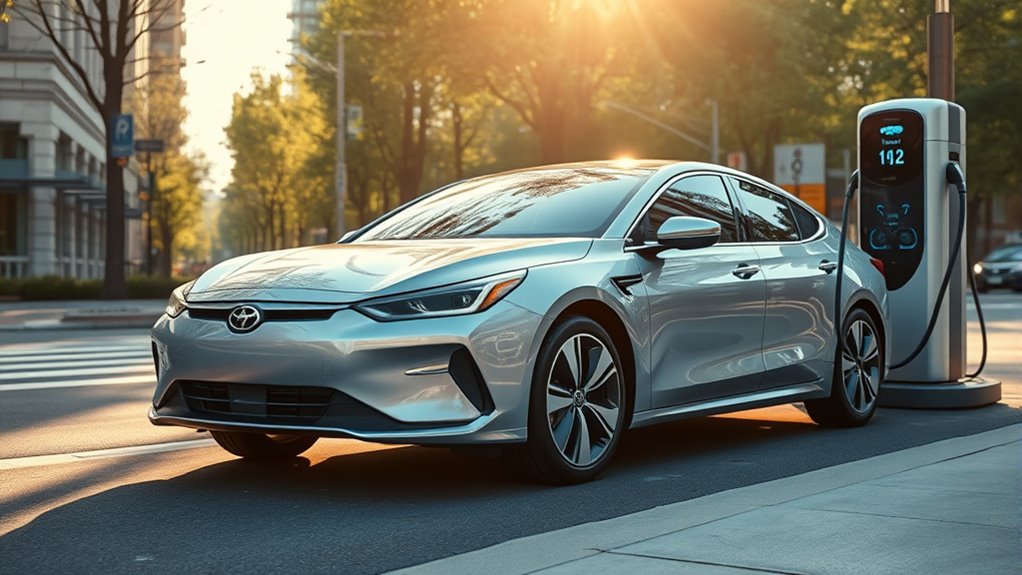
Hybrid powertrains balance gas and electric motion by intelligently switching between or combining both power sources based on your driving needs. They use sophisticated systems to maximize performance and efficiency, capturing energy from braking and constantly monitoring battery health. During city driving, they rely more on electric power, while on highways, the gas engine takes over for higher performance. Keep exploring to discover how these systems optimize your driving experience seamlessly.
Key Takeaways
- Hybrid systems seamlessly switch between gas engines and electric motors based on driving demands.
- Energy flow is managed to optimize performance and efficiency, utilizing electric power in city driving and gas power on highways.
- Regenerative braking captures kinetic energy to recharge the battery, enhancing efficiency.
- The battery management system monitors and maintains optimal battery health for reliable electric power.
- Sophisticated control systems balance power sources to reduce emissions while delivering strong performance.

Have you ever wondered how modern vehicles balance performance and efficiency? Hybrid powertrains do this by seamlessly combining gas engines with electric motors, giving you the best of both worlds. This blend allows your vehicle to deliver strong performance while minimizing fuel consumption and emissions. At the heart of this balance is sophisticated systems that manage energy flow, guaranteeing you get ideal efficiency without sacrificing power when needed.
One key feature that helps hybrid vehicles optimize energy use is regenerative braking. When you brake or slow down, instead of losing all that kinetic energy as heat, the system captures it and converts it into electrical energy. This energy is then stored in the vehicle’s battery for later use. Regenerative braking is a smart way to recover energy that would otherwise go to waste, boosting overall efficiency and reducing reliance on the gas engine. Because of this, you’ll notice that hybrids often brake more smoothly and efficiently, as the system intelligently adjusts how much energy is recovered based on your driving conditions.
Battery management is another critical component that allows hybrid powertrains to balance gas and electric operation. The vehicle’s onboard computer constantly monitors the state of charge, temperature, and health of the battery. It guarantees the battery stays within ideal parameters, preventing overcharging or excessive depletion. This careful management not only prolongs the battery’s lifespan but also makes sure that electric power is available when needed, whether for quick acceleration or low-speed driving. The system decides when to switch between the gas engine and electric motor or when to operate both simultaneously, providing a seamless transition that feels natural to you.
Thanks to advanced battery management and regenerative braking, your hybrid vehicle can adapt to different driving styles and conditions. During city commutes, it may rely more heavily on electric power, saving fuel and reducing emissions. On highways or when more power is needed, the gas engine kicks in to provide sustained performance. The intelligent coordination between the engine and electric motor is so smooth that you might not even notice when the switch happens.
In essence, hybrid powertrains leverage regenerative braking and meticulous battery management to create a driving experience that’s efficient, responsive, and environmentally friendly. They intelligently allocate power, recover energy, and protect your battery’s health, all while giving you the performance you expect. This smart balancing act guarantees that you get the most out of every drop of fuel, making hybrids a practical choice for drivers who want to save money and reduce their carbon footprint without sacrificing performance. Additionally, tuning and maintenance of these systems with specialized shops can further optimize hybrid performance and longevity.
As an affiliate, we earn on qualifying purchases.
Frequently Asked Questions
How Do Hybrid Powertrains Impact Long-Term Vehicle Maintenance Costs?
Hybrid powertrains generally lower your long-term maintenance costs because they experience less wear and tear on components like brakes and the engine. However, you might face higher expenses related to battery longevity and occasional repairs. Maintenance frequency for hybrid systems is typically reduced, but you should keep an eye on the battery’s health over time. Overall, hybrids can save you money, but battery replacement costs should be considered in your budget.
What Are the Environmental Benefits of Hybrid Over Traditional Vehicles?
Imagine a time when cleaner air was just a dream. Hybrid vehicles help you achieve that by reducing emissions and conserving resources. You cut down on harmful pollutants, leading to improved air quality. Plus, they use less gas, which means you’re less reliant on fossil fuels. This not only benefits the environment but also helps you save money while making a positive impact on your community’s health.
How Does Regenerative Braking Work in Hybrid Systems?
When you apply regenerative braking, the hybrid system captures energy normally lost as heat during braking. This process, called energy recovery, converts kinetic energy into electrical energy, which is stored in the battery for later use. You can feel this system working as the vehicle slows smoothly without heavy brake pedal pressure. Regenerative braking helps improve fuel efficiency and reduces brake wear, making your driving more eco-friendly and cost-effective.
Are Hybrid Powertrains Suitable for Off-Road or Heavy-Duty Applications?
Hybrid powertrains can be suitable for off-road and heavy-duty applications, but it depends on the design. You’ll find that many hybrids are built with off-road durability and heavy-duty performance in mind, ensuring they handle rough terrain and demanding tasks. However, not all hybrids are optimized for extreme conditions. You should look for models specifically engineered for off-road use, with reinforced components and higher torque output for tough environments.
What Advancements Are Expected in Hybrid Technology in the Coming Years?
In the coming years, hybrid technology will revolutionize your driving experience, with battery efficiency soaring to unprecedented levels and software integration becoming seamless as if they’re fused by magic. Expect smarter energy management, longer-lasting batteries, and quicker charging times, making hybrids more powerful and reliable than ever. These advancements will push the boundaries of innovation, transforming your vehicle into a marvel of modern engineering that’s both eco-friendly and insanely efficient.
Conclusion
By now, you see how hybrid powertrains skillfully balance gas and electric, delivering efficiency and versatility. Did you know that hybrids can reduce fuel consumption by up to 50% compared to traditional vehicles? This impressive statistic highlights their role in cutting emissions and saving you money at the pump. Embracing hybrid technology means you’re contributing to a cleaner environment while enjoying reliable performance—making it a smart choice for today’s eco-conscious driver.