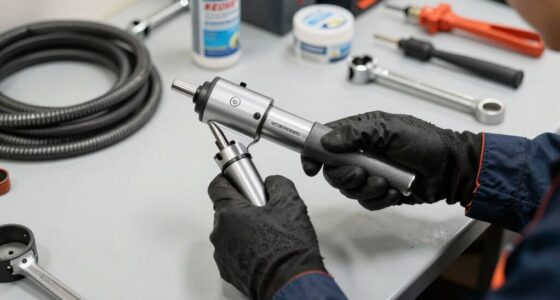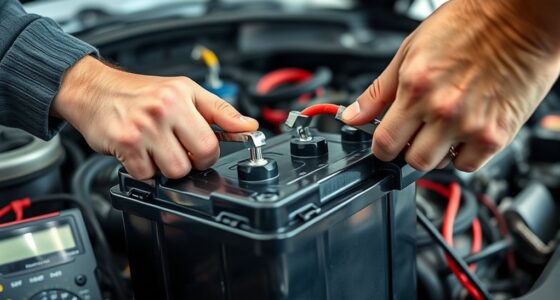
To clean your fuel injectors at home, first verify your engine is cool and disconnect the negative battery terminal. Relieve fuel system pressure and carefully disconnect the fuel lines and injectors, noting their positions. Soak the injectors in a commercial fuel injector cleaner for 15-30 minutes, then use a soft brush or compressed air to clear debris. Reinstall everything securely, repressurize the system, and check for leaks. Continuing with this process can help restore your engine’s performance and efficiency.
Key Takeaways
- Relieve fuel system pressure and disconnect the negative battery terminal for safety before starting.
- Remove fuel injectors carefully, noting their position, and prepare them for cleaning.
- Soak injectors in a commercial fuel injector cleaner or use ultrasonic cleaning for thorough maintenance.
- Reinstall injectors securely, reconnect fuel lines, and pressurize the system to check for leaks.
- Start the engine to verify improved performance, ensuring cleaner injectors for better fuel efficiency.

If your vehicle is running rough or your fuel economy has decreased, cleaning your fuel injectors might be the solution. Over time, fuel injectors can become clogged with deposits, leading to uneven fuel spray, misfires, and reduced engine performance. Performing basic fuel system maintenance at home can restore smooth operation and improve your vehicle’s efficiency. The process doesn’t require specialized tools, but it does demand a cautious approach and attention to detail.
Start by ensuring your engine is cool before you begin. You’ll need to locate the fuel injectors, which are usually accessible from the engine bay. Before disconnecting anything, disconnect the negative battery terminal to prevent any electrical mishaps. Next, relieve fuel system pressure by removing the fuel pump relay or fuse and starting the engine until it stalls. This step helps prevent fuel spray when disconnecting fuel lines. Once the pressure is released, disconnect the fuel lines from the injectors carefully, using appropriate tools to avoid damaging connectors or fittings. Be prepared for some residual fuel; keep a rag or container nearby to catch any drips.
Now, remove the fuel injectors from their mounting points. Depending on your vehicle, this might involve loosening clips or bolts. Once out, you can soak the injectors in a commercial fuel injector cleaner. Look for a product specifically designed for cleaning fuel injectors, and follow the manufacturer’s instructions carefully. Typically, soaking for 15-30 minutes helps loosen stubborn deposits. Some people prefer to use ultrasonic cleaning, but that’s more advanced and usually requires professional equipment. After soaking, use a soft brush or compressed air to gently remove remaining debris from the injector nozzles.
Reinstall the cleaned injectors by reversing the removal steps. Make sure all connections are tight and secure to prevent leaks. Reconnect the fuel lines, ensuring they’re properly seated, and replace any removed fuses or relays. When everything is back in place, turn the ignition key to the “On” position without starting the engine. This will activate the fuel pump and pressurize the system. Check for leaks, then start the engine. You might notice an improvement in engine responsiveness and smoother idle.
Regular fuel system maintenance, including cleaning your fuel injectors, keeps your engine performing at its best. Clean injectors promote efficient fuel combustion, leading to better power delivery, improved fuel economy, and fewer emissions. Additionally, using automotive scan tools can help diagnose issues related to fuel delivery and ensure your fuel system is functioning properly. Although DIY cleaning isn’t a substitute for professional service when needed, it’s a practical way to maintain your vehicle’s health and save money on repairs in the long run.

THIKPO Universal Fuel Injector Tester and Cleaner Tool Kit, DIY Cleaning Tool Kit, 8 Pulse Modes, 4 Wire Dual Channel for 2 Fuel Injectors, 8 Size Cleaning Adapters, 12V/5V Output Power
Upgraded Universal Fuel Injector Tester and Cleaner Tool Kit—Operates injectors individually to diagnose fuel delivery problems on petrol…
As an affiliate, we earn on qualifying purchases.
As an affiliate, we earn on qualifying purchases.
Frequently Asked Questions
Can I Use Regular Household Cleaners to Clean Fuel Injectors?
You shouldn’t use regular household cleaners to clean fuel injectors because they often aren’t chemical compatible and can cause damage. Household cleaners are designed for surfaces, not delicate engine components. Instead, use a fuel injector cleaner made specifically for automotive use. These products are formulated to safely dissolve deposits without harming your injectors, ensuring proper chemical compatibility and maintaining your engine’s performance.
How Often Should I Clean My Fuel Injectors for Optimal Performance?
You should clean your fuel injectors every 30,000 miles or as recommended by your vehicle’s manufacturer. Regular cleaning helps improve fuel efficiency and supports overall engine maintenance. If you notice rough idling, poor acceleration, or decreased mileage, it’s a sign to clean them sooner. Keeping up with this routine prevents buildup that can cause engine problems, ensuring your vehicle runs smoothly and stays fuel-efficient over time.
Is It Safe to Clean Fuel Injectors Without Professional Tools?
Cleaning your fuel injectors without professional tools is like trying to repair a watch with a hammer—risky. While DIY safety is vital, using proper professional tools guarantees thorough cleaning and avoids damage. If you’re not experienced, it’s safer to seek professional help, as improper cleaning can harm your engine. Prioritize safety and precision, and remember that sometimes, the best tool is a trained technician.
What Are the Signs Indicating My Fuel Injectors Need Cleaning?
You’ll notice your fuel efficiency drops, and your engine might struggle to accelerate or stall unexpectedly, which signals your fuel injectors may need cleaning. Engine misfires are common, along with rough idling or hesitation during acceleration. If these symptoms appear, it’s a good idea to check your injectors, as dirty ones can cause poor fuel delivery, reducing performance and fuel economy. Cleaning them can restore smooth operation and save you money.
Will Cleaning Fuel Injectors Improve My Vehicle’s Fuel Economy?
Cleaning your fuel injectors can substantially boost your vehicle’s fuel efficiency and injector performance. When you clear clogs and contaminants, fuel flows freely, optimizing combustion. This smoother, more efficient process means you’ll burn less fuel for the same power, saving money and reducing emissions. So, yes—regular cleaning can improve your car’s overall efficiency, helping you enjoy better mileage and more reliable performance on every drive.
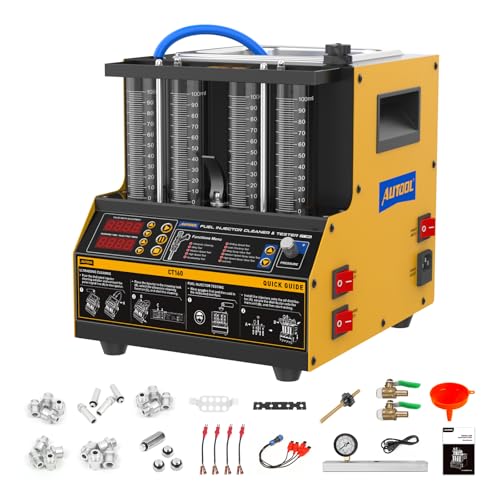
AUTOOL Fuel Injector Cleaner Tester Machine, Ultrasonic Fuel Injection Cleaner with Heating Function 4 Cylinder for 12V Fuel Injectors, Digital Display, 3 Cleaning Functions 10 Test Modes
【Ultrasonic Heating Cleaning】The fuel injector cleaner machine can be used to clean 4 injectors simultaneously with ultrasonic heating…
As an affiliate, we earn on qualifying purchases.
As an affiliate, we earn on qualifying purchases.
Conclusion
Cleaning your fuel injectors at home is simple and cost-effective. Just like Sarah, who saved hundreds by doing it herself, you can restore your engine’s performance without expensive repairs. Regular cleaning prevents clogs and improves fuel efficiency, giving your car a smoother ride. Follow these easy steps, stay consistent, and enjoy the benefits of a cleaner engine. With a little effort, you’ll keep your vehicle running like new—it’s worth it!

Red Line 60103 SI-1 Complete Fuel System Cleaner, Cleans and Prevents Corrosion in Fuel Systems, Cleans Injectors, Carburetors, Valve and Combustion Chamber Deposits – 15 Ounce (2 Pack)
DESIGNED TO EXCEED EXPECTATIONS: Red Line complete SI-1 fuel system cleaner treatment for cleaning and preventing corrosion in…
As an affiliate, we earn on qualifying purchases.
As an affiliate, we earn on qualifying purchases.
THIKPO Universal Fuel Injector Tester and Cleaner Tool Kit, DIY Cleaning Tool Kit, 8 Pulse Modes, 4 Wire Dual Channel for 2 Fuel Injectors, 8 Size Cleaning Adapters, 12V/5V Output Power
Upgraded Universal Fuel Injector Tester and Cleaner Tool Kit—Operates injectors individually to diagnose fuel delivery problems on petrol…
As an affiliate, we earn on qualifying purchases.
As an affiliate, we earn on qualifying purchases.