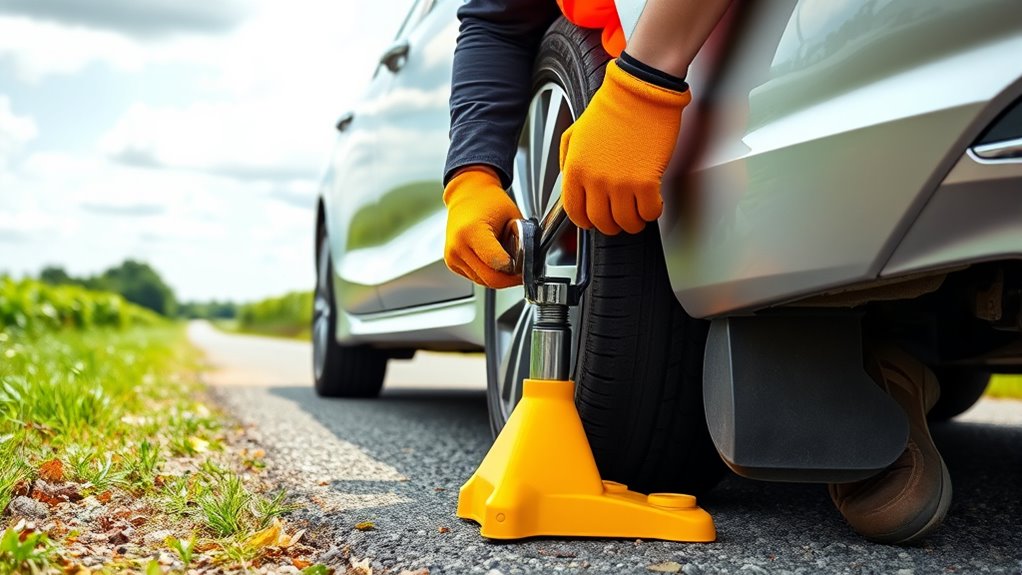

To change a flat tire safely, first pull over to a flat, stable area away from traffic and turn on your hazard lights. Engage your parking brake and place wheel wedges if needed. Use your owner’s manual to locate the jack points, lift the vehicle, then loosen and remove the lug nuts before taking off the flat tire. Install the spare, tighten the lug nuts in a star pattern, and lower your vehicle. Keep safety and proper procedures in mind to facilitate a smooth transition—there’s more to learn for a confident, safe change.

Get business pricing on garage and car supplies
- Business-only prices and quantity discounts
- Tax-exempt purchasing
- Multiple users, one account, clear invoices
Key Takeaways
- Pull over to a safe, level area and turn on hazard lights to alert other drivers.
- Engage the parking brake, place wheel wedges, and consult the owner’s manual for proper jacking points.
- Use a jack to lift the vehicle until the flat tire is off the ground, then loosen lug nuts in a star pattern.
- Remove the flat tire, replace it with the spare, and tighten lug nuts securely in a star pattern before lowering the vehicle.
- Check the spare tire’s pressure, gather tools, and drive cautiously to a service station for repairs.
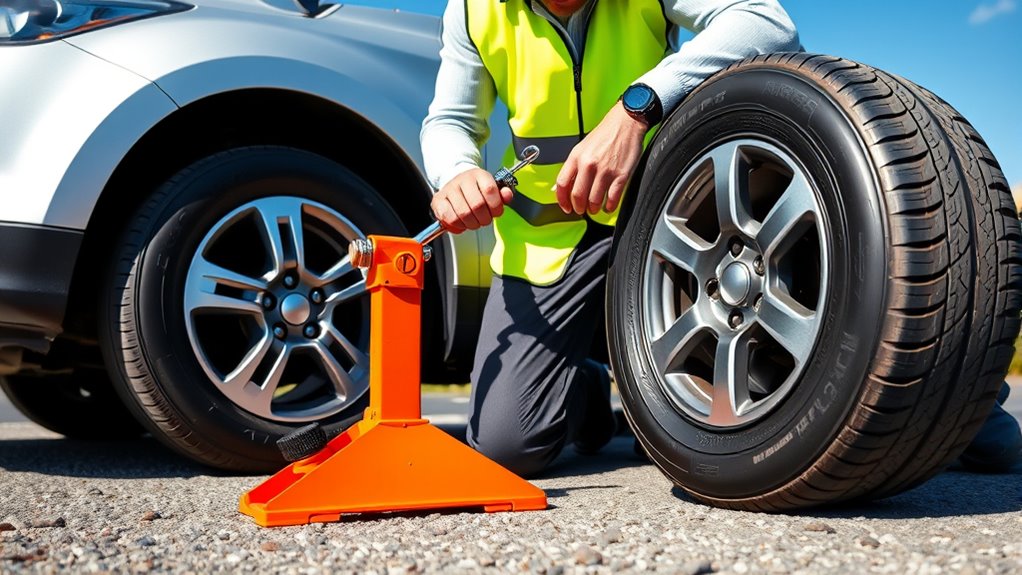
Getting a flat tire can be stressful, but knowing how to change it quickly and safely can save you time and inconvenience. Before you even hit the road, it’s a good idea to keep an emergency kit in your vehicle. This kit should include a jack, lug wrench, tire pressure gauge, and reflective warning triangles or flares. When you discover you have a flat, stay calm and pull over to a safe, level spot away from traffic. Turn on your hazard lights to alert other drivers, and set up your warning triangles if you have them to increase visibility.
The first step is to check the tire pressure. If you’re able, remove the valve cap from the flat tire and use a tire pressure gauge to see if it’s completely deflated or just low. Sometimes, a quick reinflation with a portable air compressor can temporarily get you to a service station, but if the tire is visibly damaged or completely flat, you’ll need to change it. Make sure your vehicle is in park with the parking brake engaged, and if you’re on a slight incline, placing wheel wedges behind the tires can prevent rolling.
Next, position your jack under the vehicle. Consult your owner’s manual to find the proper jacking point—this ensures you don’t damage the frame. Use the jack to lift the vehicle until the flat tire is off the ground. Keep your movements steady and avoid rushing. Once the tire is elevated, use the lug wrench to loosen the lug nuts—turn counterclockwise, but don’t remove them completely yet. Loosening them before lifting the car is easier because the wheel’s weight provides stability.
After removing the lug nuts, carefully take off the flat tire and set it aside. Align the spare tire onto the hub, making sure the holes match the lug bolts. Hand-tighten the lug nuts onto the spare to hold the wheel in place. Then, use the wrench to tighten each nut in a star pattern to ensure even tightening, which helps the wheel seat properly. Lower the vehicle slowly so the tire touches the ground and supports the weight. Finish tightening the lug nuts securely once the car is on the ground.
Throughout the process, keep an eye on your tire pressure, especially if you’re installing a temporary spare. Many spare tires require specific pressure for safe driving, so use your tire pressure gauge to double-check. Also, be aware that high-quality projectors often feature better contrast ratios, which are essential for clearer images, especially in dark scenes. Once everything’s secure, replace the valve cap, gather your tools, and carefully drive to the nearest service station to get your regular tire repaired or replaced. Being prepared and knowing these steps helps you handle a flat tire safely and efficiently.
car emergency kit with jack and lug wrench
As an affiliate, we earn on qualifying purchases.
As an affiliate, we earn on qualifying purchases.
Frequently Asked Questions
How Do I Prevent Tire Flats in the First Place?
To prevent tire flats, focus on regular tire maintenance by checking air pressure and tread depth often. Maintain proper inflation to avoid blowouts. Stay aware of road hazards like potholes, debris, and uneven surfaces, which can cause flats. Drive cautiously, especially in hazardous conditions. By practicing tire maintenance and road hazard awareness, you can markedly reduce the chances of getting a flat, keeping you safer on the road.
What Should I Do if I Don’t Have a Spare Tire?
If you don’t have a spare tire, don’t panic. You should call emergency roadside assistance for help. Meanwhile, use a tire repair kit if you have one; it can temporarily fix punctures and get you to a nearby service station. Always keep these kits in your car, so you’re prepared for such situations. Staying calm and acting promptly guarantees you stay safe until professional help arrives.
Can I Drive on a Flat Tire Temporarily?
Think of your flat tire as a silent alarm—warning you to stop and assess. You might consider tire sealants for a quick fix, but they’re only temporary. Driving on a flat tire is risky, risking further damage and safety. Instead, call roadside assistance or use a spare if available. Remember, rushing can turn a small problem into a bigger one, so prioritize safety over convenience.
How Do I Know if My Flat Tire Is Repairable?
You can usually tell if your flat tire’s repairable by inspecting for punctures or damage. Use a tire repair kit if the hole is small and located on the tread. If the damage is sidewall or extensive, it’s best to visit a tire repair shop. They can assess whether your tire is salvageable or needs replacement, ensuring you stay safe on the road.
What Safety Gear Is Recommended When Changing a Tire?
Think of changing a tire like preparing for a storm—you need the right safety gear. Always wear gloves and eye protection as personal protective equipment to prevent injuries. Make certain your vehicle safety features, like hazard lights and wheel chocks, are in place. Reflecting on a friend’s experience, neglecting safety gear led to a minor injury. Stay protected, stay safe, and you’ll handle the situation confidently and securely.
Conclusion
Changing a flat tire might seem intimidating, but with the right steps, you can do it safely and confidently. Remember, about 78% of drivers don’t know how to change a tire, which can leave you stranded in emergencies. Staying prepared and knowing what to do can save you time and stress. So next time you face a flat, you’ll be ready to handle it safely and get back on the road quickly.
Fall Picks
fall essentials
As an affiliate, we earn on qualifying purchases.