Using an OBD-II scanner lets you connect directly to your vehicle’s computer to diagnose issues yourself. You can access diagnostic trouble codes, check sensor performance, and monitor live data, helping you identify problems early, especially those related to emissions or misfiring. This tool allows you to see what’s causing the check engine light and decide if professional help is needed. Keep exploring to discover how you can keep your car running smoothly on your own.
Key Takeaways
- Connect the OBD-II scanner to your vehicle’s port, usually under the dashboard, to access the onboard diagnostic system.
- Retrieve and interpret diagnostic trouble codes (DTCs) to identify specific issues affecting your vehicle.
- Use live data monitoring to assess sensor readings, ensuring sensors like oxygen sensors and catalytic converters are functioning properly.
- Confirm sensor calibration status and check for irregularities that may cause incorrect readings or engine problems.
- Address identified issues promptly to prevent further damage, improve performance, and ensure emissions compliance.
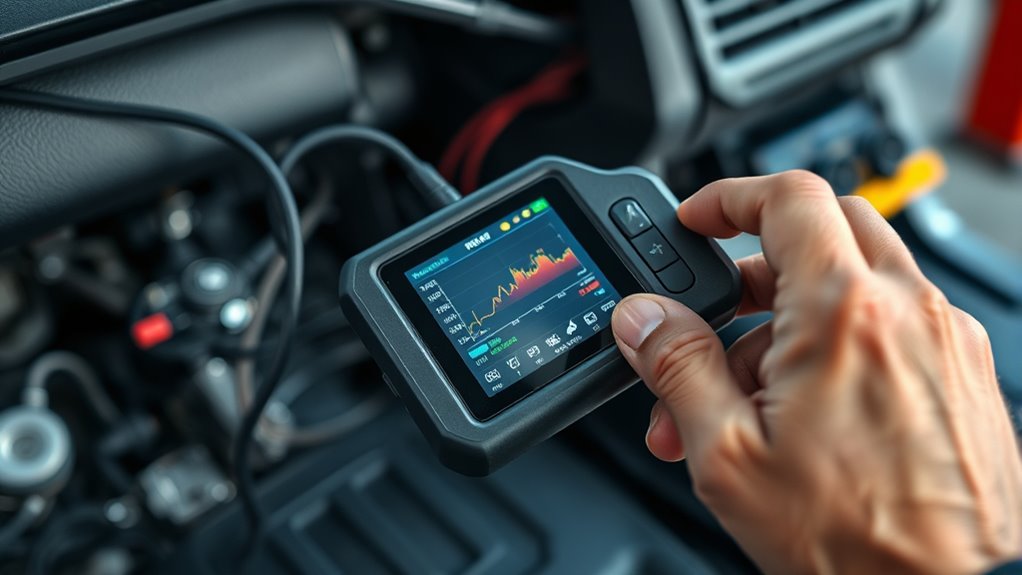
If your vehicle’s check engine light comes on, using an OBD-II scanner is a quick and effective way to diagnose the problem. This device connects to your car’s onboard computer and provides access to diagnostic trouble codes (DTCs) that pinpoint what’s causing the warning. Whether you’re dealing with emissions testing issues or sensor calibration problems, an OBD-II scanner helps you identify the root cause without expensive trips to the mechanic. It’s a handy tool for any car owner looking to understand their vehicle’s health and potentially save money.
One common reason for the check engine light is related to emissions testing components. Modern cars rely heavily on sensors to monitor exhaust gases and ensure emissions stay within legal limits. When these sensors detect irregularities, they send signals to your vehicle’s computer, triggering the light. An OBD-II scanner can reveal specific codes related to emissions, such as issues with the oxygen sensors or catalytic converter. Recognizing these codes allows you to decide whether you can handle simple repairs yourself or if professional help is needed. Remember, sometimes emissions-related issues are caused by sensor calibration errors, which occur when sensors aren’t correctly adjusted or are giving inaccurate readings. Using an OBD-II scanner, you can confirm if the sensors are functioning properly or if they need recalibration to guarantee accurate emissions testing.
Emissions-related issues often involve sensors that need calibration or replacement for accurate testing and performance.
Sensor calibration is vital for maintaining peak vehicle performance and passing emissions tests. If your sensors are out of calibration, your car might incorrectly measure parameters like oxygen levels, leading to faulty readings and potential engine problems. An OBD-II scanner not only identifies faulty sensors but can also guide you toward calibration issues by revealing specific error codes. Some advanced scanners offer live data monitoring, so you can see real-time sensor outputs and determine whether calibration adjustments are necessary. Correct sensor calibration ensures your vehicle runs efficiently, reduces emissions, and prevents future issues that could cause the check engine light to stay on. Additionally, advances in automated diagnostics are improving how quickly and accurately vehicle problems are identified, making it easier for owners to maintain their cars effectively.
Using an OBD-II scanner empowers you to take control of your vehicle’s diagnostics. Once you’ve retrieved the trouble codes, you can look up their meanings and decide on the appropriate course of action. For emissions testing-related problems, fixing sensor calibration issues or replacing faulty sensors can often resolve the problem without costly repairs. Regularly scanning your vehicle also helps catch problems early, preventing them from escalating into expensive repairs or failing emissions tests. With some basic knowledge and the right scanner, you’re equipped to troubleshoot and maintain your car’s health confidently, saving time, money, and unnecessary trips to the mechanic.

ANCEL AD310 Classic Enhanced Universal OBD II Scanner Car Engine Fault Code Reader CAN Diagnostic Scan Tool, Read and Clear Error Codes for 1996 or Newer OBD2 Protocol Vehicle (Black)
CEL Doctor: The ANCEL AD310 is one of the best-selling OBD II scanners on the market and is…
As an affiliate, we earn on qualifying purchases.
As an affiliate, we earn on qualifying purchases.
Frequently Asked Questions
Can I Use an OBD-II Scanner on Any Vehicle?
You might wonder if an OBD-II scanner works on any vehicle. Generally, these scanners are compatible with most cars manufactured after 1996, but vehicle compatibility can vary. Some scanners have limitations and may not access all systems or codes on certain models, especially older or specialized vehicles. Always check your scanner’s compatibility features and limitations before use to guarantee it effectively diagnoses your vehicle’s issues.
How Often Should I Scan My Car for Issues?
Thinking of your car like a health check-up, regular scans catch issues early. You should perform routine checks every 1,000 to 3,000 miles, or during maintenance scheduling. If you notice dashboard warning lights or strange sounds, scan promptly. Regular diagnostics help prevent costly repairs and keep your vehicle running smoothly. Make scanning part of your maintenance routine to stay ahead of potential problems and ensure safety on the road.
Do All OBD-II Scanners Provide the Same Features?
Not all OBD-II scanners offer the same features, so you should consider scanner compatibility before buying. Some models provide basic functions like reading trouble codes, while others include advanced features like live data, freeze frame, or emissions testing. Feature variations depend on the scanner’s quality and price. Make sure the scanner you choose is compatible with your vehicle and meets your diagnostic needs for the best results.
Can I Fix Car Problems Myself After Diagnosing With an OBD-II Scanner?
You can often handle basic DIY repairs after diagnosing your car with an OBD-II scanner, but serious issues might still need professional assistance. The scanner helps you identify problems, saving you time and money, but it doesn’t substitute expert knowledge for complex repairs. If you’re confident in your skills, you might fix minor issues yourself; otherwise, consulting a professional ensures safety and proper resolution.
Are There Risks of Damaging My Vehicle Using an OBD-II Scanner?
There are some risks when using an OBD-II scanner, especially if you’re unfamiliar with your vehicle’s electrical system and emission controls. You might accidentally disconnect sensors or alter settings, which can cause engine issues or trigger emission system errors. To avoid damage, follow the scanner’s instructions carefully, and consult a professional if you’re unsure. Proper use minimizes risks and helps you diagnose problems safely.
ANCEL AD310 Classic Enhanced Universal OBD II Scanner Car Engine Fault Code Reader CAN Diagnostic Scan Tool, Read and Clear Error Codes for 1996 or Newer OBD2 Protocol Vehicle (Black)
CEL Doctor: The ANCEL AD310 is one of the best-selling OBD II scanners on the market and is…
As an affiliate, we earn on qualifying purchases.
As an affiliate, we earn on qualifying purchases.
Conclusion
With an OBD-II scanner, you’re empowered to easily evaluate engine errors and enhance your car care. By breezing through basic diagnostics, you bypass costly repairs and boost your confidence behind the wheel. Remember, regular checks can prevent small issues from snowballing into serious setbacks. So, stay savvy, scan smartly, and keep your car cruising smoothly. Simple steps today guarantee a safer, smoother drive tomorrow—seize the scanner, solve the snags!

FOXWELL NT301 OBD2 Scanner Live Data Professional Mechanic OBDII Diagnostic Code Reader Tool for Check Engine Light
[Vehicle CEL Doctor] The NT301 obd2 scanner enables you to read DTCs, access to e-missions readiness status, turn…
As an affiliate, we earn on qualifying purchases.
As an affiliate, we earn on qualifying purchases.

Throttle Position Sensor (TPS) Adjustment and Test Tool, All adapters Version
This All-Adapters kit includes all 6 adapters, see pictures of included plugs
As an affiliate, we earn on qualifying purchases.
As an affiliate, we earn on qualifying purchases.