TL;DR
A report by InsideEVs explains three common electric-vehicle motor designs: permanent-magnet synchronous, induction and electrically excited synchronous motors. They differ in how they create the rotor’s magnetic field, shaping efficiency, performance, materials needs and the way automakers configure all-wheel-drive systems.
An InsideEVs report explains how permanent-magnet, induction and electrically excited motors produce motion in electric vehicles, and why automakers use different designs or pair them in one vehicle. The choice affects efficiency, power, packaging and materials, so the motor type can help explain how an EV balances everyday driving with traction and performance.

Get business pricing on garage and car supplies
- Business-only prices and quantity discounts
- Tax-exempt purchasing
- Multiple users, one account, clear invoices
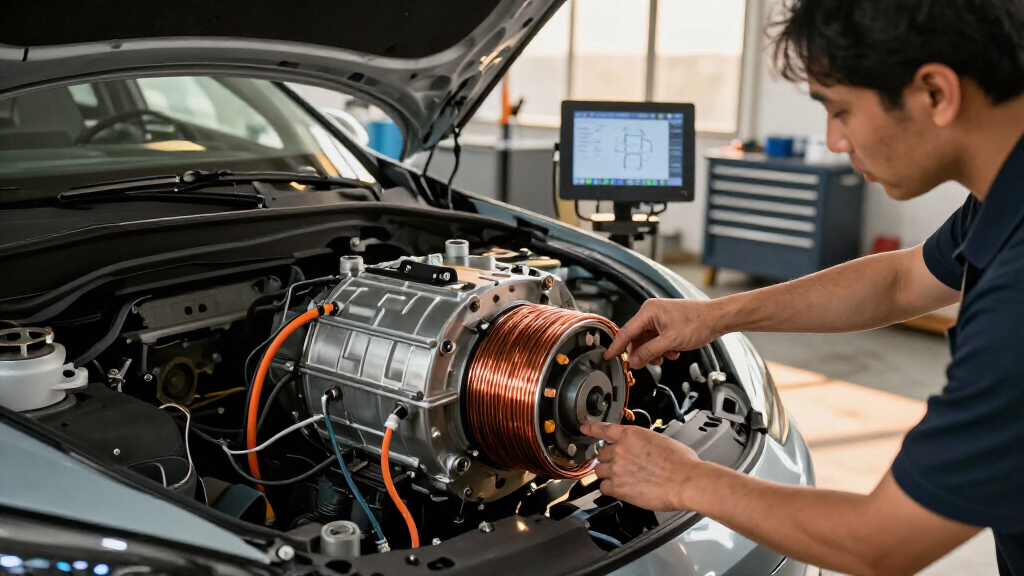
All three designs use a stator, the stationary outer part, and a rotor, the rotating inner part connected to the drive shaft. A battery supplies direct current, and an inverter converts it into controlled alternating current for the stator coils. Their changing magnetic field pulls the rotor around; gearing then transfers power toward the wheels.
A permanent-magnet synchronous motor uses magnets attached to or embedded in its rotor. Because the rotor does not need electricity to maintain its magnetic field, this design avoids the losses involved in powering rotor windings. The report describes these motors as efficient and capable of delivering substantial power from a compact package. Many automotive versions use rare-earth materials, although the term “permanent magnet” does not itself mean a motor must contain rare earths.
An induction motor creates a magnetic field in conductive rotor bars using the stator’s moving field. Its rotor must turn slightly slower than that field—a difference called “slip”—to induce current and produce torque. The report says the design avoids permanent magnets and can spin with little drag when unpowered, but the induced current creates heat and reduces efficiency. An electrically excited synchronous motor instead uses electrically powered rotor coils to make an adjustable electromagnet. It avoids permanent magnets but adds rotor windings, a power supply and electricity use.
How Motor Choice Shapes an EV
Motor design is one part of the trade-off behind an EV’s energy use, power delivery and material requirements. Permanent-magnet motors can avoid the energy losses of powering rotor coils, while induction motors offer a way to add propulsion without permanent magnets and with little drag when inactive. Electrically excited motors give engineers another way to adjust the rotor’s magnetic field as speed and load change, but require electrical power and extra components.
These differences also help explain why a vehicle may have more than one motor type. In the report’s example, Audi’s Q6 E-Tron Quattro pairs a permanent-magnet rear motor for regular propulsion with a front induction motor that can add power when needed. The front motor can spin with little drag when it is not providing propulsion. That configuration illustrates how motor designs can complement each other rather than one type serving every job.
Products Worth Considering

Vantrue N4 Pro S 4K 3-Channel Dash Cam with Triple STARVIS 2 Sensors

DEWALT 20V MAX Brushless Drill and Impact Driver Combo Kit (DCK277D2)

VIOFO A229 Pro 4K HDR Dash Cam with Dual STARVIS 2 Sensors (Front & Rear)
As an affiliate, we earn on qualifying purchases.
Three Ways to Create Rotor Magnetism
The key distinction in the InsideEVs explanation is where the rotor gets its magnetic field. Permanent-magnet motors carry their magnetic source on the rotor. Induction motors create a rotor field through current induced in conductive bars, while electrically excited motors send electricity to rotor coils. All rely on magnetism, but they generate it differently.
The report cites a range of manufacturers and applications. It says BMW uses electrically excited motors in its latest sixth-generation EV powertrains and Renault uses the approach in vehicles including the Renault 5 E-Tech; Renault points to reduced reliance on rare earths and magnet suppliers. The report also describes induction motors as a common choice for a secondary axle in some all-wheel-drive EVs, alongside a permanent-magnet motor on the main drive axle. These are examples, not a claim that every model from those manufacturers uses the same configuration.
“The biggest difference is surprisingly easy to understand: where the rotor (the spinning part) gets its magnetism.”
— InsideEVs report
Model Details Still Matter
The source explains broad motor designs and gives selected vehicle examples, but it does not provide a model-by-model comparison of efficiency, output, cost or driving range. Actual performance depends on the motor’s engineering and how it is controlled and paired with the rest of the powertrain; the motor category alone does not establish how one vehicle will compare with another.
The report also does not quantify how much energy a given design uses in a particular driving cycle, or how material sourcing affects the price of a specific vehicle. Its statements about manufacturers’ choices describe the examples cited, not a universal rule for every current or future EV.
Check the Specific Powertrain
For buyers comparing EVs, the practical next step is to check the specific model’s motor and drivetrain configuration in its technical specifications. All-wheel-drive versions may use different motor combinations from rear-wheel-drive versions, and manufacturers can change designs between generations. A motor label alone cannot establish a vehicle’s efficiency or performance; published vehicle specifications and independent tests provide the relevant comparisons.
The InsideEVs report offers a framework for reading those details: identify whether the rotor uses permanent magnets, induced current or electrically powered coils, then consider how the motor is used in the vehicle. No additional product announcement or policy change is identified in the supplied material.
Key Questions
What are the three EV motor types covered in the report?
The report covers permanent-magnet synchronous motors, induction motors and electrically excited synchronous motors. They differ in how the rotor gets its magnetic field.
Why do some EVs use permanent-magnet motors?
The rotor’s magnets provide its magnetic field without needing an electrical supply to maintain it. The report says this can avoid losses associated with powering rotor windings and can support an efficient, compact motor. Many automotive permanent magnets use rare-earth materials, but not all permanent magnets must do so.
What does “slip” mean in an induction motor?
Slip is the speed difference between the stator’s rotating magnetic field and the rotor. The difference allows current to be induced in the rotor bars; if the rotor matched the field’s speed, induction and torque would disappear.
Why might an EV combine different motor types?
A manufacturer can use one motor for regular propulsion and another to add power or traction when needed. The report describes the Audi Q6 E-Tron Quattro as pairing a permanent-magnet rear motor with a front induction motor.
Source: insideevs.com