Choose an automotive repair tool kit that fits your vehicle and the jobs you plan to do, then check, organize, and use its tools safely. This guide is for beginners handling basic maintenance and simple repairs; it takes about 30–60 minutes to select and prepare a kit. Work on a more complex repair only if you have the right instructions, tools, and experience.

Get business pricing on garage and car supplies
- Business-only prices and quantity discounts
- Tax-exempt purchasing
- Multiple users, one account, clear invoices

Prostormer 240-Piece Mechanic Tool Set with Aluminum Tool Box
- ✔ Piece count: 240
- ✔ Measurement standard: Metric and SAE
- ✔ Socket drive sizes: 1/4-inch, 3/8-inch, and 1/2-inch
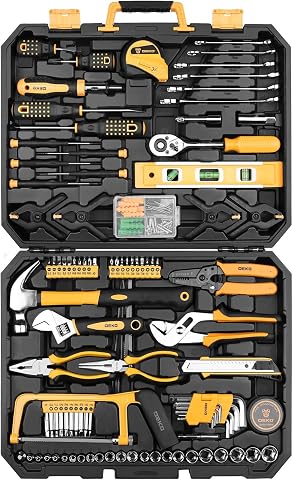
DEKOPRO 228-Piece Socket Wrench and Hand Tool Set with Storage Case
- ✔ Piece count: 228
- ✔ Socket sizes: 1/4-inch and 3/8-inch metric
- ✔ Ratchet: 72-tooth, 5-degree switch

GrenPRO 239-Piece Tool Set with Portable Tool Box
- ✔ Piece count: 239
- ✔ Tool material: Heat-treated polished steel
- ✔ Handle material: TPR
Difficulty: Beginner | Time: 30–60 minutes to choose and prepare a kit; repair time varies
What You’ll Need
Tools & Materials:
- Vehicle owner’s manual
- Automotive repair tool kit or a list of tools to compare
- Safety glasses and mechanic’s gloves
- Flashlight
- A stable, level work area
Knowledge:
- Ability to identify your vehicle’s make, model, year, and engine
- Ability to follow the owner’s manual and tool instructions
Check your owner’s manual for vehicle-specific fastener types, lifting points, and safety warnings. A general tool kit does not replace special service tools or a torque wrench where the manufacturer specifies a tightening value. Never work under a vehicle supported only by a jack.
Prostormer 240-Piece Mechanic Tool Set with Aluminum Tool Box
For a buyer who wants one kit to cover a wider range of automotive fasteners, Prostormer is the most complete match in this lineup. It includes SAE and metric tools plus 1/4-inch, 3/8-inch, and 1/2-inch drive sockets, giving it broader stated coverage than DEKOPRO and GrenPRO, whose socket selections are metric and limited to two drive sizes. That flexibility can reduce the need to immediately supplement the set when a repair involves different standards or a larger socket drive.The assortment also includes ratchets, wrenches, pliers, screwdrivers, bits, and hex keys, so it can handle varied hand-tool tasks around a vehicle as well as general fixes. The aluminum case provides a more substantial storage shell than the plastic and blow-molded cases supplied with the other picks, which may suit a kit that will be moved or stored with care. However, the full set weighs 19.5 pounds, making it the heaviest option here. Its individual socket and wrench sizes are not specified, so the broader standards do not guarantee coverage for a particular repair. Compared with the more compact DEKOPRO, this is the better breadth-first choice, but less convenient to carry frequently.
Pros:
- Includes both SAE and metric tools.
- Provides 1/4-inch, 3/8-inch, and 1/2-inch drive sockets.
- Combines sockets, wrenches, ratchets, pliers, screwdrivers, and bits.
- Aluminum case keeps the assortment organized for storage and transport.
Cons:
- At 19.5 pounds, it is the heaviest kit in this comparison.
- The description does not list individual socket or wrench sizes.
Best for: Home mechanics who want both SAE and metric tools and value three socket drive sizes in one organized kit.
Not ideal for: Anyone prioritizing easy carrying, or buyers who need confirmation that specific socket sizes are included.
Bottom line: We rank Prostormer first for its broadest stated automotive coverage, provided its weight and unspecified size list suit your needs.
“We rank Prostormer first for its broadest stated automotive coverage, provided its weight and unspecified size list suit your needs.”
DEKOPRO 228-Piece Socket Wrench and Hand Tool Set with Storage Case
DEKOPRO is the practical middle ground when a basic metric toolkit matters more than broad socket standards. Its listed 1/4-inch and 3/8-inch metric sockets, 72-tooth ratchet, wrenches, and pliers cover a familiar range of hand-tool tasks. The ratchet’s 5-degree switch angle may help in tighter spaces where a larger swing is difficult, a useful detail for working around crowded components. Against Prostormer, though, the metric-only socket listing is a meaningful limitation: it does not offer the stated SAE coverage or 1/2-inch drive sockets.At 12.76 pounds, this is the lightest kit in the group, about a pound lighter than GrenPRO and substantially lighter than Prostormer. That makes it a more sensible pick to carry between a storage area and a vehicle. Its blow-molded case holds the assortment in one place, and the set also includes a hammer, tape measure, and screwdriver bits for jobs beyond the engine bay. The tradeoff is that its emphasis is basic repairs and DIY, not a comprehensive mechanic’s inventory. The description includes a batteries-required note, but does not identify which item uses them; buyers should confirm that detail if it matters to their intended use.
Pros:
- Lightest listed weight among these three kits.
- 72-tooth ratchet has a 5-degree switch angle for restricted spaces.
- Includes metric sockets, wrenches, pliers, a hammer, and tape measure.
- Blow-molded case keeps tools together for storage and carrying.
Cons:
- Socket selection is listed as metric only.
- No 1/2-inch drive sockets are specified.
- The description does not clarify which included item requires batteries.
Best for: DIY vehicle owners who primarily work with metric fasteners and want a lighter kit for common repairs and general home tasks.
Not ideal for: Mechanics needing SAE sockets, a 1/2-inch drive, or documented coverage for a specific repair.
Bottom line: We place DEKOPRO second for portability and useful basic metric coverage, with clear limits for buyers who need broader automotive compatibility.
“We place DEKOPRO second for portability and useful basic metric coverage, with clear limits for buyers who need broader automotive compatibility.”
GrenPRO 239-Piece Tool Set with Portable Tool Box
GrenPRO makes the most sense when automotive tools are only part of the job. Its metric 1/4-inch and 3/8-inch sockets, 72-tooth ratchet, wrenches, pliers, bits, and extensions provide a basic mechanic assortment. But the set also includes a folding work light, level, spring clamps, hacksaw, utility knife, and tape measure. These extras can help with workshop and household tasks; they also mean the kit is less tightly focused on car repair than Prostormer’s broader SAE-and-metric socket selection.Its plastic toolbox has recessed slots for organizing the tools, while TPR handles are described as offering a comfortable, non-slip grip. At 13.67 pounds, GrenPRO sits between DEKOPRO and Prostormer in weight, so portability is reasonable for occasional moving but not effortless. The metric-only sockets and two specified drive sizes constrain its appeal for buyers seeking broad vehicle coverage. As with DEKOPRO, the listed socket sizes do not establish whether a particular fastener is covered. Compared with DEKOPRO, GrenPRO brings more general-purpose extras, but carries nearly a pound more; choose it when those extras will see use, not simply because the piece count is higher.
Pros:
- Includes metric sockets, ratchet, wrenches, pliers, bits, and extensions.
- Adds a folding work light and household repair tools such as a hacksaw and level.
- TPR handles are described as providing a non-slip grip.
- Recessed slots in the toolbox help organize the assortment.
Cons:
- Socket assortment is specified as metric and limited to 1/4-inch and 3/8-inch sizes.
- At 13.67 pounds, it weighs more than DEKOPRO.
- Its broad household extras make it less specialized for automotive work.
Best for: A DIY owner who wants a basic metric automotive set alongside tools for household fixes and small workshop projects.
Not ideal for: Buyers seeking a dedicated, broadly compatible mechanic kit or the lightest set to carry.
Bottom line: We rank GrenPRO third for automotive focus, while recommending it when the household and workshop extras are part of the plan.
“We rank GrenPRO third for automotive focus, while recommending it when the household and workshop extras are part of the plan.”
As an Amazon Associate we earn from qualifying purchases.
Before You Start
Decide which jobs you want to handle, such as replacing wiper blades, tightening a battery terminal, or changing an air filter. Keep work within your skill level. Park on firm, level ground, switch off the engine, remove the key, and let hot parts cool before opening the hood. For roadside emergencies, prioritize visibility and personal safety; move away from traffic and call for help if the location is unsafe.
Step-by-Step Instructions
Step 1: List the jobs you plan to do
Write down the maintenance and simple repairs you expect to perform. Check the owner’s manual or a vehicle-specific repair guide for the fastener types and any special tools those jobs require. Use the list to compare kits; do not choose by piece count alone.
Tip:For work that requires lifting, brake service, or high tightening accuracy, confirm the required equipment and instructions before buying a general kit.
Check: You have a short list of intended jobs and the tools each job calls for.
Step 2: Match the kit to your vehicle
Compare the kit’s sockets, ratchets, extensions, and bits with the fasteners used on your vehicle. Check whether it includes both metric and SAE sizes if your jobs call for both. Look for clear size markings, a sturdy case, and tools made for automotive use. Confirm that the kit contains the sizes you need rather than assuming a large set will cover them.
Tip:Many vehicles use metric fasteners, but the correct set depends on the vehicle and repair. Verify sizes in vehicle-specific instructions.
Check: The kit covers the listed jobs, and its size markings are readable.
Step 3: Add safety and job-specific equipment
Gather safety glasses, gloves, a flashlight, and any job-specific items your manual calls for. Add a torque wrench if the repair instructions specify a torque value, and use properly rated jack stands and wheel chocks for work that requires lifting. Buy missing items separately instead of improvising with a mismatched tool.
Tip:Never substitute a breaker bar or ratchet for a torque wrench when a specified torque matters.
Check: You have the protective gear and every special tool needed for the selected jobs.
Step 4: Inspect and organize the tools
Open the case and check each tool for cracks, rust, loose parts, or damaged markings. Confirm that sockets fit securely on the ratchet and that the ratchet changes direction smoothly. Arrange tools in labeled slots and note any missing or damaged pieces before beginning a repair.
Tip:Do not use a cracked socket, a slipping ratchet, or a tool with a damaged handle; it can slip and injure you or damage a fastener.
Check: Tools are accounted for, undamaged, and stored where their sizes can be identified.
Step 5: Set up a safe work area
Park on a firm, level surface, switch off the engine, remove the key, and let hot components cool. Apply the parking brake. Put on eye protection and gloves suited to the task, and keep the case, work light, and parts within reach without placing them near belts, fans, or hot surfaces.
Tip:If the job requires raising the vehicle, follow the vehicle’s lifting points and support it with rated jack stands on stable ground. Do not go underneath a vehicle held up only by a jack.
Check: The vehicle is secured, the work area is lit and stable, and protective gear is on.
Step 6: Select the correct tool and fit it fully
Choose the exact socket or bit size specified for the fastener. Push it fully onto the ratchet or driver, then seat it squarely on the fastener. Pull gently to confirm it does not wobble or slip before applying force.
Tip:A loose-fitting tool can round a fastener head. Stop and check the size if the tool rocks or starts to slip.
Check: The tool sits squarely and securely on the fastener before you turn it.
Step 7: Turn the fastener with controlled force
Set the ratchet direction before turning. Apply steady pressure while keeping the tool aligned with the fastener. Stop if the tool slips, the fastener resists unexpectedly, or a part begins to move in a way the repair instructions do not describe. Use a torque wrench for final tightening when the instructions specify a torque value.
Tip:Do not add a pipe or other extension to a tool unless its instructions allow it; extra force can break tools or damage parts.
Check: The fastener moves as directed, its head remains in good condition, and any specified final torque is applied with the correct tool.
Step 8: Return tools and check the work area
Count the tools and return each one to its labeled case slot. Check the engine bay or work area for loose tools, rags, and removed fasteners before starting the vehicle. Store the kit in a dry, secure place and replace missing or damaged tools before the next job.
Tip:Keep a simple inventory in the case so you can spot a missing tool before driving.
Check: The case is complete, the work area is clear, and no tool or loose item remains near moving or hot parts.
Common Mistakes to Avoid
- Choosing a kit by its advertised piece count. — Compare the included sizes and tool types with your vehicle and intended jobs.
- Using a socket or bit that almost fits. — Match the size to the repair instructions and stop if the tool wobbles or slips.
- Using a general tool kit for a job that needs specialized equipment. — Check the manual or repair guide first; obtain the specified tools or have a qualified technician do the job.
- Working under a vehicle supported only by a jack. — Use the correct lifting points, rated jack stands, and wheel chocks, following the vehicle and equipment instructions.
Troubleshooting
Problem: A socket slips or will not stay on the fastener.
Solution: Stop turning. Check that the socket is the correct size, fully seated, and undamaged. Replace worn or mismatched parts before continuing.
Problem: The fastener will not loosen with steady pressure.
Solution: Stop before the tool slips or the fastener rounds. Check the repair instructions for the correct direction and method; use an approved penetrating product only when suitable for that location. Seek qualified help if it remains stuck.
Problem: The kit is missing a size or special tool needed for the job.
Solution: Pause the repair and obtain the correct tool. Do not substitute a near-fit size or use an unsuitable tool to force the fastener.
What Success Looks Like
You have a kit matched to your planned jobs, can identify and inspect its tools, and can select a correctly fitting tool for each fastener. After a repair, fasteners are handled as the vehicle instructions specify, the work area is clear, and every tool is back in the case. If a job calls for equipment or expertise you lack, success means stopping and getting the right help before damage or injury occurs.
Next Steps
Keep the owner’s manual and any vehicle-specific repair instructions with your maintenance records. After each job, wipe tools clean, dry them before storage, and replace damaged or missing pieces. Review the kit when you take on a new repair so you can add the required tools before starting. Arrange professional service for jobs beyond your training or equipment.
Frequently Asked Questions
What should a basic automotive repair tool kit include?
Choose sockets and a ratchet, extensions, screwdrivers or bits, and any other tools required by your planned jobs. Add safety glasses, gloves, and a work light. Check the vehicle-specific instructions for missing sizes and special equipment.
Do I need metric and SAE sockets?
Use the measurement system required by your vehicle and repair. Check the fastener sizes before buying; a mixed set can be useful when your planned jobs call for both systems.
Can I use a standard household tool kit on a car?
Some hand tools may work for simple tasks, but household kits may lack the correct socket sizes, fit, or durability. Match the tools to the automotive job and use automotive-rated equipment where specified.
When do I need a torque wrench?
Use one when the repair instructions give a torque value, especially where correct clamping force matters. Set and use it according to its instructions, and do not use a regular ratchet as a substitute for the final torque check.