
TL;DR

Get business pricing on garage and car supplies
- Business-only prices and quantity discounts
- Tax-exempt purchasing
- Multiple users, one account, clear invoices
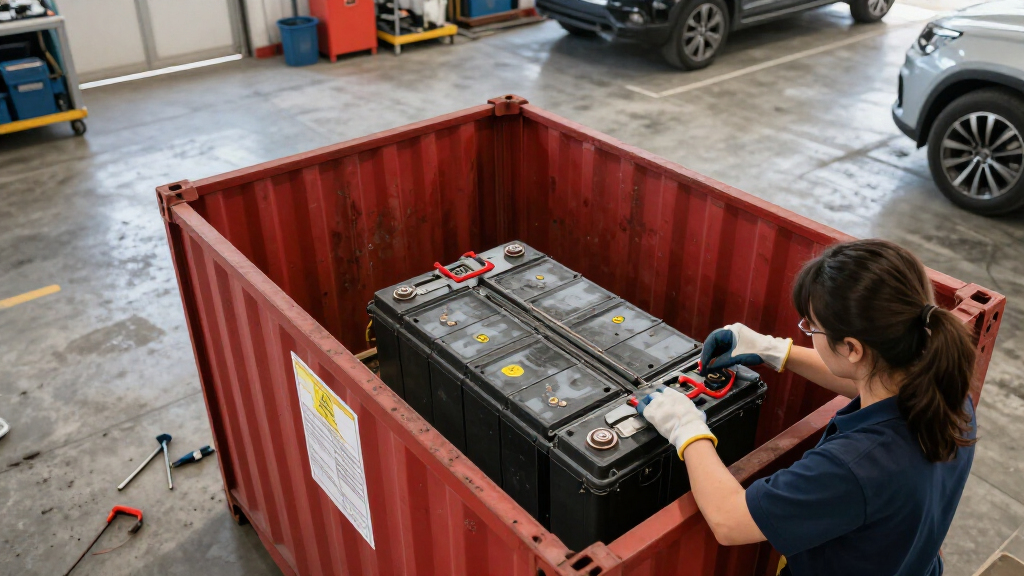
Renewance adopted Obexion AG reusable, stackable containers from DGeo to consolidate shipments of damaged, defective or recalled batteries. The company says the purpose-built packaging lets it handle higher volumes at reduced risk, though the available report gives no quantified cost, safety or time results.
Renewance, which manages end-of-life electric-vehicle and energy-storage batteries, has adopted Obexion AG reusable containers to ship multiple damaged, defective or recalled batteries together. A case study says the purpose-built packaging allows the company to consolidate shipments, addressing the cost and handling demands of a one-battery-per-container approach while managing dangerous goods.
The case study says damaged, defective or recalled batteries—described as DDR batteries—are classified as dangerous goods. It characterizes conventional shipping practice as generally requiring one battery per container, a constraint that can add transportation expense and handling time when a company is moving batteries at scale. Renewance works with end-of-life batteries from electric vehicles and energy-storage systems, where managing multiple units is part of its operations.
Renewance selected Obexion AG, a reusable, stackable container from DGeo that the report describes as built specifically to transport multiple DDR batteries. The company says the design lets it combine batteries into consolidated shipments rather than relying on separate containers for each unit. The source does not detail the container’s technical specifications, capacity, testing standards or the precise operating procedures used for loading and transport.
Sterling Picton, who leads solutions development for end-of-life projects at Renewance, said the container was designed for the application and supports higher-volume handling. The case study presents the change as a packaging and logistics improvement, but supplies no before-and-after figures for shipping costs, delivery times, incident rates or the number of batteries moved. The report was sponsored by Labelmaster, a company that provides dangerous-goods compliance products and services.
Consolidating Battery Shipments
For companies handling end-of-life batteries, packaging choices affect how many units can move in a shipment and how much handling each unit requires. Renewance’s adoption of a container intended for multiple DDR batteries shows one operational response to the limits of individual-container shipping. If the approach performs as described, consolidation could reduce the number of separate packages and associated handling steps.
The safety implications require careful qualification. Damaged batteries can present transport hazards, and the source says the Obexion AG container is intended to reduce transportation risks. It does not publish independent test results or incident data that would establish how much risk is reduced. The reported change is relevant to logistics planning, but it is not evidence that dangerous-goods requirements have been waived or that every damaged battery can be shipped in the same configuration.
Products Worth Considering

NOCO Boost GB70 2000A 12V Lithium Jump Starter

NOCO Boost GB250 5250A 12V Lithium Jump Starter

Milwaukee M18 18V Cordless 4-Tool Combo Kit with Hammer Drill, Reciprocating Saw, Impact Driver, Work Light, Batteries, Charger, and Case
As an affiliate, we earn on qualifying purchases.
Why DDR Battery Shipping Is Different
DDR batteries are not treated in the source as ordinary freight: they are classified as dangerous goods. Their condition can make packaging and handling requirements more demanding than for batteries being shipped in normal service. The case study says this commonly means one battery per container, creating a practical challenge for businesses managing end-of-life batteries at scale.
Renewance’s work covers batteries from both electric vehicles and energy-storage systems. The report frames Obexion AG as a purpose-built alternative to the packaging arrangement that had increased the company’s costs and handling time. It does not identify the locations, routes, shipment dates or regulatory jurisdictions involved, so the account should be read as a company case study rather than a full technical or regulatory evaluation.
““It’s a more advanced product, designed for this specific application.””
— Sterling Picton, Renewance’s solutions development lead for end-of-life projects
Results Still Need Quantification
The case study does not provide measured savings, shipment volumes, handling-time comparisons or safety records before and after the packaging change. It also does not describe the container’s capacity, materials, performance tests or which specific battery conditions and shipment configurations it is approved for. Those details would be needed to compare the approach with other compliant packaging options.
The source attributes the reduced-risk assessment to Renewance and does not include independent verification. It is also unclear how broadly the company has adopted the containers, whether the approach applies across all of its projects, or what regulations and route-specific requirements governed the shipments. The report’s sponsorship by Labelmaster is relevant to its framing; the material provided does not include a separate regulator or carrier assessment.
More Operating Data Needed
The case study describes Renewance’s packaging change but does not announce a future rollout, a planned regulatory review or a next milestone. The company’s next reported step is not specified. Further information on shipment volume, costs and handling time, along with testing and safety data, would help establish the practical scale of the change and whether its reported advantages hold across different battery types and transport conditions.
Until those details are available, the confirmed development is that Renewance has adopted a reusable, stackable container designed for multiple DDR batteries. Readers should treat claims about lower risk and improved operating efficiency as the company’s assessment, not as quantified outcomes established by the information in the case study.
Key Questions
What changed in Renewance’s battery-shipping approach?
Renewance adopted Obexion AG reusable, stackable containers designed to hold multiple damaged, defective or recalled batteries, allowing it to consolidate shipments.
What are DDR batteries?
DDR refers to damaged, defective or recalled batteries. The case study describes them as dangerous goods that require specialized care during shipping.
Who makes the Obexion AG container?
The case study identifies DGeo as the maker of the Obexion AG container.
How much money or time will the containers save?
The report does not provide before-and-after cost or time figures. It says the prior one-battery-per-container approach increased cost and handling time, but does not quantify the effect of the new packaging.
Has the claimed safety improvement been independently verified?
The source quotes a Renewance representative saying the container enables higher-volume handling at reduced risk, but gives no independent test results or incident data to quantify that claim.
Source: rss