TL;DR
Inverted has converted a 1967 Porsche 912 into an electric daily driver with a 300-horsepower rear motor and a 62-kWh battery split between the front and rear. The company claims about 250 miles of range, 75-kW DC fast charging and a 0-to-60-mph time of four seconds; those figures have not been independently verified in the supplied reporting.
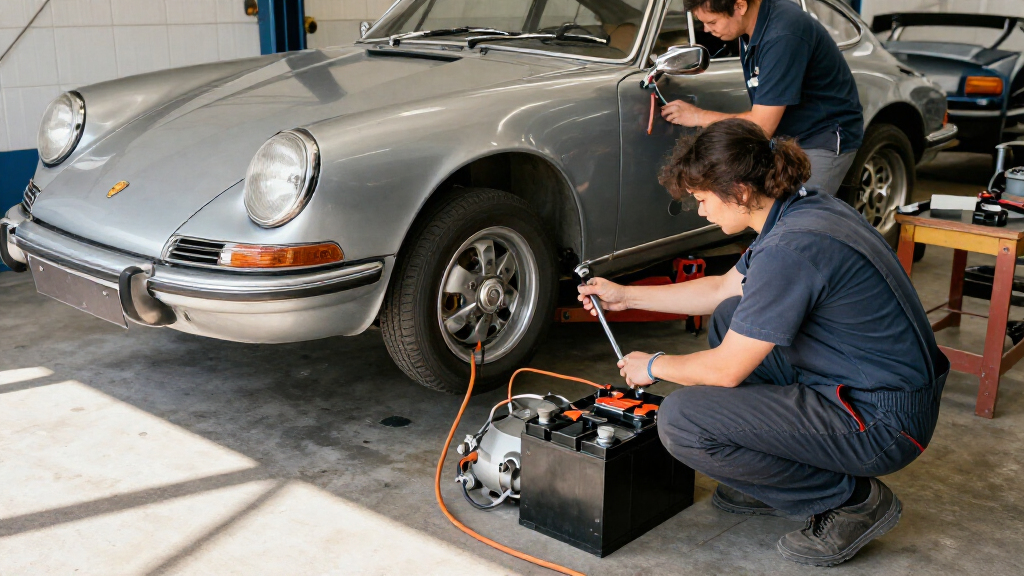
EV-conversion company Inverted has electrified a 1967 Porsche 912 with a 300-horsepower motor and a 62-kWh battery divided between the front and rear of the car. The layout is intended to improve weight distribution while giving the classic Porsche substantially more power than its original four-cylinder engine.

Get business pricing on garage and car supplies
- Business-only prices and quantity discounts
- Tax-exempt purchasing
- Multiple users, one account, clear invoices
The conversion uses a rear-mounted electric motor and a 62-kWh battery pack. Instead of locating all the battery weight at the back, Inverted split the pack: one section sits where the original engine was, and another is mounted under the hood. The company says that arrangement gives the converted car better weight balance than the original 912.
Inverted claims the car can travel around 250 miles per charge, accept DC fast charging at up to 75 kW, and accelerate from zero to 60 mph in four seconds. The report does not provide independent test results or specify the conditions behind those estimates. The conversion is presented as a daily driver rather than a long-distance touring car.
The project also changes the cabin while retaining vintage styling. Its gauges have been adapted for electric operation: the central tachometer is replaced by a power-percentage display, and the fuel gauge now indicates battery charge. According to the report, this was the third powertrain in the particular car. Its owner had previously fitted a more powerful 911 engine before commissioning Inverted to build an electric setup intended to suit daily use.
A Different Way to Package EV Power
The conversion illustrates one of the main engineering challenges in electrifying a classic car: adding a sizable battery without concentrating too much mass in one area. In a rear-engined Porsche, placing the entire pack behind the cabin could further load the rear axle. Inverted’s split-pack approach is meant to distribute that mass between the ends of the car, while keeping the motor at the rear.
It also changes the car’s performance profile. The source compares the claimed four-second 0-to-60-mph time with about 13 seconds for a stock 912, whose original engine made roughly 90 horsepower. That comparison is based on figures in the report, not a published test of this specific converted car. The result shows how an EV swap can preserve a classic body and interior character while substantially changing power delivery and acceleration.
Products Worth Considering

Chemical Guys 14-Piece Arsenal Builder Car Wash Kit with Foam Blaster

Chemical Guys TORQX Random Orbital Polisher Kit, 9-Piece

NOCO Boost X GBX45 12V Lithium Jump Starter, 1,250A
As an affiliate, we earn on qualifying purchases.
From Original Engine to Electric
The Porsche 912 was originally sold with a four-cylinder engine, while this particular example had already been modified with a 911 engine before the electric conversion. The owner then approached Inverted for a powertrain better suited, according to the report, to everyday driving.
Inverted has worked on electric powertrain conversions for classic Range Rovers and also offers bespoke projects for customers’ vehicles. The 912 is one example of that custom work. The company’s conversion leaves the car’s exterior in a form described by the report as visually similar to a standard 912, while changing its powertrain and adapting its interior instruments.
“The company says the converted 912 has around 250 miles of range.”
— Inverted, as reported by InsideEVs
Performance Figures Need Testing
The reported range, charging rate and acceleration are attributed to Inverted, and the source material does not include independent verification, test conditions or details about how the range estimate was measured. It also does not identify the battery chemistry, the exact split between the front and rear sections, or the finished car’s weight.
The report does not state the conversion’s price, whether Inverted plans to build more 912s using this layout, or whether the car has completed any published road or track testing. Its account of the owner’s goals and the earlier engine swap comes through the reporting, rather than a direct statement from the owner in the supplied material.
Further Build Details Await
The supplied report does not announce a delivery date, production plan or follow-up test for the converted 912. The next useful details would be independent verification of its range and acceleration, along with information about the battery’s placement, final vehicle weight and conversion cost. Until those are published, the stated figures should be treated as Inverted’s claims about this individual car, not independently confirmed performance results.
Key Questions
How much power does the electric Porsche 912 have?
Inverted says its rear-mounted electric motor produces 300 horsepower. The supplied report does not include independent dyno testing.
Why is the battery pack split?
One part of the 62-kWh pack is mounted at the rear and the other under the hood. Inverted says distributing the battery this way improves the car’s weight balance compared with placing the pack entirely at the rear.
What range does Inverted claim?
Inverted claims the converted 912 can travel around 250 miles per charge. The source does not provide independent range results or explain the test conditions behind that estimate.
How quickly can the car charge?
The report says the car can DC fast charge at up to 75 kW. It does not give a charging-time estimate or details about the charging curve.
Is this a standard production Porsche conversion?
No. The report describes it as a bespoke customer conversion by Inverted. It does not say that Porsche built or sells the electric 912.
Source: insideevs.com