The cost differences between dealership and independent repairs largely depend on labor rates, parts used, and warranty coverage. Dealerships often charge higher hourly rates and use OEM parts, which can increase costs but offer better quality and warranty protection. Independent shops typically have lower labor rates and may use aftermarket parts, reducing expenses. Your choice depends on your vehicle’s age, repair needs, and long-term plans—find out more to make an informed decision.
Key Takeaways
- Dealerships usually have higher labor rates, increasing overall repair costs compared to independent shops.
- OEM parts at dealerships are more expensive than aftermarket parts used by independents.
- Independent mechanics often charge lower hourly rates, making repairs more affordable.
- Dealerships may offer more comprehensive warranty coverage, reducing out-of-pocket expenses.
- For simple repairs, independent shops generally provide cost-effective solutions with comparable quality.
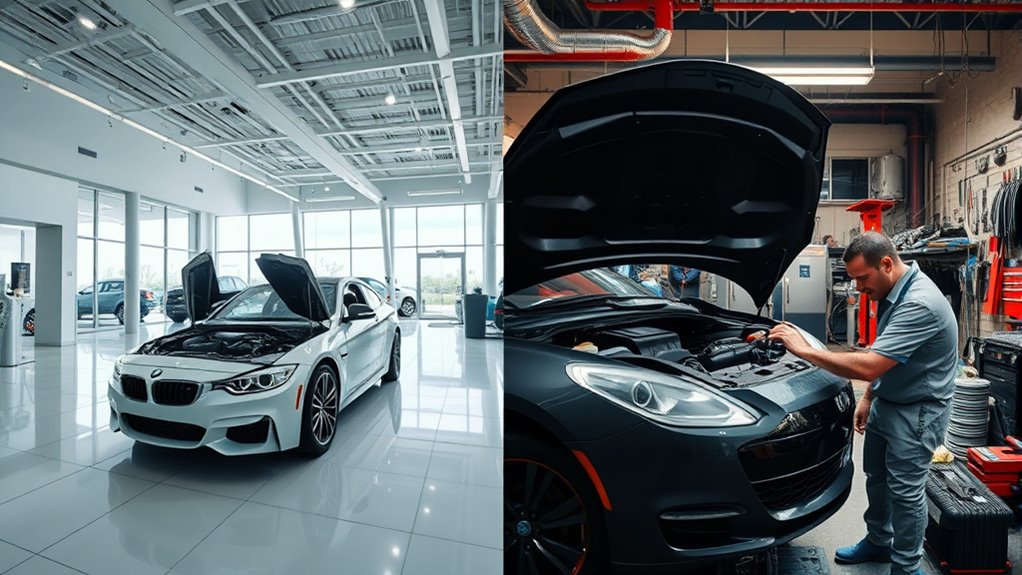
When it comes to vehicle repairs, many drivers wonder whether going to a dealership or an independent mechanic will save them money. The answer depends on several factors, including warranty coverage and parts quality. Dealerships often have the advantage of thorough warranty coverage that can reduce your out-of-pocket expenses for certain repairs. If your vehicle is still under warranty, repairs performed at the dealership might be covered entirely or at least partially, saving you money. Independent mechanics, on the other hand, may not offer the same warranty protections, but they often provide more flexible options and can sometimes extend their own warranties on repairs. It’s important to weigh how long you plan to keep your vehicle and whether warranty coverage is a priority for you.
Parts quality is another critical factor influencing costs. Dealerships typically use original equipment manufacturer (OEM) parts, which are designed specifically for your vehicle. These parts tend to be more reliable and durable but often come at a higher price. Independent shops might use aftermarket parts, which can be cheaper but vary in quality. Some aftermarket parts are comparable to OEM, but others may not last as long or fit as precisely, potentially leading to additional repairs down the line. If you’re looking for the highest quality parts, a dealership might be the better choice, but if you’re comfortable with potential variability, independent mechanics could save you money upfront.
Dealerships use OEM parts for durability, while aftermarket parts at independents vary in quality and price.
The cost difference between dealership and independent repairs also stems from labor rates. Dealerships usually have higher hourly rates because of their brand name, specialized training, and access to manufacturer-specific tools. Independent mechanics often charge less for labor, which can considerably reduce the overall repair bill. However, the trade-off might be in the scope of repairs they can perform or the parts they use. If your repair is straightforward and doesn’t require OEM parts, an independent shop might be the more cost-effective option.
Additionally, some dealerships offer specialized training that independent shops may lack, which can impact the quality and scope of repairs available. Ultimately, your choice depends on what you value most—whether it’s warranty coverage, parts quality, or lower labor costs. If you want peace of mind with warranty protection and original parts, a dealership might be worth the extra expense. But if your vehicle isn’t under warranty, and you’re comfortable with aftermarket parts and lower labor rates, an independent mechanic can provide quality service at a reduced cost. Consider your vehicle’s age, repair needs, and long-term plans to make the best decision for your budget.

GOOACC 240PCS Bumper Retainer Clips Car Plastic Rivets Fasteners Push Retainer Kit 12 Popular Sizes Auto Push Pin Rivets Set -Door Trim Panel Fender Clips for GM Ford Toyota Honda Chrysler
Universal fit kit – Great assortment push retainer kit with 12 popular size, fitting for door trim, radiator…
As an affiliate, we earn on qualifying purchases.
As an affiliate, we earn on qualifying purchases.
Frequently Asked Questions
How Do Warranty Policies Differ Between Dealerships and Independents?
You’ll find that warranty policies differ mainly in coverage and repair scope. Dealerships usually offer warranty coverage that’s more extensive, often including repairs with original parts and manufacturer support. Independent shops might have limited warranty coverage and a narrower repair scope, sometimes excluding certain parts or services. Always check the specific warranty policy to understand what’s covered and how repair scope varies, so you can choose the best option for your vehicle.
Are There Specific Repairs Better Suited for Dealerships or Independents?
You should take your vehicle to a dealership for specialized repairs that require manufacturer-specific tools and expertise, ensuring quality and proper diagnostics. For routine maintenance like oil changes or brake inspections, independents often offer more affordable options and convenient scheduling. While dealerships excel in complex or warranty-related repairs, independents are a cost-effective choice for standard services, letting you save money without sacrificing quality on everyday repairs.
How Does the Quality of Parts Compare Between the Two Repair Options?
Think of parts like books—some are original editions, others aftermarket. Generally, dealership repairs use OEM quality parts, ensuring superior durability, much like a first edition. Independent shops often use aftermarket parts, which can be cheaper but vary in quality. I had a friend whose aftermarket brake pads wore out quickly, while OEM parts lasted years. So, your choice can impact the long-term reliability of your repairs.
What Impact Does Location Have on Repair Costs?
Location markedly impacts your repair costs due to regional disparities and pricing variations. In urban areas, prices tend to be higher because of increased overhead and labor rates, while rural locations often offer more affordable options. Your choice of repair shop can lead to substantial savings or extra expenses, depending on regional factors. Always compare regional pricing variations to guarantee you get the best deal and avoid overpaying for repairs.
How Can I Verify the Credentials of an Independent Mechanic?
To verify an independent mechanic’s credentials, start by asking if they hold certifications from recognized programs like ASE. Check their credentials online or request proof. Also, read customer reviews on trusted platforms to gauge their reputation and quality of work. Doing this helps confirm you’re choosing a qualified, reputable mechanic who meets industry standards and delivers reliable service.

2PCS Car Turbo Whistle, Aluminum Alloy Universal Turbo Whistle, XL Size Aluminum Alloy Universal Turbo Sound Exhaust Muffler Pipe Whistle Car Roar Make (Red)
[High quality material]: The exhaust muffler pipe flute is made of high-quality aluminum alloy, which has the characteristics…
As an affiliate, we earn on qualifying purchases.
As an affiliate, we earn on qualifying purchases.
Conclusion
Ultimately, choosing between a dealership and an independent repair shop depends on your priorities and budget. While dealerships often charge more for brand-specific expertise, independent shops can provide quality work at a lower cost. Do you value brand assurance over savings? By weighing these factors carefully, you can make an informed decision that aligns with your needs and finances, ensuring your vehicle stays in top shape without breaking the bank.

FTIHTRY 12-Piece Pick and Hook Tools Set, Pick Tool Set Car Auto Oil Seal/O-Ring Seal Gasket Pick Hooks Puller Remove, Long and Mini Pick Tool Set
Premium Quality – Made of heat treated CR-V steel and chrome vanadium steel shafts, sturdy and sharp.
As an affiliate, we earn on qualifying purchases.
As an affiliate, we earn on qualifying purchases.

Nilight 10003W 14 Ft Male-to-Female Extension Cord Cable Heavy Duty 12V/24V Car Charger with Cigarette Lighter Socket,2 Years Warranty, red
Heavy duty wire: high-quality materials, durable in use, easily extend your 12V- 24V DC power source when travelling
As an affiliate, we earn on qualifying purchases.
As an affiliate, we earn on qualifying purchases.