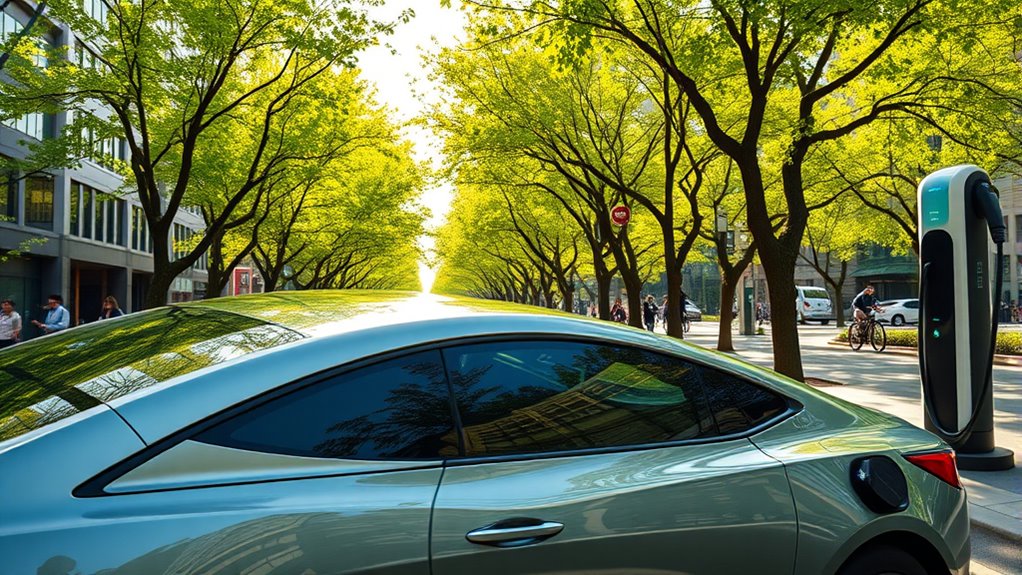

Electric vehicles save you money over time thanks to expanding charging options and durable batteries, reducing the need for fuel and costly repairs. Installing a home charger can cut costs further, especially with utility incentives, while fast chargers along routes keep you on the go without harming your battery’s lifespan. Because EV technology keeps improving, you’ll find that owning one offers increasingly better long-term value—discover how these benefits can work for you.

Get business pricing on garage and car supplies
- Business-only prices and quantity discounts
- Tax-exempt purchasing
- Multiple users, one account, clear invoices
Key Takeaways
- Home charging reduces fuel costs and offers utility incentives, lowering overall ownership expenses.
- Durable batteries last over a decade, minimizing replacement costs and maintaining vehicle value.
- Expanded charging infrastructure decreases range anxiety and supports convenient, optimal charging habits.
- Long-term savings from lower maintenance and fuel costs make EVs more economical over time.
- Advancements in battery technology and charging networks continue to enhance cost efficiency and vehicle longevity.

Electric vehicles (EVs) are increasingly recognized not just for their environmental benefits but also for their long-term cost advantages. When you consider owning an EV, one of the first things to think about is how you’ll keep it charged. The charging infrastructure has grown considerably, making it easier than ever to find charging stations whether you’re commuting or taking longer trips. This expanded network reduces range anxiety and guarantees you can recharge conveniently, helping you avoid the costs associated with fuel and frequent trips to gas stations. Installing a home charger might involve an upfront investment, but it pays off over time by providing you with the convenience and lower electricity rates during off-peak hours. Plus, many utility companies offer incentives for installing home charging stations, further decreasing your overall expenses.
Investing in home charging stations offers convenience and long-term savings with lower electricity rates and utility incentives.
Battery longevity is another vital factor that influences the long-term savings of owning an EV. Modern EV batteries are built to last for many years, often exceeding 8 to 10 years with proper care. This durability means you won’t need to replace the battery frequently, saving you thousands of dollars down the line. Manufacturers have improved battery technology considerably, leading to longer-lasting power packs that retain their capacity over time. As a result, the depreciation rate for EVs tends to be slower than traditional vehicles, and resale value remains relatively high, especially if the battery health is maintained well. Proper maintenance, such as avoiding extreme temperatures and not overcharging, can further extend battery life, guaranteeing your investment remains sound for years.
Furthermore, advancements in charging infrastructure complement the longevity of batteries. As more fast chargers become available along highways and in urban centers, you’ll find it easier to keep your EV charged without stressing the battery with frequent fast charging. This balance helps preserve battery health, which in turn sustains your vehicle’s long-term value. Over time, the combination of a reliable charging network and durable batteries reduces the total cost of ownership, making EVs a more economical choice than conventional cars in the long run. Enhanced sound design technologies in newer charging stations and vehicles can also provide real-time feedback on battery health, optimizing charging habits.
In essence, your investment in an EV pays off through a well-established charging infrastructure and resilient batteries. These elements work together to lower ongoing costs, improve convenience, and extend the vehicle’s lifespan. As technology continues to evolve, expect these benefits to become even more pronounced, solidifying electric vehicles as a smart, cost-effective choice for the future.
As an affiliate, we earn on qualifying purchases.
Frequently Asked Questions
How Do Electric Vehicle Maintenance Costs Compare Over Time?
You’ll find that electric vehicle maintenance costs are generally lower over time. With fewer moving parts, you avoid many repair expenses associated with traditional engines. Battery longevity is vital, but most EV batteries last many years before needing replacement, keeping costs down. Regular maintenance like tire rotations is minimal, and since there’s no oil to change, your ongoing expenses stay lower, making EVs more cost-effective in the long run.
Are There Tax Incentives That Impact Long-Term Savings?
You can save thousands with tax credits and government rebates when you buy an electric vehicle. For example, some incentives can cut your purchase price by up to $7,500. These financial perks directly reduce your upfront costs and boost your long-term savings. Taking advantage of available tax credits and rebates now means you’ll benefit from lower expenses over the vehicle’s lifetime, making electric cars a smarter, cost-effective choice.
What Are the Resale Value Prospects for Electric Vehicles?
You’ll find that resale value prospects for electric vehicles vary, but generally, they’re improving due to advancements in battery longevity and growing market demand. As batteries last longer and technology becomes more reliable, electric cars tend to depreciate less over time. However, market depreciation still influences resale value, so staying updated on battery health and market trends helps you maximize your vehicle’s resale potential.
How Does Charging Infrastructure Affect Long-Term Ownership Costs?
Imagine you’re steering a city like a modern knight with a trusty steed. Charging station accessibility directly impacts your long-term ownership costs—if stations are easy to find, you’ll spend less on costly detours or emergency charges. Grid reliability ensures your battery stays topped up without interruptions, saving you money over time. Reliable infrastructure keeps your EV running smoothly, making ownership more affordable and stress-free in the long run.
What Are the Environmental Benefits Linked to Long-Term Savings?
You benefit from environmental savings through reduced emissions, helping fight climate change. As electric vehicle batteries are recycled, you lessen waste and conserve resources, further lowering environmental impact. Over time, your choice supports emissions reduction, contributing to cleaner air and a healthier planet. These long-term benefits not only protect the environment but also enhance your sustainability efforts, making electric vehicles a smarter, eco-friendly investment for the future.
Conclusion
So, as you weigh your options, remember that investing in an electric vehicle isn’t just a fancy fad—it’s a smart move for your wallet and the planet. Over time, you’ll save on fuel, maintenance, and taxes, making it a true knight in shining armor against rising costs. Think of it as your own modern-day Excalibur, ready to conquer the challenges of tomorrow’s world while keeping your expenses in check. Embrace the future—your future self will thank you.
Halloween Picks
halloween
As an affiliate, we earn on qualifying purchases.