
To manage car care expenses effectively, you should establish an emergency fund dedicated to unexpected repairs. Regularly contribute small amounts to this savings account to build a financial cushion. This fund helps you handle urgent repairs without stress or high-interest loans. Combine this strategy with proper insurance and routine maintenance to keep costs predictable. Keep exploring for more tips on how to strengthen your car care financial plan and stay prepared for anything.
Key Takeaways
- Establish a dedicated savings account for unexpected car repairs to ensure quick access during emergencies.
- Regularly contribute a fixed amount to your emergency fund to build sufficient reserves over time.
- Combine adequate insurance coverage with your emergency fund to cover both minor and major repairs effectively.
- Prioritize routine maintenance to prevent costly breakdowns and reduce the frequency of emergency repairs.
- Review and adjust your financial strategies periodically to ensure your emergency fund meets evolving car care needs.

Keeping your car in good shape doesn’t have to drain your wallet. By effectively managing your expenses, especially through proper insurance planning and maintenance budgeting, you can stay ahead of unexpected costs. The key is to see your car care as a strategic part of your financial health. Start by reviewing your insurance coverage regularly. Adequate insurance planning ensures you’re protected from major repairs or accidents that could otherwise lead to hefty out-of-pocket expenses. While it might seem tempting to cut corners to save money, choosing the right coverage prevents surprises and keeps your repair costs manageable.
In addition to insurance, maintenance budgeting is essential. Setting aside a specific amount each month for routine upkeep helps prevent small issues from escalating into costly repairs. Think of it as a safety net that minimizes the shock of unexpected expenses. When you budget for regular oil changes, tire rotations, brake inspections, and fluid top-offs, you’re proactively maintaining your vehicle’s health. This regular upkeep not only extends the lifespan of your car but also keeps it running efficiently, saving you money on fuel and major repairs over time. Incorporating preventive maintenance into your routine reduces the likelihood of costly breakdowns and repairs.
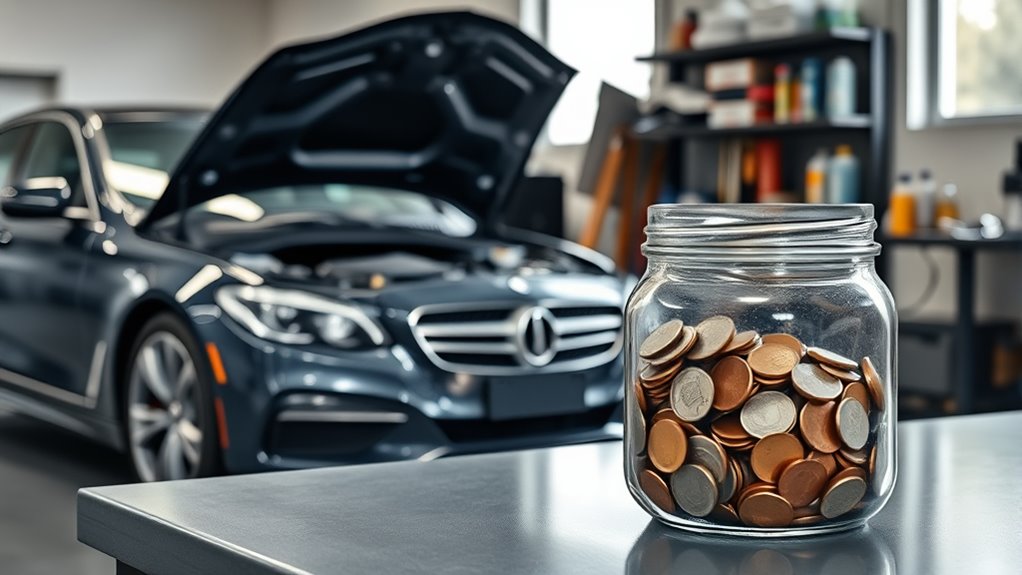
Having an emergency fund dedicated to car-related expenses gives you peace of mind. It’s wise to set aside a separate savings account specifically for unexpected repairs or urgent maintenance needs. When the time comes, instead of panicking or resorting to high-interest loans, you can draw from this fund confidently. To build this fund, incorporate a small, consistent amount into your maintenance budgeting. Over time, it grows, providing a cushion for those unpredictable moments when your car suddenly needs attention.

BUILDING AN EMERGENCY FUND FOR PEACE OF MIND: Calculating how much you need, choosing where to keep it, and replenishing after use
As an affiliate, we earn on qualifying purchases.
As an affiliate, we earn on qualifying purchases.
Frequently Asked Questions
How Much Should I Keep in My Emergency Fund for Car Repairs?
You should keep at least $500 to $1,000 in your emergency fund for car repairs. This covers unexpected expenses like insurance deductibles, brake replacements, or sudden breakdowns. Also, consider your monthly fuel costs and potential maintenance needs. Having this cushion means you won’t strain your finances if a surprise repair or high fuel bill pops up, helping you stay prepared and avoid debt.
When Is the Best Time to Dip Into My Emergency Fund for Car Issues?
You should dip into your emergency fund for car issues when repairs are urgent and unavoidable, like unexpected breakdowns or safety concerns. If an insurance claim covers part of the repair, consider using your fund for the remaining expenses. Routine maintenance, however, isn’t a reason to use your emergency fund. Use it only when repairs are necessary and can’t wait, ensuring your safety and preventing further damage.
How Often Should I Review and Adjust My Car Repair Emergency Fund?
Picture your emergency fund as a sturdy bridge over unpredictable waters. You should review and adjust it every 6 to 12 months, like inspecting a bridge’s foundation. During these checks, compare insurance options, update maintenance schedules, and consider recent repair costs. This way, your fund remains reliable, ensuring you’re prepared for unexpected car issues without draining your savings or risking a breakdown.
Are There Specific Types of Car Repairs That Warrant Emergency Fund Use?
Certain repairs, like insurance claims or unexpected breakdowns, definitely warrant emergency fund use. If you face urgent issues such as engine failure or a flat tire that can’t wait for routine maintenance, use your fund. Routine maintenance, like oil changes or tire rotations, shouldn’t drain your emergency stash. Keep your fund for genuinely unexpected expenses, ensuring you’re prepared for repairs outside your regular maintenance schedule.
How Can I Prioritize Repairs When My Emergency Fund Is Limited?
If your emergency fund is limited, prioritize repairs that impact safety or essential operation. For example, if your brakes are failing, address those first, even if it means waiting on less urgent issues. Check if your insurance claims can cover some costs, and ask your dealer about discounts. This way, you make the most of your limited emergency funds by focusing on critical repairs first.
Conclusion
By setting aside an emergency fund for your car, you’re better prepared to handle unexpected expenses without breaking the bank. Keep in mind, a stitch in time saves nine—address small issues before they turn into costly repairs. Stay proactive, and your car will thank you with reliable performance. Remember, it’s better to be safe than sorry, so keep your emergency fund topped up and your car well-maintained.