
When choosing between leasing and buying, consider your maintenance and financing needs. With buying, you’re responsible for maintenance costs after warranties and benefit from resale value, but your monthly payments are higher and you own the vehicle outright. Leasing usually offers lower payments, with maintenance often covered during the lease, but you won’t own the car at the end. To make the best decision for your driving habits and finances, exploring these differences further can help.
Key Takeaways
- Buying requires pay for maintenance after warranties expire, while leasing often includes free routine maintenance during the lease term.
- Purchasing involves higher upfront costs but offers ownership benefits and potential resale value; leasing typically requires less initial money and lower monthly payments.
- Leasing payments are usually lower than buying, but leasing limits mileage and may have wear-and-tear restrictions; buying provides more flexibility.
- Ownership allows full depreciation benefits and resale profit, whereas lease payments may be tax-deductible but lack ownership advantages.
- Buying suits high-mileage, long-term drivers; leasing suits those seeking lower payments, regular upgrades, and reduced maintenance worries.
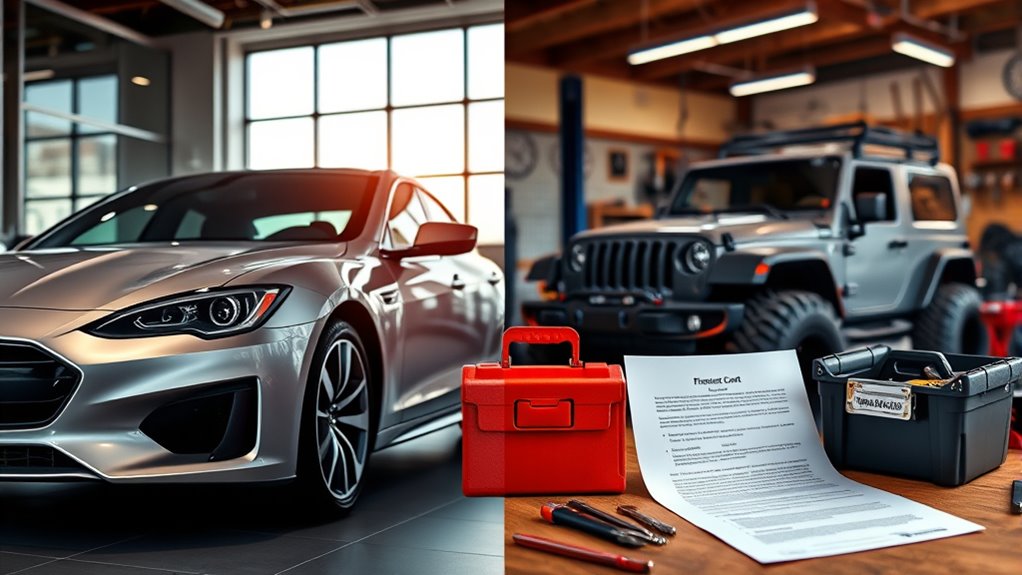
Are you trying to decide whether to lease or buy your next vehicle? When it comes to maintenance and financing considerations, your choice can profoundly impact your overall expenses and convenience. If you opt to buy, you’re responsible for maintenance costs after any warranties expire, but you also gain the benefit of building resale value over time. Once you decide to sell or trade in your vehicle, its resale value becomes a key factor in recouping your investment. A well-maintained car typically fetches a higher price, so staying on top of repairs and regular servicing can pay off when you’re ready to upgrade. Conversely, leasing often covers routine maintenance, which means fewer out-of-pocket costs for repairs during the lease term. However, since you don’t own the car at the end of the lease, you don’t benefit from any resale value, and you’ll need to adhere to mileage limits and wear-and-tear guidelines to avoid extra charges.
Financing a purchase involves upfront costs, such as a down payment, and monthly payments that go toward building equity in the vehicle. These payments can be higher than lease payments, but once you complete your loan, you own the car outright, giving you flexibility to keep or sell it without restrictions. When you sell, your resale value plays a vital role in determining how much money you recoup, and maintaining the vehicle can maximize that value. On the other hand, leasing typically requires less upfront money and lower monthly payments, which can be appealing if you prefer driving new cars frequently. Still, it’s important to consider the tax implications—leasing payments are often deductible as a business expense, if applicable, but lease payments are not eligible for the same depreciation benefits that come with owning a vehicle.
Ultimately, your decision depends on your financial situation and driving habits. If you drive a lot and plan to keep the car for many years, buying might be more economical, allowing you to benefit from resale value and potential tax advantages. If you prefer lower payments and the chance to drive a new vehicle every few years, leasing could be more convenient, with less concern about resale value. Additionally, understanding the role of color accuracy in maintaining vehicle aesthetics can influence your maintenance choices to keep the car looking new longer. Whichever route you choose, understanding the maintenance costs and tax implications will help you make an informed decision that aligns with your financial goals and lifestyle.
Frequently Asked Questions
How Do Maintenance Costs Differ Between Leasing and Buying?
When you lease, maintenance costs are often lower because warranty coverage usually handles repairs, and maintenance frequency tends to be less since leased vehicles are newer. Buying means you’re responsible for all maintenance costs, which can add up over time, especially as the vehicle ages. You’ll need to budget for repairs and regular upkeep without warranty assistance, making maintenance costs more unpredictable compared to leasing.
What Impact Does Credit Score Have on Financing Options?
A good credit score is like a key that opens many doors. It directly influences your credit eligibility, making it easier to access favorable financing rates. When your credit score is high, lenders see you as reliable, so you get better loan terms. Conversely, a lower score can limit your options and lead to higher interest rates, making financing more expensive and harder to secure.
Are There Tax Benefits Associated With Leasing or Buying?
You can benefit from tax deductions and depreciation benefits whether you lease or buy. Leasing often allows you to deduct lease payments as business expenses, reducing your taxable income. When you buy, you may take advantage of depreciation benefits, spreading the cost over several years. Both options offer potential tax advantages, so consider your financial situation and consult a tax professional to determine which strategy maximizes your benefits.
How Does Residual Value Affect Leasing Agreements?
Residual value considerably shapes your leasing agreements because it determines the car’s worth at lease end. Higher residual values mean lower monthly payments, making leases more affordable. Conversely, lower residuals increase costs, as you pay for the depreciation. When residual value is accurately assessed, it helps you avoid surprises, ensuring your lease remains manageable. So, keep an eye on residual value to maximize your leasing benefits and minimize unnecessary costs.
Can Leasing Terms Be Customized to Fit My Budget?
Yes, leasing terms can be customized to fit your budget. You can negotiate flexible payments and contract terms that align with your financial situation. Discuss your budget with the leasing company, and they may adjust the lease duration or payment schedule to make it more manageable. This flexibility helps you avoid financial strain while still enjoying the benefits of leasing, ensuring the agreement suits your personal or business needs.
Conclusion
When it comes to leasing or buying, your choice can feel like steering a maze—complex and overwhelming. But remember, whether you opt for the flexibility of leasing or the long-term ownership of buying, the right decision can save you a fortune and keep your peace of mind intact. Don’t let the financial jungle scare you—arm yourself with knowledge, and you’ll come out ahead, making your vehicle decision as smooth as a perfectly paved highway!