
To protect your undercarriage from seasonal road salt, wash your vehicle thoroughly after winter driving, focusing on the underside. Regular inspections help catch early rust spots, while washing and applying rust-proof coatings prevent corrosion from spreading. Use anti-corrosion sprays and keep fluids topped up to add extra protection. Staying proactive saves you money and extends your vehicle’s lifespan. Keep exploring to discover more effective ways to shield your car from salt damage during winter months.
Key Takeaways
- Regularly wash the vehicle, especially underneath, to remove salt residue and prevent rust formation.
- Inspect the undercarriage periodically for early rust signs and address issues promptly.
- Apply rust-proof coatings or anti-corrosion sprays to vulnerable metal parts before winter.
- Maintain proper vehicle fluids, tires, and suspension to ensure safety and reduce salt-related damage.
- Proactive maintenance and cleaning extend vehicle lifespan and minimize costly repairs from salt-induced corrosion.
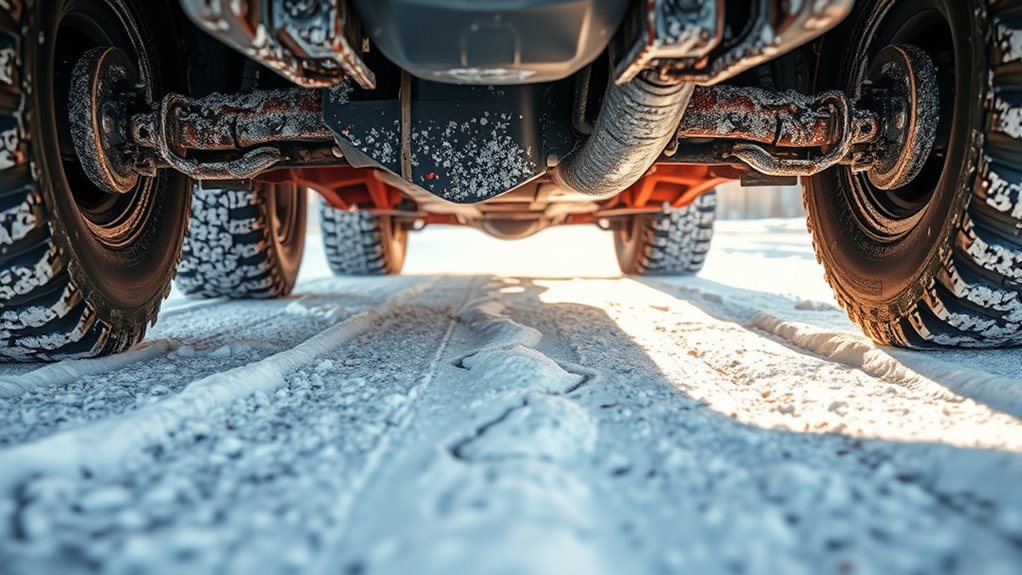
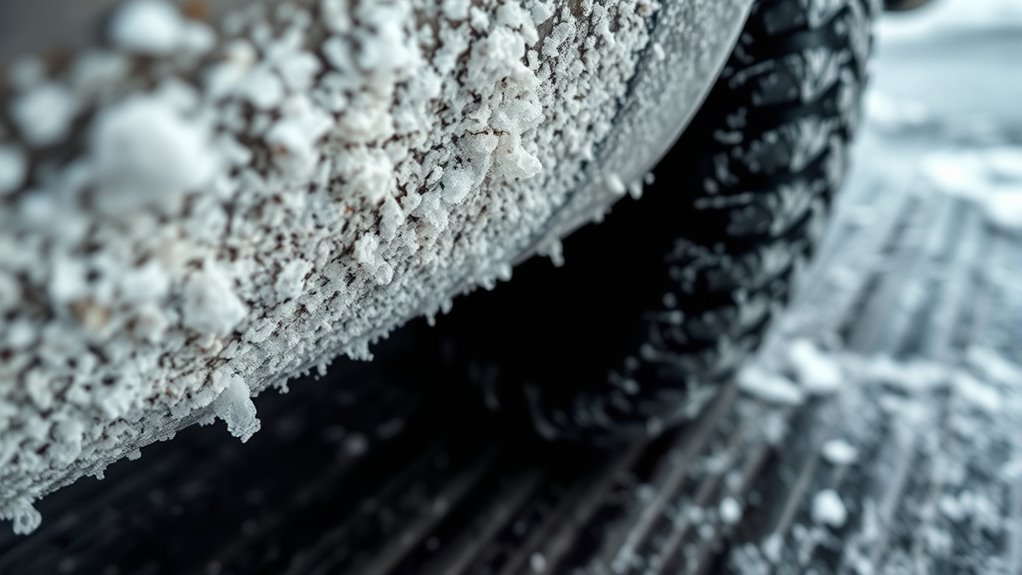
Have you ever wondered how roads stay safe during winter storms? It’s a combination of plowing, sanding, and, importantly, the use of road salt. While salt effectively melts ice and snow, it can also pose problems for your vehicle, especially its undercarriage. When salt comes into contact with metal, it accelerates corrosion, which can weaken critical parts over time. That’s why corrosion prevention should be a priority for anyone who drives during winter. Regular vehicle maintenance becomes essential after snow and ice seasons to keep your car in top shape. Washing your vehicle thoroughly, especially underneath, helps rinse away salt residue that lurks on the undercarriage and wheel wells. This simple step prevents rust from forming and spreading, extending the life of your vehicle. Applying a rust-proof coating or undercoating can add an extra layer of protection, making it harder for salt to cause damage.
Regularly wash your car underneath after winter to prevent salt-induced rust and extend vehicle lifespan.
It’s also wise to inspect your vehicle’s undercarriage periodically. Look for any signs of rust or corrosion, especially after a harsh winter. Catching issues early can save you money and prevent more serious problems down the road. Keep an eye on the brake lines, exhaust system, and frame — these areas are most vulnerable to salt-induced corrosion. If you notice rust starting to form, consider having it treated professionally to halt further deterioration. Proper vehicle maintenance isn’t just about appearance; it’s about safety and longevity. When your undercarriage is protected, you reduce the risk of brake failure, exhaust leaks, or structural damage, all of which could compromise safety on the road.
In addition to washing and inspections, ensure your vehicle’s fluids are topped up and in good condition. Cold weather can take a toll on battery performance and other crucial components. Consider using anti-corrosion sprays on exposed metal parts, especially if you frequently drive on salty roads. These sprays create a barrier that discourages rust formation. Also, check your tires and suspension; winter driving conditions can wear these out faster, and maintaining proper alignment and pressure ensures ideal handling and safety.
Ultimately, taking proactive steps for corrosion prevention and maintaining your vehicle’s health makes a significant difference during winter months. It’s not just about getting through a storm; it’s about protecting your investment and ensuring your car remains reliable when you need it most. Regular maintenance and thorough cleaning after winter help you avoid costly repairs and extend your vehicle’s lifespan, so you can confidently tackle whatever winter throws your way. Recognizing the potential damage from salt emphasizes the importance of diligent care to prevent costly repairs in the future.

Rust-Oleum 248656 Professional Grade Rubberized Undercoating Spray, 15 oz, Black
Perfect for use on bare or primed metal underbodies of cars, trucks, trailers, RVs and more
As an affiliate, we earn on qualifying purchases.
As an affiliate, we earn on qualifying purchases.
Frequently Asked Questions
How Often Should I Wash My Car During Winter?
You should wash your car at least once a week during winter to remove salt and grime. Regular washing helps protect your undercarriage from corrosion and keeps winter tire maintenance effective. Don’t forget to check your windshield washer fluid frequently and keep it full, so you can clear away salt spray and road grime. This routine keeps your car in good shape and guarantees safe driving in winter conditions.
Can Salt Damage My Car’s Paint?
Ever wonder if salt can sneak past your car’s defenses? Yes, it can cause paint corrosion by penetrating the surface, especially if you don’t wash your car regularly. Salt penetration accelerates rust and damages your paint, leaving unsightly spots and long-term harm. To protect your vehicle, wash it frequently during winter, focusing on the undercarriage, and consider applying a protective wax to create a barrier against salt’s corrosive effects.
What Are the Best Undercarriage Protectants?
You should consider using salt resistant coatings like rubberized undercoatings or oil-based sprays to protect your undercarriage. These protectants create a barrier that prevents salt from causing undercarriage rust, especially during winter months. Regularly applying these coatings helps maintain your vehicle’s integrity and prolongs its lifespan. Make sure to clean your undercarriage thoroughly before applying protectants, and reapply as recommended to keep rust at bay.
Is It Safe to Drive Immediately After Applying Salt?
You shouldn’t drive immediately after applying salt because it can cause salt corrosion on your vehicle’s undercarriage. Waiting a little allows the salt to do its job without risking damage or compromising road safety. If you need to drive soon, rinse off your vehicle thoroughly afterward to reduce salt buildup. Regular maintenance prevents corrosion, prolongs your car’s lifespan, and guarantees safe driving conditions during winter.
How Does Salt Affect Brake Performance?
Imagine your brakes as a delicate balance of friction and precision. Salt accelerates brake corrosion, which can weaken components and impair brake performance. Over time, the corrosive effects cause rust to form on metal parts, reducing responsiveness and increasing stopping distances. To keep your brakes reliable, wash off salt promptly and consider protective coatings. Regular inspections help catch corrosion early, ensuring your braking system remains safe and effective in winter conditions.
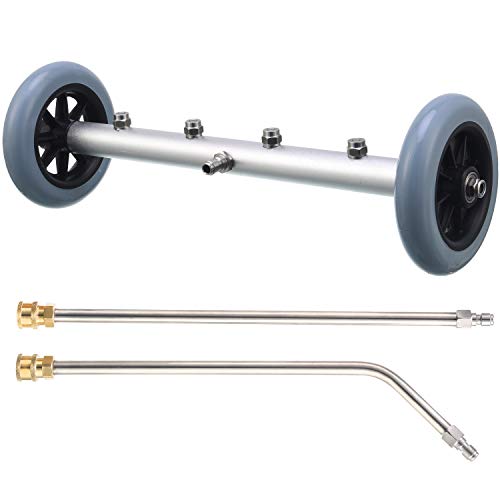
RIDGE WASHER Pressure Washer Undercarriage Cleaner, 16 Inch Undercarriage Washer, Pressure Washer Under Car Cleaner with Straight Extension Wand, 4000 PSI
PACKAGE INCLUDE: 1 pcs 16.1 inch undercarriage washer, 1 pcs 15.7 inch straight extension wand and 15.7 inch…
As an affiliate, we earn on qualifying purchases.
As an affiliate, we earn on qualifying purchases.
Conclusion
As you embrace the convenience of seasonal road salt, remember it’s a double-edged sword—protecting your car’s undercarriage now, but risking long-term damage beneath the surface. While it keeps you safe on icy roads, it silently accelerates corrosion over time. Balancing these realities, you get the comfort of winter driving, yet must stay vigilant. Ultimately, safeguarding your vehicle requires awareness of both the immediate safety and the hidden costs beneath the surface.
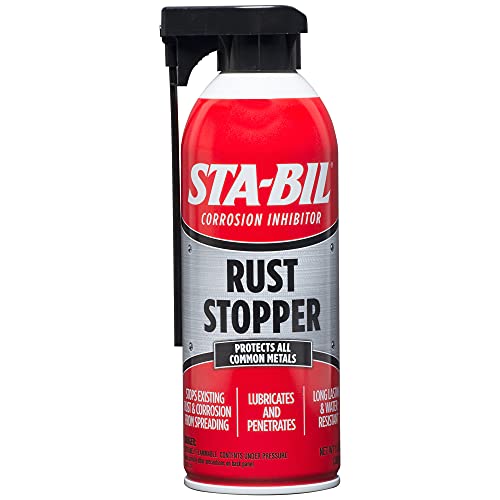
STA-BIL Rust Stopper – Anti-Corrosion Spray and Antirust Lubricant – Prevents Car Rust, Protects Battery Terminals, Stops Existing Rust, Rust Preventative Coating – 13 Oz (22003)
Corrosion Inhibitor – Fights the formation of rust and corrosion on exposed or painted metal surfaces while leaving…
As an affiliate, we earn on qualifying purchases.
As an affiliate, we earn on qualifying purchases.

LivTee 32" Extendable Ice Scraper & Snow Brush for Car Windshield, 360° Rotating Snow Removal Tool for Cars, Trucks & SUVs, Automotive Winter Essentials & Car Accessories for Men, Blue
【Heavy-Duty & Paint-Safe】 Built with tough ABS, thick PC bristles, and a soft EVA foam handle, this snow…
As an affiliate, we earn on qualifying purchases.
As an affiliate, we earn on qualifying purchases.