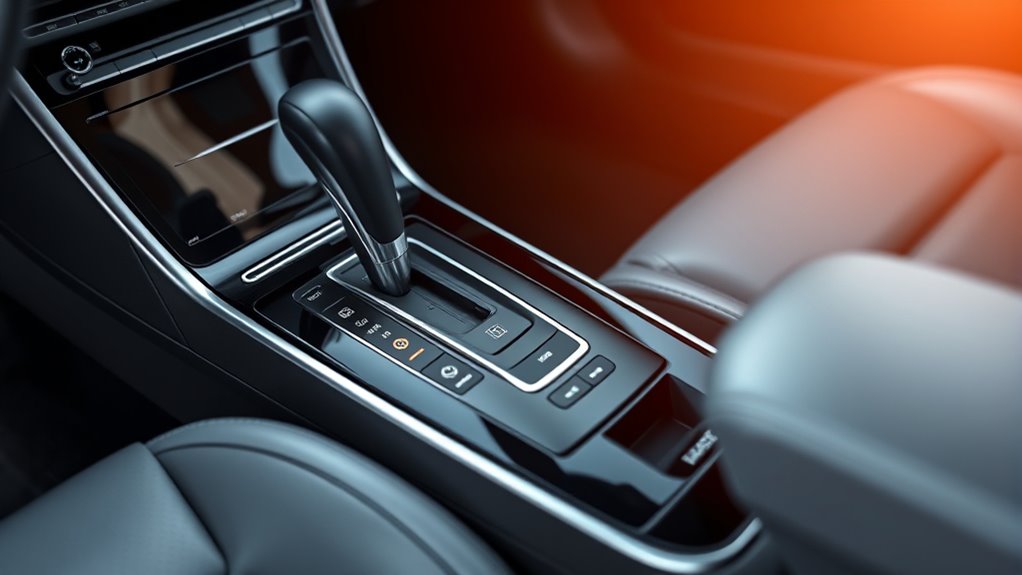
Automatic transmissions shift gears smoothly by continuously monitoring your vehicle’s speed, engine load, and throttle position. The system uses sensors and a control unit to decide when to change gears, engaging hydraulic clutches internally to shift seamlessly without your input. This intelligent process guarantees smooth acceleration, deceleration, and peak performance. If you want to understand exactly how these complex systems work behind the scenes, there’s more to discover about this impressive technology.

Get business pricing on garage and car supplies
- Business-only prices and quantity discounts
- Tax-exempt purchasing
- Multiple users, one account, clear invoices
Key Takeaways
- Automatic transmissions use a control unit to determine the optimal gear based on driving conditions.
- Hydraulic systems and clutch packs automatically engage and disengage to shift gears smoothly.
- The transmission’s computer monitors vehicle speed, engine load, and throttle position to decide when to shift.
- Gear ratios are adjusted seamlessly, often using advanced systems like CVTs or dual-clutch setups for smooth transitions.
- Modern automatic transmissions eliminate manual clutch operation, providing effortless, continuous gear shifting.
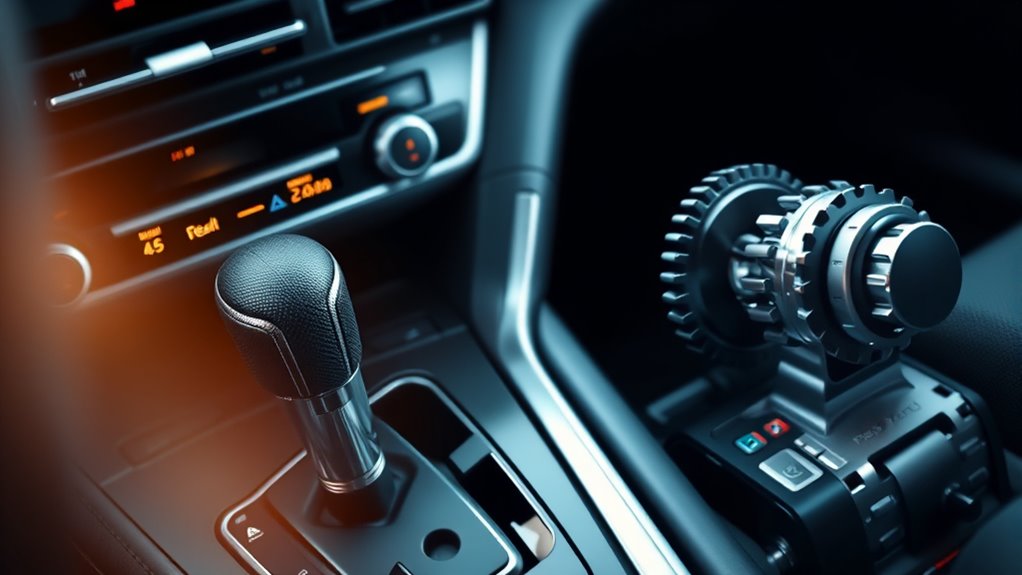
Automatic transmissions handle gear shifting seamlessly, so you don’t have to manually change gears while driving. Instead, the vehicle’s system takes care of selecting the appropriate gear ratio for the current driving situation, providing smooth acceleration and deceleration. The core mechanism behind this process involves complex interactions between clutch operation and gear ratios, though you don’t need to worry about those details while on the road. The transmission’s computer constantly monitors factors such as vehicle speed, engine load, and throttle position to determine when a gear change is necessary. Arcade machines often use microprocessors and specialized hardware, similar to those in modern automatic transmissions, to ensure optimal performance. In traditional manual transmissions, clutch operation is essential for shifting gears. The driver manually presses the clutch pedal to disconnect the engine from the wheels, allowing a gear change, and then releases the clutch to re-engage the engine with the new gear. In automatic transmissions, this process is handled internally by a hydraulic system and a set of clutch packs that engage and disengage automatically. When your car shifts gears, it’s because the transmission’s control unit signals the clutch packs to engage the appropriate gear ratio, smoothly transferring power from the engine to the wheels. This eliminates the need for driver intervention and results in a more comfortable driving experience. Gear ratios are fundamental to how automatic transmissions operate. They determine the relationship between engine speed (RPM) and wheel speed. At low speeds, the transmission uses a lower gear ratio to provide more torque, helping the vehicle start moving. As speed increases, the system shifts to higher gear ratios to improve fuel efficiency and reduce engine strain. These gear ratios are carefully calibrated within the transmission system to optimize performance, fuel economy, and smoothness. Modern automatic transmissions, especially continuously variable transmissions (CVTs) and dual-clutch systems, manipulate gear ratios more precisely, providing a near-seamless transition between gears.
As an affiliate, we earn on qualifying purchases.
Frequently Asked Questions
How Do Automatic Transmissions Differ From CVTS?
Automatic transmissions use torque converters and planetary gears to shift gears smoothly without driver input. CVTs, on the other hand, don’t have fixed gears; they use a belt or chain and pulleys to vary the gear ratio continuously. You’ll notice CVTs offer smoother acceleration, while traditional automatics provide distinct gear shifts. Both systems aim for efficiency, but CVTs often improve fuel economy, whereas automatics deliver more traditional driving feel.
Can Automatic Transmissions Be Manually Overridden?
Imagine steering your car like a ship captain, where you can take manual override of the shift control. Yes, many automatic transmissions let you manually select gears through a sport mode or paddle shifters, giving you control when needed. This feature allows you to override the automatic shifting temporarily, especially useful for engine braking or better control on steep inclines. Just remember, it’s a way to assist, not replace, the automatic system entirely.
What Causes Slipping or Delayed Shifting in Automatics?
You experience slipping or delayed shifting in automatics mainly because of issues with the torque converter or hydraulic pressure. If the torque converter isn’t functioning properly, it won’t transfer power smoothly, causing slipping. Additionally, low hydraulic pressure can hinder gear changes, leading to delays. These problems often stem from fluid leaks, worn parts, or a malfunctioning pump, so getting your transmission checked promptly can prevent further damage.
Are Automatic Transmissions More Reliable Than Manuals?
Yes, automatic transmissions are generally more reliable than manuals because they handle gear engagement smoothly and require less driver input. They rely on transmission fluid to keep everything running efficiently, reducing wear and tear. Plus, modern automatics are built with durable components that resist slipping and delayed shifts. This makes them a practical choice for those seeking ease of use and longevity, especially if you prefer a hassle-free driving experience.
How Does Cold Weather Affect Automatic Transmission Shifting?
Cold weather can make your automatic transmission shift more sluggishly because low temperatures thicken the transmission fluid. When this happens, your car may take longer to shift gears or feel less responsive. To prevent issues, guarantee your transmission fluid is at the proper level and rated for cold temperatures. Warm up your vehicle before driving, especially in very cold conditions, to allow the fluid to circulate and help smooth out gear shifts.
Conclusion
So there you have it, your automatic transmission’s secret dance of gears—completely invisible, effortlessly smooth, and totally foolproof. Who needs to learn the complexities of manual shifting when you can sit back and pretend you’re a racing driver? Just trust your car to handle the chaos while you enjoy the ride. After all, it’s not like driving is an art or anything—just a simple push of a button and a whole lot of “magic.”
Fall Picks
fall essentials
As an affiliate, we earn on qualifying purchases.