
Brake rotors are exposed discs that contact brake pads to slow your vehicle and need regular checks for warping or scoring, with options for resurfacing or replacement. Brake drums are enclosed cylinders paired with brake shoes, mainly used on some rear wheels, and require inspections for wear and cracks. Maintenance of both components guarantees reliable braking, and choosing quality pads helps extend their lifespan. If you stay tuned, you’ll discover more about how these parts differ and how to keep them in top shape.
Key Takeaways
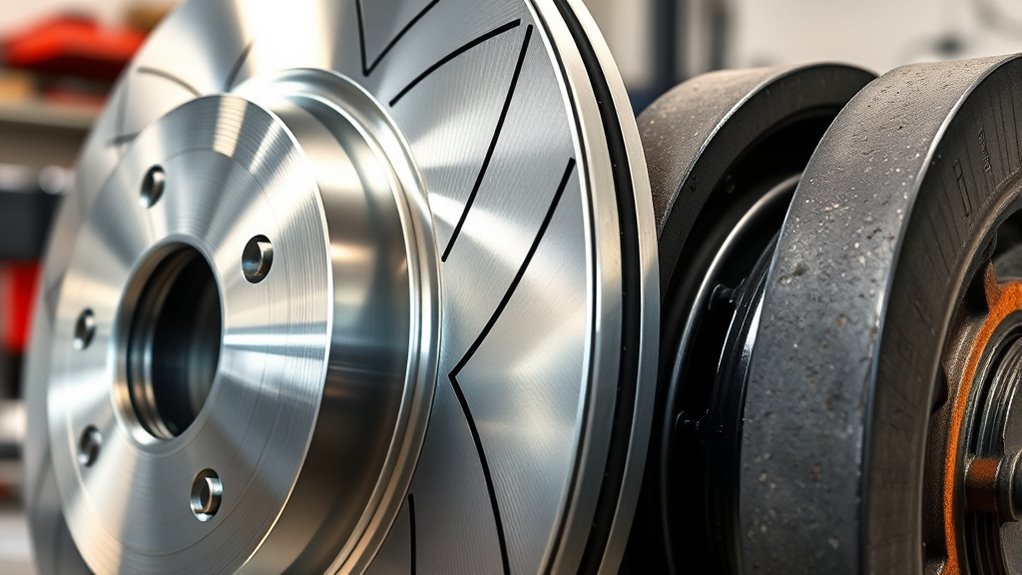
- Brake rotors are flat, disc-shaped components mounted on wheels, while drums are enclosed, cylindrical parts surrounding brake shoes.
- Rotors are common in modern vehicles’ front brakes, whereas drums often serve rear brakes in older or specific models.
- Rotors require regular inspection for warping or scoring and can be resurfaced or replaced; drums need checking for wear and heat cracks.
- Brake pads contact rotors directly, with material choice affecting heat, dust, and wear; brake shoes work with drums to generate friction.
- Electric parking brakes influence brake component wear and diagnostics, impacting maintenance for both rotors and drums.
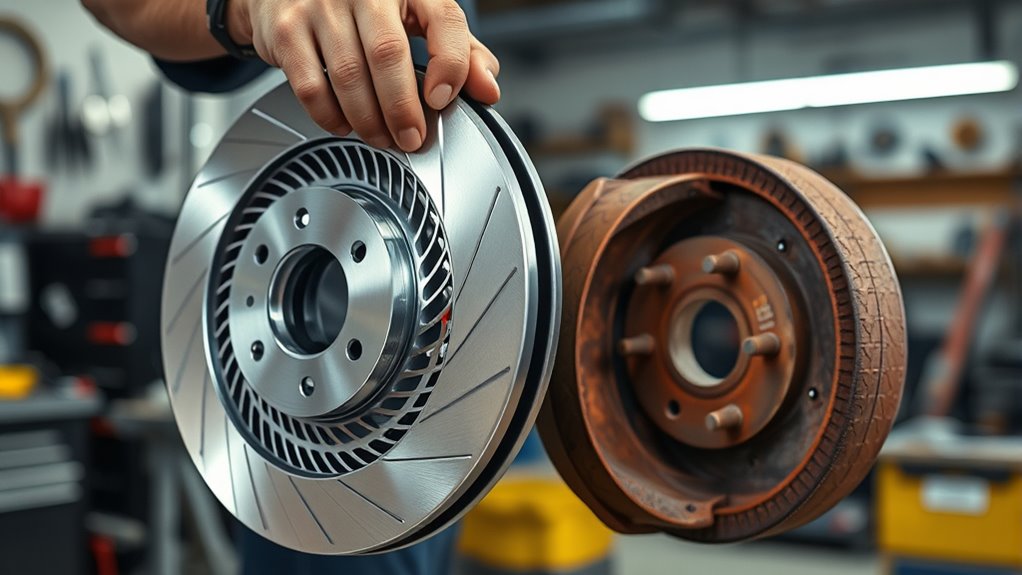
When it comes to stopping your vehicle effectively, understanding the difference between brake rotors and drums is vital. Both components serve the same purpose — slowing down or stopping your car — but they operate differently and require distinct maintenance. Brake rotors are flat, disc-shaped components attached to the wheel hub, while drums are enclosed, cylindrical parts surrounding the brake shoes. Recognizing these differences helps you better understand how your braking system works and what to expect during repairs or replacements.
Brake rotors are typically found in modern vehicles and work alongside brake pads that press against their surface to create friction. The materials used for brake pads vary depending on driving style and vehicle type, ranging from organic to ceramic or metallic compounds. High-performance brake pads, especially ceramic types, tend to generate less heat and produce less brake dust, which can extend the lifespan of rotors. Because rotors are exposed and directly contact the brake pads, they need to be kept clean and checked regularly for warping or scoring. Proper maintenance can involve resurfacing or replacing rotors when they become too thin or damaged. Conversely, brake drums are part of drum brake systems, often found on the rear wheels of some vehicles. They work with brake shoes that expand outward to press against the inside of the drum, creating friction. Since the drum encloses the brake shoes, it’s less exposed to dirt and debris, but it still requires periodic inspection for wear or heat cracks. Additionally, the use of electric parking brakes has influenced how both rotors and drums are maintained, as some models integrate electric systems that can affect brake component wear and diagnostics.
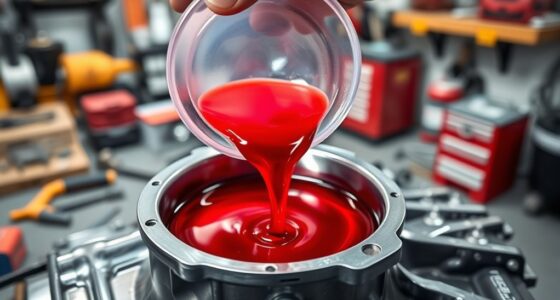
Electronic parking brakes have introduced a new layer to braking systems. They use an electric motor to activate calipers or brake shoes, replacing traditional mechanical linkage. This system simplifies parking brake operation and can automatically engage when you turn off the vehicle, adding convenience and safety. When maintaining your brakes, it’s vital to understand how electronic parking interacts with your brake components, especially if you notice unusual behavior like squealing or warning lights. Regularly inspecting brake pads and drums or rotors for wear ensures your braking system remains reliable. If your brake pads are made from high-quality materials, they tend to last longer and provide consistent stopping power. However, all brake pad materials will eventually wear out and need replacement, especially if you notice decreased braking performance or increased stopping distances.
Frequently Asked Questions
How Do Brake Rotors and Drums Impact Overall Vehicle Safety?
Your brake rotors and drums are vital for overall vehicle safety, directly impacting brake performance. Properly maintained, they guarantee quick, reliable stopping power, reducing accident risks. When these components are in good condition, your safety features, like anti-lock braking systems, work effectively. Conversely, worn or damaged rotors and drums can compromise braking efficiency, increasing stopping distances. Regular inspections and maintenance keep your brakes functioning at their best, keeping you safe on the road.
Can Brake Rotors or Drums Be Repaired Instead of Replaced?
Think of your brake system as a trusted friend—sometimes, with gentle care and patience, it can be restored. Yes, brake rotors and drums can often be repaired using reconditioning techniques like machining or resurfacing. These repair options help extend their life, but only if they haven’t suffered severe damage. Keep in mind, proper inspection determines if repair is safe or if replacement’s the better choice for your safety.
How Often Should I Check My Brake System Components?
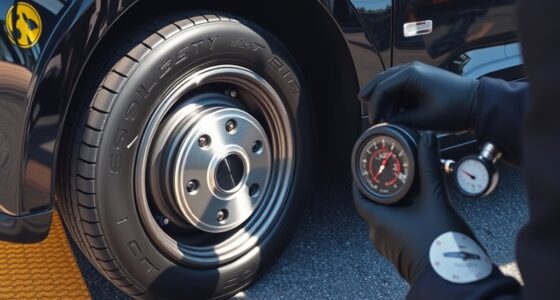
You should check your brake system components every 10,000 to 15,000 miles, or at least once a year. During inspections, look at your brake pads for wear, verify your brake fluid is at the proper level, and examine your rotors or drums for damage. Regular checks help prevent issues like brake failure and keep your braking system functioning smoothly, saving you money and ensuring safety.
Are There Specific Driving Habits That Wear Out Rotors or Drums Faster?
Sure, your aggressive driving style, like sudden stops and hard braking, wears out rotors or drums faster than a leisurely cruise. Overusing brakes during frequent stop-and-go traffic or descending steep hills quickly heats and damages these components. So, ironically, the smoother your driving style, the longer your brake system lasts. Mindful brake usage helps preserve your rotors and drums, saving you money and avoiding unexpected repairs.
What Are the Signs Indicating the Need for Brake System Maintenance?
You should schedule brake system maintenance if you notice brake fluid indicators warning you or if you hear brake pad noise, which often signals worn pads or rotors. Other signs include a soft brake pedal, vibrations when braking, or longer stopping distances. Addressing these issues promptly guarantees your brakes stay effective and safe, preventing costly repairs down the line. Regular check-ups keep your brake system in top shape.
Conclusion
Ultimately, understanding the dance between brake rotors and drums is like mastering a symphony—you need each part to play its role perfectly. Think of them as the heartbeat of your car’s stopping power, working in harmony or facing chaos if neglected. Keep them well-maintained, and they’ll keep your journey smooth and safe. Ignoring their needs is like silencing the orchestra—leaving you vulnerable when you need control the most. Stay attentive, and your brakes will always lead the way.