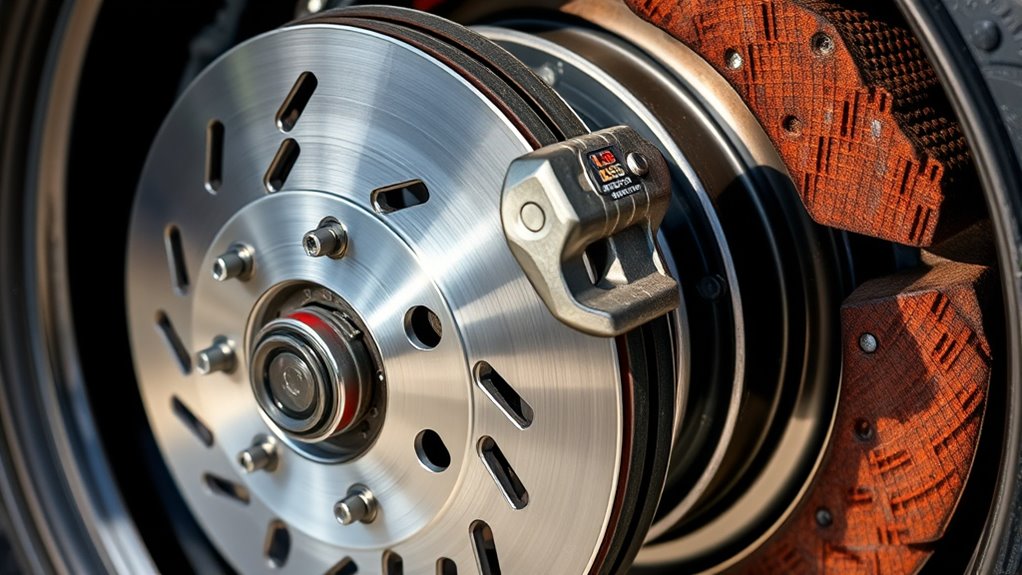

When you press the brake pedal, hydraulic pressure in the system causes either disc brakes or drum brakes to engage. Disc brakes use calipers to squeeze pads against a rotating rotor, while drum brakes push shoes outward against a drum. Anti-lock braking systems (ABS) work by pulsing brake pressure rapidly to prevent wheel lockup during hard stops. Understanding how these components work together helps you grasp how your vehicle slows and stops efficiently—continue to explore for more insights.

Get business pricing on garage and car supplies
- Business-only prices and quantity discounts
- Tax-exempt purchasing
- Multiple users, one account, clear invoices
Key Takeaways
- Disc brakes use hydraulic pressure to squeeze brake pads against rotors, creating friction for quick stopping and heat dissipation.
- Drum brakes push brake shoes outward against a rotating drum using hydraulic force, generating friction to slow the vehicle.
- Anti-lock braking systems (ABS) prevent wheel lockup by rapidly modulating hydraulic pressure, maintaining steering control during hard braking.
- Both disc and drum brakes rely on friction, but disc brakes dissipate heat more efficiently, reducing brake fade during intense braking.
- ABS enhances safety by preventing skidding, especially in slippery conditions, through sensors and electronic control of brake pressure.

Brake systems are essential for controlling your vehicle’s speed and ensuring safety, with the most common types being disc brakes, drum brakes, and anti-lock braking systems (ABS). When you press the brake pedal, you’re activating a complex process that transforms your force into stopping power. Most brake systems rely on hydraulic pressure, which transmits your input through brake fluid to engage the brake pads or shoes. This hydraulic force pushes against the rotors or drums, creating friction that slows your vehicle down.
Brake systems use hydraulic pressure to convert your pedal force into stopping power through friction.
In disc brake systems, when you apply the brakes, hydraulic pressure causes the calipers to squeeze the brake pads against the spinning disc or rotor. This contact generates the friction needed to decelerate the wheel. The design allows for quick heat dissipation, reducing the risk of brake fade—a condition where excessive heat diminishes braking effectiveness. Brake fade can occur if the brakes are used intensively over a short period, causing the brake fluid to overheat and lose its ability to transmit force effectively. This results in a spongy pedal feel and reduced stopping power, especially on steep descents or during aggressive driving.
Drum brakes work differently. When activated, hydraulic pressure pushes the brake shoes outward against a rotating drum. The contact between the shoes and the drum generates friction, which slows the wheel. Although they are less efficient at dissipating heat compared to disc brakes, drum brakes are often used in the rear wheels of some vehicles due to their cost-effectiveness and durability. However, they’re more prone to brake fade because they tend to retain more heat within the drum, particularly during prolonged braking.
Anti-lock braking systems (ABS) add an advanced layer of safety by preventing wheel lockup during hard braking. When sensors detect imminent wheel lockup, ABS modulates hydraulic pressure by rapidly pulsing the brake calipers or shoes. This prevents skidding and helps you maintain steering control. The system continuously adjusts hydraulic pressure, which is delivered through the same basic hydraulic mechanism used in traditional brakes but with electronically controlled valves. This quick modulation minimizes brake fade under extreme conditions, keeping your stopping distance predictable and your vehicle stable.
Understanding how hydraulic pressure works in your brake system underscores the importance of proper maintenance. Worn or contaminated brake fluid can impair pressure transmission, risking brake fade or failure. Regular inspections, fluid changes, and awareness of brake performance help you maintain peak safety. Whether you’re stopping at traffic lights or descending a steep hill, your brake system’s ability to efficiently convert hydraulic pressure into safe, controlled stops is crucial for your safety on the road.
As an affiliate, we earn on qualifying purchases.
Frequently Asked Questions
How Often Should Brake Fluid Be Replaced?
You should replace your brake fluid every 2 to 3 years for proper brake fluid maintenance. This helps prevent moisture buildup that can reduce braking performance. Check your vehicle’s manual for recommended brake fluid types, as using the correct type guarantees peak function. Regularly flushing and replacing brake fluid keeps your braking system in top shape, reducing the risk of brake failure and extending the lifespan of your brake components.
What Are Signs of Brake System Failure?
Think of your brake system as the heart of your car’s safety. Signs of failure include spongy brakes or a soft pedal, which might mean brake fluid leaks or worn brake pads. You might also notice squealing, grinding sounds, or increased stopping distances. If your brake warning light comes on, don’t ignore it. Regular checks help catch issues early, keeping your ride safe and smooth.
Can Brake Systems Be Repaired or Replaced?
Yes, your brake system can be repaired or replaced. If your brake pads have exceeded their lifespan or you’re experiencing issues, a mechanic can replace them or upgrade your brake system for better performance. Regular maintenance ensures safety and efficiency. Whether it’s replacing worn components or upgrading for improved braking, timely repairs help you stay confident on the road. Don’t delay repairs—address problems promptly for maximum safety.
How Does Weather Affect Brake Performance?
A stitch in time saves nine, and that’s true for your brakes too. Weather affects brake performance because road salt can cause corrosion, and temperature fluctuations may lead to brake fade or reduced responsiveness. Cold weather thickens brake fluid, making stops less smooth, while hot temperatures can cause brake fade. Regular maintenance and cautious driving in bad weather help keep your brakes working safely, no matter what Mother Nature throws your way.
Are There Differences in Brake Systems for Electric Vehicles?
Electric vehicle brakes differ from traditional systems because they rely heavily on regenerative braking, which recovers energy and reduces wear on the brake components. You’ll notice that EV brakes often integrate electric motors that assist with stopping, providing smoother deceleration. This system not only improves efficiency but also minimizes brake pad wear, making your braking experience more responsive and eco-friendly.
Conclusion
Now that you know how brake systems work—from discs and drums to ABS—you’re basically a braking superhero in disguise. With this knowledge, you can appreciate the incredible precision and power behind every stop you make, like a maestro conducting a symphony of safety. So next time you hit the brakes, remember, you’re controlling a system so advanced, it’s almost like magic—keeping you safe while the road battles try to throw you off course!
Fall Picks
fall essentials
As an affiliate, we earn on qualifying purchases.