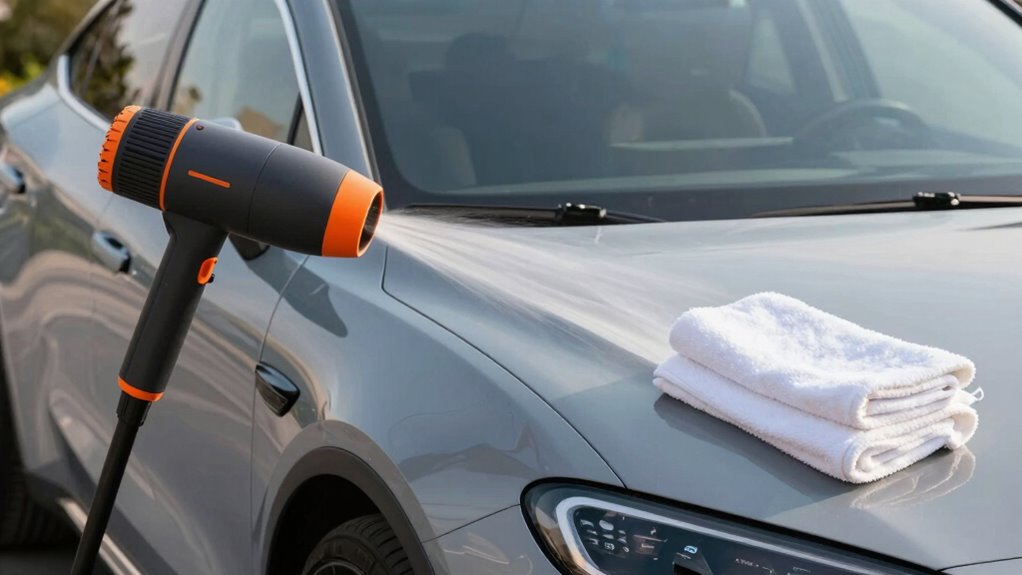

Using an air blower is the faster and safer way to dry your car because it quickly removes water, especially from hard-to-reach spots, reducing the risk of scratches or water spots. Towels can be effective but may cause micro-scratches if not used carefully and take longer to dry the entire surface. Choosing the right method can save you time and protect your paint—discover more tips to get the best results.
Key Takeaways
- Air blowers dry vehicles faster, reducing overall drying time compared to towels.
- They minimize contact, lowering the risk of scratches and swirl marks during drying.
- Towels offer precise control for detailed areas but are slower and may cause micro-scratches if misused.
- Proper technique with air blowers, including correct nozzle angle and pressure, ensures safe and effective drying.
- Combining both methods can optimize drying speed and safety while protecting your car’s finish.

KOLENDA Handheld Cordless Lightweight Powerful Car Dryer Air Blower with 1800G & 335MPH Powerful, Air Duster Electric Leaf Blower Cleaning Dryer Turbo for Patio Cleaning, Lawn Care and Car Drying
【High-Capacity Battery & Extended Runtime】KOLENDA cordless car dryer air blower features a 21V-10.0Ah battery with 4 adjustable speed…
As an affiliate, we earn on qualifying purchases.
As an affiliate, we earn on qualifying purchases.
Which Car Drying Method Is Faster and Safer?

Are air blowers or towels the faster and safer choice for drying your car? When it comes to drying speed, air blowers often lead because they can quickly remove water from hard-to-reach areas without physical contact. This reduces the risk of scratching or swirling the paint, making safety considerations a key advantage. Towels, especially if not chosen carefully, can cause micro-scratches or leave lint behind, compromising your car’s finish. Air blowers also minimize the chance of water spots caused by uneven drying. Additionally, proper drying techniques are essential for preventing damage and ensuring a high-quality finish. Using a quality microfiber towel can sometimes improve drying results, but it still carries the risk of scratches if not used carefully. While towels might be more convenient for quick touch-ups, air blowers are generally safer and faster for thorough, all-encompassing drying. Prioritizing safety considerations, air blowers offer a more efficient and gentle drying method overall. Furthermore, understanding the importance of protecting your car’s finish can help maintain your vehicle’s paint and overall appearance over time. Using the right drying method can protect your car’s finish and extend its lifespan, especially when combined with recommended maintenance practices.
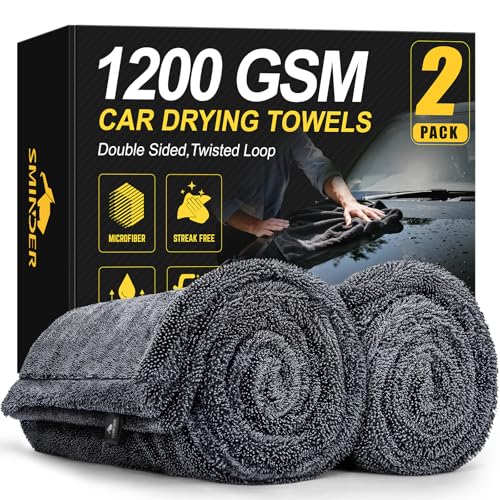
SMINDER 2-Pack 1200 GSM Car Drying Towels – Microfiber Towels for Cars (36" x 24"), Ultra-Absorbent, Streak-Free, Scratch-Free, No Water Spots, Double-Twist Pile & Edgeless Design
Streak-Free, Spot-Free Drying: With SMINDER’s car drying towels advanced 1200 GSM microfiber and twisted-loop technology, you’ll enjoy a…
As an affiliate, we earn on qualifying purchases.
As an affiliate, we earn on qualifying purchases.
Pros and Cons of Towels and Air Blowers for Car Drying
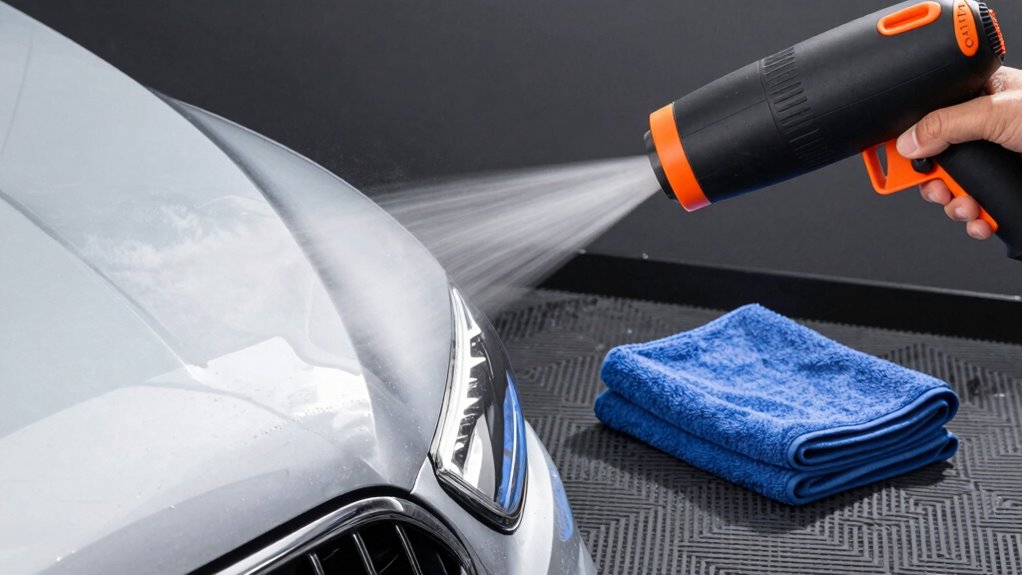
Choosing between towels and air blowers for drying your car involves weighing their respective advantages and drawbacks. Towels are affordable, versatile, and excellent for detailing accessories, allowing precise control with different drying techniques. However, they can scratch the paint if not used carefully and may leave streaks or water spots if not thorough. Proper drying techniques can significantly impact the effectiveness and safety of your drying process. To prevent potential damage, it’s important to use microfiber towels that are gentle on paint surfaces. Air blowers, on the other hand, speed up the process and reduce contact, minimizing the risk of scratches, but they require an initial investment and can be noisy. They also need proper maintenance to prevent dust buildup. Consider your drying style, budget, and patience when choosing. Towels excel in detailed work, while air blowers offer a faster, safer alternative for those prioritizing efficiency. Additionally, understanding car drying techniques can help optimize your drying process and protect your vehicle’s finish. Using air filters in your blower can also help prevent dust from settling on your car during the drying process. Incorporating proper maintenance of your tools ensures consistent performance and longevity.

Leaf Blower Cordless,Battery Powered 800,000 RPM Electric Leaf Blower with 2 x 4.0Ah Battery and Charger Handheld Blowers for Lawn Care,Dust,Snow,Car Blowing Water with 2 Extended Nozzle
【Powerful & Efficient Turbine Motor】Experience next-level blowing performance with our cordless leaf blower, engineered with turbine motor that…
As an affiliate, we earn on qualifying purchases.
As an affiliate, we earn on qualifying purchases.
How Fast Can You Dry a Car With Towels Versus Air Blowers?

When comparing drying speeds, you’ll notice that air blowers often finish faster than towels, especially on larger surfaces. Factors like your skill, the car’s size, and the equipment’s power can influence how quickly each method works. Understanding these efficiency differences helps you choose the best approach for your timing needs. Additionally, using an appropriate technique can further optimize drying time and prevent damage. Incorporating efficient methods can also reduce the risk of scratches and water spots, ensuring a safer drying process. For instance, selecting high-quality equipment that is designed for quick drying can make a significant difference in your results.
Drying Speed Comparison
Drying a car efficiently depends heavily on the method you choose, as air blowers and towels each have distinct speeds. Air blowers can dry a vehicle in about 10-15 minutes, especially with a powerful unit, reducing water spots and minimizing environmental impact since they use less water and chemicals. Towels, however, take longer—around 20-30 minutes—depending on the car’s size and drying technique.
Consider these points:
- Air blowers remove water quickly, preventing spots caused by leftover moisture.
- Towels require multiple passes to absorb water thoroughly.
- Air blowers are more consistent and reduce the risk of scratching.
- Towels may be less eco-friendly if used inefficiently, increasing water spots and waste.
Time Efficiency Factors
The speed at which you can dry a car depends largely on the method you select. Air blowers generally dry your vehicle faster because they cover large areas quickly, reducing the risk of water spots that can harm paint protection. Towels, on the other hand, require more time and effort, especially if you’re dealing with stubborn cleaning chemicals or hard-to-reach spots. Using a high-quality, absorbent towel can speed things up, but it still takes longer than an air blower. Additionally, the presence of cleaning chemicals can make towel drying more challenging, as they may leave residues or streaks if not properly removed. Proper collaboration between methods can optimize drying efficiency and safeguard your vehicle’s finish. Incorporating capacity considerations, such as the power of air blowers, can further improve drying times. In some cases, employing specialized equipment can enhance the overall process, ensuring a thorough and safe dry. Also, proper technique when using towels can significantly reduce the time and potential for damage. Moreover, choosing the right drying method based on your vehicle’s size and the environment can lead to better results. Overall, air blowers offer a significant time efficiency advantage, especially when you need a quick, thorough dry without risking damage to your paint.
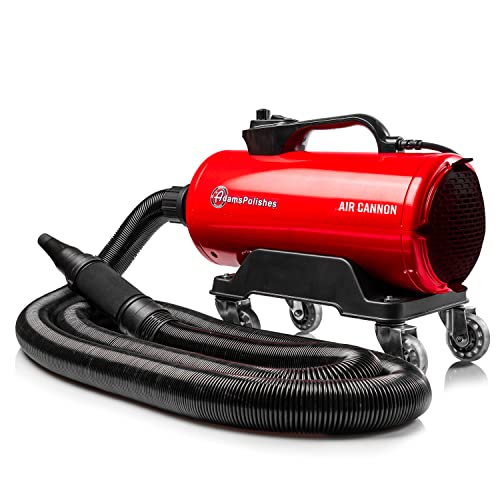
Adam's Polishes Air Cannon Car Dryer Blower – Powerful Detailing Wash | Filtered Dryers, Blowers & Blades Safer Than Microfiber Towel Cloth
✅ Protect Your Car's Finish with the Safest Touch-Free Drying Method – Say goodbye to swirl marks and…
As an affiliate, we earn on qualifying purchases.
As an affiliate, we earn on qualifying purchases.
Are Towels Safe for Your Car’s Paint and Finish?

While towels are a popular choice for drying a car, their safety for your vehicle’s paint and finish depends largely on the type and quality of the towel you use. A soft, microfiber towel is gentle and less likely to cause scratches. To guarantee safety, consider these tips:
- Use high-quality, plush microfiber towels designed for automotive use.
- Avoid rough or worn towels that can trap dirt and debris.
- Keep towels clean to prevent transferring grit, especially when applying car wax or polishing.
- Be cautious during tire cleaning, as dirt can scratch the paint if trapped in the towel.
- Regularly wash towels with proper laundering techniques to maintain their softness and effectiveness.
- Using proper drying methods like microfiber towels can significantly reduce drying time and minimize the risk of damage. Additionally, air blowers can quickly remove excess water from hard-to-reach areas without contact.
- Proper car care practices are essential for maintaining your vehicle’s shine and protecting its finish.
Using the right towel minimizes risks and helps preserve your car’s shine while preventing damage to the paint and finish.
Do Air Blowers Reduce the Risk of Scratches and Damage?
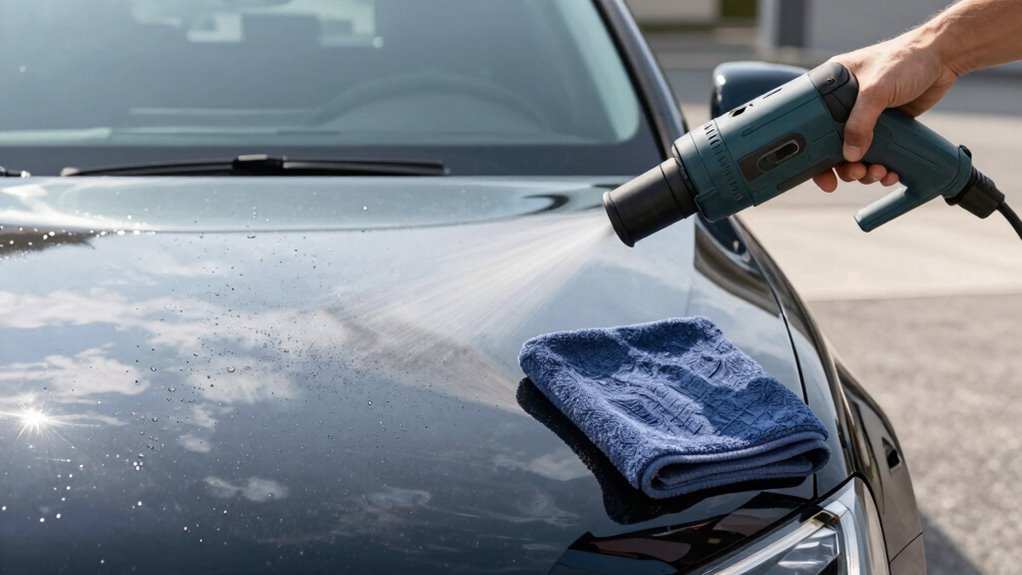
Using an air blower creates a gentle airflow that minimizes the risk of scratching your car’s surface. Since it doesn’t require physical contact, you avoid potential damage caused by towels or cloths. This reduces the chances of accidental scratches and keeps your paint looking pristine. Additionally, air blowers are often designed with durability and weather resistance in mind, making them suitable for various environments and further protecting your vehicle during the drying process. Proper system monitoring ensures the blower operates efficiently and safely, preventing overuse or malfunctions that could harm your vehicle or equipment.
Gentle Airflow Benefits
Gentle airflow from air blowers considerably reduces the risk of scratches and damage during cleaning. This airflow efficiency guarantees you avoid direct contact with delicate surfaces, making gentle drying safer for your car’s finish. Using a blower allows you to control the pressure and direction, minimizing the chance of harming paint or trim. Here are some benefits:
- Reduces friction that can cause scratches
- Prevents accidental contact with abrasive materials
- Limits the need for vigorous wiping or scrubbing
- Ensures consistent, even drying without pressure points
Reduced Contact Risks
Air blowers considerably reduce the risk of scratches and damage because they eliminate the need for direct contact with your car’s surface. Using contactless technology, they blow air across the surface, preventing abrasive contact that can cause swirl marks or scratches. This safer drying method minimizes the chance of accidentally applying too much pressure or using rough towels that can scratch paint. Additionally, air blowers promote a lower environmental impact by reducing waste and eliminating the need for paper towels or cleaning chemicals. With fewer physical interactions, you lessen the risk of damaging delicate finishes, making your drying process safer and more eco-friendly. Overall, air blowers offer a smarter, less risky way to keep your car pristine without compromising its surface.
How to Safely Use Towels for a Scratch-Free Dry
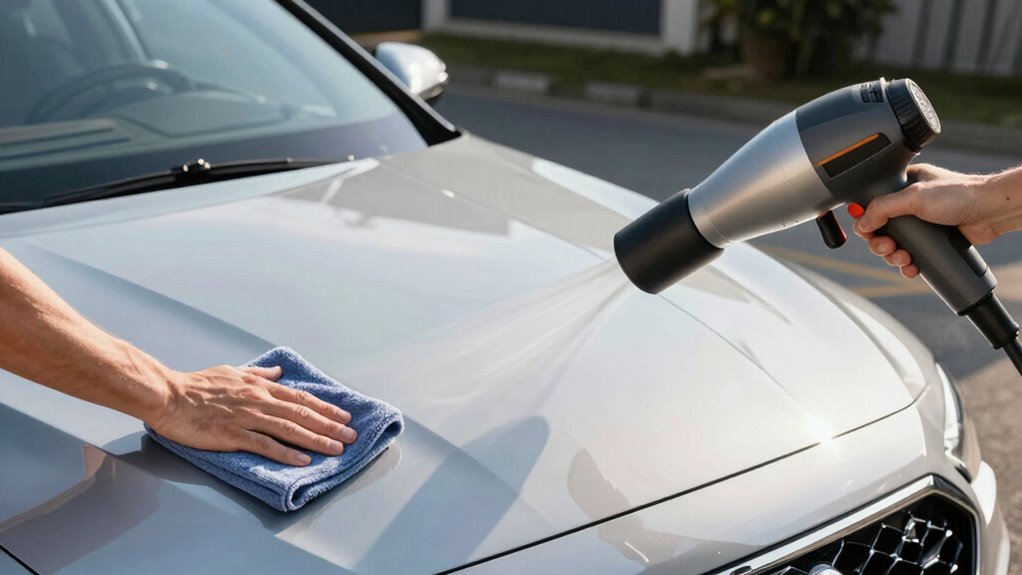
To dry your car safely with towels and avoid scratches, start by choosing a soft, microfiber cloth specifically designed for automotive use. These cloths are gentle on paint and prevent micro-scratches. When towel-drying, follow these tips:
- Use a clean, dry microfiber cloth for each section to avoid reintroducing dirt.
- Gently pat or lightly wipe, avoiding vigorous rubbing or circular motions.
- Work from top to bottom to prevent dirt from spreading.
- Consider air drying remaining moisture, reducing contact altogether.
Microfiber cloths excel at absorbing water without scratching, making them ideal for safe towel drying. While air drying can be effective, combining it with careful towel use ensures a scratch-free finish. Always prioritize gentle, deliberate movements for the best results.
Tips for Using an Air Blower Without Causing Damage
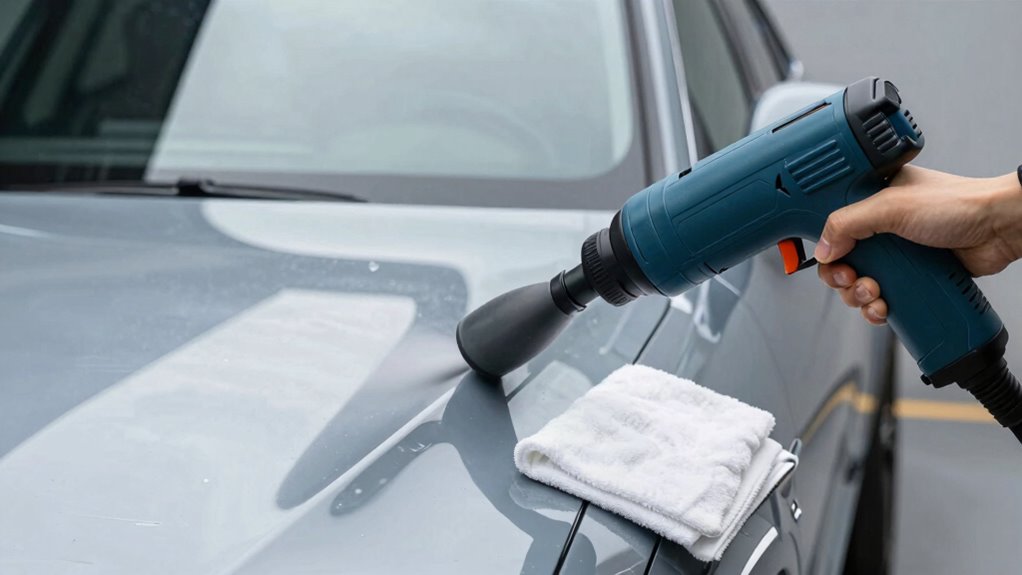
To use an air blower safely, start by positioning the nozzle correctly—keep it a slight distance from the surface to avoid direct contact. Make sure you don’t apply too much pressure, as excessive force can cause damage. Keeping these tips in mind helps you dry effectively without risking harm.
Proper Nozzle Positioning
Proper nozzle positioning is essential to prevent damage when using an air blower. You should focus on maintaining the right nozzle angle to avoid directing high-pressure air directly at sensitive areas. Here are some tips:
- Keep the nozzle at a slight angle, around 30 degrees, to gently push water off surfaces.
- Use pressure control to adjust airflow, ensuring it’s strong enough to dry but not forceful enough to cause damage.
- Avoid pointing the nozzle directly at seams or edges, which are more vulnerable.
- Maintain a consistent distance from the surface—about 6 to 12 inches—while adjusting pressure as needed.
Avoiding Excessive Pressure
Controlling the pressure of your air blower is key to preventing damage. Too much pressure can cause water to force into seams or delicate areas, risking scratches or dents. To avoid this, use a pressure regulation feature if available, setting it to a lower, gentle setting. Focus on slow, steady drying techniques that distribute airflow evenly, reducing the risk of high-pressure blasts. Keep the nozzle moving constantly, avoiding prolonged contact in one spot. Pay attention to areas like door seals, vents, and trim, which are more vulnerable to damage. By adjusting the pressure and employing proper drying techniques, you can effectively dry your car without risking harm. Proper pressure control ensures a safe, efficient drying process that preserves your vehicle’s finish.
Cost and Maintenance: Towels Versus Air Blowers
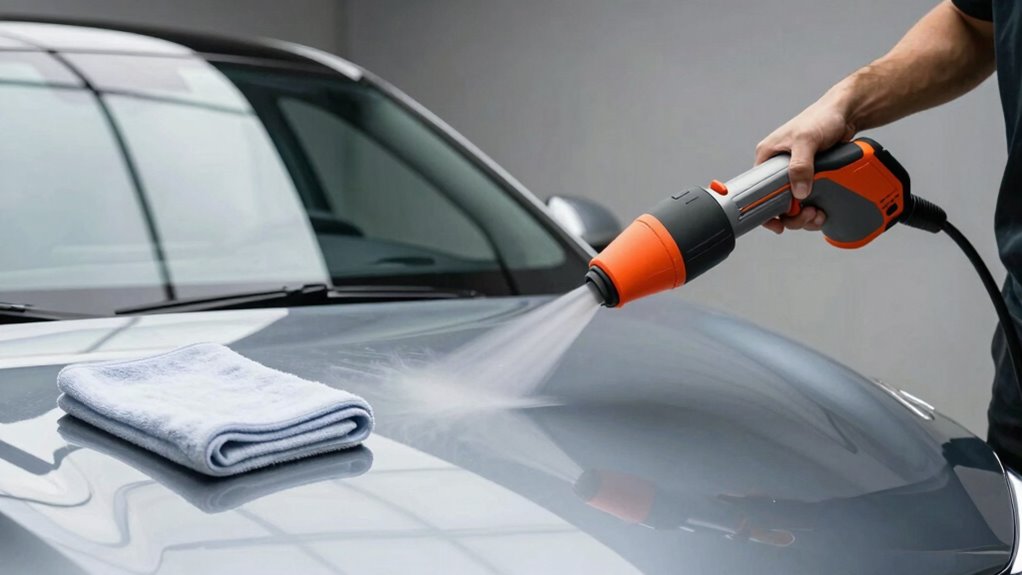
While towels may seem inexpensive upfront, they often require frequent replacement and ongoing laundering costs, making them less cost-effective over time. When comparing the cost comparison and maintenance requirements, air blowers have clear advantages. Consider these points:
- Initial investment: Air blowers cost more upfront but last longer.
- Replacement: Towels need regular replacement due to wear and tear.
- Maintenance: Air blowers require minimal upkeep, just occasional cleaning.
- Operating costs: Towels incur ongoing laundry expenses, while blowers use electricity efficiently.
Which Method Is Best for Saving Time During Car Drying?

When it comes to saving time during car drying, choosing the right method can make a significant difference. Air blowers are typically faster than towels, especially with proper detailing techniques, as they can quickly remove water from hard-to-reach areas without needing multiple passes. Towels may require more effort and multiple repetitions, which adds to drying time. Weather considerations also play a role; in humid or rainy conditions, a quicker method like an air blower helps prevent water spots and delays. If you’re aiming for efficiency, using an air blower with targeted detailing techniques ensures you dry your car faster and more thoroughly. Towels, while effective, tend to take longer and may increase the risk of scratching if not used carefully.
Final Tips: Choosing the Fastest and Safest Way to Dry Your Car

To dry your car quickly and safely, prioritize methods that balance speed with protection. First, use an air blower to avoid scratching your car’s surface and protect your car wax. Second, always make sure parking sensors are clear of water to prevent false alerts or damage. Third, gently dry around sensitive areas like door handles and mirrors to avoid water spots. Fourth, before drying, consider applying a fresh coat of car wax; it helps water bead off and speeds up drying. Remember, rushing can cause scratches or damage your sensors. By combining quick air drying with careful manual removal in tricky spots, you protect your car’s finish and electronics, making the process both faster and safer.
Frequently Asked Questions
Can Air Blowers Dry the Car Completely Without Any Towel Drying?
Air blowers can dry your car completely, but their efficiency depends on the blower’s power and design. They excel at removing most water quickly, reducing towel use. However, some residual moisture might remain in crevices or around intricate details. Using a soft, microfiber towel guarantees towel material safety and helps reach areas the blower might miss. Combining both methods provides a thorough, safe, and efficient drying process.
Are There Specific Towel Materials That Are Safer for Car Paint?
You should use microfiber towels for safe car paint drying since they’re gentle and highly absorbent, reducing the risk of scratches. Avoid terry cloth, which can be rough and cause micro-scratches over time. Microfiber safety is essential for maintaining your car’s finish. Always choose soft, high-quality microfiber towels and dry your car gently to prevent damage while ensuring a thorough, safe dry.
How Much Noise Do Commercial Air Blowers Produce During Drying?
Imagine you’re drying your car with a commercial air blower, and it whines loudly, reaching noise levels of around 80-90 decibels. In this case, the sound safety concern becomes real, especially if you’re working nearby or repeatedly. These blowers produce significant noise, which can be disruptive or harmful over time. Always wear ear protection and choose models with lower noise levels to maintain a safe, comfortable environment during drying.
Do Air Blowers Require Special Filters or Maintenance?
Air blowers typically require minimal filter maintenance, but it’s crucial to check and clean or replace filters regularly to guarantee peak performance. Some models may have specific air purifier requirements, especially if they are designed for indoor use or contain HEPA filters. Keep an eye on your blower’s filter status, follow manufacturer guidelines, and perform routine filter maintenance to prevent clogs and maintain efficient drying.
Can Using an Air Blower Cause Water Spots on the Car?
Using an air blower can cause water spots if you don’t dry the car properly afterward. When water evaporates unevenly, minerals can settle on your paint, leading to water spots and potential paint damage over time. To avoid this, keep the blower moving to prevent pooling and always follow up with a microfiber towel to guarantee a streak-free, spot-free finish. Proper technique minimizes risks and keeps your car looking its best.
Conclusion
When it comes to drying your car, using an air blower is generally faster and safer than towels, especially if you choose the right equipment and techniques. Many believe towels are gentler, but improper use can cause scratches. Studies show air blowers, when used correctly, reduce risk and save time. So, investing in a quality air blower isn’t just convenient—it’s a proven way to protect your car’s finish while getting the job done quickly.