Spot‑free rinsing with DI water works by passing purified water through ion exchange resins that remove minerals like calcium and magnesium. This ultra-pure water then dries without leaving spots or streaks, ensuring a flawless finish. It’s ideal for cleaning surfaces, vehicle detailing, and glass. If you want to understand the entire process more fully, keep exploring how these systems operate and optimize for best results.
Key Takeaways
- Deionized (DI) water is produced by passing water through ion exchange resins that remove mineral ions like calcium and magnesium.
- The resin exchanges mineral ions for hydrogen and hydroxide ions, resulting in highly pure water free from minerals that cause spots.
- When used as a rinse, DI water evaporates without leaving mineral deposits, ensuring a spot-free, streak-free finish.
- Regular system maintenance, including filter and resin replacement, is essential to maintain water purity and optimal rinsing performance.
- Properly designed DI systems ensure consistent high-quality water, making spot-free rinsing efficient and environmentally friendly.
What Is Deionized Water and How Does It Differ From Tap Water?
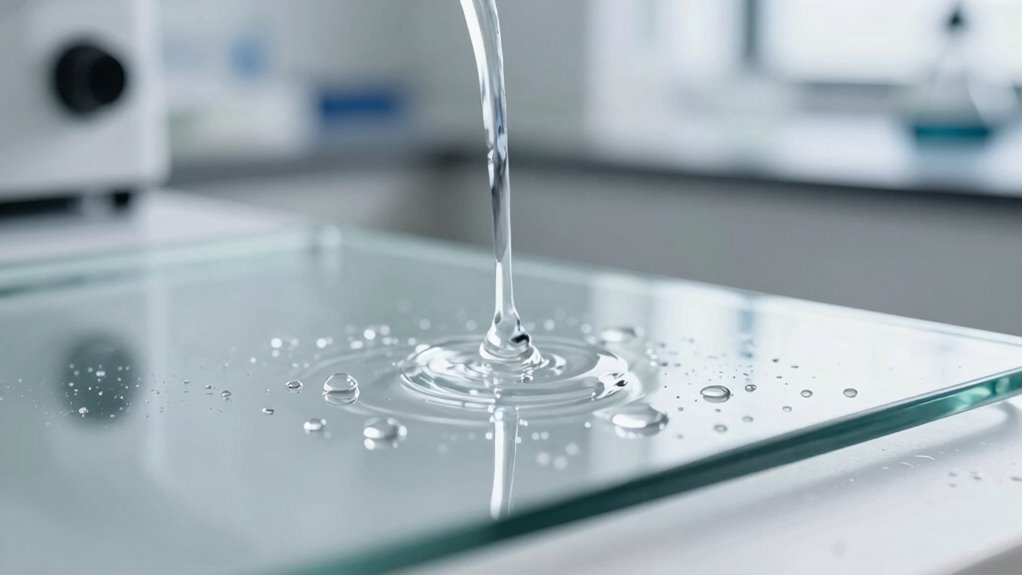
What exactly is deionized water, and how does it differ from tap water? Deionized water is a form of water that has undergone water purification to remove almost all mineral ions, such as calcium, magnesium, and sodium. This mineral elimination process results in very pure water, free from impurities that can cause spots or stains. Unlike tap water, which contains naturally occurring minerals and other contaminants, deionized water is specifically filtered to eliminate these substances. This makes it ideal for applications requiring spotless finishes, like car washing or glass cleaning. By removing minerals, DI water prevents water spots and streaks, ensuring a cleaner, clearer result. Its purity makes it a preferred choice for many industries where water quality directly impacts outcomes. Additionally, water purification techniques like deionization are essential for maintaining consistent quality in sensitive applications.
How DI Water Removes Minerals and Prevents Water Spots?
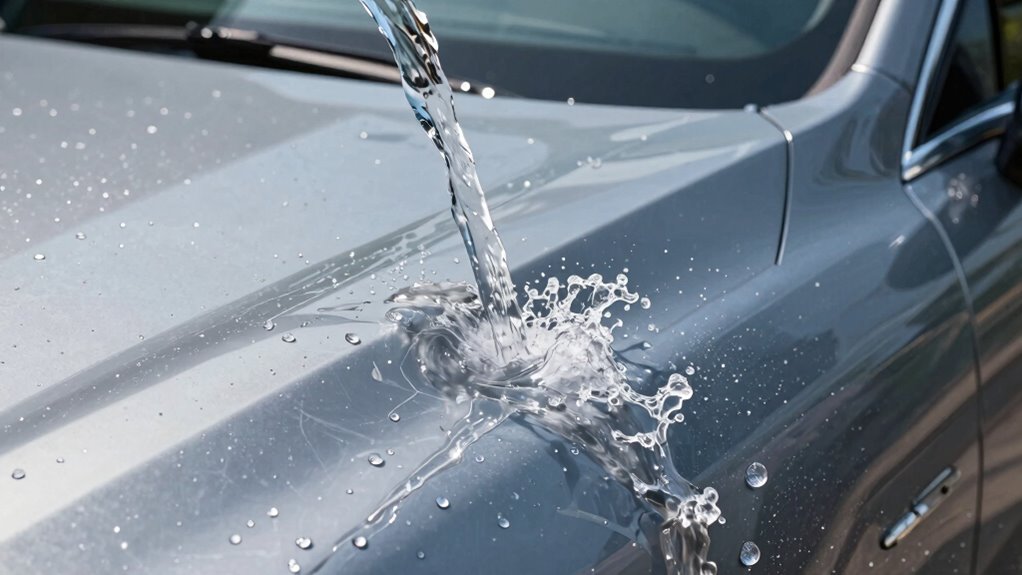
DI water removes minerals through a process called ion exchange, which strips away impurities and leaves it mineral-free. As it works, DI water flows over surfaces, preventing minerals from settling and causing water spots. This process is especially useful in sustainable gifting because it reduces the need for chemical cleaners and water wastage. Additionally, the ion exchange process is highly efficient and can be customized for different cleaning needs, making it an eco-friendly choice. This makes it ideal for keeping things clean and spot-free without leaving residues behind. Embracing calm and clarity, understanding the simple yet effective process of DI water can help you approach cleaning with a more mindful and peaceful mindset.
Mineral Removal Process
When water passes through a deionization (DI) system, it undergoes a process that effectively removes minerals like calcium, magnesium, and iron. This process uses ion exchange resins that replace these minerals with hydrogen and hydroxide ions, resulting in pure water. Removing minerals not only prevents water spots but also reduces environmental impact since less harsh chemicals are needed for cleaning. Additionally, it can lower cost considerations over time, as DI water minimizes the need for repeated rinsing or re-washing due to mineral deposits. This efficient mineral removal ensures your surfaces stay spotless and reduces the environmental footprint of your cleaning process. By understanding this process, you can see how DI systems contribute to sustainable, cost-effective water treatment. Understanding ion exchange helps clarify how mineral removal works at a molecular level. The resin regeneration process also plays a crucial role in maintaining the effectiveness of DI systems over time. Moreover, the deionization process itself is designed to be highly efficient and environmentally friendly, further emphasizing its benefits. Additionally, regular maintenance of the DI water system ensures optimal performance and longevity.
How DI Water Works
Have you ever wondered how deionized water keeps surfaces spotless and free of water spots? It all comes down to water purification and mineral removal. During the process, water passes through specialized resins that strip away ions like calcium and magnesium, which cause water spots and mineral deposits. This ion exchange effectively purifies the water, leaving it free of impurities that could leave residues. Because DI water contains very few dissolved minerals, it doesn’t leave behind any spots or streaks when it dries. Instead, it rinses surfaces cleanly, evaporating without depositing minerals. This precise mineral removal makes DI water ideal for spot-free rinsing, ensuring surfaces stay pristine without the need for additional drying or polishing. ion exchange is a key technology that enables the removal of these minerals, ensuring the water remains pure and spot-free. Additionally, the deionization process can be tailored to remove specific impurities, enhancing its effectiveness for various applications. An understanding of water filtration methods helps to appreciate how such purity levels are achieved.
Preventing Water Spots
As water passes through deionization systems, the resin beads actively remove dissolved minerals like calcium and magnesium that cause water spots. This process results in pure, mineral-free water that dries without leaving marks. Vetted by Berkley Vallone, using DI water ensures eco-friendly cleaning by reducing chemical runoff and waste. It helps conserve water because you won’t need repeated rinses or touch-ups. Preventing mineral buildup minimizes the need for harsh cleaning agents. Spot-free rinsing saves time and labor, making your process more efficient. Additionally, the deionization process guarantees consistent water quality, which is crucial for achieving reliable, streak-free results. The resin beads in DI systems are designed for durability, ensuring long-term performance and cost-effectiveness. Proper maintenance of these systems also prolongs their lifespan, providing continued cost savings over time.
Benefits of Using DI Water for Spot-Free Rinsing
Using DI water for spot-free rinsing offers significant advantages, primarily because it leaves surfaces free of mineral deposits and water spots. High water purity guarantees no residual minerals cling to surfaces, resulting in a cleaner, clearer finish. This reduces the need for additional cleaning or polishing, saving you time and effort. Additionally, using DI water has environmental benefits; since it eliminates the use of harsh chemicals and reduces wastewater, it’s a more eco-friendly option. DI water systems produce minimal waste and lower the risk of environmental contamination. By opting for DI water, you not only achieve a spotless result but also support sustainable practices. Furthermore, incorporating smart automation systems can optimize the use of DI water, ensuring efficient operation and consistent rinsing quality. Overall, the use of DI water enhances the quality of rinsing while promoting environmentally responsible solutions.
How DI Water Systems Are Used in Industry and Commercial Settings
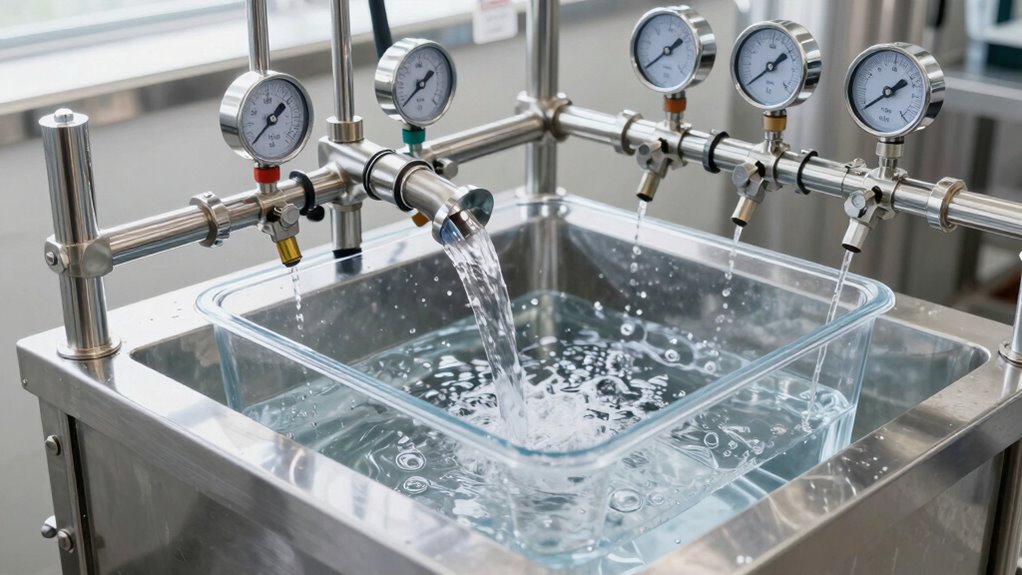
In industry and commercial settings, DI water systems play a crucial role in guaranteeing product quality and process efficiency. They support applications like:
- Industrial filtration: Removing contaminants to meet strict water quality standards.
- Electronics manufacturing: Providing ultra-pure water for cleaning sensitive components.
- Pharmaceutical production: Ensuring water purity to meet regulatory requirements.
- Food processing: Using high-quality water to maintain safety and quality.
These systems help control water quality, preventing impurities from affecting products or processes. They are essential in environments where even tiny contaminants can cause defects or failures. By integrating DI water systems, industries achieve consistent results, reduce waste, and comply with industry standards. Properly designed systems can also enhance water purification efficiency, ensuring optimal removal of impurities. This process often involves advanced deionization techniques which play a key role in achieving desired water purity levels. This ensures reliable operations and excellent product quality across diverse sectors.
Step-by-Step: How a DI Water Rinsing Process Works

When performing a DI water rinsing process, the first step is to prepare the item or surface to be cleaned. You’ll start by ensuring the water system is properly set up with effective chemical filtration, which removes contaminants that could compromise water purity. This filtration step is vital because it guarantees the water used is free of sediments, organic matter, or minerals. Additionally, the type of filtration used can influence the overall quality of the rinse. Next, you’ll activate the system, allowing purified DI water to flow over the surface or item. As the water contacts the surface, it dissolves and washes away residues, dirt, or cleaning agents, leaving behind only ultra-pure water. This process relies on the high water purity achieved through chemical filtration, ensuring a spot-free rinse without streaks or spots. Proper flow dynamics and fluid behavior are essential to maximize coverage and minimize streaking during rinsing, especially considering the movement of water over complex surfaces. Understanding the principles of Free Floating can help optimize the flow and effectiveness of the rinsing process to achieve the best results, as water flow behavior plays a crucial role in uniform coverage and residue removal. Incorporating knowledge of energetic alignment can further enhance the efficiency of the process by promoting a harmonious flow of water and contaminants away from the surface.
Common Challenges With DI Water Systems and How to Troubleshoot
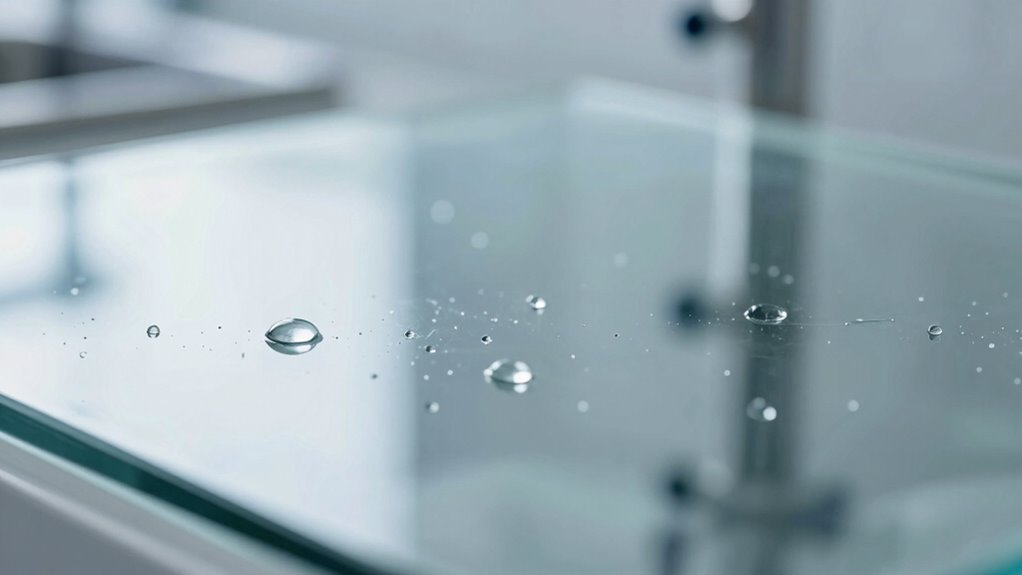
Despite careful setup, DI water systems often face common issues like reduced water purity, slow flow rates, or system clogging. To troubleshoot effectively, you should:
- Perform regular system maintenance to prevent mineral buildup and component wear.
- Conduct water quality testing to identify contaminants or increased total dissolved solids (TDS).
- Check filters and resin beds for clogging or exhaustion, replacing them as needed.
- Inspect for leaks or blockages that could restrict flow.
- Stay informed about regional flavors and chicory/coffee insights, which can influence water quality and system performance.
Addressing these challenges promptly helps maintain peak performance. Keeping up with routine system maintenance and water quality testing ensures your DI system produces high-purity water consistently, avoiding costly downtime or compromised rinsing results.
Choosing the Right DI Water System for Your Needs
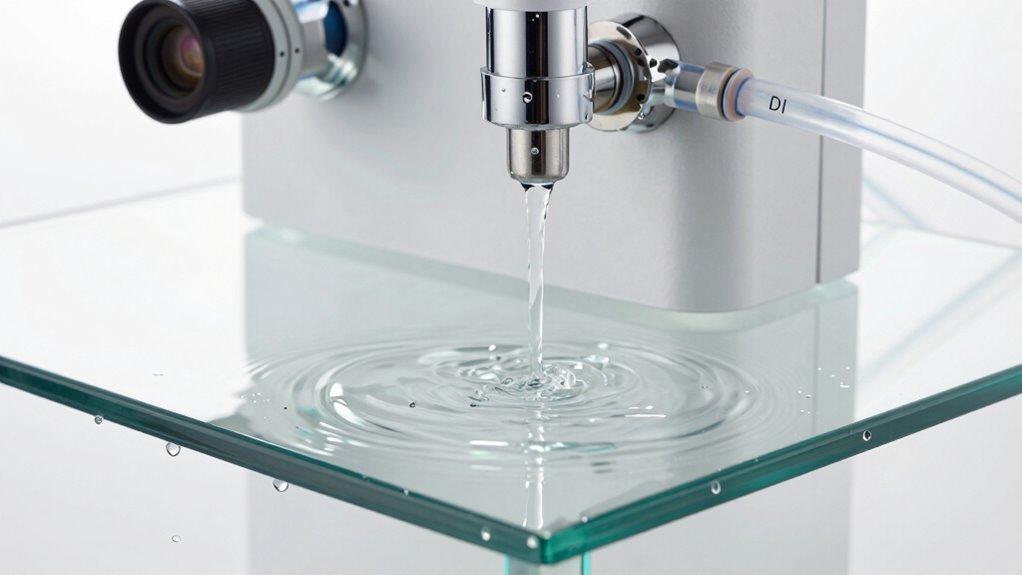
Choosing the right DI water system depends on understanding your specific water quality requirements, production volume, and available space. To guarantee spot-free rinsing, focus on systems that excel in water filtration and mineral removal. If your application demands ultra-pure water, select systems with multi-stage filtration that target dissolved solids and contaminants. For higher volumes, consider larger-capacity units to meet demand without sacrificing water quality. Space constraints may influence whether you choose compact or modular systems. Additionally, evaluate the system’s ability to remove minerals effectively, preventing residue buildup. By aligning your needs with a system designed for precise water filtration and mineral removal, you’ll ensure consistent, spot-free rinsing results while optimizing operational efficiency.
Additional Advantages of DI Water Beyond Water Spot Prevention
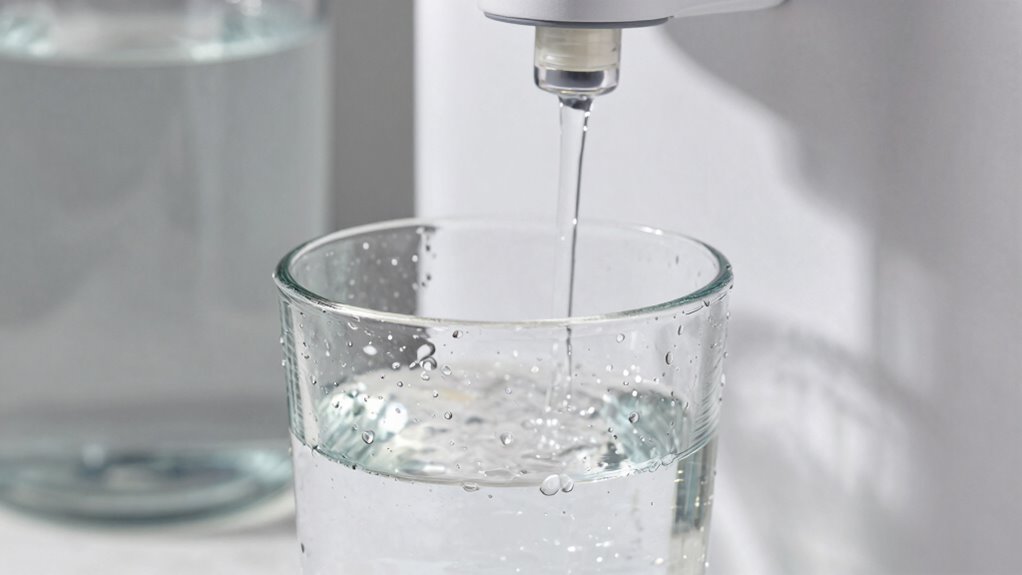
While achieving spot-free rinsing is a key benefit of DI water systems, their advantages go much further. High water purity assures you get cleaner results in various applications. Additionally, DI water reduces the need for harsh chemicals, supporting environmental benefits like decreased chemical runoff. Here are some additional benefits:
DI water systems enhance product quality, reduce chemical use, prevent equipment corrosion, and promote safer work environments.
- Improved product quality due to consistent water purity.
- Reduced chemical usage, lowering environmental impact.
- Less equipment corrosion from minerals and impurities.
- Enhanced safety by minimizing chemical exposure for workers.
Frequently Asked Questions
How Often Should I Replace the Resin in My DI Water System?
You should replace the resin in your DI water system based on its resin lifespan, which typically ranges from 6 to 12 months. Monitor the system’s performance and resin condition regularly; when your water starts showing higher TDS levels or the system’s efficiency drops, it’s time for a resin replacement. Following a proper replacement schedule ensures peak spot-free rinsing and maintains water purity.
Can DI Water Corrode or Damage Certain Materials or Surfaces?
Did you know that DI water, with a 0 TDS level, is highly reactive? It can cause material compatibility issues and surface corrosion if not used carefully. You should be cautious because some metals and plastics may degrade or corrode when exposed to pure water. Always check your materials’ compatibility before using DI water, and avoid prolonged contact to prevent damage or surface corrosion.
What Maintenance Is Required to Keep DI Water Systems Functioning Properly?
To keep your DI water system functioning properly, you need to perform regular system calibration to guarantee accurate resin levels and water purity. You should also monitor resin saturation and schedule resin regeneration when necessary to maintain system efficiency. Additionally, check for any leaks or clogs, clean filters regularly, and replace resin when it becomes exhausted. Proper maintenance ensures spot-free rinsing and extends your system’s lifespan.
Are There Environmental Considerations When DIsposing of Used DI Water?
Yes, there are environmental considerations when disposing of used DI water. You should manage it responsibly by following wastewater management protocols to minimize environmental impact. Disposing of DI water improperly can harm local ecosystems, so always check your local regulations. Using proper filtration or recycling methods helps reduce waste and environmental footprint. Being mindful of disposal practices guarantees you protect the environment while maintaining compliance.
How Do Temperature and Pressure Affect DI Water System Performance?
You’ll find that temperature and pressure critically impact your DI water system’s performance. Higher temperatures can reduce water viscosity, affecting flow rate adjustments and system calibration, making it harder to maintain consistent purity. Increased pressure can improve flow but may strain components. Regularly check and adjust flow rates, and ensure your system is calibrated for current conditions to optimize efficiency and prevent issues caused by fluctuating temperature and pressure levels.
Conclusion
Now that you understand how deionized water works and its role in preventing spots, imagine what could happen if your system isn’t set up correctly. Small mistakes might seem harmless, but they can lead to unexpected results. Are you truly prepared to achieve flawless, spot-free rinsing every time? The key lies in knowing the right system and maintenance—because when it comes to perfect results, missing a step could make all the difference.