
You don’t need to worry about oil changes with electric cars because they don’t have engines that require oil. Maintenance is simpler; you mainly check batteries, tires, brakes, and fluids like coolant. Regular inspections help keep everything running smoothly and prevent bigger issues later. While other components need attention, oil changes aren’t part of the routine. Keep exploring to learn more about how to keep your electric vehicle in top shape.

Get business pricing on garage and car supplies
- Business-only prices and quantity discounts
- Tax-exempt purchasing
- Multiple users, one account, clear invoices
Key Takeaways
- Electric cars do not require oil changes as they lack internal combustion engines.
- Routine maintenance focuses on battery health, tires, brakes, and fluid levels.
- Regular inspections help identify issues with coolant, brakes, and suspension components.
- Proper maintenance extends vehicle lifespan and ensures safety and efficiency.
- Monitoring battery and fluid systems is essential for optimal electric vehicle performance.

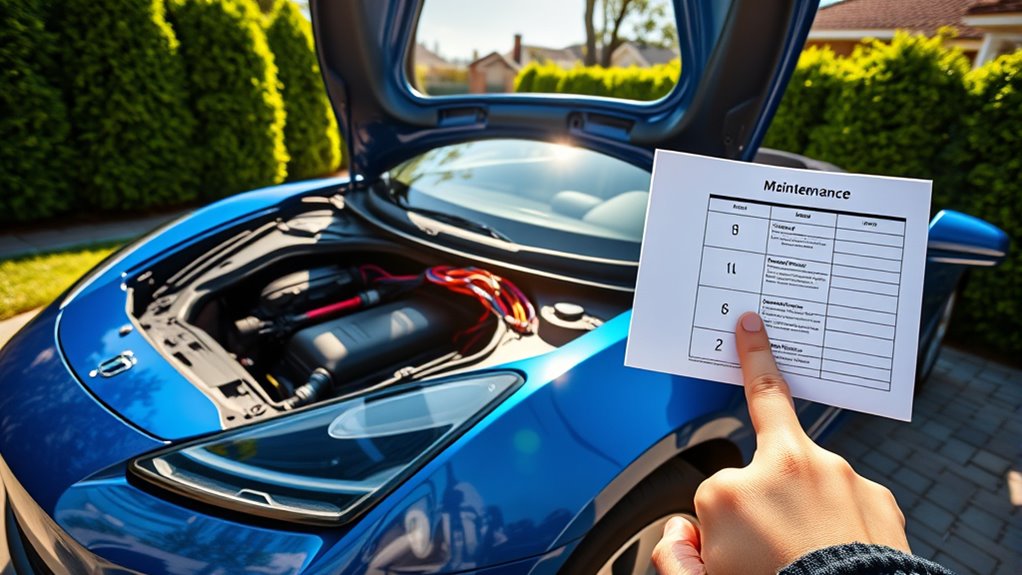
Ever wondered how maintaining an electric car differs from traditional vehicles? The answer lies mostly in the fewer maintenance requirements, but some tasks still matter. For starters, electric cars don’t need oil changes, which is a significant advantage. Instead, you focus on other key areas to keep your vehicle running smoothly. One of these is monitoring your battery lifespan. Although electric batteries are built to last many years, their capacity gradually diminishes over time. Regularly checking the health of your battery can help you spot potential issues early. Manufacturers often recommend periodic diagnostics to guarantee your battery is operating efficiently. Proper maintenance can extend its lifespan, saving you money in the long run. Additionally, keeping your tires in good shape is essential, especially through consistent tire rotation. Electric cars tend to be heavier than their gas counterparts because of their batteries, which puts extra stress on the tires. Rotating them regularly ensures even wear, which prolongs their life and maintains excellent handling. It’s a simple task that pays off in better safety and performance. Unlike traditional cars, which require oil changes, electric vehicles have fewer fluid replacements. However, they do have other fluids, like coolant for the battery and electric motor, which need periodic checks. You should keep an eye on these to prevent overheating and guarantee the longevity of your powertrain. The brakes also tend to last longer in electric cars due to regenerative braking systems that reduce wear. Still, it’s wise to have your brake system inspected periodically to catch any issues early. Regular tire rotation not only helps with tire lifespan but also enhances safety by maintaining consistent traction. Alongside this, your vehicle’s suspension and steering components should be checked periodically, especially if you notice any unusual noises or handling problems. Additionally, understanding high refresh rates and their impact on vehicle performance can help you optimize your electric car’s handling and responsiveness. While electric cars are simpler in some ways, neglecting routine checks can lead to bigger issues down the line. It’s essential to stay on top of these tasks, even if they’re less frequent than oil changes. In conclusion, maintaining your electric car involves focusing on battery health, tire rotation, fluid levels, and brake inspections. These steps help guarantee your vehicle remains reliable, safe, and efficient for years to come. By understanding these basics and staying proactive, you can enjoy the benefits of your electric vehicle without the hassle of traditional maintenance routines.
electric vehicle battery diagnostic tool
As an affiliate, we earn on qualifying purchases.
As an affiliate, we earn on qualifying purchases.
Frequently Asked Questions
How Often Should I Check the Electric Car’S Battery Health?
You should check your electric car’s battery health regularly, ideally every 3 to 6 months. Perform battery diagnostics to monitor its condition and guarantee peak performance. Pay attention to your charging routines, avoiding overcharging or deep discharges, which can affect battery longevity. Regular inspections help identify issues early, allowing you to maintain efficient operation and extend your battery’s lifespan. Staying proactive keeps your electric vehicle running smoothly.
Do Electric Cars Require Coolant Replacements?
Think of your electric car’s coolant as its lifeblood, keeping things running smoothly. Unlike traditional engines, you don’t need oil changes, but coolant replacements are essential for engine maintenance. Typically, you should check coolant levels regularly and replace it every 3-5 years or as recommended by your manufacturer. This prevents overheating and keeps your EV in top shape, ensuring a hassle-free ride without the need for oil change worries.
What Maintenance Is Needed for Electric Vehicle Tires?
For your electric vehicle, proper tire maintenance is essential. You should regularly perform tire rotations to guarantee even wear and extend tire life. Additionally, routinely inspect the tread depth to identify early signs of uneven wear or damage. Keeping your tires properly maintained not only improves safety and handling but also maximizes your EV’s efficiency and range. Make these checks part of your regular maintenance routine for peak performance.
Are Brake Systems in Electric Cars Maintenance-Free?
Your electric car’s brake system isn’t completely maintenance-free, but it requires less attention. You’ll need to monitor brake pad wear and perform occasional brake fluid checks. Since electric cars use regenerative braking, brake pads last longer, reducing maintenance frequency. Still, it’s smart to have a professional inspect your brakes periodically to guarantee safety and peak performance. This way, you’ll enjoy smooth braking without surprises.
How Do I Maintain the Electric Motor’S Performance?
To maintain your electric motor’s performance, you should regularly check charging station locations to guarantee convenient access and prevent range anxiety. Use regenerative braking to maximize energy efficiency and reduce wear on braking components. Keep the motor clean and inspect electrical connections periodically. Follow manufacturer guidelines for maintenance schedules, and stay attentive to any unusual noises or performance issues to catch problems early and keep your electric car running smoothly.
Conclusion
In summary, electric cars require far less maintenance than traditional vehicles, with no oil changes needed. For example, imagine you own an EV and only need to check the tire pressure and brake fluid occasionally. This simplicity means less time and money spent on upkeep, letting you enjoy your drives more. So, embrace the low-maintenance benefits of electric cars and save yourself the hassle of routine oil changes altogether.
Fall Picks
fall essentials
As an affiliate, we earn on qualifying purchases.