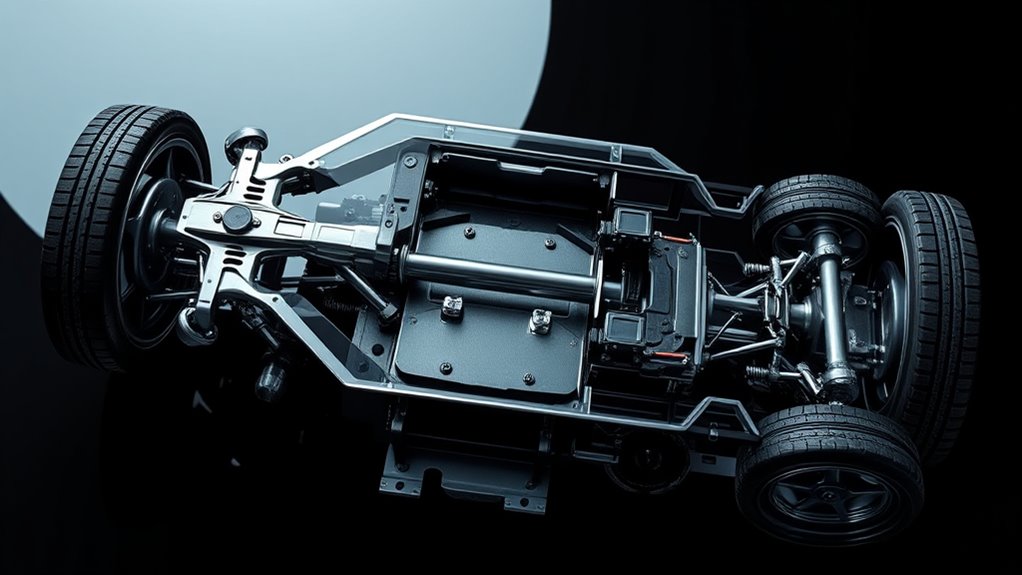

Drivetrain layouts—FWD, RWD, and AWD—determine how your vehicle delivers power to the wheels, affecting handling, performance, and versatility. FWD pushes power to the front wheels, making it cost-effective and great for winter driving. RWD sends power to the rear wheels, offering better balance for sporty driving but less traction on slippery roads. AWD distributes power to all four wheels, giving you improved grip in challenging conditions. Continuing will help you understand which layout suits your driving needs best.
Key Takeaways
- FWD sends power to front wheels, offering cost-effective, good traction, and compact design ideal for daily commuting.
- RWD delivers power to rear wheels, providing better handling, balance, and is favored in sports cars and trucks.
- AWD distributes power to all four wheels simultaneously, enhancing traction, stability, and off-road capabilities across various conditions.
- Electric vehicles often use specialized layouts to optimize efficiency, performance, and off-road ability, differing from traditional drivetrain types.
- Choosing the right drivetrain depends on driving conditions, performance needs, off-road capability, and budget considerations.
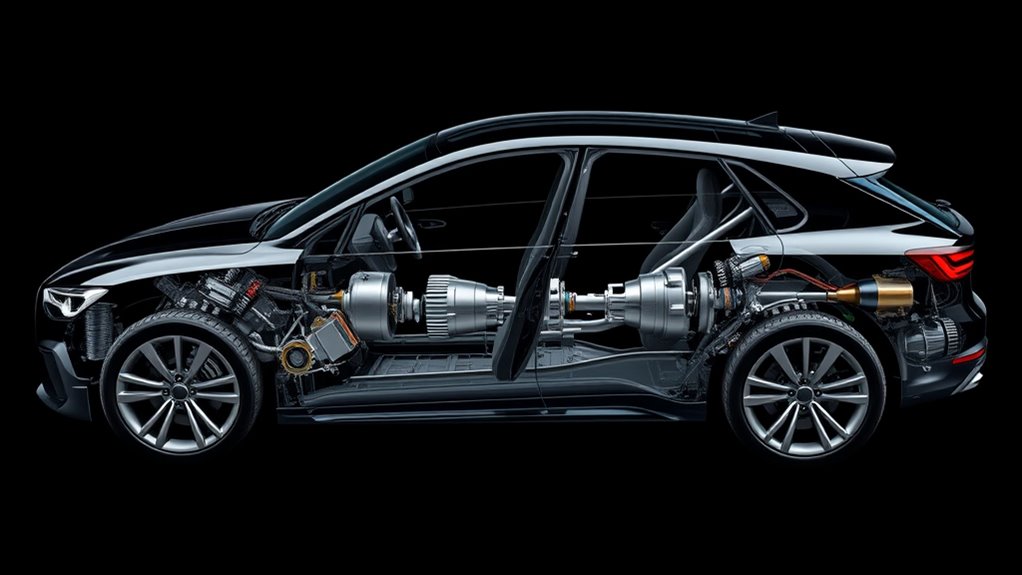
Have you ever wondered how a vehicle’s power reaches the wheels? It’s a fascinating process that depends heavily on the drivetrain layout. Understanding the differences between front-wheel drive (FWD), rear-wheel drive (RWD), and all-wheel drive (AWD) can help you make smarter choices when it comes to your vehicle. Each setup has its own strengths and weaknesses, especially when considering driving conditions and vehicle types. For example, electric vehicles often utilize these layouts differently to maximize efficiency and performance, including off-road capabilities for some models.
Understanding how drivetrain layouts like FWD, RWD, and AWD influence vehicle performance helps you choose the perfect car for your needs.
In FWD vehicles, the engine’s power is sent to the front wheels. This setup is popular because it’s compact, cost-effective, and provides good traction in slippery conditions. When you drive a FWD car, you’ll notice it tends to handle well in rain or snow, making it a practical choice for everyday commuting. It also simplifies manufacturing, which can translate to lower prices. However, FWD vehicles might not offer the same level of performance or off-road capabilities that other layouts provide, especially when you venture onto uneven terrains. Their weight distribution favors the front, which can impact handling in more demanding environments.
RWD vehicles, on the other hand, transfer power to the rear wheels. This layout is often associated with sports cars and trucks because it offers better balance and handling, especially during spirited driving. When you accelerate in a RWD car, you’ll notice a more dynamic feel—power pushes the car forward, giving a sense of control and agility. This setup also benefits vehicles with larger engines, as it distributes weight more evenly. Yet, RWD isn’t the best choice for icy or snowy roads unless supplemented with specialized tires or advanced traction control. Its off-road capabilities are limited, as RWD vehicles can struggle on loose or uneven surfaces since only the rear wheels are actively driven.
AWD systems combine both front and rear wheels, providing power to all four at the same time. If you’re looking for versatility, AWD can handle a variety of conditions—wet, dry, snow, or off-road trails. Many electric vehicles feature AWD to enhance traction and acceleration, especially in challenging terrains. This layout excels in off-road capabilities, allowing you to traverse rough terrains with confidence. It offers a balance of performance and stability, making it suitable for drivers who need a vehicle that can adapt to changing conditions. While AWD tends to be more complex and expensive, it offers peace of mind when driving in unpredictable environments or tackling off-road adventures.
Additionally, electric vehicle drivetrain layouts often differ from traditional setups to optimize efficiency and performance, which is especially important given the unique characteristics of electric motors. Ultimately, your choice depends on how you plan to use your vehicle. Whether it’s for daily commuting, spirited driving, or conquering off-road trails, understanding drivetrain layouts helps you select the right vehicle for your needs.
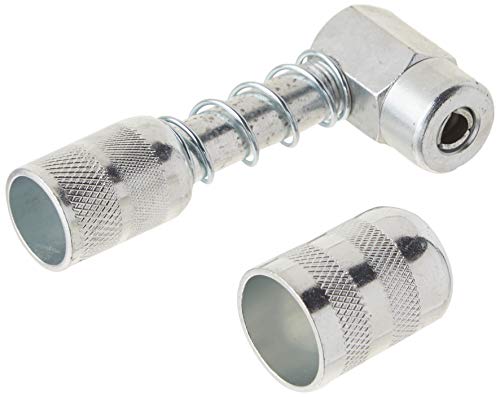
LUMAX LX-1404 Silver 90 Degree Grease Coupler for Hard-to-Reach Grease Fittings on Cars, Trucks, Farm Equipment; Ideal for Lubrication of Front and All-Wheel Drive Vehicles
90° GREASE COUPLER FOR TIGHT SPACES: Easily lubricates hard-to-reach grease fittings on cars, trucks, farm equipment, and front/all-wheel…
As an affiliate, we earn on qualifying purchases.
As an affiliate, we earn on qualifying purchases.
Frequently Asked Questions
How Do Drivetrain Layouts Impact Vehicle Maintenance Costs?
Your drivetrain layout influences maintenance costs mostly through the cost comparison and maintenance complexity. FWD vehicles tend to be cheaper and simpler to maintain because of fewer parts, like driveshafts and differentials. RWD and AWD systems are more complex, requiring more frequent checks and repairs, which can drive up costs. So, choosing a FWD can save you money, while RWD and AWD might involve higher maintenance expenses over time.
Which Drivetrain Layout Is Best for Off-Road Driving?
You should choose an AWD drivetrain for off-road driving because it offers better off-road traction and rugged durability. With AWD, power distributes to all four wheels, helping you conquer uneven terrain, mud, and rocks with ease. This layout provides enhanced stability and control, making it ideal for challenging off-road conditions. So, if you want reliable performance in rugged environments, AWD is your best choice.
Can Drivetrain Types Be Changed After Vehicle Purchase?
Yes, you can change drivetrain types after buying a vehicle through aftermarket conversions or drivetrain swaps. While it’s possible, it’s a complex process that requires significant mechanical work and expertise. You’ll need to modify components like the transmission, axles, and possibly the chassis. Before proceeding, consider the cost and practicality, and consult with a professional to make certain the swap aligns with your vehicle’s structure and your driving needs.
How Do Drivetrain Layouts Affect Vehicle Safety Features?
Drivetrain layouts are like different dance partners, each influencing your vehicle’s safety. They directly impact vehicle stability and traction control, helping you stay steady on the road. For example, AWD offers better grip in slippery conditions, enhancing safety. Rear-wheel drive may be sportier but less stable in rain or snow. Understanding these effects helps you choose the right drivetrain for your safety needs, ensuring confident, controlled driving.
Are There Environmental Benefits Associated With Specific Drivetrain Types?
Yes, certain drivetrain types can offer environmental benefits. For example, FWD vehicles often have better fuel efficiency, supporting emissions reduction and eco-friendly technology. AWD systems, while enhancing traction, tend to consume more fuel, potentially increasing emissions. Choosing a drivetrain that maximizes efficiency helps reduce your vehicle’s carbon footprint, making it more eco-conscious. By understanding these differences, you can select a drivetrain that aligns with your environmental goals.

DRIVE UP Club Car DS Front Hub Assembly, Golf Cart Front Wheel Hub with Bearings Seals Kit for Club Car DS 1981-2003 Gas and Electric Golf Carts, OEM 1011892
Compatible Models: Club Car front hubs with wheel bearing fits Club Car DS 1981-2003 gas or electric golf…
As an affiliate, we earn on qualifying purchases.
As an affiliate, we earn on qualifying purchases.
Conclusion
Just like a skilled conductor chooses the right arrangement for a symphony, selecting the perfect drivetrain layout guarantees your vehicle performs at its best. Whether you prefer the agility of FWD, the power of RWD, or the versatility of AWD, understanding these setups helps you make informed choices. Remember, each layout has its own rhythm—find the one that harmonizes with your driving style and needs, and you’ll navigate the road like a maestro leading an orchestra.

Pincuttee 14pcs Car Decal Stickers,Wheel Rim Decal Sticker,Sport Logo Reflective Stickers,Sport Emblem Car Rear Bumper Sticker,Rear Mirror Decals for All Vehicles(Red,14PCS)
✔【Material】Vinyl material; Durable, flexible and easy to use, with memory function and stretch ductilit,Which can quickly remove the…
As an affiliate, we earn on qualifying purchases.
As an affiliate, we earn on qualifying purchases.

Swanson Tool P0110 Little Blue Book of Instructions For Roof & Stairway Layout
The Swanson essential guide to easily determine hip, valley, common, and jack rafter lengths for any roofing project…
As an affiliate, we earn on qualifying purchases.
As an affiliate, we earn on qualifying purchases.