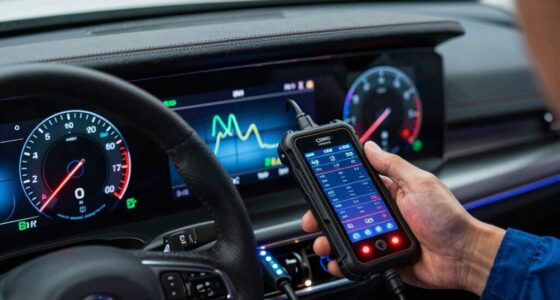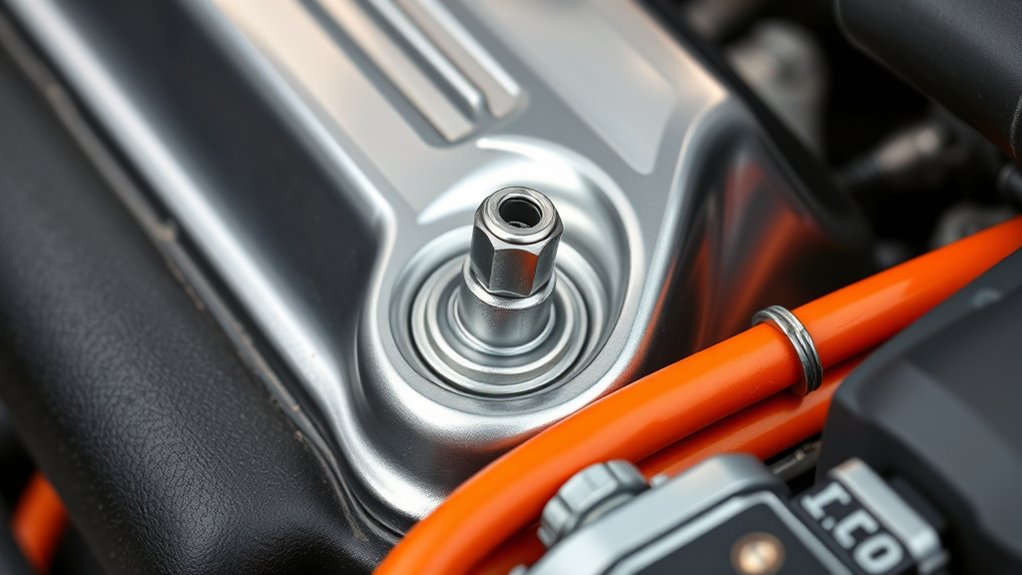

Your engine coolant temperature sensor monitors your engine’s temperature and sends real-time data to your vehicle’s computer. This allows the ECU to adjust the fuel mixture, control the radiator fan, and guarantee your engine runs efficiently without overheating or running too cold. Proper operation keeps your engine performing well and prevents damage. If you’re interested, there’s more to discover about how this essential component keeps your vehicle running smoothly.
Key Takeaways
- Detects engine coolant temperature during operation and sends data to the ECU.
- Helps regulate the fuel mixture for optimal engine performance.
- Controls radiator fan activation based on temperature readings.
- Prevents engine overheating or running too cold by ensuring proper cooling.
- Assists in early diagnosis of cooling system issues and sensor malfunctions.
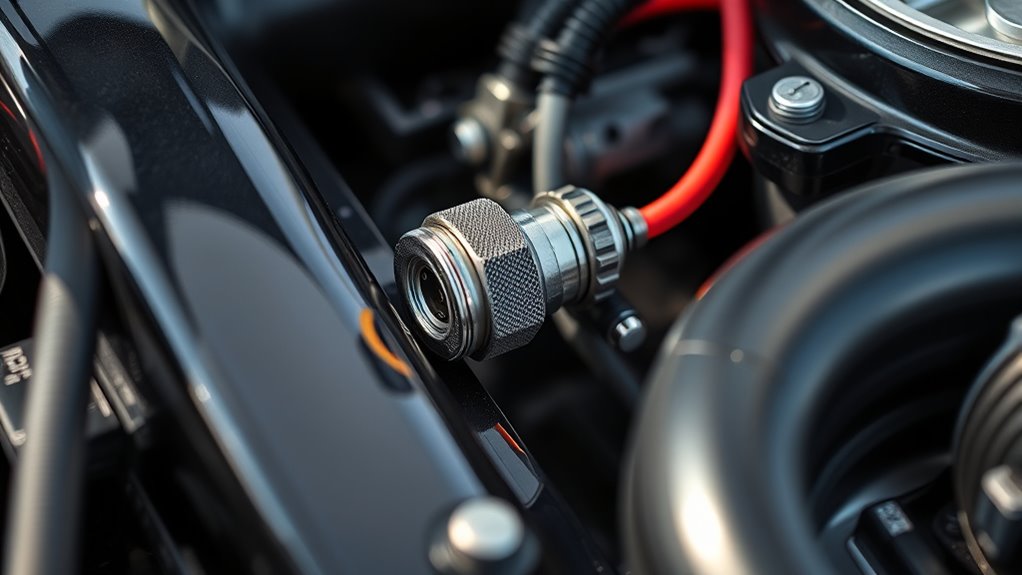
Have you ever wondered how your vehicle knows when it’s running hot or cold? It’s all thanks to the engine coolant temperature sensor. This small device plays a crucial role in keeping your engine running smoothly and preventing damage. When your engine heats up during operation, the coolant sensor detects the temperature and sends that information to your vehicle’s engine control unit (ECU). The ECU then uses this data to make critical adjustments, like regulating fuel mixture or controlling the radiator fan, ensuring ideal engine performance.
Understanding how the coolant sensor works is essential for proper coolant sensor diagnostics. When the sensor malfunctions, it can send false readings or stop transmitting data altogether. This can lead to inaccurate engine temperature readings, which may cause the engine to run too hot or too cold. Inaccurate readings can also hinder engine overheating prevention efforts. If your sensor isn’t functioning properly, your vehicle might not activate the cooling system at the right time, risking overheating or unnecessary wear on engine components. Diagnosing issues with the coolant sensor involves checking the wiring, testing the sensor’s resistance, and verifying the signals it sends to the ECU. A faulty sensor might display inconsistent readings or trigger warning lights on your dashboard, alerting you to a potential problem.
When your coolant sensor is working correctly, it helps maintain the right engine temperature through real-time data analysis. This ensures your engine operates efficiently and avoids unnecessary stress. Proper coolant sensor diagnostics can uncover problems early, saving you from costly repairs and breakdowns. Recognizing symptoms of a faulty sensor, like fluctuating temperature gauge readings, engine overheating, or poor fuel economy, allows you to address issues before they escalate. Regularly monitoring engine data and understanding sensor signals can enhance vehicle reliability. Replacing a defective coolant sensor is usually straightforward and can markedly improve your vehicle’s performance.

ACDelco Gold 213-4514 (19236568) Engine Coolant Temperature Sensor
Professional, premium aftermarket replacement
As an affiliate, we earn on qualifying purchases.
As an affiliate, we earn on qualifying purchases.
Frequently Asked Questions
How Often Should I Replace My Engine Coolant Temperature Sensor?
You should replace your engine coolant temperature sensor every 50,000 to 100,000 miles or if your diagnostic tools indicate inaccurate readings. Regular sensor calibration helps guarantee reliable performance, so if you notice engine overheating or poor fuel economy, consider replacing it sooner. Using diagnostic tools can confirm if the sensor’s faulty, guiding you to replace it before it causes further engine issues. Proper maintenance keeps your engine running smoothly.
Can a Faulty Sensor Cause Engine Overheating?
A faulty sensor can definitely cause engine overheating, as it may send incorrect data, leading to improper coolant mixing or sensor calibration issues. Studies show that 30% of engine problems stem from sensor malfunctions. When the sensor malfunctions, it can cause the engine to run hotter than necessary, risking overheating. Regularly checking and replacing a failing coolant temperature sensor helps maintain proper temperature regulation and prevents costly engine damage.
Is Sensor Replacement a DIY or Professional Job?
Replacing the sensor can be a DIY job if you’re comfortable with basic tools. You’ll need to locate the sensor, which is usually near the radiator or engine block, and guarantee proper sensor calibration afterward. However, if you’re unsure about the sensor location or how to handle calibration, it’s best to consult a professional. Proper replacement ensures your engine’s temperature readings stay accurate and prevent overheating issues.
What Are the Signs of a Failing Coolant Temperature Sensor?
Signs of a failing coolant temperature sensor include sudden stalls, sluggish starts, and erratic engine behavior. You might notice coolant leaks around the sensor, or the dashboard warning light flickering. The sensor’s calibration can drift, causing incorrect temperature readings. This misreading can lead to overheating or poor fuel efficiency. Catch these cues early to prevent severe engine damage and make certain your vehicle runs smoothly and safely.
How Does the Sensor Impact Fuel Efficiency?
Your coolant temperature sensor impacts fuel efficiency by helping your engine regulate coolant temperature properly. When the sensor functions correctly, it provides accurate data for ideal fuel mixture, improving efficiency. If the sensor malfunctions, it can cause poor coolant regulation, leading to incomplete combustion and increased fuel consumption. Regular sensor diagnostics ensure your system works correctly, maintaining fuel economy and preventing potential engine issues caused by inaccurate temperature readings.
ACDelco Gold 213-4514 (19236568) Engine Coolant Temperature Sensor
Professional, premium aftermarket replacement
As an affiliate, we earn on qualifying purchases.
As an affiliate, we earn on qualifying purchases.
Conclusion
Understanding your engine coolant temperature sensor is vital, as it helps your vehicle run efficiently and avoids overheating. Did you know that a faulty sensor can cause your engine to consume up to 25% more fuel? Regularly checking this sensor guarantees peak performance and saves you money in the long run. Keep an eye on it, and you’re more likely to prevent costly repairs while keeping your engine running smoothly for miles to come.

ANCEL AD310 Classic Enhanced Universal OBD II Scanner Car Engine Fault Code Reader CAN Diagnostic Scan Tool, Read and Clear Error Codes for 1996 or Newer OBD2 Protocol Vehicle (Black)
CEL Doctor: The ANCEL AD310 is one of the best-selling OBD II scanners on the market and is…
As an affiliate, we earn on qualifying purchases.
As an affiliate, we earn on qualifying purchases.
ACDelco Gold 213-4514 (19236568) Engine Coolant Temperature Sensor
Professional, premium aftermarket replacement
As an affiliate, we earn on qualifying purchases.
As an affiliate, we earn on qualifying purchases.