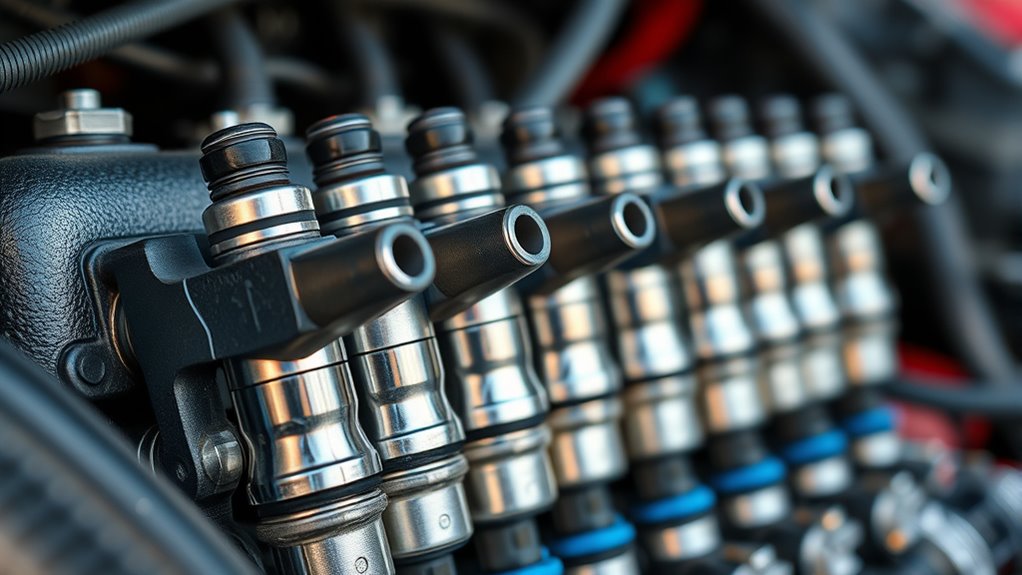

Fuel injectors are vital for delivering the right amount of fuel into your engine’s combustion chambers at the perfect time, helping your vehicle run smoothly, efficiently, and cleanly. They atomize fuel into a fine mist for better mixing with air, which guarantees ideal combustion. However, issues like clogs, dirt, or timing problems can cause rough idling, hesitation, or reduced power. Understanding these functions and common problems can help you keep your engine performing at its best.
Key Takeaways
- Fuel injectors precisely deliver and atomize fuel into the engine for efficient combustion.
- Proper spray pattern and timing are essential for smooth engine performance and fuel efficiency.
- Common issues include clogged injectors, poor spray quality, and incorrect timing, leading to rough idling or hesitation.
- Faulty injectors or sensors can cause misfires, increased emissions, and decreased engine power.
- Regular maintenance and cleaning help prevent injector problems and ensure optimal engine operation.
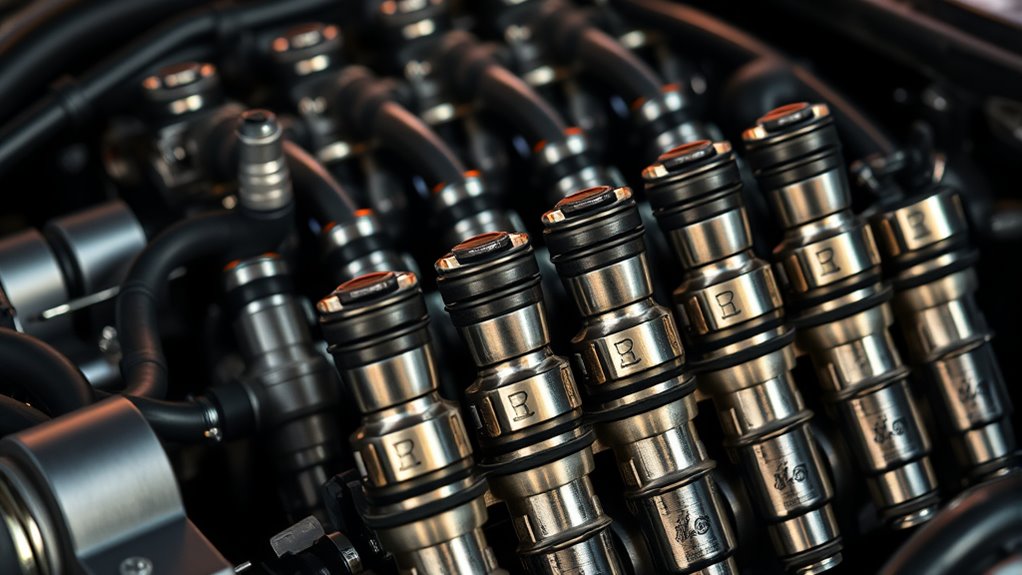
Fuel injectors play a critical role in modern engines by delivering the right amount of fuel into the combustion chambers at the ideal time. Your engine relies on these components to guarantee smooth operation, peak fuel efficiency, and minimal emissions. The process begins with the fuel spray, which is how the injector atomizes the fuel into a fine mist, allowing for better mixing with air. This spray is essential because it influences how completely the fuel combusts, affecting overall engine performance. If the fuel spray is uneven or inconsistent, you might notice rough idling, hesitation, or reduced power.
Injector timing is equally significant. It refers to the precise moment when the fuel injector opens to spray fuel into the intake manifold or combustion chamber. Proper injector timing ensures that fuel is delivered exactly when the engine needs it—during the intake stroke or just before compression. When the timing is off, your engine can suffer from misfires, increased emissions, or poor fuel economy. Modern fuel injection systems use sensors and engine control units (ECUs) to adjust injector timing dynamically, maximizing performance based on driving conditions. But if these sensors malfunction or the ECU encounters issues, injector timing can become erratic, leading to drivability problems.
You might not think about it often, but the quality of the fuel spray directly impacts how well your engine runs. A good spray pattern ensures thorough atomization, promoting efficient combustion. When injectors become clogged or dirty, the spray pattern can deteriorate, causing incomplete fuel vaporization. This can lead to misfires, rough running, or increased fuel consumption. Understanding injector timing helps you realize why sometimes your engine feels sluggish or stalls unexpectedly—these symptoms often point to timing issues or spray inconsistencies. Regular maintenance and using quality fuel can help maintain proper fuel spray and injector timing. Additionally, staying informed about potential scam warnings can help you avoid fraudulent services that could compromise your vehicle’s fuel system.
A clean fuel spray ensures smooth engine performance and better fuel efficiency.
If your vehicle exhibits signs of poor engine performance, it could be a sign that your fuel injectors need attention. Sometimes, cleaning or replacing injectors restores proper fuel spray and corrects timing issues. In some cases, faulty sensors or wiring can interfere with the ECU’s ability to control injector timing properly. Recognizing these symptoms early can prevent more costly repairs down the line. In sum, the fuel spray and injector timing are central to your engine’s health. When they work in harmony, your vehicle runs smoothly, efficiently, and reliably. If they fall out of sync, it’s time to diagnose and address the underlying issues to keep your engine performing at its best.

THIKPO Universal Fuel Injector Tester Cleaner Tool Kit, DIY Cleaning Tool with 8 Pulse Modes, 4 Wire Dual Channel for 2 Injectors, 8 Size Adapters, 12V/5V Output Power
Upgraded Universal Fuel Injector Tester and Cleaner Tool Kit—Operates injectors individually to diagnose fuel delivery problems on petrol…
As an affiliate, we earn on qualifying purchases.
As an affiliate, we earn on qualifying purchases.
Frequently Asked Questions
How Often Should Fuel Injectors Be Professionally Cleaned?
You should have your fuel injectors professionally cleaned every 30,000 to 50,000 miles. Regular cleaning improves fuel economy and helps maintain emission control, ensuring your vehicle runs smoothly. If you notice rough idling or reduced performance, it’s a sign you need a cleaning sooner. Staying on schedule prevents injector clogs, saves you money on repairs, and keeps your engine running efficiently while meeting emission standards.
Can a Faulty Fuel Injector Cause Engine Misfires?
Fuel injector faults can definitely cause engine misfires, leading to poor performance and increased emissions. When injectors malfunction, they deliver inconsistent fuel flow, disrupting combustion. This not only hampers fuel efficiency but also hampers emission control efforts. You might notice rough idling, hesitation, or stalling. Addressing faulty injectors promptly maintains your engine running smoothly, improves fuel economy, and ensures emissions stay within safe, legal limits.
What Are the Signs of a Failing Fuel Injector?
You’ll notice signs of a failing fuel injector in reduced fuel efficiency and sluggish engine performance. You might experience rough idling, engine misfires, or hesitation during acceleration. Additionally, increased emissions and a strong fuel smell can indicate issues. When fuel injectors malfunction, your engine doesn’t run smoothly, so paying attention to these symptoms helps prevent further damage and guarantees ideal performance and efficiency.
Are Fuel Injectors Compatible With All Vehicle Types?
Fuel injectors are like keys tailored for specific vehicles, so they aren’t compatible with all types. You need to check fuel compatibility and consider injector differences for your particular make and model. Some injectors work across multiple vehicles, but many are designed for specific engines. Always verify with your vehicle’s manual or a mechanic to confirm you get the right fit, avoiding potential performance issues.
How Do I Replace a Faulty Fuel Injector Myself?
To replace a faulty fuel injector yourself, start by disconnecting the battery and relieving fuel system pressure. Remove engine covers and intake components as needed. Carefully disconnect electrical connectors and fuel lines, then unscrew the injector. Use DIY repair tips like cleaning surrounding parts beforehand to guarantee proper installation. Install the new injector, reconnect everything securely, and reassemble. Finally, test your vehicle to confirm the repair works smoothly.

MOTOKU 8 Pcs Fuel Injectors for 99-01 Town Car Mercury E-350 F-250 4.6L V8 0280155857 XW7E-A5B
Part Number: 0280155857 / 822-11154 / M02857X8 /FJ610 / XW7E-A5B
As an affiliate, we earn on qualifying purchases.
As an affiliate, we earn on qualifying purchases.
Conclusion
Understanding how fuel injectors work and recognizing common issues can save you from a car disaster that feels like an apocalypse. When your injectors function properly, your engine runs smoother than silk, delivering power and efficiency like a finely tuned symphony. But neglect can turn your ride into a sluggish snail or a fiery mess. Stay vigilant, maintain your injectors, and keep your engine singing like a bird, so you never have to face a vehicular catastrophe.

FOXWELL JT200 Fuel Injector Tester, Fix Engine Misfire & Rough Idle – Visualize Spray Pattern & Volume, Automatic Fuel Injection System Tester Diagnostic Tool for 6V/12V MPI Motorcycle & Car Injectors
【Stop Guessing, Start Saving – Find the Faulty Injector in Minutes】Tired of throwing money at new injectors only…
As an affiliate, we earn on qualifying purchases.
As an affiliate, we earn on qualifying purchases.

Lucas Oil 10003 Fuel Treatment – 1 Quart
The world’s #1 fuel additive for both gasoline and diesel engines
As an affiliate, we earn on qualifying purchases.
As an affiliate, we earn on qualifying purchases.