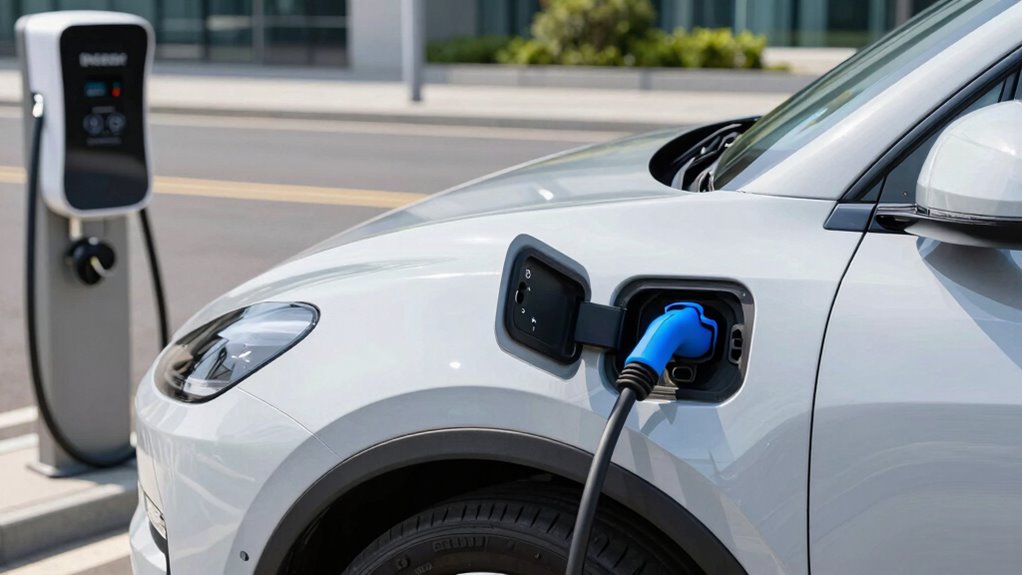

If you’re comparing Level 1 and Level 2 EV charging, you should know that Level 1 uses a standard home outlet and offers slow charging, while Level 2 requires a dedicated charger and provides faster energy transfer. Level 2 is ideal if you need quick recharges, but it costs more to install. For everyday use and maximizing convenience, understanding which option fits your routine is key—continue exploring to learn more.
Key Takeaways
- Level 1 chargers are slow, providing about 4-5 miles of range per hour, ideal for overnight home use.
- Level 2 chargers are faster, delivering approximately 25-30 miles of range per hour, suitable for quick top-ups.
- Level 1 is more affordable and easier to install, while Level 2 may require electrical upgrades and higher upfront costs.
- Choose Level 1 for minimal daily driving; opt for Level 2 if you need faster charging for frequent or long trips.
- Incentives and infrastructure availability can influence which charging level best fits your EV ownership needs.

ChargePoint HomeFlex Level 2 EV Charger J1772 – Fast Smart Battery Power Charging at Home for Electric Automobile Vehicles – Hardwired for Electric Car
- Reliable Home Charging: Builds dependable EV charging stations
- 24/7 Support: Around-the-clock assistance available
- Mobile App Control: Manage charger via ChargePoint app
As an affiliate, we earn on qualifying purchases.
As an affiliate, we earn on qualifying purchases.
What Are Level 1 and Level 2 EV Charging?
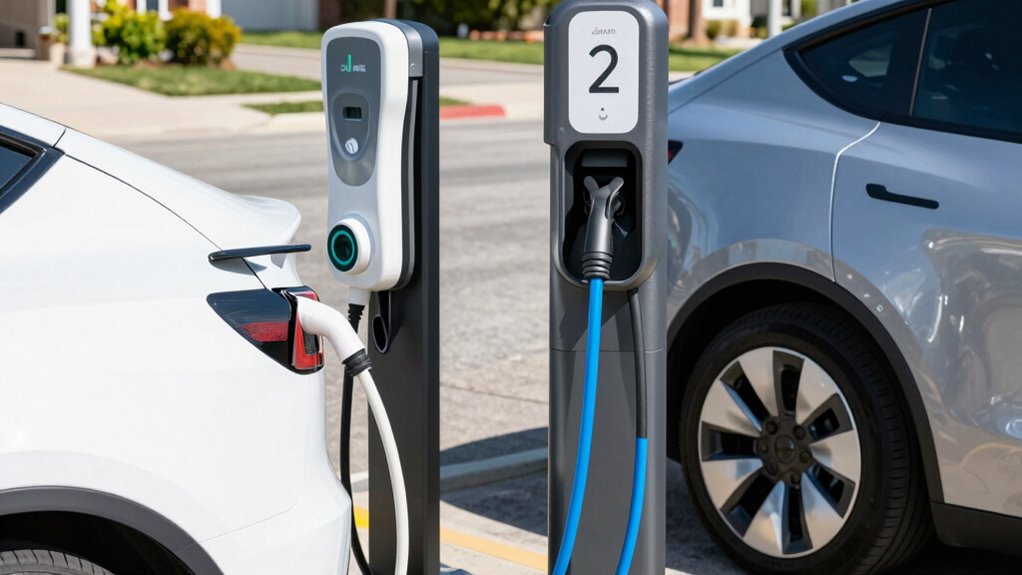
Have you ever wondered how electric vehicle chargers differ? The main difference lies in their charging connectors and how they handle battery capacity. Level 1 chargers use standard household outlets, providing a slow charge suitable for smaller batteries or overnight charging. Level 2 chargers, on the other hand, require specialized charging connectors and deliver faster power, making them ideal for larger batteries and quicker top-ups. The battery capacity of your EV determines how much energy it can hold, which influences how long charging takes. Charging infrastructure options vary depending on your location and vehicle compatibility. While Level 1 chargers are compatible with most outlets, Level 2 requires dedicated equipment. Understanding these differences helps you choose the right setup for your vehicle’s battery capacity and guarantees efficient charging. Additionally, selecting the appropriate charging level can impact your overall charging efficiency and convenience. Being aware of battery capacity considerations can also help optimize your charging process and minimize wait times. Moreover, considering the charging speed is crucial for planning trips and daily use.
How Do Level 1 and Level 2 Charging Differ in Performance and Cost?
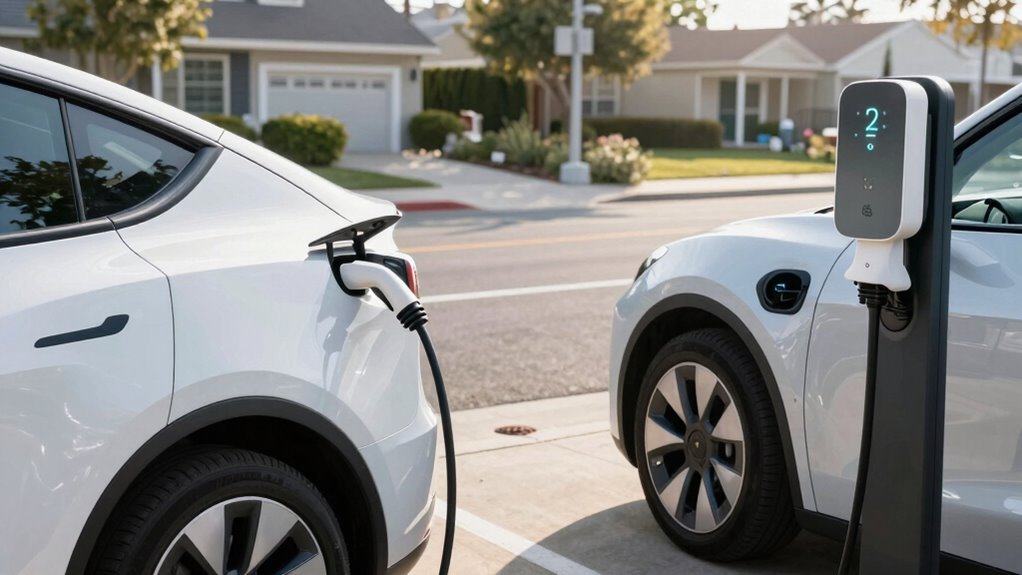
When comparing Level 1 and Level 2 chargers, their performance and costs stand out as key differences. Level 1 chargers are slower, providing about 4-5 miles of range per hour, making them suitable for overnight charging. Level 2 chargers deliver faster charging, typically adding 25-30 miles of range per hour, which is ideal for quick top-ups. In terms of cost comparison, Level 1 chargers are more affordable upfront and easier to install, but their slower energy efficiency means you spend more time and potentially more money on electricity over time. Level 2 chargers cost more initially and may require professional installation, but their higher energy efficiency and faster charging can save you money and time in the long run. Additionally, mastering system monitoring can help optimize your charging setup for better efficiency. Proper safety precautions are essential when installing and using EV chargers to prevent hazards and ensure safe operation. Understanding charging infrastructure options can also assist you in making informed decisions tailored to your driving habits. Knowing about charging station availability can help plan your routes more effectively.
Which EV Charging Level Is Best for Your Daily Routine?
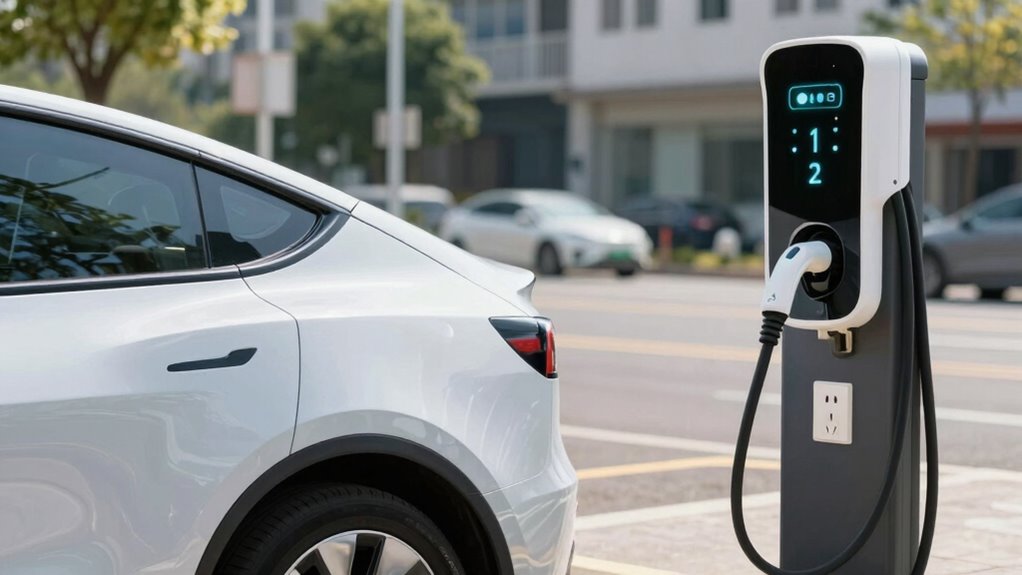
Choosing the right EV charging level depends largely on your daily driving habits and schedule. If you commute short distances and can leave your car plugged in overnight, Level 1 charging may suit you, especially with its widespread charging station compatibility. However, if you need faster charges or have a longer daily drive, Level 2 charging is more efficient, often supported by government incentives that help offset installation costs. Consider your routine:
Choosing the right EV charger depends on your driving habits and schedule.
- How quickly you need to recharge after daily use
- Compatibility of your vehicle with available charging stations
- Any local incentives to upgrade your home or workplace chargers
- Understanding smart charging protocols can optimize your energy use and improve home comfort, making your charging experience more efficient and convenient. Additionally, exploring charging infrastructure options in your area can help ensure reliable access to charging stations when needed. Being aware of energy management strategies can further enhance your overall charging experience and reduce costs. Incorporating renewable energy sources into your setup can also contribute to a more sustainable charging routine.
What Are the Advantages and Disadvantages of Level 1 and Level 2 Charging?
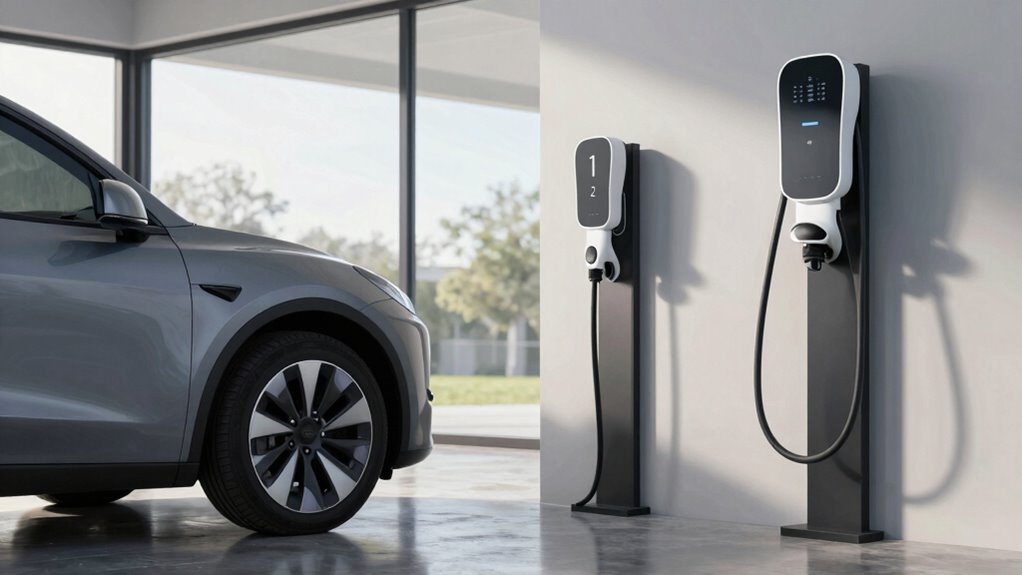
Understanding the pros and cons of Level 1 and Level 2 charging helps you choose what’s best for your needs. You’ll want to think about how quickly each charges, the costs involved, and how they fit into your daily routine. Let’s explore how these factors influence your charging options. Additionally, considering effective charging techniques can optimize your charging sessions and ensure your EV remains in top condition.
Charging Speed Differences
Level 1 and Level 2 chargers differ considerably in their charging speeds, which directly impacts how quickly your vehicle gains power. Level 1 chargers typically provide about 4-5 miles of range per hour, making them suitable for overnight charging. In contrast, Level 2 chargers can deliver 25-30 miles of range per hour, markedly reducing charging time. Your access to charging infrastructure and government incentives can influence your choice, as Level 2 stations are often part of broader public networks.
- Faster charging reduces downtime, ideal for daily use or quick top-ups
- Level 1 chargers are more convenient for overnight home charging
- Level 2 stations often receive government incentives, encouraging faster adoption
Installation and Cost Factors
Installing a Level 1 charger is straightforward and affordable, often requiring just a standard household outlet, making it an accessible option for most homeowners. The main advantage is low upfront cost, with minimal installation needs. However, cable compatibility can be a concern if your outlet isn’t compatible or if you need an extension, which may affect safety and efficiency. Mixed product roundups can help you explore other home and outdoor charging solutions. Level 2 chargers usually involve higher installation costs, including potential electrical upgrades, but they can qualify for solar incentives that reduce overall expenses. While the initial investment is higher, Level 2 chargers offer faster charging times. Keep in mind that installation costs vary depending on your home’s electrical setup, so weigh these factors when choosing the best option for your budget and needs. Additionally, the charging speed differences between Level 1 and Level 2 can significantly impact daily convenience. Upgrading your electrical infrastructure may be necessary to support faster chargers, which can influence installation costs and safety considerations. Furthermore, understanding the electrical infrastructure of your home can help determine the most suitable charging level, ensuring safety and efficiency.
Practical Usage Scenarios
When deciding between Level 1 and Level 2 charging, consider how you’ll use your EV daily. If you mainly park at home and have ample time, Level 1’s slow charge suits your routine. For frequent urban driving, where quick turnaround and better charging station accessibility matter, Level 2 is more practical. It’s especially beneficial in areas with limited urban infrastructure supporting fast charging.
- Level 1 is convenient for overnight charging at home but may be insufficient for daily needs.
- Level 2 offers faster charging, reducing downtime, ideal for busy schedules.
- Accessibility of charging stations influences your choice, especially in urban settings with limited infrastructure.
- Understanding the different charging levels helps you make informed decisions based on your lifestyle and driving habits.
- Recognizing the charging infrastructure in your area can significantly impact your charging options and convenience.
Understanding these scenarios helps you choose the right charging level for your lifestyle.
Can You Use Both Charging Levels With Your EV?
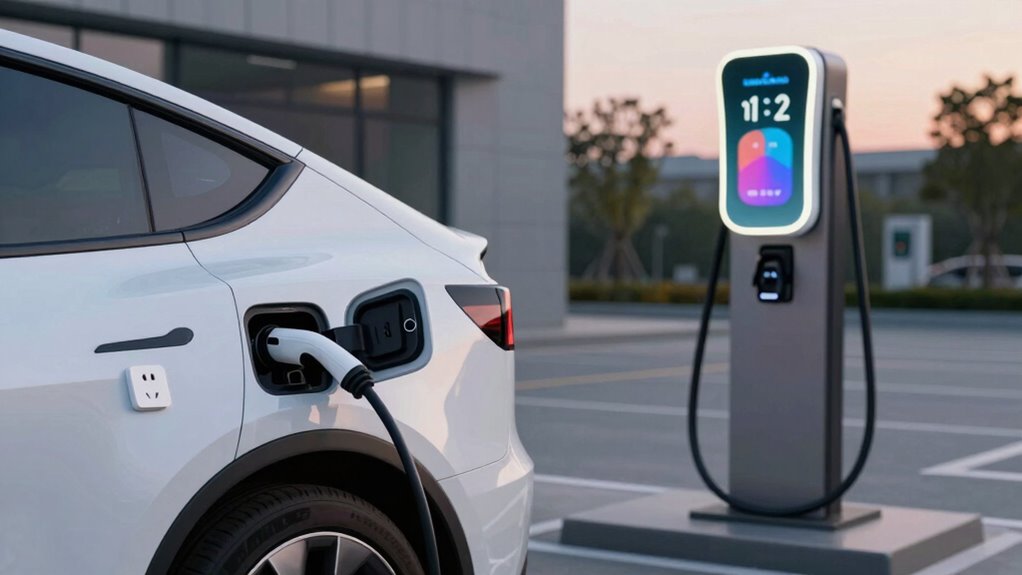
Ever wonder if you can use both Level 1 and Level 2 chargers with your electric vehicle? Yes, most EVs are compatible with both types of charging stations. Your vehicle’s onboard charger is designed to handle different power supplies, allowing you to switch between charging levels based on your needs. When you connect to a Level 1 charger, it uses a standard household outlet, providing slow but steady charging. A Level 2 charging station, on the other hand, delivers more power and charges faster. Your EV can seamlessly accept power from either level, making it flexible for various situations. Just verify your vehicle’s charging system supports both levels, and you’ll be able to use the appropriate charging station according to your circumstances. Upgrading your EV’s charging system can enhance performance and charging efficiency, especially if you want to boost your vehicle’s overall charging capabilities.
How to Choose the Right EV Charging Level for Your Needs?
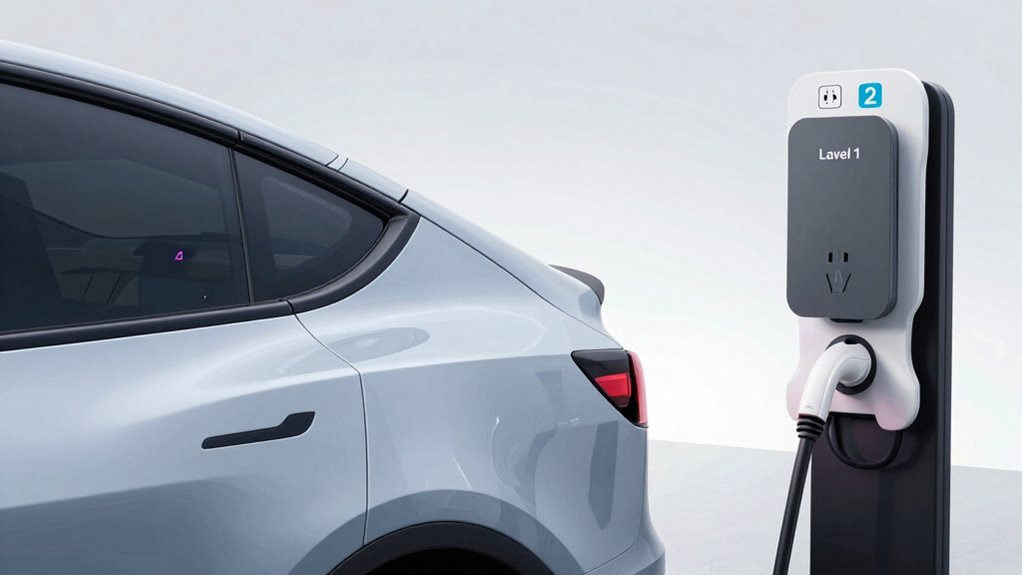
When choosing the right EV charging level, consider how quickly you need to recharge your vehicle and your daily driving habits. You should also evaluate installation requirements and costs to guarantee it fits your budget and space. Balancing these factors helps you select the most convenient and cost-effective option for your needs. Additionally, exploring best charging stations can help you find reliable and efficient options suitable for your lifestyle. Understanding charging infrastructure can further assist in making informed decisions about future upgrades or expansions.
Charging Speed Considerations
Choosing the right EV charging level depends largely on how quickly you need your vehicle to recharge. If you prioritize faster charging, Level 2 chargers can substantially reduce your wait time, but keep in mind that rapid charging might impact battery longevity over time. Consider your daily driving habits and whether your charging infrastructure supports quick recharging options.
- Opt for Level 1 if you have ample time and want to preserve battery health.
- Choose Level 2 for faster top-ups during regular use without stressing your battery.
- Be aware that faster chargers may strain your vehicle’s battery over the long term, making slow charging better for battery longevity.
Balance your speed needs with the impact on your battery and available infrastructure to find the best fit.
Installation and Cost Factors
Selecting the right charging level involves considering both installation requirements and costs. A clear cost comparison helps you decide, as Level 1 chargers are usually free or inexpensive to install, often just plugging into a standard outlet. In contrast, Level 2 chargers require dedicated wiring, which can increase installation costs but offer faster charging. You’ll need to evaluate your home’s electrical capacity and whether upgrades are necessary. Installation requirements vary: Level 1 needs minimal setup, while Level 2 might require professional help and electrical work. Balancing these factors helps you choose a charger that fits your budget and lifestyle. If you prioritize affordability and simplicity, Level 1 may suffice. But if faster charging is a priority, investing in Level 2 might be worth the higher initial cost.
Additional Considerations: Installing and Budgeting for Your Home Charger
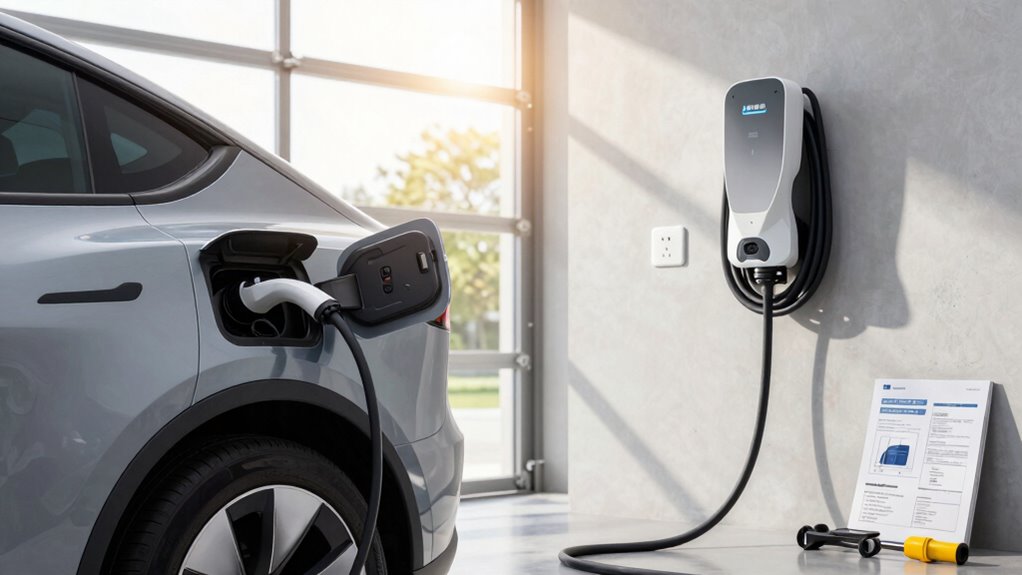
Installing a home charger involves more than just plugging it in; it requires careful planning and budgeting to guarantee safety and efficiency. You should consider integrating the charger into your home renovation plans, ensuring your electrical system can handle the load. Budgeting for the installation includes costs for permits, possible upgrades, and professional labor. To maximize energy efficiency, evaluate your home’s wiring and consider smart chargers that optimize charging times.
- Assess your current electrical system and upgrade if necessary
- Plan for potential home renovation work to support installation
- Choose energy-efficient chargers with smart features to reduce energy costs
Frequently Asked Questions
Can I Upgrade From Level 1 to Level 2 Charging Later?
Yes, you can upgrade from Level 1 to Level 2 charging later. You’ll need to check charger compatibility with your EV and make certain your home’s electrical system can handle the upgrade. Electrical upgrades might be necessary, such as installing a dedicated circuit and a higher capacity outlet. Consulting a professional electrician ensures the process is safe and efficient, making your shift smooth and ready for faster charging.
How Long Does It Take to Install a Level 2 Charger at Home?
It usually takes about one to three days to install a Level 2 charger at your home, but this depends on your installation timeline and contractor selection. You might think it’s quick, but factors like electrical upgrades or permit delays can prolong it. To guarantee a smooth process, choose an experienced contractor early. You’ll be charging faster and more efficiently once the installation is complete, saving you time and hassle.
Are There Government Incentives for Installing Home EV Chargers?
Yes, you can get government rebates or installation grants when installing a home EV charger. Many programs aim to encourage clean transportation, helping offset costs. You should check federal, state, or local incentives available in your area, as eligibility varies. Applying for these rebates or grants is straightforward—just gather your installation receipts and fill out the required forms. Taking advantage of these incentives can substantially reduce your overall installation expenses.
Will My Existing Electrical System Support a Level 2 Charger?
Is your electrical system ready for a Level 2 charger? Chances are, you’ll need to check your electrical capacity first. Many homes may require circuit upgrades to support the higher power draw. Do you know if your current wiring can handle it? If not, consulting a licensed electrician can help determine if upgrades are needed, ensuring safe and efficient charging without overloading your system.
How Do Charging Speed and Power Affect Battery Health Over Time?
Charging speed and power can impact your battery health over time. Faster charging often generates more heat, which may accelerate battery degradation and reduce lifespan. Frequent fast charging increases the number of charging cycles, potentially leading to quicker battery wear. To protect your battery, balance fast and slower charging sessions, and avoid consistently charging to full capacity. Proper care helps maintain the best performance and prolongs your EV’s battery life.
Conclusion
Choosing between Level 1 and Level 2 charging depends on your daily driving habits and budget. For example, if you drive short distances daily, Level 1 might suffice. But if you commute long distances, investing in a Level 2 charger can save you time and keep your EV ready to go. Assess your routine and garage setup to make the best choice—your EV’s convenience and longevity depend on it.