Choosing between portable and stationary compressors depends on your project’s mobility needs, workload demands, and workspace size. If you need quick setup for light tasks and frequent transport, a portable unit suits you best. But for heavy-duty, continuous use in a fixed location, a stationary compressor offers durability and higher capacity. To make the right choice, consider your actual workload, environment, and long-term costs. Keep exploring to find out which type fits your specific projects perfectly.
Key Takeaways
- Consider mobility needs; portable compressors suit tasks requiring frequent relocation, while stationary units are ideal for fixed, continuous operations.
- Match compressor capacity (PSI & CFM) to tool requirements and workload demands for optimal performance.
- Evaluate workspace constraints; small spaces benefit from portable units, whereas larger areas accommodate stationary models.
- Factor in noise levels and safety precautions; stationary compressors are quieter and better suited for prolonged use environments.
- Assess long-term costs, durability, and maintenance needs to choose between initial affordability of portable units and longevity of stationary systems.

Craftsman Air Compressors 6 Gallon Portable Pancake Air Compressor,Oil Free Max 150 Psi 1.0HP 2.6 CFM@90PSI Electric Air Compressor Shop Air Compressor, CMXECXA02106410
6 GALLON CRAFTSMAN AIR TOOL: 6 Gallon pancake style electric air compressor. 120V 1.0 HP, perfect for home,…
As an affiliate, we earn on qualifying purchases.
As an affiliate, we earn on qualifying purchases.
What Are the Main Differences Between Portable and Stationary Compressors?
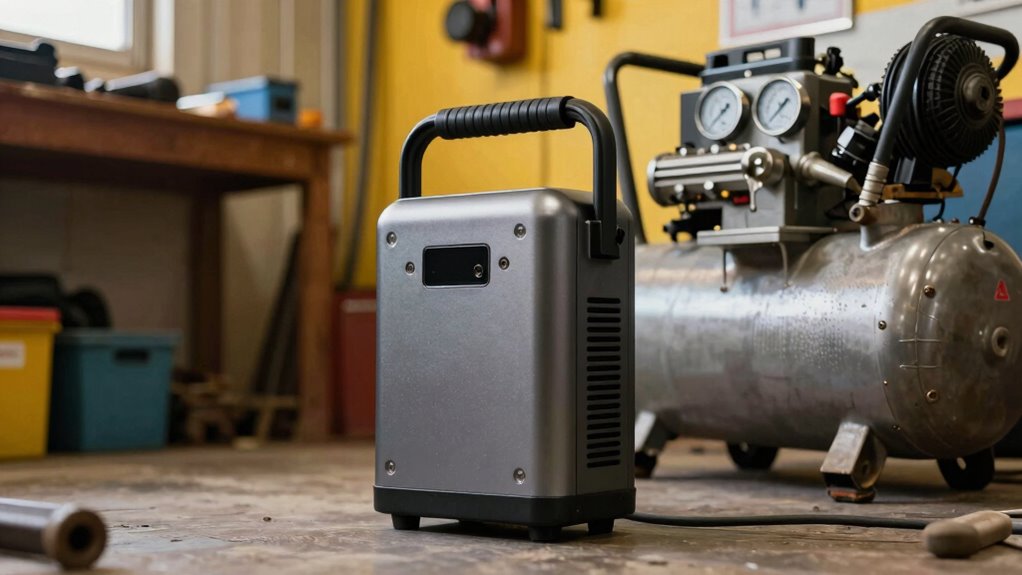
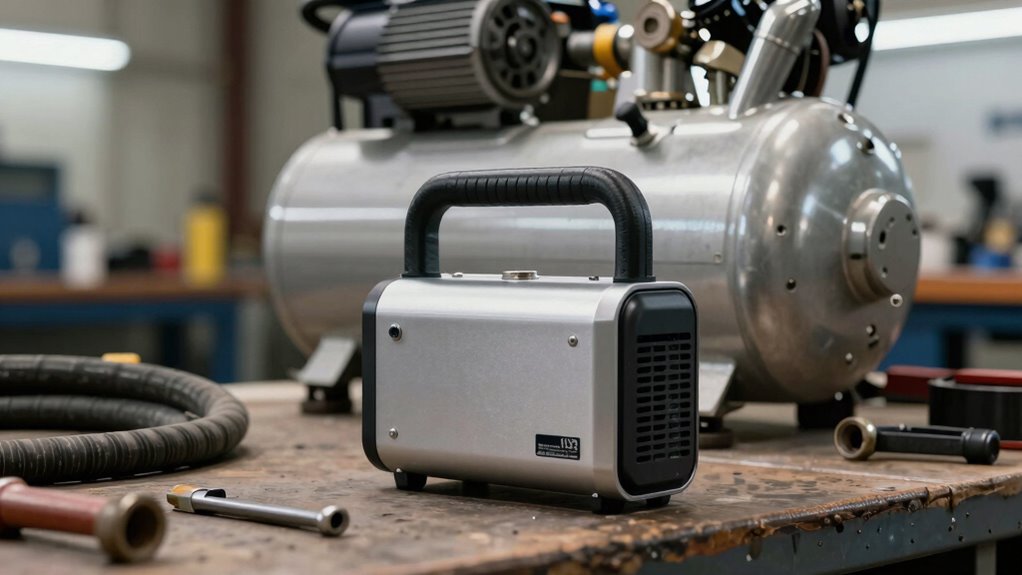
The main difference between portable and stationary compressors lies in their design and mobility. Portable compressors are compact, lightweight, and easy to move around, making them ideal for on-the-go tasks. Stationary compressors, on the other hand, are larger, fixed in one location, and suited for heavy-duty, continuous use. When using either type, it’s important to follow proper safety precautions, such as wearing protective gear and ensuring proper ventilation. Proper ventilation is especially crucial when operating larger units to prevent the buildup of fumes or heat, which can pose safety hazards. Regular maintenance tips, like checking hoses and draining moisture, help keep your compressor running efficiently and safely. Portable models typically require less maintenance, but you should still inspect them regularly. Stationary units demand routine upkeep to prevent breakdowns, especially since they handle more demanding workloads. Understanding these differences helps you operate your compressor safely and effectively, especially considering the importance of proper ventilation for safe operation. Additionally, understanding your power requirements can help determine the most suitable type for your needs. Being aware of maintenance routines can extend the lifespan of both compressor types and ensure consistent performance. Proper installation procedures are also vital to optimize safety and efficiency for stationary units.
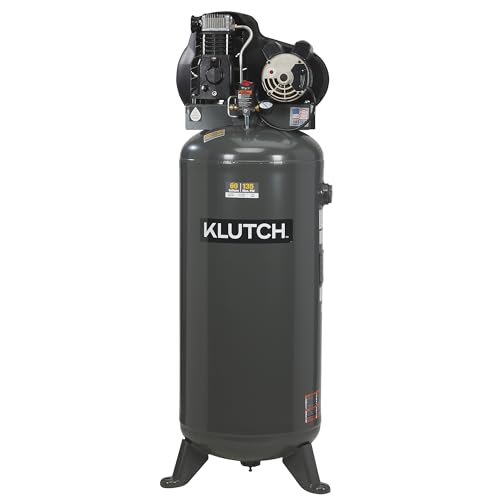
Klutch 60-Gallon Single-Stage Vertical Air Compressor, 3.7 HP, 230 Volts
POWERFUL PERFORMANCE: Features a robust 3.7 HP dual-induction motor that delivers 9.3 CFM @ 90 PSI and a…
As an affiliate, we earn on qualifying purchases.
As an affiliate, we earn on qualifying purchases.
How Do You Determine Which Compressor Type Fits Your Project Needs?
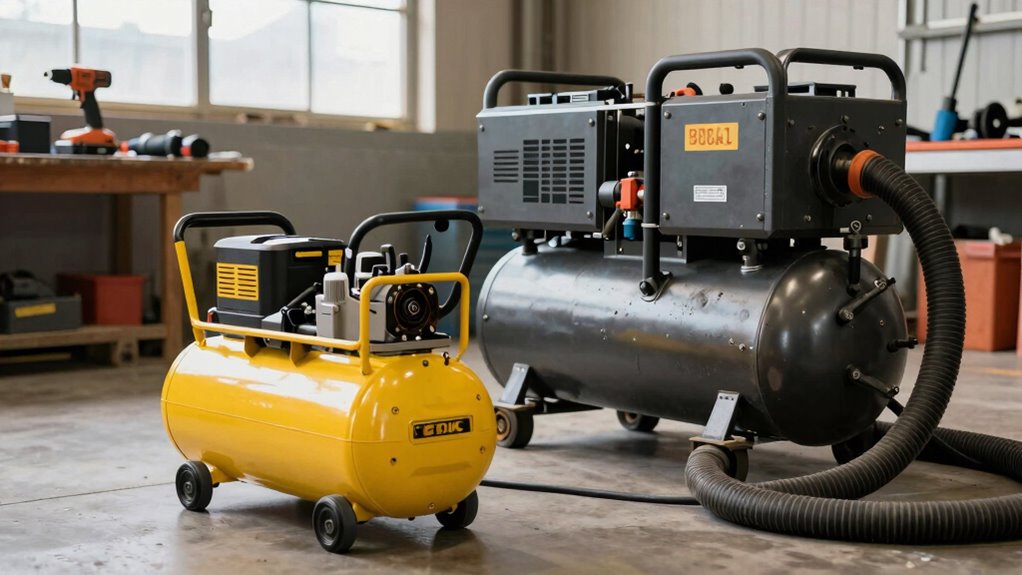
Choosing the right compressor for your project depends on understanding your specific needs and workload. Consider factors like compressor durability and noise levels, which influence performance and comfort. To determine the best fit, ask yourself:
Selecting the right compressor depends on your needs, durability, and noise preferences for optimal performance.
- Will I need portability or stationary setup?
- How important are noise levels for my work environment?
- What’s the expected workload and continuous use?
- Do I require a durable compressor for heavy-duty tasks?
If you need a quiet, portable unit for light tasks, a smaller compressor with lower noise levels works best. For heavy-duty, long-term projects, prioritize durability with a stationary model. Evaluating these factors helps you match the compressor type to your project’s demands efficiently.

Klutch 29-Gallon Air Compressor, 2.5 HP, 120 Volts, 175 PSI
POWERFUL COMPRESSOR: Unleash the potential of your tools with this portable air compressor, the Klutch 29-Gallon Air Compressor's…
As an affiliate, we earn on qualifying purchases.
As an affiliate, we earn on qualifying purchases.
What Are the Benefits of Using a Portable Air Compressor?
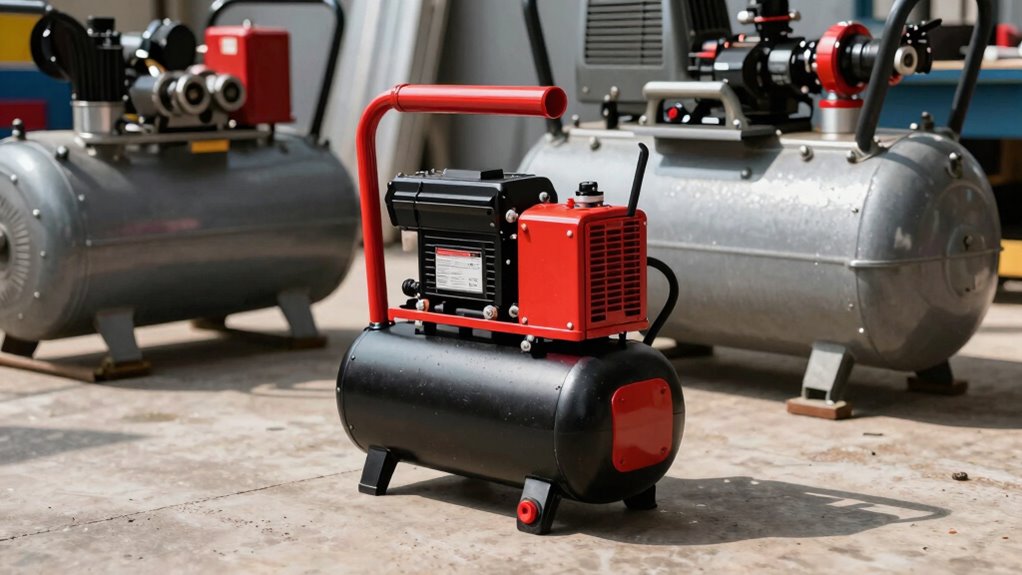
Portable air compressors offer unmatched flexibility, allowing you to take compressed air wherever your work takes you. This mobility means you can easily move from one job site to another without hassle. They’re ideal for small to medium tasks, providing sufficient power without the bulk of stationary models. Because they’re often smaller, they tend to produce lower noise levels, so you can work more comfortably in various environments. Additionally, portable compressors can help maintain better air quality by reducing the need for long air hoses that might pick up dust or debris. Their compact design also makes storage simple, saving space in your workspace. Overall, a portable air compressor gives you convenience, adaptability, and quieter operation—perfect for on-the-go projects and quick fixes. Rendering lard knowledge highlights the importance of having reliable equipment for self-sufficiency and efficient operation.

AstroAI L7 Tire Inflator Portable Air Compressor Cordless Mini Bike Pump with Digital Dual Values Display, 150 PSI Car Tires Air Pump with LED Lights&Pressure Gauge for Auto, Motorcycles, Bikes, Balls
ADVANCED TRUEGAUGE SCREEN: This battery tire inflator includes updated sensor technology, capable of collecting pressure data from tire…
As an affiliate, we earn on qualifying purchases.
As an affiliate, we earn on qualifying purchases.
Why Choose a Stationary Air Compressor for Heavy-Duty Projects?
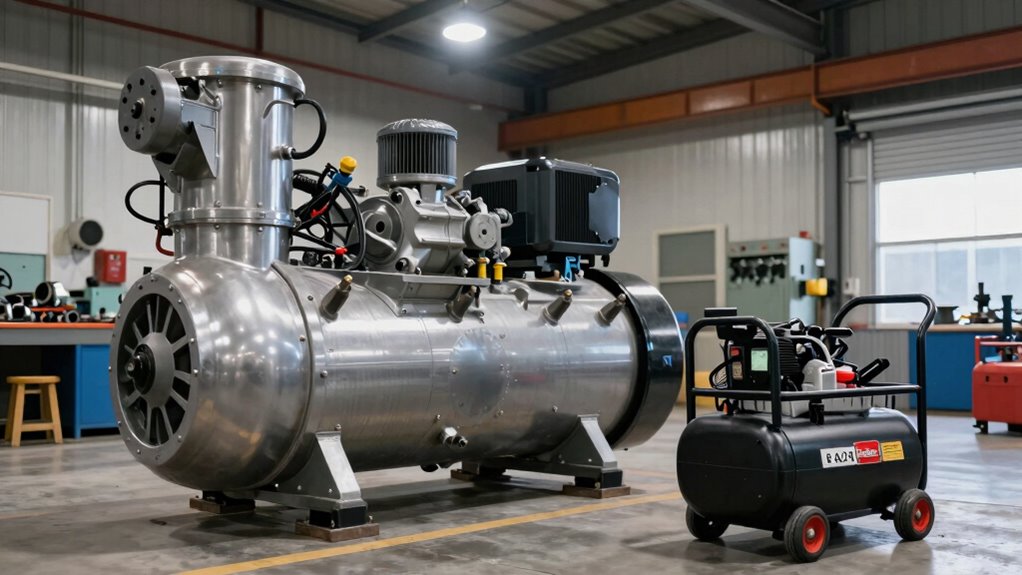
For heavy-duty projects, a stationary air compressor delivers the power and durability you need to get the job done efficiently. It offers consistent performance, reducing downtime and ensuring steady airflow for demanding tasks. Stationary units enhance air quality by maintaining cleaner, more stable output, which helps protect your tools and equipment. They also tend to operate at lower noise levels compared to portable models, minimizing workplace disruption. Key benefits include:
- Reliable, continuous operation for extended periods
- Better control over air quality
- Reduced noise levels for a safer work environment
- Greater capacity to handle high-demand tools and applications
Choosing a stationary compressor means investing in durability and performance, making it ideal for heavy-duty projects where efficiency and quality matter most.
What Factors Should You Consider When Selecting Power, Size, and Capacity?
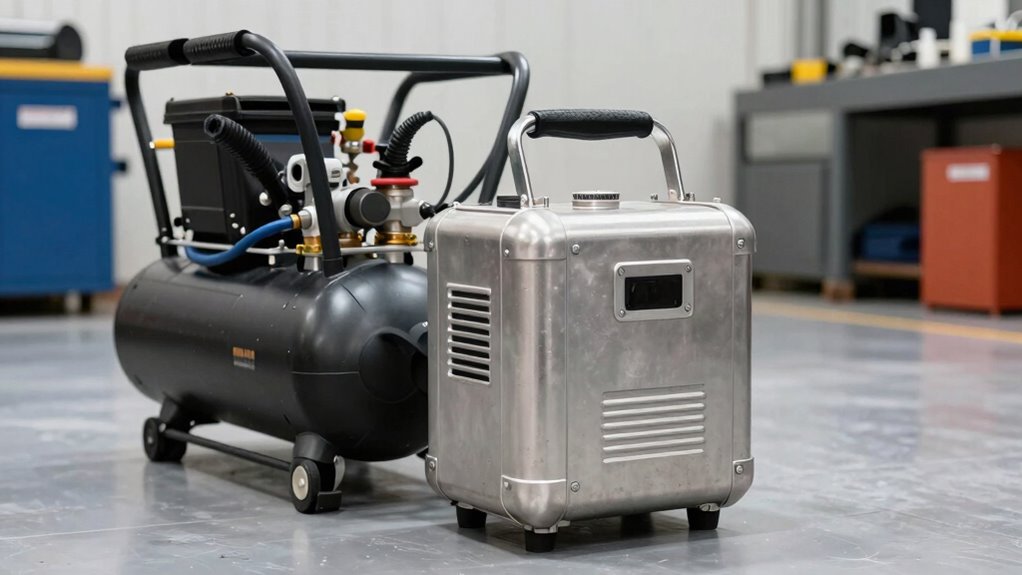
When choosing a compressor, you need to consider your power needs and how much workload you’ll be handling. Think about the size and portability—will you need to move it around or keep it stationary? Also, match the capacity to your tasks to guarantee it can handle your projects without running into limits. Additionally, understanding the airflow requirements of your tools can help ensure you select a compressor that provides consistent performance. Recognizing the design innovation in compressor models can also lead to more efficient and reliable operation over time. Being aware of comedogenic ratings can help prevent skin issues when using compressor-related equipment near your face or skin surfaces. Staying informed about AI cybersecurity is increasingly important for protecting digital assets related to compressor control systems.
Power Needs and Usage
How do you determine the right power, size, and capacity for your compressor needs? Consider your workload and the tools you’ll operate. Larger projects or heavy-duty tools require higher PSI and CFM, while smaller tasks need less. Think about how often you’ll use the compressor—frequent use demands more capacity. Fuel efficiency is essential if you’ll rely on a gas-powered model, saving you money over time. Noise levels matter if you’ll operate the compressor in noise-sensitive environments. To help decide, evaluate these factors:
- Power requirements of your tools
- Duration and frequency of use
- Fuel efficiency for gas models
- Noise restrictions in your workspace
- Battery capacity and inverter compatibility to ensure your compressor can operate efficiently in portable or stationary setups. Additionally, considering the filtration and pump protection features can prolong the lifespan of your equipment by preventing clogs and ensuring consistent performance. Understanding the compressor capacity and performance ratings can further guide you in choosing the most suitable model for your needs. Being aware of energy consumption and efficiency can also help you reduce operating costs over the long term.
Balancing these factors ensures you select a compressor that meets your needs without excess capacity or wasted energy.
Compactness and Portability
Choosing the right compressor involves considering how portable and compact it needs to be for your work environment. You want a unit that fits easily into your storage solutions and is manageable during transport. Smaller compressors are ideal for tight spaces and quick setups, but pay attention to noise levels—they can affect your comfort and safety. Consider whether you’ll be moving the compressor frequently or using it mainly in one spot. Think about weight, size, and how easily it can be stored when not in use. Here’s a quick comparison:
| Feature | Portable Compressor | Stationary Compressor | Best For |
|---|---|---|---|
| Size | Compact, easy to store | Larger, needs dedicated space | Mobile tasks |
| Weight | Lightweight, easier to carry | Heavy, usually fixed in place | Frequent transport |
| Noise Levels | Generally louder, consider noise reduction | Quieter, better for long-term use | Quiet environments |
| Storage Solutions | Fits in small spaces, cabinets or closets | Requires dedicated room | Limited space |
| Portability | High, easy to move around | Low, fixed installation | On-the-go jobs |
Additionally, market availability can influence your choice, especially if you need a compressor that aligns with current supply trends.
Capacity and Workload Limits
Selecting the right compressor requires careful attention to its power, size, and capacity to match your workload. Consider how airflow capacity impacts your ability to handle continuous tasks, ensuring it meets your project’s demands. Proper workload management involves choosing a compressor that can sustain consistent operation without overheating or overloading. Keep these factors in mind:
- Airflow capacity to support your tools and tasks
- Power output aligned with workload intensity
- Size and portability for your work environment
- Duty cycle to prevent overheating during extended use
Balancing these elements ensures your compressor can handle your workload efficiently, reducing downtime and increasing productivity. Whether portable or stationary, understanding capacity limits helps you select a unit that aligns with your specific needs. Additionally, paying attention to ergonomics and workspace layout can improve your overall productivity and comfort during operation.
How Do Cost, Maintenance, and Operating Expenses Compare?
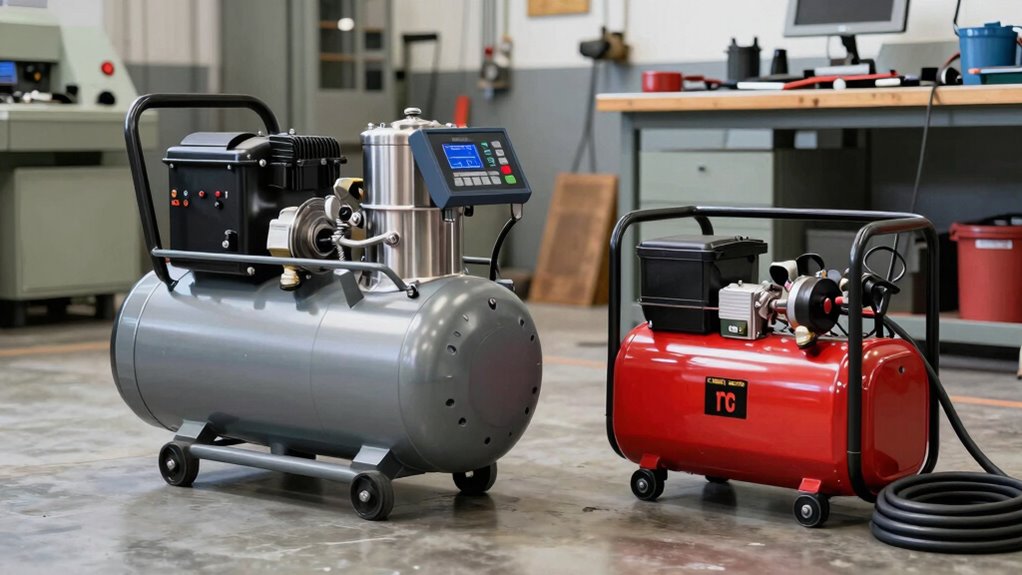
When comparing portable and stationary compressors, you’ll want to take into account the initial purchase costs and ongoing expenses. Portable units usually cost less upfront but may have higher maintenance over time, while stationary models often require a larger investment initially but can be cheaper to maintain long-term. Understanding these cost differences helps you choose the best option for your budget and needs.
Initial Purchase Costs
While portable compressors often have a lower initial purchase price than stationary units, their costs can vary considerably based on size and features. The purchase price depends on factors like airflow capacity, power source, and portability features. Generally, portable models are more affordable upfront but may lack some durability or advanced features found in stationary units. Additionally, it is important to consider scam prevention measures to ensure you purchase from reputable sellers. Consider these points:
- Portable compressors usually cost less initially but may require frequent replacements
- Stationary units have higher initial costs but often last longer
- Extra features, like higher PSI or electric power, increase purchase price
- Budget for potential upgrades or accessories that can add to initial expenses
- Proper maintenance can significantly extend the lifespan of both types, affecting overall costs
- Understanding the durability and build quality of each type can help you make a more informed decision.
- Comparing total cost of ownership over time can reveal the most economically sound option for your needs.
- Conducting a cost-benefit analysis considering both upfront and ongoing expenses ensures a more comprehensive decision-making process.
Your choice depends on your budget constraints and the specific needs of your work environment.
Ongoing Maintenance Expenses
Portable compressors generally have lower upfront costs, but their ongoing maintenance and operating expenses can add up over time. You’ll need to budget for regular maintenance costs like oil changes, filter replacements, and inspections, which can vary based on usage. Repair expenses may also arise unexpectedly, especially with frequent transport and handling. Stationary compressors tend to have higher initial prices but often benefit from lower maintenance costs due to their durability and easier access for servicing. Here’s a quick comparison:
| Aspect | Portable Compressors | Stationary Compressors |
|---|---|---|
| Maintenance Costs | Usually higher due to frequent transport | Lower with easier access |
| Repair Expenses | Can be frequent, especially with travel | Typically less frequent |
| Operating Expenses | Slightly higher due to wear and tear | More economical long-term |
Which Compressor Is Best for Your Workspace and Mobility Requirements?
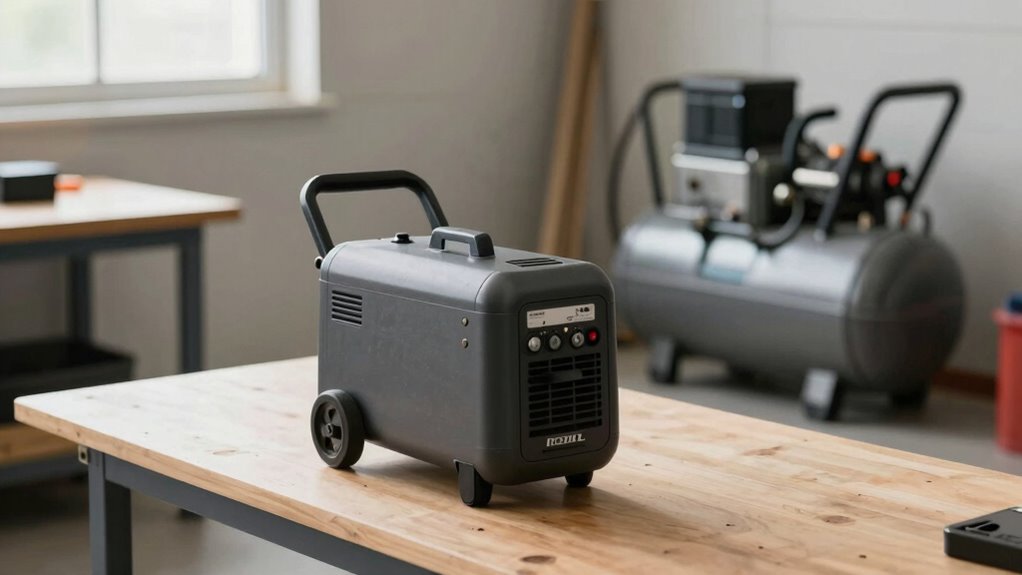
Choosing the right compressor depends largely on your workspace size and mobility needs. If you need to move frequently or work at different locations, a portable compressor offers convenience and ease of transport. For a fixed workshop or garage, a stationary unit provides higher capacity and stability. Consider these factors:
Choose between portable and stationary compressors based on your workspace size and mobility needs.
- Space limitations and available storage
- Frequency of use and portability needs
- Air compressor safety features for secure operation
- Maintenance tips suitable for your compressor type
Portable units are ideal for quick jobs and on-the-go tasks, while stationary compressors suit heavy-duty, continuous use. Making the right choice ensures efficient operation and prolongs your equipment’s lifespan. Always follow safety guidelines and perform regular maintenance to prevent accidents and extend your compressor’s life.
What Mistakes Should You Avoid When Choosing an Air Compressor?
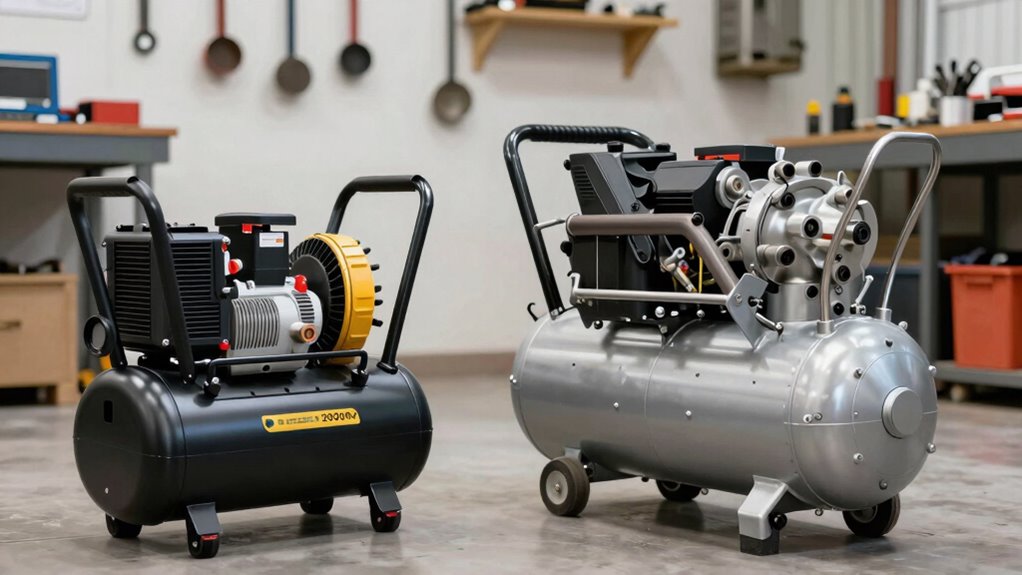
Selecting an air compressor without careful consideration can lead to costly mistakes and frustration. One common error is ignoring the importance of air quality; a compressor with poor filtration can damage tools and compromise work. Additionally, overlooking noise levels can create a disruptive workspace, especially if you work in noise-sensitive environments or shared spaces. Make sure to check the decibel ratings and consider quieter models if noise is a concern. Another mistake is choosing a compressor that’s too small or too powerful for your needs, which can either limit productivity or waste energy. Avoid rushing your decision—evaluate your project requirements, consider the compressor’s specifications, and prioritize features like air quality and noise levels to guarantee you select the right unit for your needs. Incorporating modern farmhouse decor trends can also influence your choice if you want your workspace to blend seamlessly with a rustic aesthetic.
How Do You Decide Which Type Suits Your Specific Projects Best?
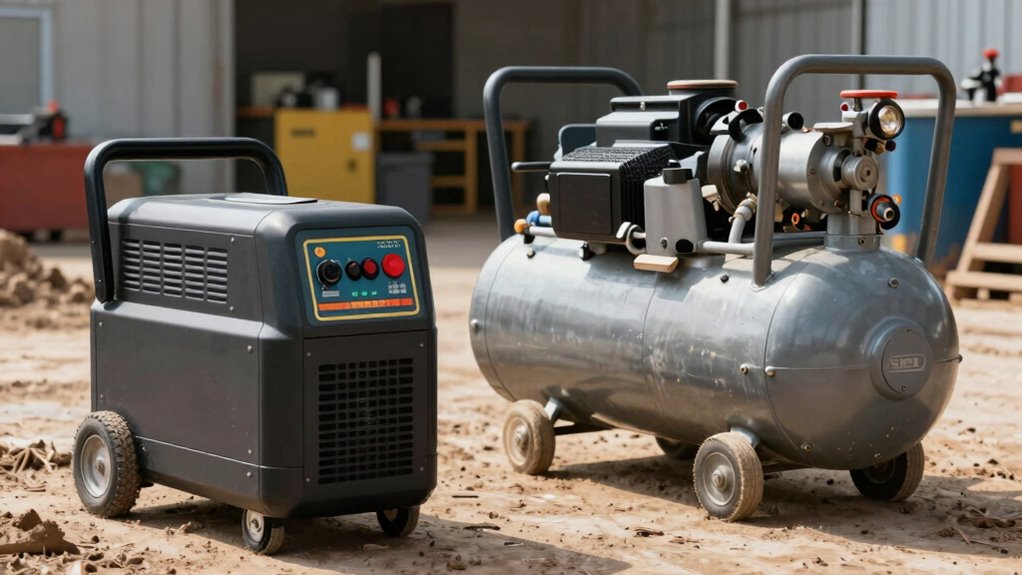
To determine which type of air compressor best suits your projects, start by evaluating the scope and frequency of your tasks. Consider whether you need portable convenience for job-site mobility or stationary durability for continuous, heavy-duty use. Think about the size and power requirements of your tools, as well as how often you’ll operate the compressor. Ensuring proper safety precautions can help prevent accidents and damage during operation. Ask yourself:
- Are you working on multiple sites regularly?
- Do your tasks require high airflow or pressure?
- Will the compressor stay in one location long-term?
- Is ease of transport a priority?
Additionally, understanding heat buildup and proper wiring practices can prevent overheating issues that may compromise safety. If mobility and quick setup matter most, go for a portable compressor. For demanding, consistent workloads, a stationary model offers greater durability and reliability. Choose based on your specific project needs.
Frequently Asked Questions
What Are the Noise Level Differences Between Portable and Stationary Compressors?
You’ll notice that stationary compressors generally have a lower noise level compared to portable ones, thanks to sound insulation and larger enclosures. Portable compressors tend to be noisier because of their compact size and less soundproofing. If noise comparison matters, especially in noise-sensitive environments, stationary units are a better choice. However, keep in mind that proper sound insulation can help reduce noise from portable models too.
How Does Compressor Durability Vary Between Portable and Stationary Models?
Imagine you’re running a busy workshop, and your stationary compressor endures constant use. Its durability comparison with a portable model shows it often lasts longer, thanks to superior material quality and robust construction. Stationary compressors are built for longevity, with heavy-duty materials like cast iron, while portable models prioritize lightweight components that may wear faster. You’ll find that material quality directly influences how long each compressor remains reliable under demanding conditions.
Can Portable Compressors Handle Continuous Operation for Long Projects?
Portable compressors generally aren’t built for continuous operation over long projects because their power source and design prioritize mobility ease. You might find them overheating or wearing down faster when used nonstop. If your project demands sustained power and durability, a stationary compressor is a better choice. It offers consistent performance and can handle extended use, ensuring you stay productive without frequent maintenance or downtime.
What Safety Considerations Are Unique to Stationary Compressors?
You must prioritize installation requirements, ensuring your stationary compressor is securely anchored and properly ventilated—no, it’s not a DIY project, so don’t skimp! Theft prevention is also essential; consider lockable enclosures or alarms, because leaving it out in the open invites unwanted guests—like thieves. Neglecting these safety measures could lead to costly damage or injuries, so treat your stationary compressor like the royalty it deserves.
How Easy Is It to Upgrade or Expand Each Compressor Type?
Upgrading or expanding your compressor depends on its type. For stationary compressors, a modular design offers high expansion potential—you can easily add modules or upgrade components as needed. Portable compressors are generally less flexible; their compact design limits expansion options. However, some models feature modular components, making upgrades feasible. Overall, stationary compressors provide better scalability, while portable ones are more suited for simple, immediate tasks.
Conclusion
Choosing between portable and stationary compressors is like picking the right tool for a job—you want one that fits your needs perfectly. Consider your project size, mobility needs, and budget. By weighing these factors, you’ll find the compressor that works seamlessly, just like a key fits perfectly into its lock. Make an informed decision, and you’ll keep your projects running smoothly and efficiently, no matter the task.