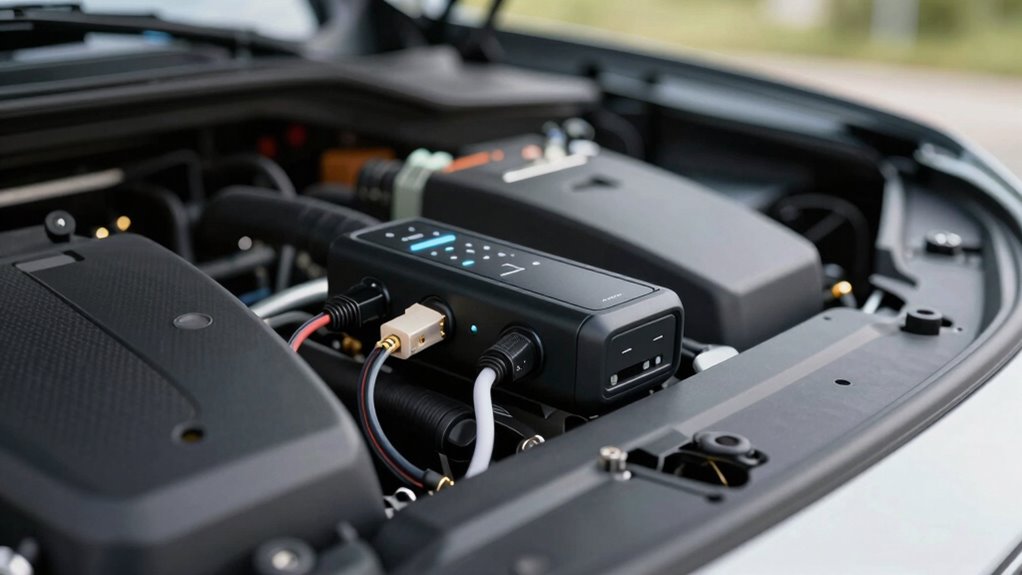
Before installing a remote starter, first check if your vehicle supports it, including compatibility with factory or aftermarket keyless systems and its electrical system. Make certain your battery is in good condition and that wiring, security, and safety features like neutral switches are compatible. Confirm if you’ll need additional modules or bypasses. Proper installation is key to avoid issues, and knowing these steps can help you make a smooth upgrade—more details on these points follow.
Key Takeaways
- Verify vehicle compatibility with remote start systems, including factory or aftermarket keyless entry support.
- Check electrical system and battery health to ensure proper power supply and avoid starting issues.
- Confirm wiring diagrams and connections match your vehicle model to prevent installation errors.
- Ensure factory or existing security systems are compatible or plan for necessary bypass modules.
- Consider potential impacts on vehicle warranty and choose reputable, manufacturer-approved remote starter kits.
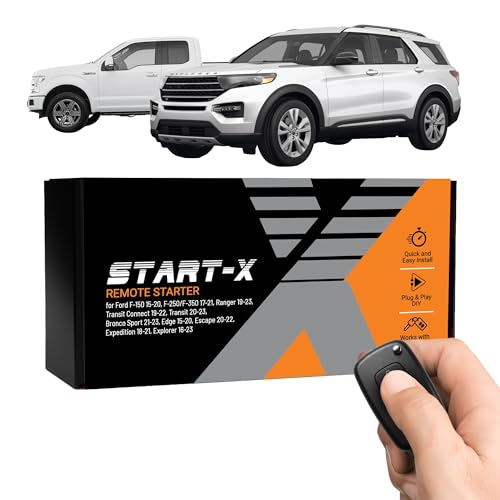
Start-X Remote Starter Kit for Select Ford F-150/F-250/F-350, Ranger, Transit, Transit Connect, Bronco Sport, Edge, Escape, Expedition & Explorer | Push-to-Start & Key Ignition | Plug N Play Install
𝗗𝗜𝗬 𝗿𝗲𝗺𝗼𝘁𝗲 𝘀𝘁𝗮𝗿𝘁 𝗸𝗶𝘁: Add remote start functionality to your vehicle for a fraction of the cost. Enjoy…
As an affiliate, we earn on qualifying purchases.
As an affiliate, we earn on qualifying purchases.
Do You Need a Remote Starter for Your Vehicle?
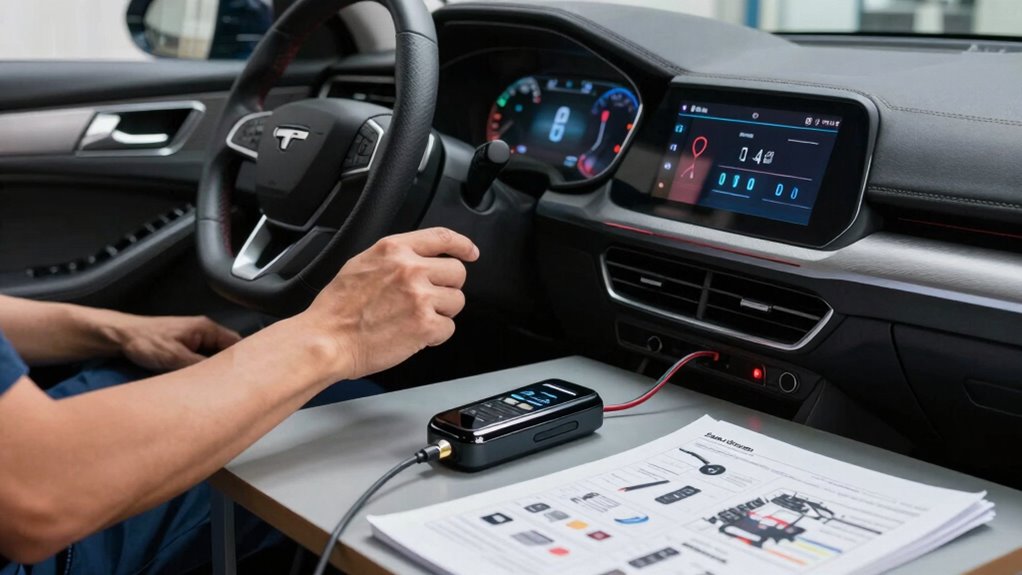
Deciding whether you need a remote starter depends on your daily routine and driving habits. Some believe remote starter myths, like it always drains your battery or causes excessive wear, but customer testimonials often tell a different story, showing how convenient and reliable these devices can be. If you frequently start your vehicle from a distance to warm it up or cool it down, a remote starter might be a smart investment. Consider how much time you spend waiting in cold or hot weather before driving. If your routine involves early mornings or unpredictable weather, a remote starter can offer comfort and convenience. Evaluating your needs carefully, and don’t just rely on myths—listen to real user experiences to decide if it’s right for you. Additionally, understanding the technology behind remote starters can help you make an informed decision. Exploring the environmental impact of vehicle accessories, such as remote starters, can also guide you toward choices that align with your eco-conscious values. Recognizing the importance of power quality and monitoring can ensure your vehicle’s electrical system remains reliable when installing such devices. Moreover, considering the compatibility with your vehicle model can prevent installation issues and ensure optimal performance. To maximize safety and efficiency, it’s also important to review installation requirements and professional support to ensure proper setup and operation.
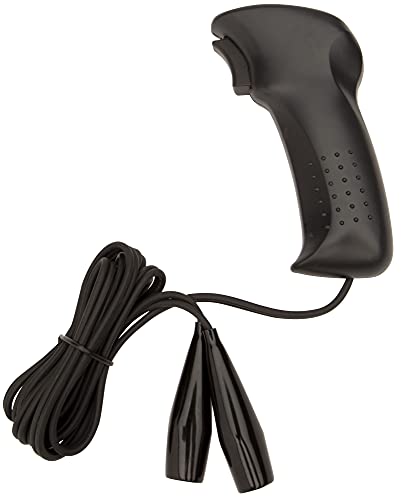
Remote Starter Switch
Cranks engine from under the hood without the help of an assistant
As an affiliate, we earn on qualifying purchases.
As an affiliate, we earn on qualifying purchases.
Is Your Car Compatible With a Remote Starter?
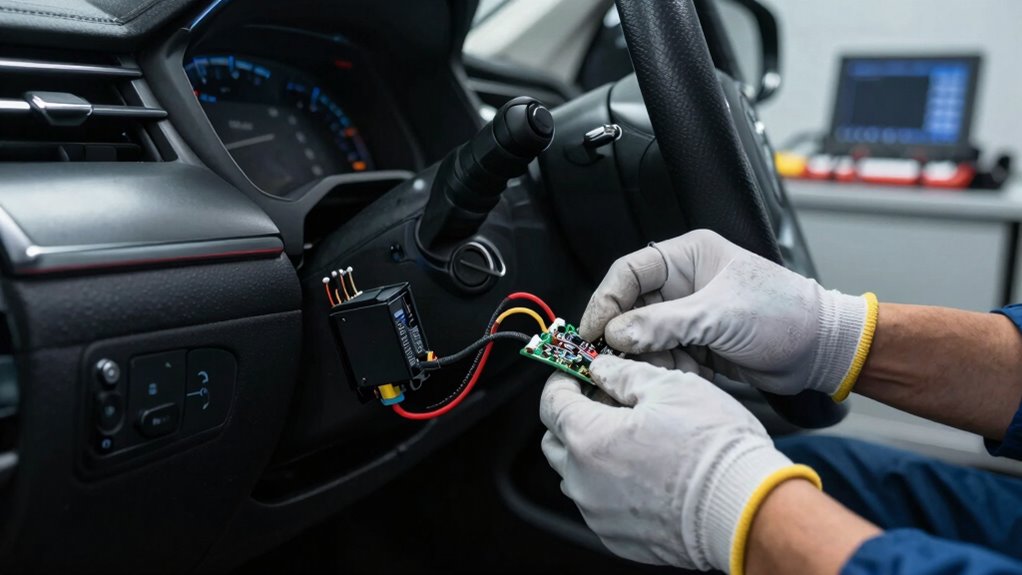
First, check if your vehicle meets the compatibility requirements, such as having a factory or aftermarket keyless entry system. Then, confirm your car has the necessary key features, like an electronic control unit (ECU) that supports remote start functions. Finally, verify that your electrical system can handle the installation without issues, so your remote starter works safely and reliably. Additionally, it’s beneficial to review your vehicle’s Victorian steampunk design elements to ensure the installation complements your car’s aesthetic. Considering the electric power generation capabilities of your vehicle can also help determine if the remote starter installation is feasible. Ensuring your vehicle’s free floating engine components are in good condition can prevent unexpected issues during installation. Checking your vehicle’s electrical system can further help avoid potential compatibility problems.
Vehicle Compatibility Requirements
Not all vehicles are compatible with remote starters, so it’s important to check your car’s specifications before installation. Some models may lack the necessary wiring or electronic systems needed for remote start functionality. Before proceeding, ensure your vehicle’s battery maintenance is up to date, as a weak battery can cause starting issues once a remote starter is installed. Additionally, perform vehicle diagnostics to identify any existing electrical problems that could interfere with the system’s operation. Older cars with complex or outdated wiring may require upgrades, making installation more challenging or costly. Confirming compatibility helps prevent unnecessary expenses and guarantees your remote starter works reliably. Always consult your vehicle’s manual or a professional technician to verify if your car meets the specific requirements for remote starter installation. Vehicle compatibility is crucial to ensure a smooth and effective setup. Properly assessing your vehicle’s electrical system can help avoid potential installation issues. Additionally, understanding your vehicle’s electronic systems can provide insights into compatibility concerns and necessary modifications. Conducting a thorough system check beforehand can further ensure compatibility and a successful installation. Performing a compatibility test can save time and resources during installation.
Key Features Needed
To determine if your car can support a remote starter, you need to check for specific key features. Many remote starter myths suggest they work universally, but compatibility varies. First, verify your vehicle has a functioning ignition system compatible with remote start units. Second, confirm your car has a neutral safety switch, preventing accidental starting in gear. Third, check for factory or aftermarket keyless entry systems, as these can simplify installation. Fourth, research brand comparisons to select reliable models that suit your vehicle’s features. Keep in mind, some cars may require additional modules or adapters. Additionally, ensuring your vehicle has the necessary remote start compatibility features can save you time and money during installation. It’s also helpful to review your vehicle’s electrical system specifications to ensure they meet the requirements for remote starter integration. Recognizing the importance of vehicle security systems can also impact compatibility and installation procedures. Understanding your car’s electronic control units can further facilitate a smoother setup process. Moreover, consulting your vehicle’s owner’s manual can provide specific guidance on remote start compatibility. By verifying these features, you’ll avoid false assumptions and ensure smooth installation, rather than relying on myths about universal compatibility.
Electrical System Compatibility
Is your car’s electrical system compatible with a remote starter? Many vehicles require specific features to ensure smooth operation. Check if your car’s battery maintenance is up to par, as a weak battery can hinder remote starter performance. Additionally, parking sensors might need to be disconnected or bypassed during installation. Here’s a quick overview:
| Compatibility Factor | Details |
|---|---|
| Battery condition | Must be in good shape for reliable start |
| Electrical system type | Must support remote starter connections |
| Parking sensors | May need to be temporarily disabled |
| Factory security system | Confirm compatibility or need for bypass |
Ensuring these elements match prevents issues and guarantees your remote starter works efficiently. Also, verifying your vehicle’s electrical system compatibility can save time and prevent potential malfunctions during installation. Checking the battery condition beforehand is crucial, as a weak or aging battery can cause startup failures and drain your new system quickly. Properly assessing factory security systems ensures seamless integration without triggering alarms or malfunctions. Additionally, understanding your vehicle’s electrical system type helps determine if additional wiring or adapters are necessary for installation. Being aware of vehicle wiring configurations can further streamline the process and avoid unexpected complications.

FSTURIOS Immobilizer Bypass Module, Car Immobilizer Chip Key Release for Remote Engine Start Stop, 12V Universal Transponder Bypass Module Kit Used for Most Chip Key Cars
Practical Function: This module is designed to bypass the immobilizer chip in the original OEM key fob to…
As an affiliate, we earn on qualifying purchases.
As an affiliate, we earn on qualifying purchases.
What Are the Best Types of Remote Starters for Your Car?
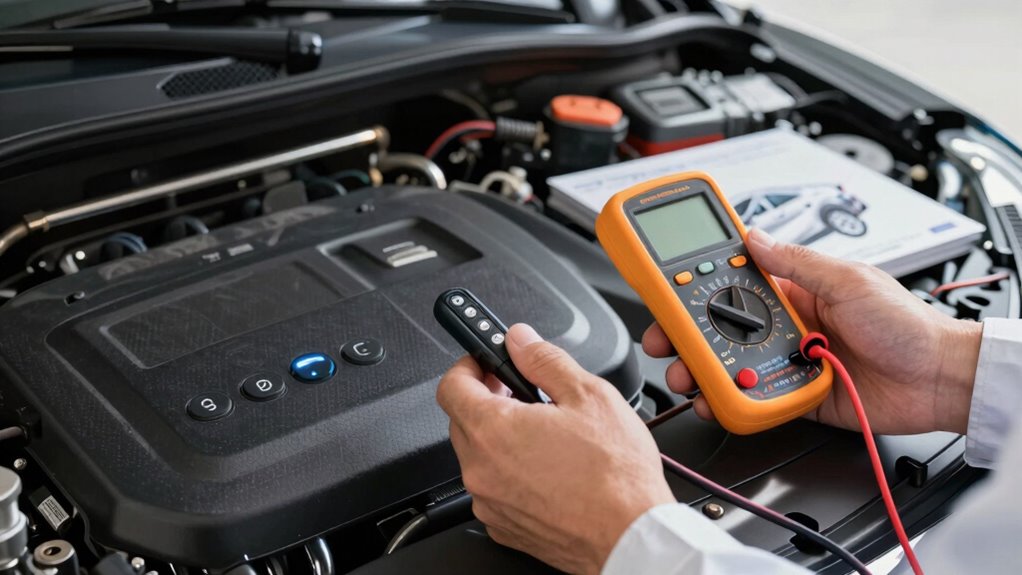
Choosing the right remote starter depends on your vehicle’s compatibility and your preferences. You’ll need to decide between wired and wireless options, each offering different benefits. Understanding these choices helps you pick the best remote starter for your car’s needs.
Compatibility With Vehicle
Since not all remote starters work equally well with every vehicle, it’s important to evaluate compatibility before buying. You need to verify the system works with your car’s make and model. Some remote starters require specific features, like a functioning key programming system, to sync properly. Additionally, check your vehicle’s battery health, as a weak battery can affect remote starter performance. Compatibility also depends on whether your car has factory or aftermarket security systems, which may need integration. Consider the type of ignition system your vehicle uses—some starters are better suited for manual or automatic transmissions. Lastly, confirm that your vehicle has the necessary wiring connections, so installation goes smoothly and the remote starter functions correctly.
Wired vs. Wireless Options
When selecting a remote starter for your vehicle, understanding the differences between wired and wireless options can help you make the best choice. Wireless starters offer greater convenience, allowing you to lock, unlock, and start your car from a distance without extra cables. Wired options, on the other hand, provide wired reliability, ensuring a steady connection that’s less prone to interference.
| Feature | Wired | Wireless |
|---|---|---|
| Convenience | Less flexible, requires wiring | Remote control from afar |
| Reliability | Strong, consistent connection | Possible interference issues |
| Installation | More complex, professional needed | Easier DIY installation |
Think about your priorities—ease or dependability—to decide which type suits your needs best.

Car Central Locking keyless Entry Button&keyless Entry System with autostart Stop Engine and Alarm & Remote Start
Keyless Convenience: Enjoy the convenience of keyless entry and engine start/stop with this advanced system.
As an affiliate, we earn on qualifying purchases.
As an affiliate, we earn on qualifying purchases.
How Secure Are Remote Starter Systems?
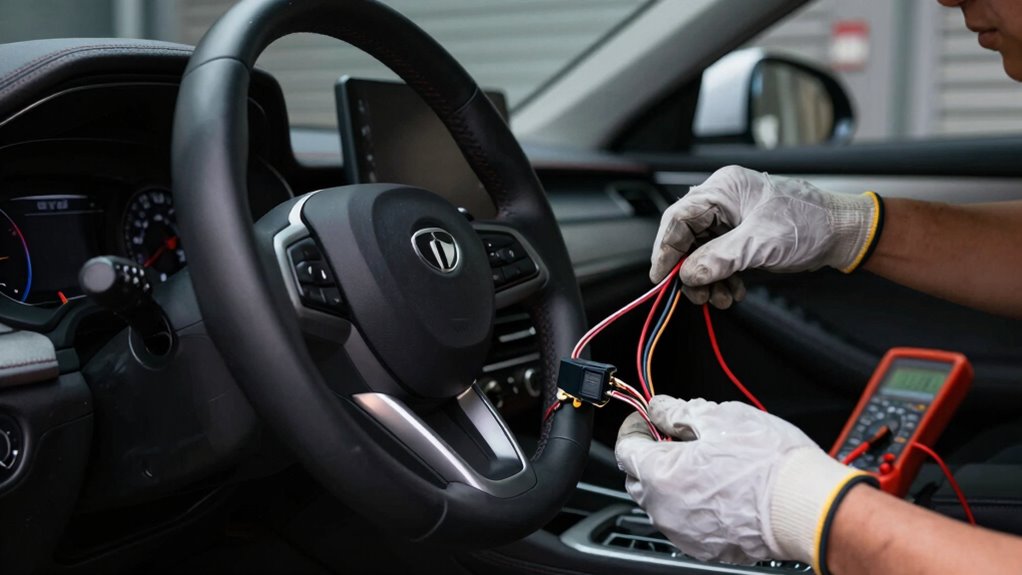
Are remote starter systems truly secure, or are they vulnerable to hacking? While many systems include security features, no technology is completely immune to remote hacking attempts. Criminals may try to intercept signals or exploit vulnerabilities to gain unauthorized vehicle access, compromising your vehicle security. However, reputable systems often use encryption and rolling codes to reduce these risks. To protect yourself, opt for models with advanced security measures and keep your firmware updated. Additionally, be cautious about using third-party apps or unverified remote starters. Understanding potential risks helps you make informed decisions to safeguard your vehicle from unauthorized remote access. Remember, awareness and proper system choices are key to minimizing vulnerabilities.
What Wiring and Installation Steps Are Involved?
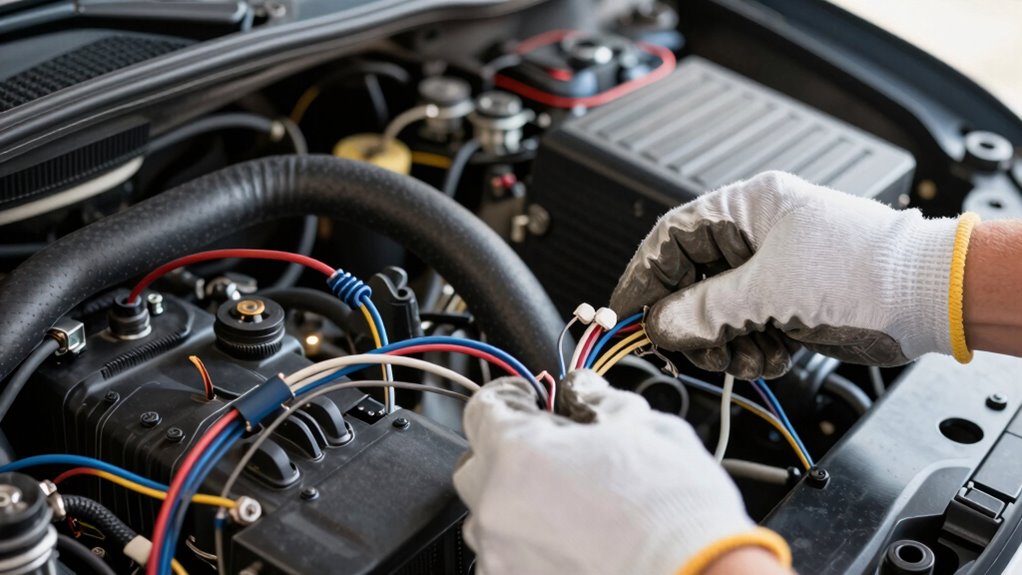
Installing a remote starter requires careful wiring and attention to detail to guarantee proper operation and safety. First, consult wiring diagrams specific to your vehicle and the remote starter model. Follow these diagrams closely to identify the correct wires for power, ignition, starter, and accessory connections. During installation, prioritize safety by disconnecting the vehicle’s battery to prevent shorts or shocks. Use proper tools and connectors to ensure secure, insulated connections. Double-check each step to avoid miswiring, which can damage components or compromise safety. Take your time with each connection, and follow manufacturer instructions thoroughly. Good installation safety practices help prevent future issues and ensure your remote starter functions reliably and safely.
Will Installing a Remote Starter Void Your Car’s Warranty?
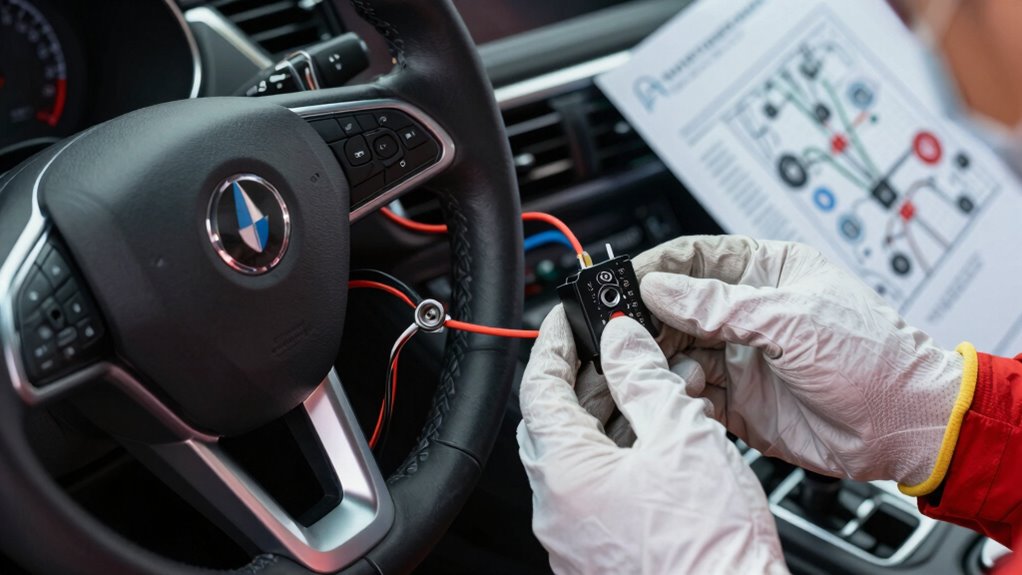
Adding a remote starter involves modifying your vehicle’s electrical system, which can raise concerns about warranty coverage. Warranty concerns often stem from manufacturer restrictions on aftermarket upgrades. Many car makers argue that non-factory-installed parts could void your warranty if they cause issues. However, not all installations automatically void your warranty—it’s often situation-dependent. To protect yourself, consider these points:
- Check your vehicle’s warranty terms for specific restrictions
- Use professional installers familiar with manufacturer guidelines
- Keep records of installation details and parts used
- Verify if the manufacturer offers approved remote starter systems
Being aware of manufacturer restrictions helps you avoid potential warranty disputes and ensures your coverage remains intact after installation. Always research and confirm before proceeding.
What Features Should You Look for in a Remote Starter?
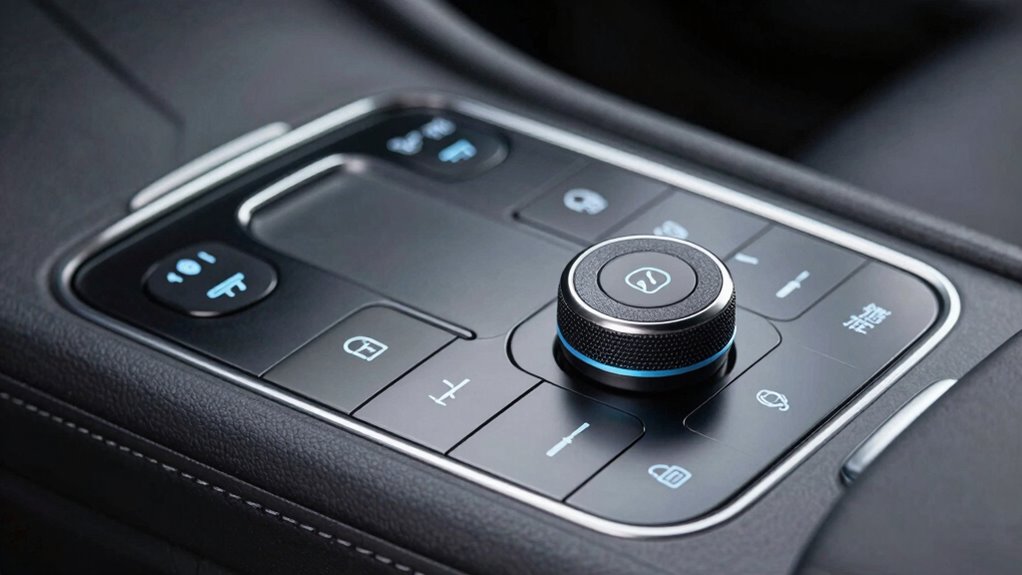
| Feature | Benefit | Ideal For |
|---|---|---|
| Long-range control | Start from afar | Large properties |
| Smartphone control | Remote access via app | Tech-savvy users |
| Parking sensors alert | Avoid obstacles when parking | Urban environments |
| Tire pressure check | Ensures safe driving conditions | Safety-conscious drivers |
How Much Does Professional Installation Cost Compared to DIY?
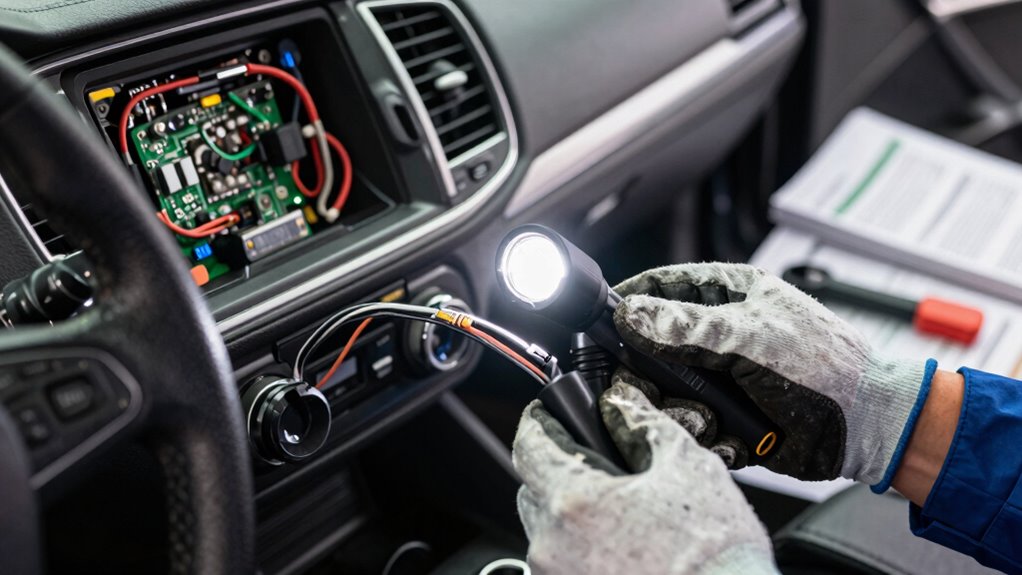
When considering professional installation versus DIY, you’ll notice a difference in labor costs and skill requirements. Professional services often charge more but include expertise that can save you time and frustration. Keep in mind, you’ll also need to invest in special tools and equipment if you choose to install it yourself.
Labor Expense Differences
Professional installation of a remote starter typically costs between $100 and $300, depending on vehicle make and model, while DIY installation can be done at little to no extra cost if you have basic tools and some technical skills. The main difference lies in labor costs and installation fees. When you hire a professional, you pay for their expertise and the time it takes to properly install the system, which can reduce the risk of errors. DIY installation eliminates labor costs but requires you to invest time and effort, plus potential troubleshooting. Keep in mind that complex wiring or vehicle-specific challenges can increase installation fees if you choose professional help. Ultimately, your decision depends on your comfort level with technical work and the complexity of your vehicle.
Skill Level Required
Installing a remote starter yourself requires a moderate level of technical skill, especially if you’re comfortable working with vehicle wiring and electronic components. The main installation challenges involve understanding your vehicle’s wiring system and correctly connecting the remote starter without damaging any parts. Your skill level will directly influence the difficulty and safety of the process. If you have experience with automotive electronics, you might find the DIY route manageable and cost-effective. However, if wiring diagrams and troubleshooting aren’t your strong suits, you could face significant challenges that increase the risk of improper installation. In such cases, professional installation, which adds to the overall cost, might be a smarter choice to ensure safety, reliability, and proper functionality.
Equipment and Tools Cost
Choosing between DIY installation and professional help also means considering the costs involved. Professional installation typically includes equipment and tools, which can range from $100 to $300, depending on your vehicle and remote compatibility. DIY projects usually require purchasing a remote starter kit, which costs $50 to $200, plus additional tools if needed. Keep in mind, some kits need specific batteries or connectors to match your vehicle’s battery requirements. Also, verify the equipment is compatible with your car’s electronics to avoid costly mistakes.
- Remote starter kits with essential features
- Additional wiring or adapters for remote compatibility
- Batteries suitable for your remote system
- Basic hand tools or specialized equipment
How to Ensure Your Remote Starter Works Seamlessly With Your Vehicle?
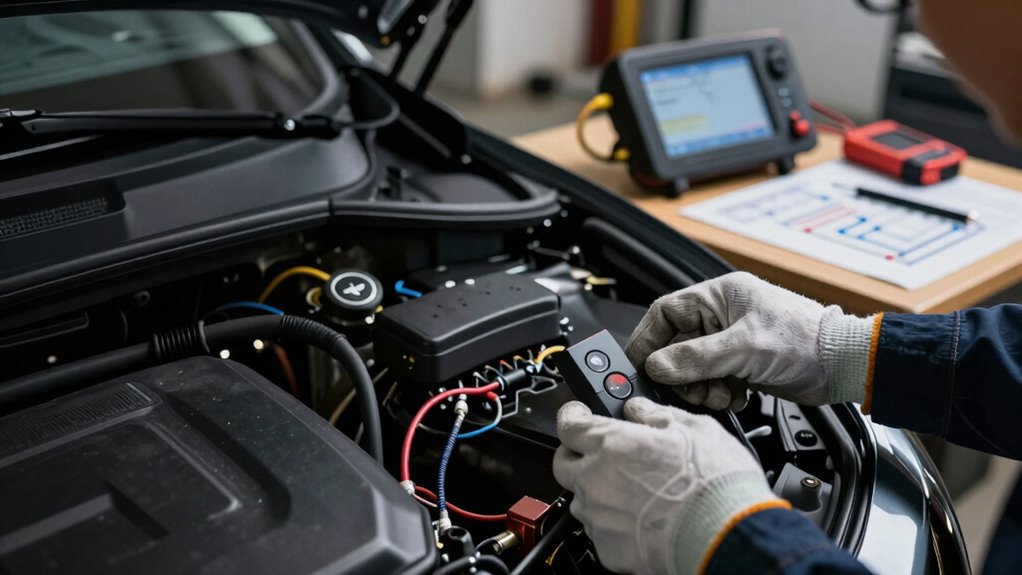
To guarantee your remote starter works seamlessly with your vehicle, start by checking that your system is compatible with your car’s make and model. Ensuring proper vehicle alarm integration is vital for smooth operation. Regular remote starter maintenance helps prevent glitches and maintains reliability. Verify that the remote communicates correctly with your vehicle’s security system to avoid conflicts.
| Compatibility Check | Key Considerations |
|---|---|
| Vehicle Make & Model | Ensure the system supports your car |
| Alarm Integration | Confirm seamless security sync |
| Remote Features | Check range and functions |
| Maintenance Needs | Schedule regular upkeep |
Following these steps minimizes issues and guarantees your remote starter functions effortlessly.
Common Installation Issues and How to Avoid Them
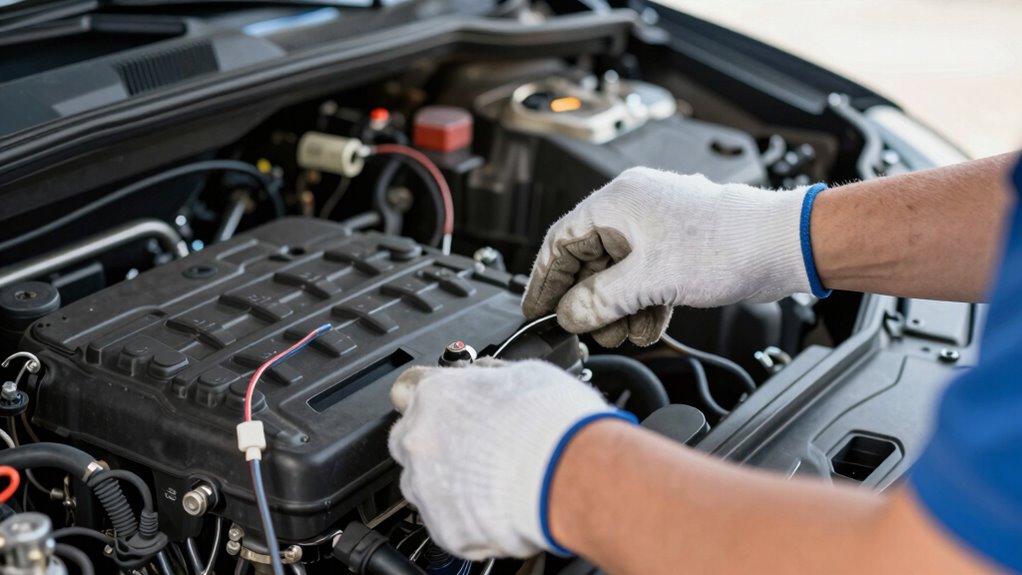
Many common installation issues stem from overlooking compatibility and wiring mistakes. These installation pitfalls can lead to malfunctioning remote starters or even damage your vehicle’s electronics. To avoid these problems, double-check that your remote starter matches your vehicle’s make and model. Ensure all wiring connections are correct and secure, following the manufacturer’s instructions. Poor grounding or incorrect bypass module installation often causes trouble, so pay close attention to grounding points. Additionally, familiarize yourself with troubleshooting tips such as verifying power sources and testing connections before final installation. Being thorough during installation reduces errors and saves time. Remember, careful planning and attention to detail prevent common issues and ensure your remote starter works reliably.
Frequently Asked Questions
Can I Install a Remote Starter on an Older Vehicle?
Yes, you can install a remote starter on an older vehicle, but you need to verify its compatibility first. Some older models might have wiring complexity or lack the necessary connections for a remote starter. You should verify vehicle compatibility and assess wiring complexity before proceeding. If you’re unsure, consulting a professional can help ensure a smooth installation and proper operation.
Are There Legal Restrictions for Remote Starters in My State?
Before you install a remote starter, you should check your state’s specific standards and restrictions. Some states have strict regulations due to safety, security, or emission laws. You might face fines or voided warranties if you overlook these legal limits. Always verify with local law enforcement or vehicle regulations to ensure you’re compliant, avoiding unnecessary issues and ensuring your remote starter functions safely and legally.
How Does a Remote Starter Affect My Car’s Fuel Efficiency?
A remote starter can slightly impact your car’s fuel economy by encouraging longer engine idling, which burns fuel without moving the vehicle. While it may not drastically decrease engine performance, frequent idling could lead to inefficient fuel use over time. To minimize this effect, use your remote starter sparingly and guarantee your vehicle’s engine runs smoothly, helping maintain ideal fuel economy and engine performance while still enjoying the convenience.
Is Professional Installation Necessary for All Vehicle Types?
You don’t always need professional installation for remote starters, but it depends on your vehicle’s aftermarket compatibility and warranty considerations. Some cars, especially newer or complex models, may require expert help to avoid damaging systems or voiding warranties. If your vehicle is straightforward, DIY installation might work. However, consulting a professional guarantees proper setup, preserves your warranty, and minimizes potential issues down the road.
Can a Remote Starter Be Programmed for Multiple Vehicles?
Yes, a remote starter can be programmed for multiple vehicles if it’s compatible with each vehicle’s make and model. You’ll need to check the remote starter’s compatibility and follow the manufacturer’s instructions for programming. Keep in mind that some systems may require specialized tools or professional help to guarantee proper setup. Always verify that your remote starter supports multi-vehicle programming before attempting to set it up.
Conclusion
Before you set out on installing a remote starter, remember it’s not just about flipping a switch—it’s about weaving convenience into your daily drive. Think of it as tuning a finely crafted instrument, ensuring every note plays in harmony. By checking your car’s compatibility, understanding the features, and choosing the right system, you’ll open a symphony of comfort and security. With careful preparation, your remote starter will become a trusted companion, whispering warmth and ease into every journey.