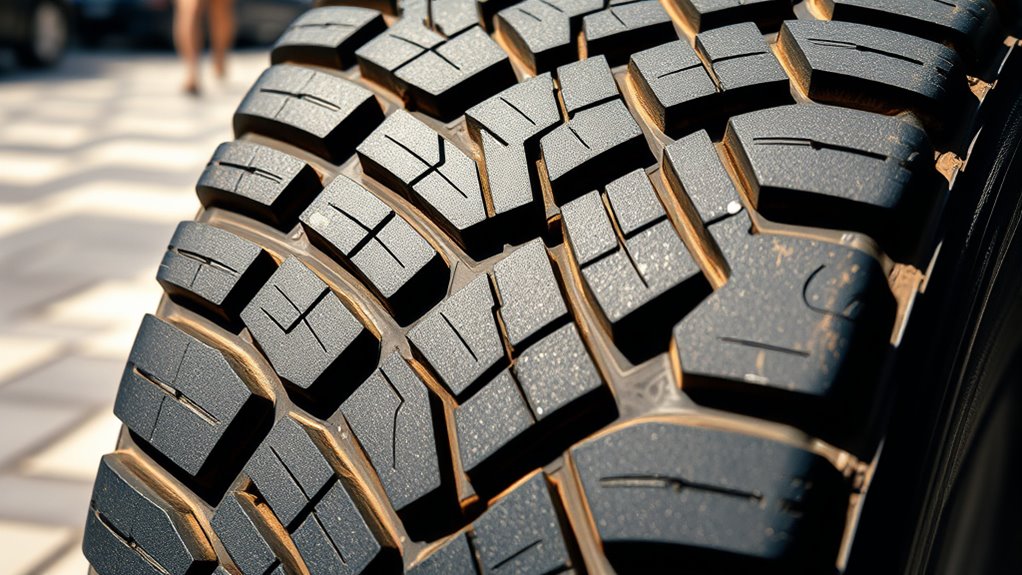

Your tire tread pattern directly affects your vehicle’s traction, noise, and safety. Aggressive, deeply grooved designs improve grip in wet or snowy conditions by channeling water and slush, while smoother patterns reduce road noise and enhance comfort. Worn or uneven patterns can compromise handling and tire lifespan. Choosing the right tread based on your driving needs can boost safety and performance. Keep exploring to discover how different patterns can support your driving experience even more.
Key Takeaways
- Tread patterns affect road noise levels, with smoother designs producing quieter rides.
- Deep and wide grooves improve wet traction by channeling water and reducing hydroplaning risk.
- Aggressive patterns with large voids tend to wear unevenly, impacting tire longevity and safety.
- Properly matched tread designs enhance handling, grip, and safety across different terrains and weather conditions.
- Tread shape and depth influence tire wear, noise, and overall driving comfort.

Have you ever wondered why different tires have various tread patterns? It’s because each pattern is designed to optimize specific aspects of your driving experience, from handling to comfort. One of the key factors affected by tread design is road noise. Tires with more aggressive, deeply grooved patterns tend to generate more sound as the rubber interacts with the pavement. Conversely, tires with smoother or more uniform tread patterns often produce less noise, making for a quieter ride. If you spend a lot of time on highways or prefer a peaceful driving environment, choosing a tire with a tread pattern engineered to minimize road noise can make a noticeable difference. The pattern’s shape, depth, and the spacing of the grooves all influence how much sound propagates into the cabin.
Another vital aspect impacted by tread design is wear patterns. Different tread patterns wear unevenly depending on driving habits, road conditions, and tire alignment. For example, tires with asymmetrical or directional patterns often wear more evenly because their design helps distribute pressure more uniformly across the surface. In contrast, tires with aggressive tread blocks or large voids might develop uneven wear, especially if the vehicle’s suspension isn’t properly maintained or if you frequently drive on rough surfaces. Recognizing wear patterns early can prevent premature tire replacement and improve safety. Properly matched tread patterns also help ensure that your tires wear evenly over time, maximizing their lifespan and maintaining consistent performance.
The choice of tread pattern directly influences how your tires grip the road during different weather conditions and terrains. For instance, tires with deep, wide grooves are better suited for wet or snowy conditions because they channel water and slush away from the contact patch, reducing the risk of hydroplaning. On the other hand, summer tires with more solid tread blocks provide a larger contact area for enhanced handling and braking on dry roads. The pattern’s ability to channel away water and debris also impacts overall traction and safety, especially in adverse weather.
Ultimately, understanding how tire tread patterns influence performance helps you select the right tires for your driving needs. By considering factors like road noise, wear patterns, and traction, you can make informed decisions that improve comfort, safety, and cost-effectiveness. It’s not just about aesthetics or brand reputation; it’s about choosing a pattern that complements your driving style and the conditions you encounter daily. Properly matched tires will serve you better, last longer, and offer peace of mind every time you hit the road. Additionally, selecting a suitable headphone type for your vehicle can enhance your overall driving experience, whether through wired or wireless options.
Frequently Asked Questions
How Do Different Tread Patterns Affect Fuel Efficiency?
Different tread patterns can markedly impact your fuel efficiency by affecting aerodynamics optimization and rolling resistance. Smooth, streamlined patterns reduce air drag and rolling resistance, helping you conserve fuel. Aggressive or deep treads increase resistance, making your engine work harder and reducing efficiency. So, choosing a tread pattern designed for low rolling resistance and aerodynamics optimization can help you save fuel and improve overall driving performance.
Can Tread Pattern Choice Improve Tire Longevity?
Yes, choosing the right tread pattern can improve tire longevity. By selecting a pattern suited to your driving conditions, you reduce uneven tread wear and extend the life of your tires. Proper pattern selection guarantees even distribution of pressure, minimizes wear caused by aggressive driving, and enhances traction. Regularly rotating your tires also helps maintain consistent tread wear, maximizing your tires’ lifespan and saving you money on replacements.
Do Tread Patterns Influence Noise Levels While Driving?
Imagine driving on a highway with new tires featuring asymmetric tread patterns. These patterns are designed for noise reduction, so you experience less road noise and smoother rides. Tread patterns directly influence noise levels by dispersing sound waves, enhancing road comfort. Choosing the right pattern can markedly reduce noise pollution and make your driving more peaceful, especially on long journeys, improving overall comfort and driving enjoyment.
Are Certain Tread Designs Better for Off-Road Conditions?
Yes, certain tread designs excel off-road conditions. Mud terrain tires feature large, aggressive patterns that grip loose surfaces like mud and rocks, providing better traction. All-season designs offer a versatile tread pattern suitable for a variety of terrains, including light off-road use. Your choice depends on your off-road needs—mud terrain for tough, muddy trails, or all-season for a mix of on and off-road driving.
How Do Tread Patterns Impact Braking Distances in Wet Conditions?
Your tire tread pattern directly impacts braking distance in wet conditions by enhancing water channeling and reducing hydroplaning risk. Deep, well-designed grooves help direct water away from the contact patch, improving grip and stopping power. If the tread pattern effectively channels water, you’ll experience shorter braking distances and safer stops on wet roads. Without proper water evacuation, hydroplaning risk increases, making it harder to control your vehicle during braking.
Conclusion
Just as a skilled sailor chooses the right sails for smooth sailing, selecting the ideal tire tread pattern guides your vehicle through various terrains with ease. Think of each pattern as a unique compass, steering you toward better traction, safety, and performance. When you understand how these patterns work, you become the captain of your journey, confidently steering every turn and challenge. Ultimately, your choice in tread patterns becomes the anchor that holds your driving experience steady and secure.