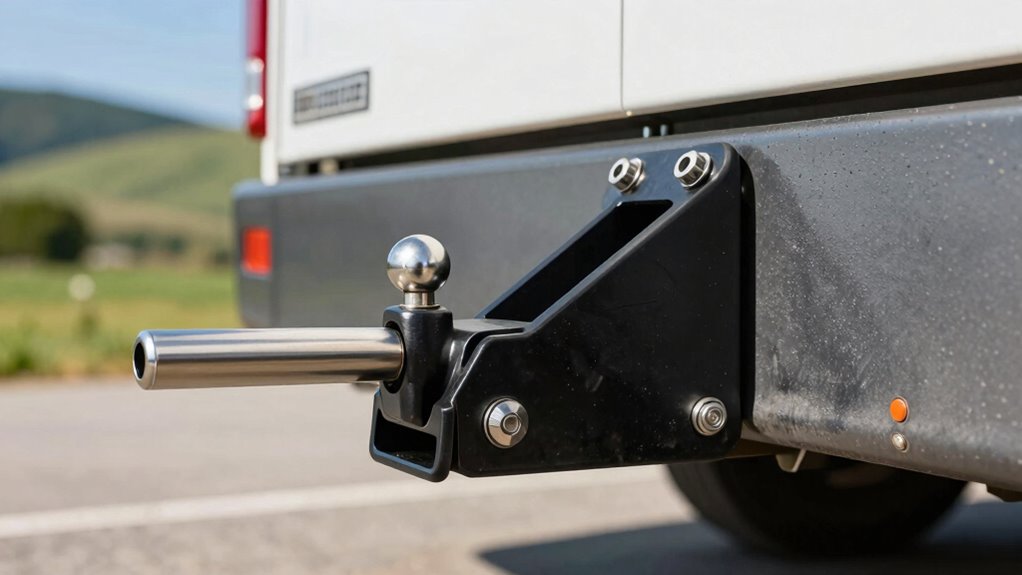

To prevent trailer sway, aim for about 10-15% of your trailer’s weight as tongue weight. For example, if your trailer weighs 4,000 pounds, your target tongue weight is between 400 and 600 pounds. To keep this balanced, shift cargo forward or adjust your hitch height. Using this simple calculation helps stabilize your trailer and improves safety. Keep going to discover the exact steps to fine-tune your setup for smoother towing.
Key Takeaways
- Calculate 10-15% of the trailer’s total weight to determine the ideal tongue weight.
- Use a reliable scale to measure the downward force on the hitch ball during loading.
- Shift heavier cargo toward the front of the trailer to increase tongue weight if needed.
- Adjust hitch height or use weight distribution systems to achieve proper load balance.
- Regularly verify tongue weight during loading to prevent trailer sway and ensure towing safety.

Rv Trailer Tongue Weight Scale 1800 Lb Portable Trailer Tongue Scale
- Large Stability Base: 6.3-inch base for enhanced stability
- Fatigue-Resistant Spring System: Ensures stable accuracy with minimal recalibration
- High Weight Capacity: Measures up to 1800 lbs with 50-lb increments
As an affiliate, we earn on qualifying purchases.
As an affiliate, we earn on qualifying purchases.
Why Proper Tongue Weight Is Key to Safe Towing
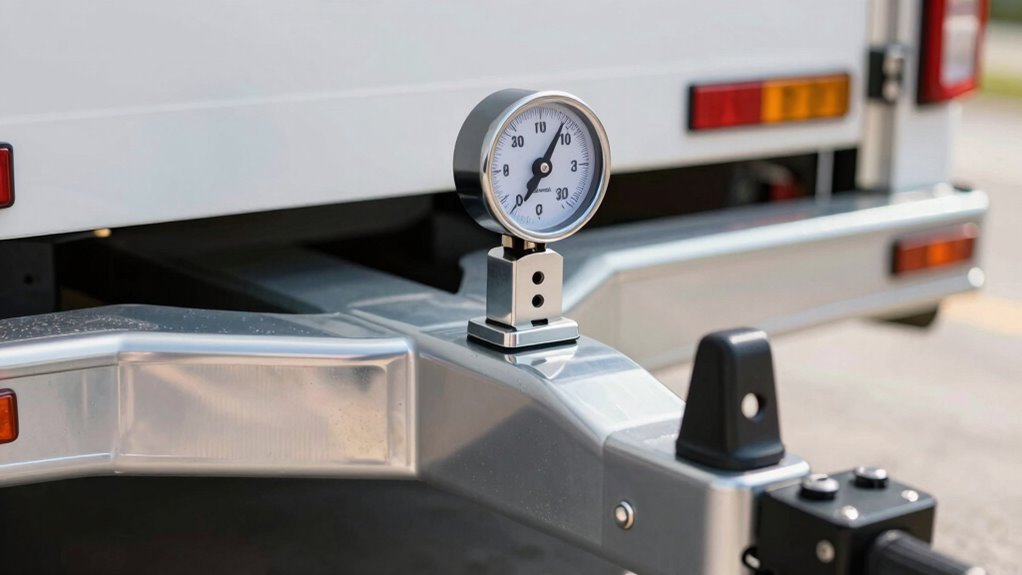
Proper tongue weight is vital because it directly affects your trailer’s stability and handling. When you choose the right trailer types, ensuring proper tongue weight helps prevent sway and reduces stress on your hitch and vehicle. Using appropriate hitch accessories, like sway bars or weight distribution systems, can further improve control and safety. Too little tongue weight causes the trailer to sway, making it difficult to steer, while too much can overload your vehicle’s rear and cause poor handling. Correct tongue weight balances the load, keeps the trailer aligned behind your vehicle, and enhances braking performance. Whether you’re towing a small utility trailer or a large RV, understanding and maintaining proper tongue weight is essential to safe, confident towing. Always match your trailer type with suitable hitch accessories for maximum safety. Understanding trailer dynamics helps you make more informed towing decisions and improves overall safety. Additionally, understanding battery inverter generators and their capacity can ensure you have reliable power for your towing needs and accessories, especially when using portable power sources. Properly calculating tongue weight percentage can prevent common towing issues and ensure your setup remains balanced during travel. Being aware of load distribution techniques can further optimize trailer stability and safety during your journey.
How to Spot Signs of Incorrect Tongue Weight and Trailer Sway
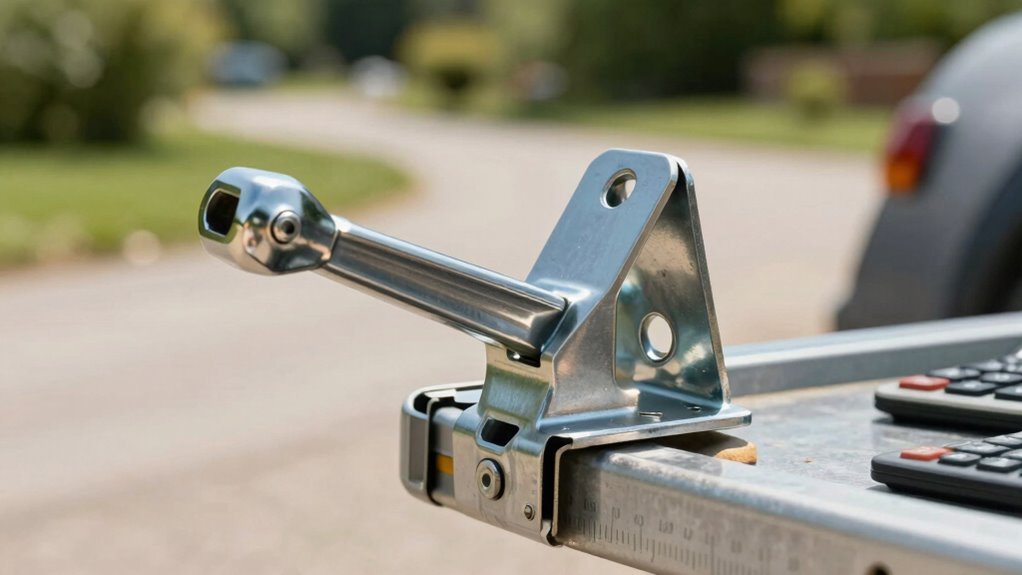
If your trailer starts to sway or feels unstable while you’re driving, it’s a clear sign that something’s off with your tongue weight. Common indicators include difficulty controlling the trailer, excessive side-to-side movement, or feeling of instability. Cargo imbalance can cause uneven weight distribution, leading to sway, while incorrect tire pressure on your trailer or tow vehicle worsens handling. Check for these signs:
| Symptom | Cause | Action |
|---|---|---|
| Trailer swaying | Inadequate tongue weight | Adjust cargo placement |
| Excessive sway at speed | Cargo imbalance | Rebalance cargo |
| Unusual tire wear | Incorrect tire pressure | Check and inflate tires |
| Poor handling | Improper tongue weight | Use proper math for weight |
Stay vigilant—these signs point to the need for quick adjustments. Properly calculating your tongue weight ensures safer towing and reduces the risk of trailer sway. Additionally, understanding how free floating weight affects your trailer can help prevent issues before they arise. Being aware of weight distribution techniques can further improve towing stability and safety. Proper installation and maintenance of your trailer components, such as axle alignment, also play a crucial role in ensuring a smooth and secure ride. Regularly inspecting your trailer’s components and understanding the importance of proper maintenance can significantly enhance safety and performance during towing.
Step-by-Step Guide to Calculating Your Ideal Tongue Weight
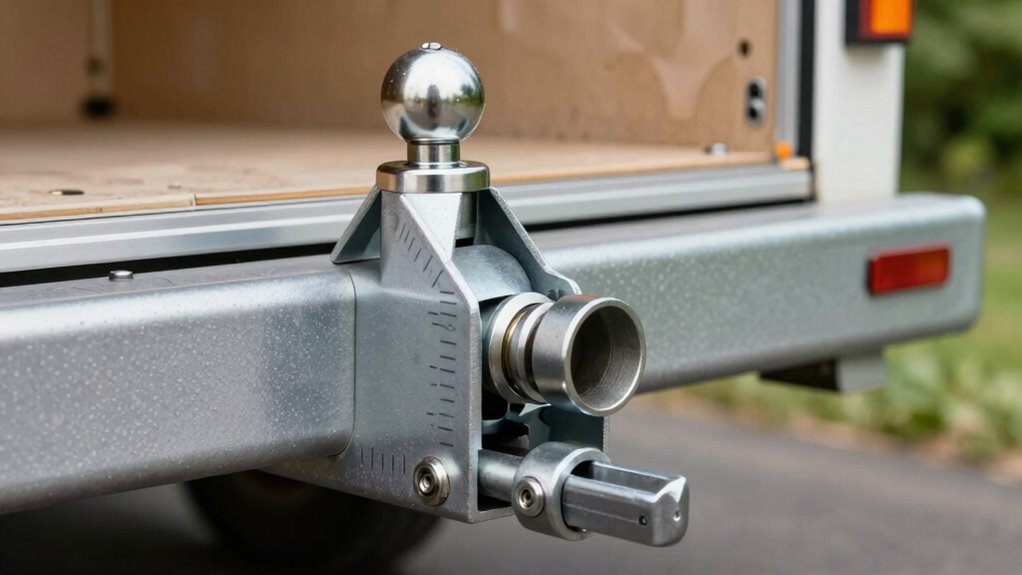
Calculating your ideal tongue weight is essential for safe trailer towing, and it all starts with understanding the correct weight distribution. Properly estimating this weight helps prevent trailer sway and ensures safe handling. To do this, follow these steps:
- Ensure your vehicle is well-maintained, with recent vehicle maintenance completed.
- Use a reliable scale to measure the downward force on the hitch ball.
- Remove any excess cargo to get an accurate reading.
- Install your hitch correctly, ensuring it’s properly secured.
- Adjust your load to achieve an ideal tongue weight, typically 10-15% of the trailer’s total weight.
- Understanding weight distribution in your trailer setup can significantly improve towing stability and safety.
- Regularly check your towing equipment for signs of wear or damage to maintain optimal safety standards.
Maintaining awareness of seasonal variations in your camping environment can help you prepare for changing weather conditions that may impact your towing safety.
Easy Tips to Adjust Your Tongue Weight for Better Stability
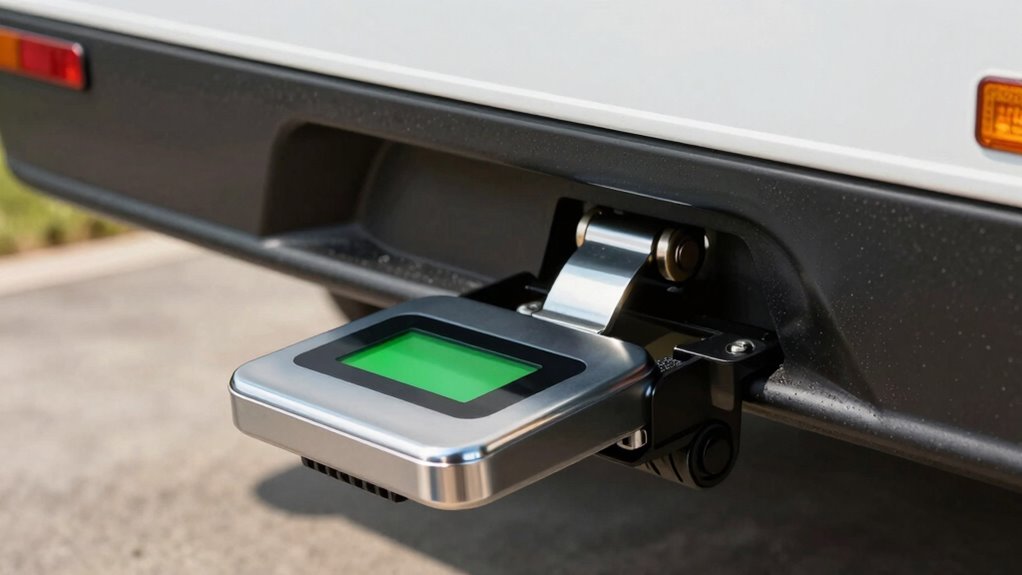
To improve your trailer’s stability, start by adjusting the load distribution to achieve the correct tongue weight. Proper weight distribution guarantees your trailer rides smoothly and reduces sway. Check your hitch height; if it’s too high or low, it can affect tongue weight. Lower the hitch height by adjusting the ball height or redistributing the load on the trailer. Shift heavier items toward the front of the trailer to increase tongue weight or move lighter items forward. Conversely, lighten the load at the rear if the tongue weight is too high. Use a weight distribution system if needed, as it helps evenly spread weight across your vehicle and trailer. Additionally, understanding the weight distribution principles can guide you in making effective adjustments. These simple adjustments can considerably enhance stability and make towing safer and more comfortable. Proper load management is supported by verified specifications that ensure your trailer setup aligns with safety standards. Knowing the impact of load balance can also help you fine-tune your setup for optimal towing performance, especially considering how AI technology can assist in calculating ideal load distributions for enhanced safety.
Math Examples to Help You Keep Your Trailer Steady
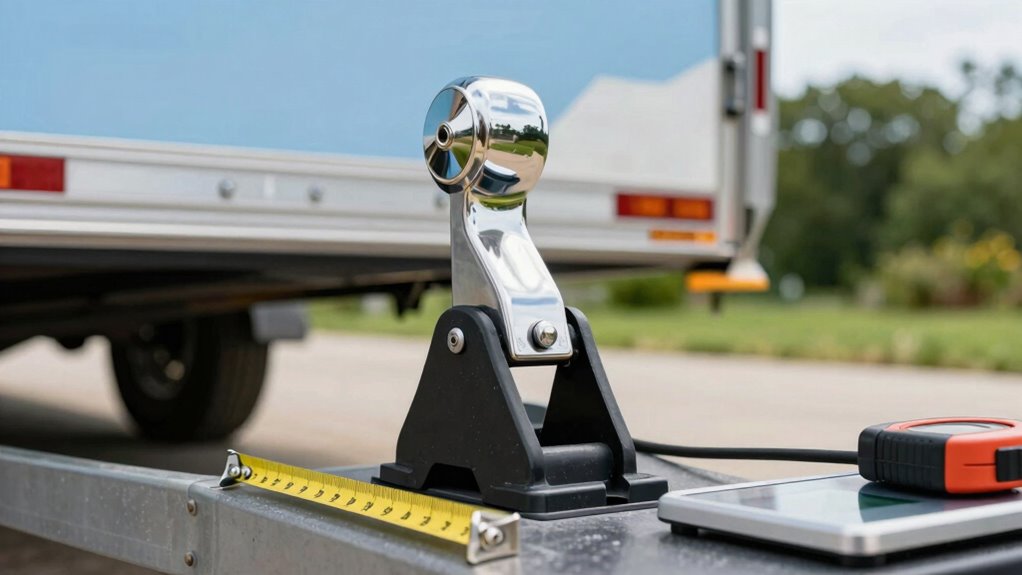
Understanding the math behind tongue weight helps you make precise adjustments for safer towing. To improve trailer balance and maximize weight distribution, try these examples:
- If your trailer weighs 4,000 lbs and you want a 10% tongue weight, aim for 400 lbs on the hitch.
- For a trailer with a 600 lbs tongue weight, ensure the load on the axles is balanced so the hitch carries about 10-15% of total weight.
- If you add 200 lbs of cargo at the front of the trailer, check that the tongue weight increases proportionally.
- When adjusting load placement, remember that moving weight forward increases tongue weight, aiding trailer stability.
- Use simple formulas to verify your calculations and tweak weight distribution for maximized trailer balance.
- Proper weight distribution is crucial for maintaining control and preventing sway during towing.
- Employing load balancing techniques can further enhance towing safety and trailer control.
- Regularly monitor tongue weight during loading to ensure safe and effective trailer handling.
- Additionally, understanding vehicle weight capacity helps prevent overloading and ensures safe towing conditions.
- Incorporating measured testing methods can help validate your load adjustments and improve overall safety.
Frequently Asked Questions
How Often Should I Recheck My Trailer’s Tongue Weight During Trips?
You should recheck your trailer’s tongue weight at least once every few hours during your trip, especially after long drives or seasonal adjustments. Changes in load or terrain can affect towing safety, so staying vigilant helps prevent sway issues. Regularly verifying tongue weight ensures your setup remains balanced and safe, giving you peace of mind throughout your journey. Always prioritize these checks to maintain ideal towing safety.
Can Uneven Weight Distribution Affect Tongue Weight Calculations?
Yes, uneven weight distribution can considerably affect your tongue weight calculations. When your load isn’t properly balanced, it skews the weight distribution, making your tongue weight inaccurate. To prevent trailer sway and ensure safe towing, you should regularly check and adjust the load distribution, focusing on proper weight balancing. Doing so helps maintain the correct tongue weight, improves stability, and keeps your trip safe and trouble-free.
What Tools Are Best for Measuring Tongue Weight Accurately?
Imagine holding the steady hand of a balance beam; portable scales and spring balances are your tools for this task. These devices act as reliable sentinels, accurately measuring tongue weight. Portable scales, especially, offer convenience and precision, fitting right beneath your hitch. Spring balances provide quick, straightforward readings. Use these tools regularly to guarantee proper weight distribution, preventing sway and keeping your journey smooth and safe.
How Does Cargo Shift Impact Trailer Stability and Tongue Weight?
Cargo shifting can dramatically impact your trailer’s stability and tongue weight. When cargo isn’t properly secured, it moves during transit, causing uneven weight distribution. This shift can increase or decrease tongue weight unexpectedly, leading to sway or instability. To prevent this, make sure cargo security and maintain proper weight distribution. Regularly check that your load stays in place, and adjust cargo placement as needed to keep the trailer balanced and safe on the road.
Are There Specific Trailer Types That Require Special Tongue Weight Considerations?
Yes, special trailer types like RVs, boat trailers, or heavy-duty cargo trailers need specific weight considerations. These trailers often have unique designs and weight distributions, making proper tongue weight essential for stability. You should carefully follow the manufacturer’s recommendations for tongue weight to prevent sway or uneven wear. Adjusting load placement or using specialized equipment can help you meet these weight considerations, ensuring safer towing and better trailer control.
Conclusion
Worried that calculating tongue weight sounds complicated? Don’t be! With just a few simple steps, you can guarantee your trailer stays steady and safe on the road. Proper tongue weight isn’t just about rules—it’s about preventing sway, protecting your vehicle, and enjoying stress-free towing. Even if you think math isn’t your thing, these quick tricks make it easy. Trust me, a little effort today keeps your trip smooth and worry-free tomorrow.