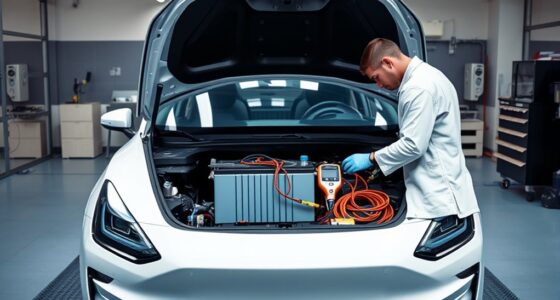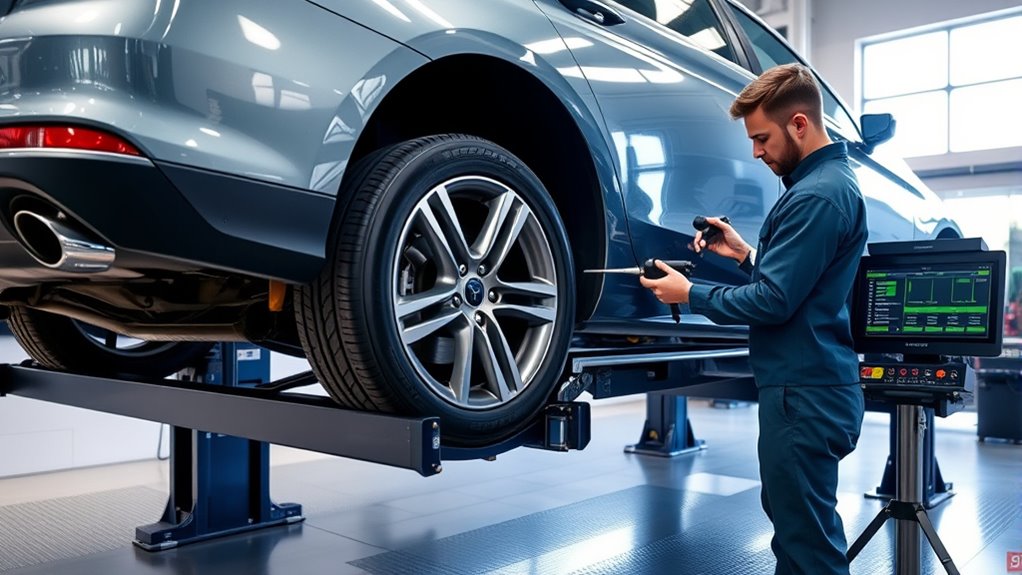

Proper wheel alignment is vital for ensuring your vehicle handles safely and smoothly. It helps prevent uneven tire wear, extends tire life, and boosts fuel efficiency. When your wheels are correctly aligned, your steering response improves, and you reduce the risk of accidents caused by poor handling. The process involves adjusting the angles of your wheels—camber, caster, and toe—using specialized equipment. If you want to learn about how it’s done and why it matters, keep going.
Key Takeaways
- Proper wheel alignment ensures vehicle safety, optimal handling, and prevents uneven tire wear.
- Misalignment can cause poor steering response, vehicle pulling, and increased tire and fuel costs.
- Signs include crooked steering wheel, uneven tire wear, and pulling after hitting obstacles or accidents.
- The process involves adjusting camber, caster, and toe angles using specialized equipment for precise alignment.
- Regular alignment improves tire lifespan, fuel efficiency, handling, and overall vehicle performance.

Proper wheel alignment is vital for your vehicle’s safety, performance, and fuel efficiency. When your wheels are properly aligned, your vehicle handles better, and you reduce the risk of accidents caused by poor steering or uneven tire wear. Misalignment, on the other hand, can lead to uneven tire wear, which shortens the lifespan of your tires and leads to costly replacements. It also impacts fuel efficiency because misaligned wheels create extra resistance, forcing your engine to work harder to keep the car moving smoothly. This extra effort consumes more fuel, making your trips more expensive over time. Staying on top of wheel alignment isn’t just about maintaining your vehicle’s health; it’s about saving money and guaranteeing your safety every time you hit the road.
You might notice signs that indicate your vehicle needs an alignment, such as the steering pulling to one side or the other, a crooked steering wheel when driving straight, or uneven tire wear patterns. When these signs appear, it’s essential to have your wheel alignment checked promptly. Regular maintenance, especially after hitting potholes, curbs, or after an accident, helps prevent misalignment from developing. Proper alignment involves adjusting the angles of your wheels so they are set to the manufacturer’s specifications. This process ensures that all four wheels are parallel to each other and perpendicular to the ground, providing ideal contact with the road surface.
During a wheel alignment procedure, a technician uses specialized equipment to measure your wheel angles, such as camber, caster, and toe. They then make precise adjustments to the suspension components to bring everything into alignment. This process can often be completed in less than an hour, but its benefits are long-lasting. Correct alignment improves tire wear, allowing your tires to last longer and perform better. Additionally, it enhances your vehicle’s handling, steering response, and overall safety. Properly aligned wheels also lead to better fuel efficiency because your engine doesn’t have to compensate for unnecessary resistance caused by misaligned wheels. Regularly checking wheel alignment helps maintain optimal vehicle performance and safety.

KATOOL KT-AV9 Android System 3D Wheel Alignment Machine Wheel Aligner Automotive Tire Alignment Tool
The KT-AV9 3D Wheel Aligner incorporates the latest Android-based 3D camera measurement technology.
As an affiliate, we earn on qualifying purchases.
As an affiliate, we earn on qualifying purchases.
Frequently Asked Questions
How Often Should I Get My Wheels Aligned?
You should get your wheels aligned every 6,000 to 10,000 miles, or when you notice uneven tire wear or steering issues. Along with alignment, it’s a good idea to have a tire rotation and suspension inspection to keep your vehicle in top shape. Regular checks ensure smooth driving, better gas mileage, and extend your tires’ lifespan. Don’t wait for problems—schedule these services routinely for maximum performance.
Can Poor Alignment Affect My Fuel Efficiency?
Poor alignment can definitely affect your fuel efficiency. When your wheels are misaligned, you might notice uneven tire wear and steering issues, causing your engine to work harder to move the vehicle. This extra effort burns more fuel. Regularly checking and fixing wheel alignment helps maintain smooth driving, reduces tire wear, and keeps your car running efficiently, saving you money on fuel in the long run.
What Signs Indicate My Vehicle Needs an Alignment?
If your vehicle exhibits steering issues or you notice uneven tire wear, it probably needs an alignment. You might feel your car pulling to one side or the steering wheel not centered when driving straight. Additionally, uneven tire wear across the tires indicates misalignment. Regularly checking these signs helps you catch problems early, improving safety, fuel efficiency, and extending your tires’ lifespan.
Is Wheel Alignment Necessary After Replacing Tires?
Yes, wheel alignment is necessary after replacing tires. When you get new tires, a proper alignment guarantees they wear evenly and last longer. If you notice a steering wheel wobble or uneven tire wear, it’s a good indicator you need an alignment. Additionally, a tire rotation might be recommended to distribute wear evenly, but aligning your wheels afterward keeps your vehicle handling smoothly and prevents future issues.
How Long Does a Typical Wheel Alignment Take?
A typical wheel alignment takes about an hour, like a brief pit stop for your car’s health. While you wait, you might also get a tire rotation or suspension inspection, ensuring everything’s in sync. This quick process corrects your wheel angles, improving handling and tire life. Think of it as tuning a musical instrument—precision now saves you trouble later on, keeping your ride smooth and safe.
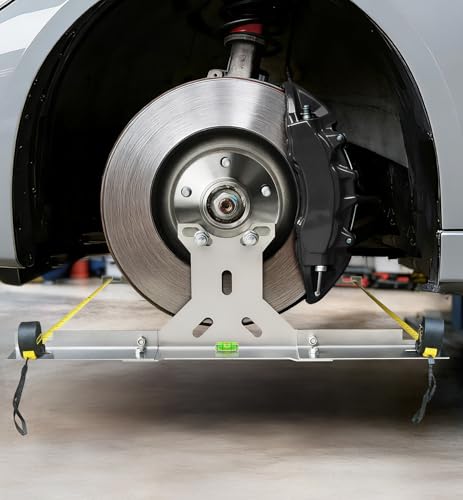
Toplamper Wheel Toe Alignment Tool Kit for at Home DIY Garage Use, Stainless Steel Toe Plates with Dual Tape Measures, Quick Front-End Toe Check for Automotive Cars Trucks SUVs (Patent Design)
DIY front‑end toe adjustment for home garages – Designed for car owners and home garages who want tocheck…
As an affiliate, we earn on qualifying purchases.
As an affiliate, we earn on qualifying purchases.
Conclusion
Proper wheel alignment ensures your vehicle handles smoothly, saves you money, and extends tire life. When you keep your wheels aligned, you improve safety, enhance performance, and protect your investment. Staying attentive to alignment needs keeps your car running efficiently, prevents uneven wear, and promotes peace of mind. Remember, regular alignment isn’t just maintenance; it’s a commitment to your safety, your savings, and your driving experience. Keep your wheels aligned, and enjoy the ride that’s safe, smooth, and reliable.
Toplamper Wheel Toe Alignment Tool Kit for at Home DIY Garage Use, Stainless Steel Toe Plates with Dual Tape Measures, Quick Front-End Toe Check for Automotive Cars Trucks SUVs (Patent Design)
DIY front‑end toe adjustment for home garages – Designed for car owners and home garages who want tocheck…
As an affiliate, we earn on qualifying purchases.
As an affiliate, we earn on qualifying purchases.
Toplamper Wheel Toe Alignment Tool Kit for at Home DIY Garage Use, Stainless Steel Toe Plates with Dual Tape Measures, Quick Front-End Toe Check for Automotive Cars Trucks SUVs (Patent Design)
DIY front‑end toe adjustment for home garages – Designed for car owners and home garages who want tocheck…
As an affiliate, we earn on qualifying purchases.
As an affiliate, we earn on qualifying purchases.