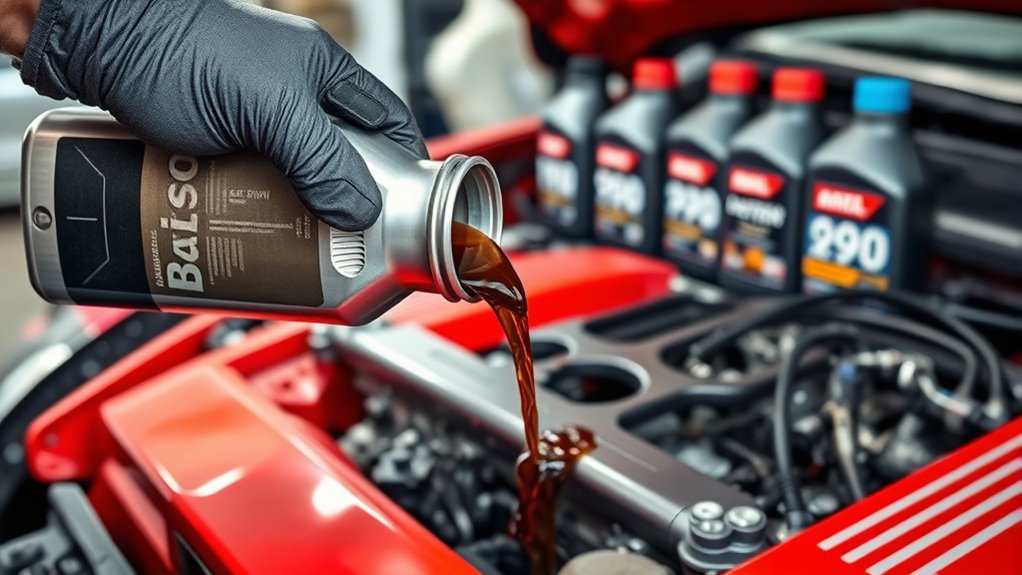

To choose the right engine oil, follow your vehicle manufacturer’s recommendations for viscosity and type, like synthetic blends or full synthetic. Consider your climate and driving habits—thicker oils work better in cold weather, while thinner oils suit hot conditions. Balancing performance with cost is key, and proper oil guarantees your engine stays protected, runs efficiently, and lasts longer. Keep these tips in mind, and you’ll be equipped to pick the best oil for your vehicle’s needs.
Key Takeaways
- Follow your vehicle manufacturer’s recommended oil type and viscosity for optimal performance.
- Choose synthetic blends for better temperature stability and longer-lasting protection at a cost-effective price.
- Match the oil’s viscosity (e.g., 5W-30) to your climate and driving conditions for effective lubrication.
- Consider your driving habits—heavy loads or extreme weather may require higher-quality or specific oil types.
- Regularly check oil levels and change according to manufacturer guidelines to ensure engine longevity and efficiency.

Choosing engine oil is essential for keeping your vehicle running smoothly and efficiently. When you’re exploring options, synthetic blends often stand out as a versatile choice. They combine the benefits of synthetic oils, like better temperature stability and longer-lasting protection, with the affordability of conventional oils. If you drive in extreme weather conditions or need an oil that offers enhanced performance, synthetic blends might be the perfect fit. They provide a good balance, especially if you’re looking for something more durable than regular oil but don’t want to pay the premium for full synthetic.
Oil viscosity is another critical factor you should consider. It refers to how thick or thin the oil is, which impacts how well it flows through your engine. The viscosity is usually indicated on the oil container by numbers, like 5W-30. The first number, combined with the letter W, indicates how the oil performs in cold temperatures, helping your engine start smoothly in winter. The second number shows how well the oil resists thinning at higher temperatures, ensuring it stays effective when your engine is hot. Choosing the right viscosity depends on your vehicle’s manufacturer recommendations and your driving environment. Using oil with too high a viscosity can cause sluggish starts and reduced fuel efficiency, while too low a viscosity might not provide enough lubrication, leading to engine wear.
Understanding how synthetic blends and oil viscosity work together helps you make an informed choice. If your car’s manual suggests a specific viscosity, stick to it, even if you’re tempted to try something different. The right viscosity ensures your engine receives proper lubrication, minimizes wear, and maximizes fuel economy. When synthetic blends are used with the recommended viscosity, you gain the benefits of enhanced protection and better engine performance, especially during cold starts or high-temperature driving. These oils are designed to flow easily in cold weather, providing faster lubrication, and to remain stable in high heat, reducing evaporation and breakdown. Additionally, selecting the proper oil can also contribute to the longevity of your vehicle’s cold‑plunge system by reducing engine-related heat stress.
Ultimately, selecting the appropriate synthetic blend and viscosity means considering your driving habits, climate, and the manufacturer’s guidelines. It’s not just about choosing the most expensive or the most popular option but matching your vehicle’s needs with an oil that offers ideal protection and performance. Regularly checking your oil level and changing it at recommended intervals keeps your engine in excellent condition, ensuring your vehicle runs smoothly for miles to come. By paying close attention to these details, you’ll help extend the life of your engine and enjoy a more reliable driving experience.
Frequently Asked Questions
How Often Should I Change My Engine Oil?
You should change your engine oil every 5,000 to 7,500 miles, but always follow your vehicle’s maintenance schedule for the ideal oil change interval. Regular oil changes keep your engine running smoothly and prevent costly repairs. Check your owner’s manual for specific recommendations, especially if you drive in harsh conditions. Staying consistent with your oil change interval ensures peak performance and longevity for your vehicle.
Can I Mix Different Types of Engine Oils?
You shouldn’t mix different types of engine oils because it can affect oil compatibility and reduce lubrication efficiency. If you need to top off, use the same oil type and viscosity as your current oil. When mixing oils, employ gentle techniques like adding small amounts gradually to prevent clumping. Always check your vehicle’s manual for specific recommendations, and if unsure, consult a mechanic to avoid potential engine issues.
What Are the Signs of Using Incorrect Engine Oil?
If you use incorrect engine oil, you might notice engine noise, reduced fuel efficiency, or increased exhaust smoke. Check for thick or gritty oil, which indicates poor oil viscosity or breakdown of oil additives. You may also see oil leaks or a warning light. These signs show your engine isn’t properly lubricated, risking damage. Always choose the right oil type to keep your engine running smoothly and avoid costly repairs.
Is Synthetic Oil Better Than Conventional Oil?
Synthetic oil blows conventional oil out of the water, offering superior performance and protection. You’ll notice smoother engine operation, better viscosity stability, and enhanced oil additives that fight wear and tear. Synthetic oils excel in extreme temperatures, maintaining ideal viscosity longer, which means fewer oil changes. If you want your engine to run like a well-oiled machine and last longer, synthetic oil is the smarter choice for your vehicle’s needs.
How Does Climate Affect My Engine Oil Choice?
Climate considerations greatly influence your engine oil choice. In cold weather, you should select a lower viscosity oil, like 5W-30, to ensure easy starting and proper lubrication. In hot climates, a higher viscosity oil, such as 10W-40, helps protect your engine from overheating and wear. Always match your oil viscosity to the climate to keep your engine running smoothly and prevent damage.
Conclusion
Choosing the right engine oil isn’t just about following a checklist; it’s about giving your engine the lifeblood it needs to run smoothly. Think of it as fueling a finely-tuned machine—each drop protecting, lubricating, and sealing essential parts. When you pick the correct oil, you’re not just maintaining your car’s health—you’re ensuring it’s ready to face any road ahead. Trust your choice, and keep your engine humming like a well-oiled symphony.