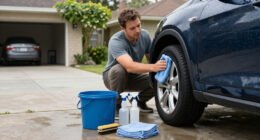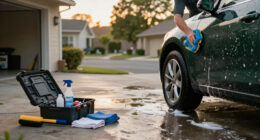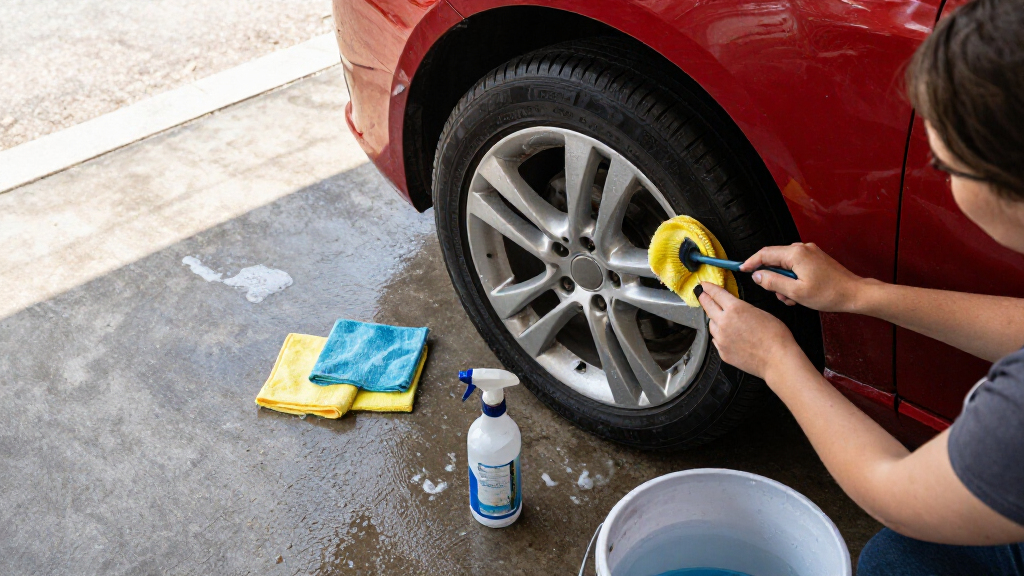

Use this guide to choose a car detailing kit and use it to clean your vehicle’s interior and exterior. It is for beginners with access to a shaded work area, water, and a few hours. Allow about 2–4 hours for a first full clean; a small vehicle or a maintenance clean may take less time.

Get business pricing on garage and car supplies
- Business-only prices and quantity discounts
- Tax-exempt purchasing
- Multiple users, one account, clear invoices

45-Piece Car Detailing Kit – Brush Set, Car Wash Cleaning Kit (Blue)
- ✔ Piece count: 45 pieces
- ✔ Brand: Qydipclin
- ✔ Included tools: Vacuum, foam gun, bucket, brushes, and polishing pads

Chemical Guys 17-Piece Car Detailing Kit – Interior, Wheel Cleaner & Wash
- ✔ Piece count: 17 pieces
- ✔ Brand: Chemical Guys
- ✔ Bucket: Heavy-duty bucket with dirt-trap filter

Armor All Ultimate Premier Car Cleaning Kit, 8 Piece Car Detailing Kit
- ✔ Piece count: 8 pieces
- ✔ Brand: Armor All
- ✔ Item form: Liquid
Difficulty: Beginner | Time: 2–4 hours
What You’ll Need
Tools & Materials:
- Car detailing kit with vehicle-safe exterior wash soap and suitable interior cleaner
- Two wash buckets, ideally with grit guards
- Garden hose or pressure washer with a gentle setting
- Several clean microfiber towels and wash mitts
- Soft detailing brushes for vents, seams, and wheels
- Wheel cleaner compatible with your wheel finish
- Glass cleaner labeled safe for automotive glass
- Vacuum with a crevice attachment
- Nitrile gloves, if required by cleaner labels
Knowledge:
- Basic ability to wash a vehicle by hand
- Ability to read and follow product labels
- Knowledge of your vehicle’s interior and wheel materials, if available
Kit contents vary. Check the labels before buying: some kits include wax or tire dressing but no wheel cleaner, glass cleaner, brushes, or towels. Buy missing items separately. Choose pH-neutral car wash soap for routine washing, and confirm that specialized products suit your paint, trim, wheels, and interior materials. Do not use household dish soap or an all-purpose cleaner on a surface unless its label specifically allows it.
45-Piece Car Detailing Kit – Brush Set, Car Wash Cleaning Kit (Blue)
The Qydipclin kit earns our top spot for buyers who want a wide spread of tools in one portable bundle. Its combination of a vacuum, low-pressure foam gun, collapsible bucket, brushes, and polishing pads reaches beyond a basic wash kit: we can address interior dirt, exterior cleaning, and some finishing tasks without assembling every tool separately. The storage bag and 11 L bucket also make the set easier to move and put away than a collection of loose accessories.That breadth is the main reason to choose it over the more focused Chemical Guys kit. Chemical Guys supplies a clearer wash routine, including a dirt-trap bucket and wash mitt, while Qydipclin spreads its contents across more types of work. It also reaches further than Armor All, whose strength is its selection of liquid cleaners rather than tools. The tradeoff is that a large kit asks us to sort and store more pieces, and the drill needed for the drill brushes is not included. We should pick another option if we prefer a short, straightforward setup or do not own a drill.
Pros:
- Combines vacuuming, foam washing, brushing, and polishing tools.
- Includes a portable 11 L collapsible bucket and storage bag.
- Covers interior and exterior cleaning across several vehicle types.
- Drill-compatible brushes and polishing pads add options for detailed work.
Cons:
- Drill is required for the drill brushes and is not included.
- The many components may be more than a casual cleaner needs.
- The broad tool assortment is less organized around a single wash workflow than the Chemical Guys kit.
Best for: Drivers who want a varied interior and exterior tool set for cars, trucks, motorcycles, or RVs.
Not ideal for: Casual cleaners who want a small, ready-to-use kit, or buyers who do not own a drill and do not want to supply one.
Bottom line: We recommend Qydipclin for the widest range of detailing tasks in one kit, provided we are comfortable managing its many pieces and supplying a drill.
“We recommend Qydipclin for the widest range of detailing tasks in one kit, provided we are comfortable managing its many pieces and supplying a drill.”
Chemical Guys 17-Piece Car Detailing Kit – Interior, Wheel Cleaner & Wash
Chemical Guys is the most coordinated choice for buyers who regularly wash their own vehicle and want the main wash steps gathered together. Its heavy-duty bucket with dirt-trap filter, chenille mitt, microfiber towels, and wash soap form a practical exterior-washing core. Interior cleaner and dedicated wheel products extend the kit beyond paint, so the routine does not stop at the bodywork. Compared with Qydipclin, this set has fewer tools but a clearer purpose: help us wash and clean the car with familiar accessories and dedicated cleaners.The wheel brushes and wheel cleaner also give it a more defined wheel-care setup than Armor All’s general cleaner assortment. Still, this kit is not a complete paint-finishing package. Wax or another paint-protection product is not listed, and buyers seeking a vacuum, foam gun, or broad collection of brushes will find Qydipclin more versatile. Its value is in the practical wash sequence, not in maximizing the number of different jobs covered. For someone building a repeatable home wash routine, that focus can be easier to use than a larger but more varied bundle.
Pros:
- Pairs a bucket and dirt trap with a chenille wash mitt and wash soap.
- Includes microfiber towels for drying and wiping.
- Adds dedicated interior cleaner and wheel-care tools.
- More focused and easier to organize around washing than Qydipclin’s 45-piece assortment.
Cons:
- Wax or another paint-protection product is not included.
- Does not provide the vacuum and polishing accessories found in Qydipclin.
- Its 17 pieces cover fewer types of tasks than the larger Qydipclin set.
Best for: DIY home detailers who want a structured wash kit with supplies for paint, wheels, tires, and interior cleaning.
Not ideal for: Buyers who want a vacuum, polishing tools, a broad accessory assortment, or paint protection included.
Bottom line: We would choose Chemical Guys for a coherent home wash routine, then add paint protection separately if that is part of our care plan.
“We would choose Chemical Guys for a coherent home wash routine, then add paint protection separately if that is part of our care plan.”
Armor All Ultimate Premier Car Cleaning Kit, 8 Piece Car Detailing Kit
Armor All takes a simpler approach: rather than supplying a large assortment of brushes or a full wash system, it groups cleaners and care products for common vehicle surfaces. The listed kit covers wheels, tires, glass, upholstery, and interior surfaces, with a UV protectant and wash pad adding useful pieces for routine upkeep. This makes it a more approachable pick for buyers who mainly want products for recurring surface-cleaning jobs and do not need Qydipclin’s wider range of tools.Compared with Chemical Guys, Armor All offers more named surface-care products but a less complete set of washing accessories. It does not include microfiber towels or cloths, so we need to bring our own for applying and removing liquid cleaners. Chemical Guys is the stronger fit if we want a bucket, mitt, towels, soap, and dedicated wheel brushes in one coordinated setup. Armor All also notes that its ammonia-free glass cleaner may need extra effort on heavy grime. We should see it as a straightforward cleaner kit, not a one-box solution for every stage of detailing.
Pros:
- Includes care for wheels, tires, glass, upholstery, and interior surfaces.
- UV protectant is included for dashboard and trim care.
- Wash pad provides a basic exterior-washing accessory.
- Simpler product selection than Qydipclin’s large tool bundle.
Cons:
- Microfiber towels or cloths are not included.
- The glass cleaner may take extra effort on heavy grime.
- Offers fewer tools and a less complete wash setup than Chemical Guys.
Best for: Drivers who want a compact selection of cleaners and protectant for common interior and exterior surfaces.
Not ideal for: Buyers who need wash towels, a bucket and mitt, a vacuum, or a broad detailing-tool assortment included.
Bottom line: We recommend Armor All for basic surface care when we already have towels and washing supplies, but its eight-piece selection is less self-contained than Chemical Guys.
“We recommend Armor All for basic surface care when we already have towels and washing supplies, but its eight-piece selection is less self-contained than Chemical Guys.”
As an Amazon Associate we earn from qualifying purchases.
Before You Start
Park on a stable surface out of direct sunlight. Let the bodywork and wheels cool before applying cleaners; heat can make products dry too quickly and leave marks. Check every product label, test unfamiliar cleaners on a small hidden area, and keep products away from children and pets. Never mix cleaning chemicals. Work from the cleaner areas toward dirtier ones, and use separate towels or mitts for paint, wheels, glass, and the interior.
Step-by-Step Instructions
Step 1: Check the kit and vehicle surfaces
Lay out the kit and confirm that you have products for washing paint, cleaning the interior, cleaning glass, and treating the wheels if needed. Read each label for dilution, application, and rinsing instructions. Check your owner’s manual or material labels for restrictions on leather, coated screens, matte finishes, and wheel coatings.
Tip:Skip products that do not match the surface. A product labeled for tires, for example, is not automatically suitable for painted trim or wheels.
Check: You can name the intended surface for each product and know whether it needs dilution, rinsing, or a dry surface.
Step 2: Prepare the workspace and vehicle
Move the vehicle into shade, close its windows, and remove loose items from the cabin. Set out separate clean towels for paint, glass, wheels, and interior surfaces. Fill one bucket with car wash solution at the label’s stated dilution and the second with clean rinse water.
Tip:If the vehicle is very dirty, rinse off loose grit before using a mitt. That reduces the chance of dragging abrasive dirt over the paint.
Check: The vehicle is cool, the work area is ready, and clean tools are separated by task.
Step 3: Clean the wheels and tires
Work on one cool wheel at a time. Apply the wheel cleaner as directed, use a dedicated brush to loosen dirt from the wheel face and crevices, and rinse fully before the product dries. Clean the tire with its own brush, then rinse. Repeat for each wheel.
Tip:Wheel finishes differ. If the label does not confirm compatibility, test a small hidden area or use mild car wash soap instead. Do not let cleaner dry on the wheel.
Check: The wheel faces, openings, and tire sidewalls are free of loose grime, with no cleaner residue left behind.
Step 4: Wash the exterior from top to bottom
Rinse the vehicle to remove loose dirt. Dip a clean wash mitt into the soapy bucket and wash a small section, starting with the roof and working downward. Rinse the mitt often in the clean-water bucket before loading it with soap again. Leave the lower panels until last, then rinse the whole vehicle thoroughly.
Tip:Use light pressure and straight, overlapping passes. If the mitt falls on the ground, wash or replace it before continuing.
Check: All panels have been washed and rinsed, and no soap remains around trim, mirrors, or door handles.
Step 5: Dry the paint and exterior glass
Use a clean microfiber drying towel to blot or gently draw water off the paint. Use a separate glass towel for windows and mirrors. Check door jambs, mirror edges, and trim for trapped water, and dry them with a clean towel.
Tip:Replace a towel when it becomes saturated or picks up grit. A dirty towel can leave marks even after a careful wash.
Check: The paint and exterior glass are dry without visible water spots or towel streaks.
Step 6: Vacuum and clear the interior
Remove floor mats and vacuum them outside the vehicle. Vacuum the seats, carpet, trunk, and gaps with suitable attachments. Use a soft brush attachment around delicate trim. Do not press the nozzle against leather, screens, or other surfaces that could scratch.
Tip:Move seats forward and back to reach the carpet underneath. Check pockets and storage areas for loose debris before vacuuming.
Check: Loose crumbs and dust are removed from the main surfaces and the gaps you can reach safely.
Step 7: Clean interior surfaces and glass
Apply an interior cleaner to a microfiber towel rather than spraying near switches, screens, or vents. Wipe dashboards, door panels, and other compatible surfaces, following the product label. Use a soft brush for dusty seams and vents, then wipe loosened dirt away. Clean interior glass with automotive glass cleaner on a separate towel.
Tip:Keep cleaner off screens unless the screen maker approves it. Use a clean, lightly damp microfiber cloth for screens when the manual allows that method.
Check: Hard surfaces look clean and dry, vents are free of visible dust, and glass has no obvious smears.
Step 8: Apply optional protection and do a final check
If your kit includes wax or a paint protectant, confirm that the product suits the paint and follow its application and removal directions. Treat tires only with a tire product labeled for that use, keeping it off the tread and brakes. Replace the floor mats and inspect the vehicle in good light.
Tip:Use a small amount of protectant and work one section at a time. Excess product can leave haze, streaks, or slippery residue.
Check: The vehicle is clean and dry, the mats are back in place, and no product residue is visible on glass, paint, wheels, or controls.
Common Mistakes to Avoid
- Washing in direct sun or on hot panels. — Work in shade and wait for the vehicle to cool so soap and cleaners do not dry before you rinse them.
- Using the same mitt or towel on wheels and paint. — Keep separate tools for wheels, paint, glass, and interior surfaces; replace any tool that touches the ground.
- Applying too much cleaner or protectant. — Follow the label dilution and application amounts, and remove residue before it dries.
- Assuming every kit product suits every vehicle surface. — Check the product label and vehicle manual, then test unfamiliar products in a hidden spot.
Troubleshooting
Problem: Water spots appear after washing.
Solution: Dry the vehicle promptly with a clean microfiber towel. If spots remain, use a paint-safe water-spot product according to its label; avoid abrasive scrubbing.
Problem: The paint looks streaky after drying.
Solution: Check whether the towel is dirty or saturated. Switch to a clean, dry towel and gently buff the affected area. Wash and rinse again if soap residue remains.
Problem: Interior glass has smears.
Solution: Use a fresh glass towel and a small amount of automotive glass cleaner. Wipe one direction, then buff with the dry side of the towel.
Problem: A cleaner changes the surface appearance.
Solution: Stop using it and remove residue as directed on the label. Do not apply another product to cover the change; check the vehicle manual or ask a qualified detailer about the affected material.
What Success Looks Like
The vehicle has clean, rinsed exterior panels, dry glass without obvious streaks, wheels without cleaner residue, and an interior free of loose debris and visible cleaner buildup. All tools have been kept separate by surface, and optional protection has been applied only where its label allows.
Next Steps
Rinse and wash reusable mitts, brushes, and towels according to their care labels, keeping wheel towels separate from paint towels. Let them dry fully before storage. Store chemicals sealed in a cool place away from children and pets. For routine upkeep, remove loose dirt and spills promptly, then repeat a full detail when the vehicle needs it. Replace kit products when labels are unreadable, products change consistency, or they pass their stated shelf life.
Frequently Asked Questions
What should a beginner’s car detailing kit include?
Start with vehicle-safe wash soap, interior cleaner, several microfiber towels, and a wash mitt. Add separate wheel and glass products if the kit lacks them, plus buckets, brushes, and a vacuum. Choose products for the surfaces in your vehicle rather than buying the largest bundle.
Can I use dish soap to wash my car?
Use car wash soap labeled for vehicle paint. Dish soap is not made for routine car washing and may remove protective products. Follow the car soap’s dilution instructions.
Do I need a pressure washer?
No. A garden hose can rinse a vehicle effectively. If you use a pressure washer, choose a gentle setting, keep the nozzle at a safe distance, and avoid aiming at seals, sensors, or damaged paint.
How often should I use a detailing kit?
Clean the vehicle when it needs it, based on driving conditions, weather, and visible dirt. Interior spills and heavy grime need prompt attention; a full detail can be less frequent. Follow product labels for how often to apply protectants.
Can one microfiber towel be used for the whole car?
Use separate towels for paint, wheels, glass, and interior surfaces. This limits grit and product transfer. Wash towels as directed and keep wheel towels apart from towels used on paint.