
When caring for leather, use gentle, leather-specific cleaners and conditioners to keep it soft and prevent cracking, while avoiding harsh chemicals. For vinyl, opt for mild soap and water, followed by UV protectants that help prevent fading and cracking from sun exposure. Both materials benefit from regular cleaning and protective products, but their treatments differ. Want to discover more tips to keep your surfaces looking their best? Keep exploring; you’ll find useful insights ahead.

Get business pricing on garage and car supplies
- Business-only prices and quantity discounts
- Tax-exempt purchasing
- Multiple users, one account, clear invoices
Key Takeaways
- Leather protectants focus on conditioning and preventing cracking, while vinyl protectants emphasize UV protection and maintaining flexibility.
- Use leather-specific cleaners and conditioners to preserve suppleness; vinyl care products mainly involve mild soap and UV inhibitors.
- Leather products require gentle cleaning with soft cloths and testing products on small areas before full application.
- Vinyl protectants create a protective barrier against sun damage, cracking, and fading, extending the lifespan of vinyl surfaces.
- Both materials benefit from following manufacturer instructions and regular maintenance routines to prolong appearance and durability.
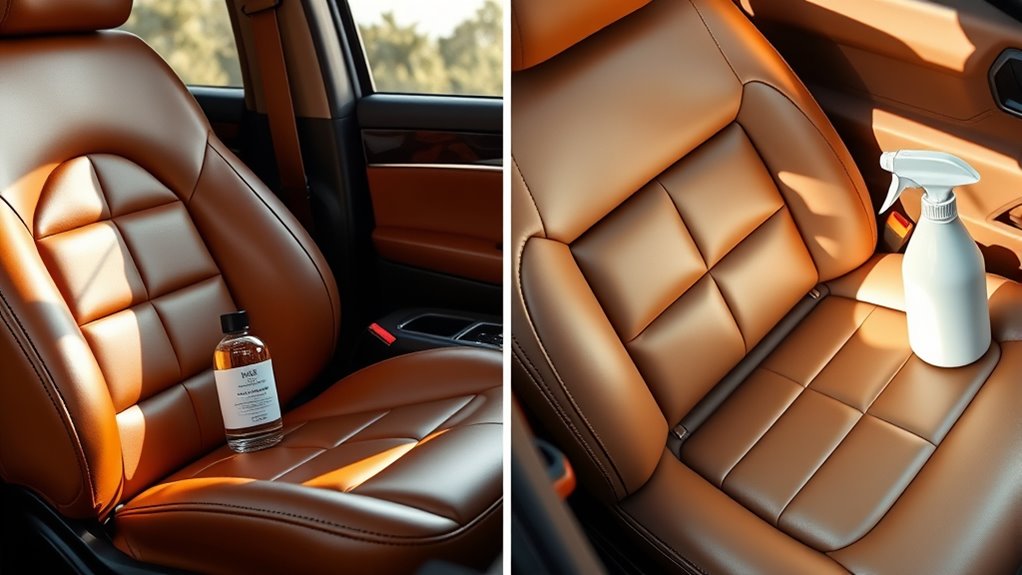
Ever wondered how to keep your indoor surfaces looking their best? Maintaining leather and vinyl surfaces requires more than just regular dusting. It’s about understanding the right cleaning techniques and product application to preserve their appearance and durability over time. Each material has unique needs, so knowing the proper approach can make all the difference in your upkeep routine.
When it comes to leather, gentle cleaning techniques are essential. You’ll want to start by vacuuming or wiping away loose dirt and debris with a soft cloth. For deeper cleaning, use a leather-specific cleaner that’s designed to lift grime without damaging the material. Apply the product sparingly, following the manufacturer’s instructions, and always test a small, inconspicuous area first. Proper product application involves gently working the cleaner into the leather using a soft cloth or sponge, then wiping away any excess. This helps prevent buildup that can cause cracking or fading. After cleaning, it’s recommended to condition the leather with a high-quality leather conditioner to keep it supple. Remember, avoidance of harsh chemicals and abrasive brushes is essential, as they can strip away natural oils or cause scratches. Additionally, understanding personalized maintenance can help extend the life of your leather surfaces.
Vinyl surfaces, on the other hand, are generally more resistant but still require careful attention. For cleaning techniques, a mixture of mild soap and water often does the trick. Use a soft cloth or sponge to apply the solution, gently scrubbing away dirt and stains. When it’s time for product application, opt for vinyl protectants that contain UV inhibitors and conditioners. These products form a protective barrier, helping to prevent cracking or fading from sun exposure. Apply the protectant evenly across the surface, using a clean cloth or sponge, and avoid oversaturating the material—less is more here. Regular cleaning combined with protective product application will extend the life of your vinyl and keep it looking fresh.
In both cases, it’s essential to follow the manufacturer’s instructions carefully. Proper product application ensures you’re not overusing chemicals that could damage your surfaces, and it helps your cleaning techniques become more effective. Be consistent with your routine—clean, condition, and protect regularly—and you’ll notice your leather and vinyl surfaces maintain their beauty much longer. Whether you’re dealing with furniture, dashboards, or other indoor surfaces, understanding how to properly clean and apply protectants keeps them looking their best and resists everyday wear and tear.
leather sofa cleaner and conditioner
As an affiliate, we earn on qualifying purchases.
As an affiliate, we earn on qualifying purchases.
Frequently Asked Questions
Are Leather Protectants Safe for All Types of Leather Surfaces?
Leather protectants are generally safe for most leather surfaces if you choose the right leather treatment. However, not all products suit every type of leather, so it’s crucial to check the label. You should also consider vinyl maintenance separately, as leather protectants aren’t designed for vinyl. Always test a small area first to prevent damage, and follow the manufacturer’s instructions for safe, effective protection.
How Often Should I Apply Vinyl Protectants for Optimal Results?
You should apply vinyl protectants every 3 to 6 months for the best results. Regular application helps maintain the product’s effectiveness, ensuring your vinyl surfaces stay protected from UV rays, cracking, and fading. Consistent application frequency not only preserves the appearance but also extends product longevity. Keep an eye on the manufacturer’s instructions, as some products may recommend more frequent use for high-traffic areas or extreme conditions.
Can Interior Protectants Be Used on Other Materials Like Fabric?
Think of interior protectants as versatile guardians; yes, you can use them on fabrics too. However, always check fabric compatibility first, since not all protectants suit every material. For multi-material application, choose a product labeled safe for both vinyl and fabric to guarantee proper care without damage. This way, you keep your entire interior looking fresh and protected, no matter the material.
Do Protectants Affect the Color or Texture of Leather or Vinyl?
Protectants can sometimes cause color change or texture alteration on leather or vinyl, especially if they contain harsh chemicals or are used excessively. You might notice a slight darkening or a change in the feel of the surface, but good-quality protectants are designed to maintain the original look. Always test a small, hidden area first to ensure it won’t negatively affect the color or texture before applying broadly.
Are There Eco-Friendly Options Available for Interior Protectants?
Yes, eco-friendly formulas are available for interior protectants, helping you care for your leather or vinyl responsibly. Look for products made with sustainable packaging and natural ingredients to reduce environmental impact. These options often avoid harsh chemicals, ensuring your vehicle’s interior stays protected without harming the planet. Choosing eco-conscious protectants allows you to maintain your car’s interior while supporting sustainability efforts.
Conclusion
When choosing between leather and vinyl protectants, remember that proper care extends their lifespan and keeps your interior looking fresh. Did you know that regular maintenance can increase the lifespan of leather interiors by up to 30%? So, whether you opt for leather or vinyl products, consistent cleaning and protection are key. Invest a little time now, and you’ll enjoy a cleaner, more durable interior for years to come.
Fall Picks
fall essentials
As an affiliate, we earn on qualifying purchases.