
Understanding transmission fluids is key to keeping your vehicle running smoothly. These fluids serve multiple roles, including lubricating parts, cooling components, and facilitating gear shifts. Different types are designed for specific systems: regular transmission fluids for general use, gear oils for differentials, and hydraulic fluids for automatic transmissions. Using the right type and maintaining proper levels prevents problems like slipping or overheating. If you want to learn how each fluid works and why maintenance matters, keep exploring further.
Key Takeaways
- Transmission fluids lubricate, cool, and facilitate smooth gear shifting in automatic and manual transmissions.
- Differential gear oils are thicker fluids designed to transfer power and protect gears during turns and high-pressure operation.
- Hydraulic system fluids transmit pressure to activate clutches and bands, ensuring smooth gear changes in automatic transmissions.
- Proper maintenance, including regular checks and fluid changes, is essential to prevent transmission failure and extend system lifespan.
- Different transmission fluids are formulated for specific functions, including regular lubrication, differential protection, and hydraulic performance.

Transmission fluids are designed to lubricate, cool, and facilitate the gear-shifting process, but not all fluids are created equal. Understanding the different types and their specific uses can help you keep your vehicle running at its best. One fundamental aspect of transmission fluids is differential lubrication. Your vehicle’s differential helps transfer power from the engine to the wheels, especially during turns, and it needs proper lubrication to prevent wear and tear. Differential lubrication typically involves gear oils that are thicker than regular transmission fluids, providing the necessary cushioning and protection for gears under high pressure. Using the right type of gear oil ensures your differential remains in good condition, reducing the risk of costly repairs down the line. Proper maintenance, including regular checks of fluid levels, is essential for preventing transmission failure and prolonging vehicle lifespan.
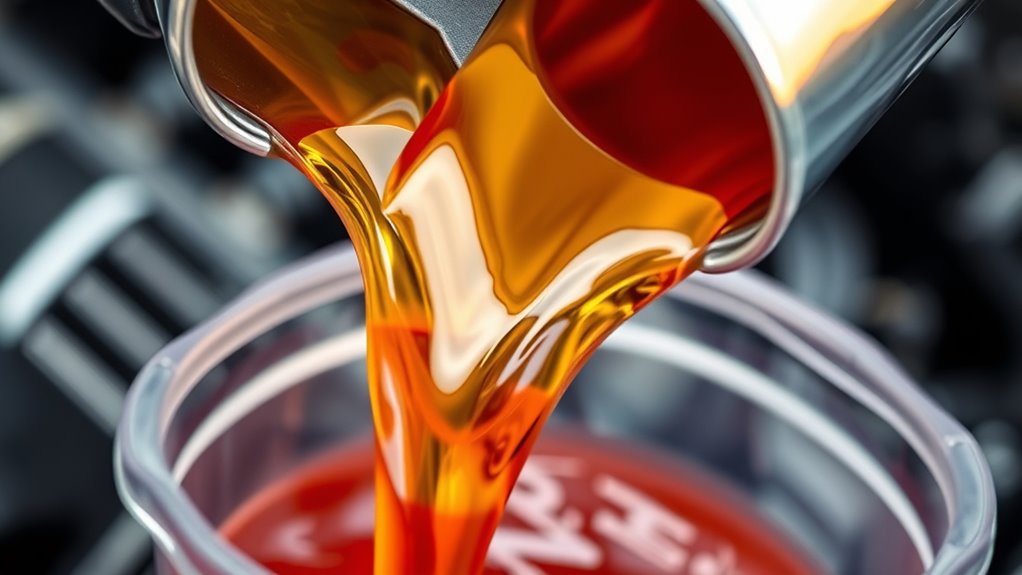
Hydraulic system fluids are another essential component of many transmissions, particularly in automatic transmissions. These fluids act as the lifeblood of the hydraulic system, transmitting pressure to activate clutches and bands that shift gears. They must be formulated to withstand high temperatures and resist breakdown over time, maintaining their viscosity and lubricating properties. Hydraulic system fluids also help in damping vibrations and reducing wear on moving parts, ensuring smooth gear transitions. When these fluids break down or become contaminated, you might notice rough shifting, slipping, or even transmission failure. That’s why regular maintenance and fluid changes are key to keep hydraulic system fluids in top shape.
Frequently Asked Questions
How Often Should Transmission Fluid Be Replaced?
You should replace your transmission fluid every 30,000 to 60,000 miles, but check your vehicle’s manual for specific guidance. Regular transmission flushing can help remove fluid contamination that causes wear and tear. If you notice shifting issues or strange noises, it’s a good idea to have the fluid examined sooner. Keeping up with fluid changes ensures smooth operation and prolongs your transmission’s lifespan.
Can I Mix Different Types of Transmission Fluids?
You shouldn’t mix different types of transmission fluids because fluid compatibility is essential. Mixing fluids can cause chemical reactions, reduce lubrication, and potentially damage your transmission. Always check your vehicle’s manual or consult a professional before adding new fluid. If you’re unsure about fluid mixing, it’s best to stick with the recommended type to guarantee the best transmission performance and longevity.
What Are Signs of Low or Degraded Transmission Fluid?
Think of your transmission fluid as the heartbeat of your car. When it turns dark or cloudy, that’s a sign you need to check it. Low or degraded fluid often smells burnt and appears brown or black instead of its usual pink or red. You might also notice slipping gears or delayed shifts. Pay attention to fluid color and smell—these are your car’s signals that its transmission needs some love.
Is Synthetic Transmission Fluid Better Than Conventional?
Synthetic transmission fluid is generally better than conventional because it offers several advantages, like improved temperature stability, better lubrication, and longer-lasting performance. Conventional differences include being more affordable upfront but needing more frequent changes. If you drive often in extreme conditions or want to extend your transmission’s lifespan, synthetic fluid is the smarter choice, providing smoother shifting and reducing wear over time.
How Does Transmission Fluid Affect Fuel Efficiency?
Transmission fluid directly impacts your vehicle’s fuel efficiency through its viscosity effects and additive benefits. Thinner, properly formulated fluid reduces friction and resistance in the transmission, helping your engine work less hard. Additives improve lubrication and protect against wear, maintaining smooth operation. When your transmission fluid is fresh and suitable, it minimizes energy loss, boosts fuel economy, and prolongs transmission life, saving you money at the pump and ensuring reliable performance.
Conclusion
Think of transmission fluids as the lifeblood of your vehicle’s gearbox, keeping everything flowing smoothly. Choosing the right type guarantees your transmission runs like a well-oiled machine, preventing costly issues down the road. Just like a heartbeat keeps you going, proper fluid maintenance keeps your car shifting effortlessly. So, pay attention to your transmission fluid, because a healthy transmission is the key to a smooth ride and many miles ahead.