TL;DR

Get business pricing on garage and car supplies
- Business-only prices and quantity discounts
- Tax-exempt purchasing
- Multiple users, one account, clear invoices
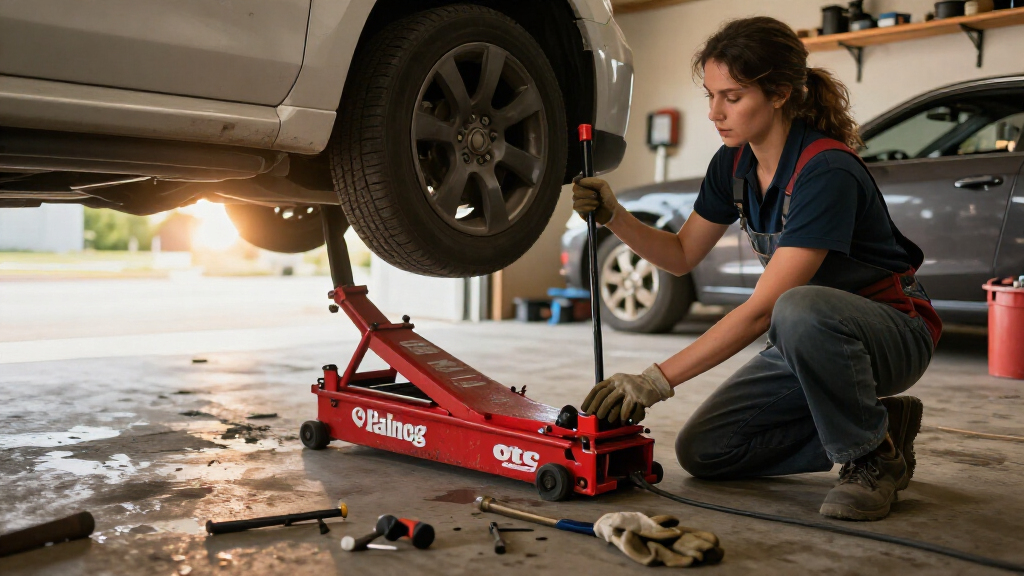
The Drive’s Andrew P. Collins reports that months of testing found OTC’s two-ton aluminum racing jack and stands lightweight, capable and easier to control than consumer-grade equipment he had used. The jack costs about 2.5 times as much as Harbor Freight’s comparable Daytona model, and the review argues its service support and warranty may suit professional use, while many occasional users can choose a less expensive jack that meets their needs.
The Drive’s Andrew P. Collins says months of testing OTC’s two-ton aluminum racing jack and jack stands found a portable, capable setup with more lift than the Harbor Freight Daytona jack he had tried, but at a substantially higher price. The comparison matters to drivers choosing equipment for trackside repairs or home use: the review puts the OTC jack at about 2.5 times the Daytona’s price and argues that its service support may make the premium more relevant for professional users than occasional owners.
Collins tested OTC’s LDJA2 two-ton aluminum racing jack and SA02 two-ton aluminum stands for several months. He says the equipment was reasonably light and that the jack lifted his cars to the height he needed. With its saddle removed, he measured a minimum clearance of 3¼ inches and a maximum lift height of 18⅝ inches. The jack weighs 41 pounds, according to the review.
For comparison, Collins cites Harbor Freight’s two-ton Daytona aluminum jack at about $220, with a maximum lift height of 16¾ inches and a weight of about 42.7 pounds. OTC’s jack was listed at $564.99 at Summit Racing, with the pair of stands at $153.99; the review also noted a $539.99 Amazon price for the jack and a $749.99 Summit bundle. Those are prices reported when the article was written, not guaranteed current prices.
Collins describes the OTC jack’s build quality and release control favorably, saying it was easy to control a vehicle’s descent. He also points to OTC’s replacement-parts site and authorized service centers. The review says both the OTC and Daytona jacks are sold as meeting the ASME PASE safety standard, while stressing that meeting a safety standard does not by itself establish how long a tool will last.
When the Higher Price May Pay Off
The review’s main takeaway is that price should be weighed against use frequency, repairability and fit, not lift capacity alone. Collins argues that professional shops and motorsport users who rely on a jack regularly may value a tool that can be serviced and supported with replacement parts. For those users, equipment downtime can carry a cost beyond the purchase price.
That case is less persuasive for a driver who lifts a car only occasionally. Collins says buyers should compare clearance and lift specifications and choose a less expensive option that meets their needs and the relevant safety standard. His experience also shows why matching a jack to the vehicle’s lifting points matters: the Harbor Freight jack he initially bought did not raise his Civic high enough from its rear-center point to lift both rear wheels, prompting him to return it.
Products Worth Considering

DEWALT 20V MAX 1/4-Inch Impact Driver Kit with Battery and Charger (DCF787D1)

DEWALT 20V MAX XR 1/2-Inch Cordless Impact Wrench Kit (DCF900P1)

NOCO Boost GB150 3000A UltraSafe Jump Starter, 12V Lithium Battery Booster
As an affiliate, we earn on qualifying purchases.
How the Comparison Took Shape
Collins says he was shopping for a lightweight setup for autocross and hillclimb events that he could carry in cars including a BMW E46 or Mazda Miata. He first bought Harbor Freight’s blue two-ton jack, which he says worked but did not provide enough height for the rear lift he needed on his Civic. After returning it, he contacted OTC, which sent him the jack and stands for testing. The review discloses that The Drive may earn revenue from product links and participates in affiliate programs.
OTC, short for Owatonna Tool Company, was founded in Minnesota in 1925 and is now a Bosch brand, according to the review. Collins contrasts its professional-tool market with consumer retail offerings. He also describes OTC’s limited lifetime warranty: it covers defects in materials and workmanship, but excludes wear items such as seals and damage from misuse, rust, contamination, modification or side loading. The warranty is for the original buyer, requires proof of purchase and may involve shipping the jack for inspection.
““It’s wonderfully easy to control a car’s descent.””
— Andrew P. Collins, The Drive reviewer
Limits of the Testing and Warranty
The review reflects one tester’s experience over several months; it does not provide a controlled durability comparison or establish how either jack performs over years of use. The claim that OTC’s professional-grade hydraulic components may offer greater longevity is the reviewer’s assessment, not a measured lifespan result. The article also does not establish that every vehicle or lifting point will work with either product.
Prices and availability can change, and the article’s listed prices are a snapshot from publication. Warranty coverage depends on OTC’s terms and its assessment of a claim; the review says wear, misuse and several types of damage are excluded. Readers should check current product specifications, warranty terms and the safety instructions for their vehicle and equipment before buying or lifting a car.
Check Fit, Price and Coverage
The review reports no further test or product announcement. For shoppers, the next step is to confirm that a jack’s minimum clearance and maximum lift suit the vehicle’s approved lifting points, then compare current prices for the jack-and-stand combination. Buyers considering OTC should also review its warranty exclusions, service options and parts availability; those comparing Harbor Freight should check the current warranty and product specifications rather than relying on prices in the review.
For any vehicle lift, follow the manufacturer’s instructions and use appropriately rated jack stands on a stable surface. A hydraulic jack alone should not be treated as support while someone works beneath a vehicle.
Key Questions
What did The Drive review?
Andrew P. Collins reviewed OTC’s LDJA2 two-ton aluminum racing jack and SA02 aluminum jack stands after several months of testing.
How much more did the OTC jack cost than the Harbor Freight comparison?
The review listed OTC’s jack at $564.99 at Summit Racing and Harbor Freight’s two-ton Daytona aluminum jack at about $220, making the OTC price roughly 2.5 times as high at the time. Prices may have changed.
What lift height did the OTC jack provide?
Collins reports a maximum lift of 18⅝ inches with the OTC jack’s saddle removed, and a minimum clearance of 3¼ inches in that configuration.
Does the review say everyone should buy OTC?
No. Collins says the higher price may make more sense for professional or frequent use, where service support and downtime matter. For occasional work, he recommends choosing a lower-cost setup that meets the vehicle’s clearance, lift and safety needs.
What does OTC’s limited lifetime warranty cover?
As described in the review, it covers defects in materials and workmanship, subject to OTC’s terms. Wear items such as seals and damage from misuse or other excluded causes are not covered; claims require proof of purchase and may require shipping the tool for inspection.
Source: thedrive.com