To change a flat tire, gather your tools: a jack, lug wrench, and spare tire. Park on a flat, stable surface, engage the parking brake, and turn on hazard lights. Loosen the lug nuts slightly, lift the vehicle with the jack at recommended points, then remove the flat tire. Install the spare, tighten the lug nuts in a crisscross pattern, and lower the vehicle. Ensuring proper tightening and tire pressure is key—keep going to learn every step for a safe, successful tire change.

Get business pricing on garage and car supplies
- Business-only prices and quantity discounts
- Tax-exempt purchasing
- Multiple users, one account, clear invoices
Key Takeaways
- Gather essential tools: jack, lug wrench, spare tire, and tire pressure gauge before starting.
- Use the jack at recommended lift points to safely elevate the vehicle and loosen lug nuts beforehand.
- Remove the flat tire and securely place the spare tire, then hand-tighten lug nuts in a crisscross pattern.
- Lower the vehicle carefully and fully tighten lug nuts with a torque wrench to ensure proper fit.
- Check tire pressure and re-tighten lug nuts after lowering, then inspect for proper installation and safety.
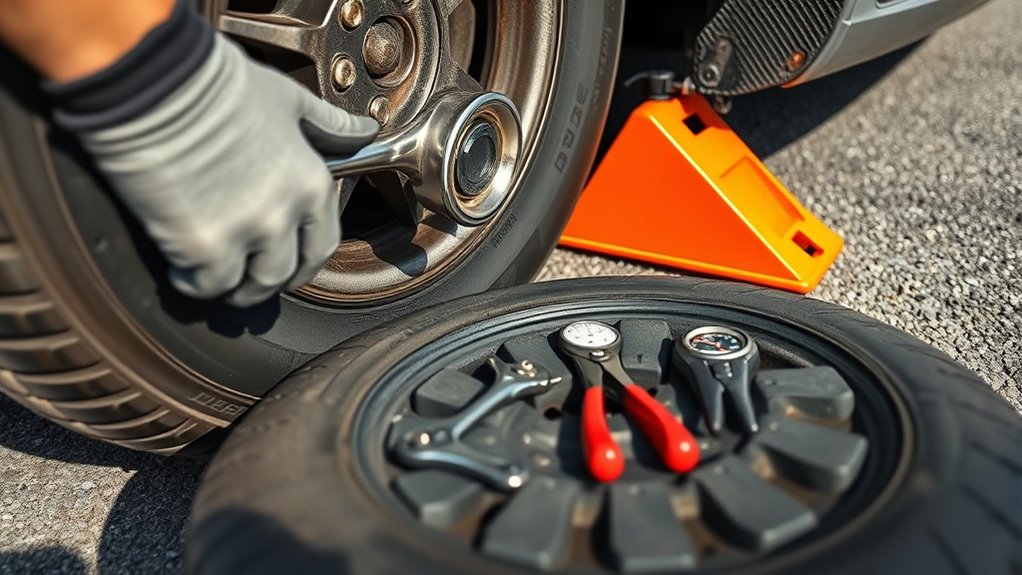
Getting a flat tire can be stressful, but knowing how to change it quickly and safely can save you time and hassle. The first step involves making sure your tire pressure is appropriate once you’ve replaced the flat with the spare. After installing the spare, check that the tire pressure matches the manufacturer’s recommended PSI, which you can typically find on the driver’s door jamb or in your vehicle’s manual. Maintaining proper tire pressure is vital because an underinflated or overinflated spare can compromise your safety and handling. Once the tire pressure is correct, you should also consider the wheel alignment. If your vehicle pulls to one side after changing the tire, or if the steering wheel vibrates, a wheel alignment might be necessary to guarantee even tire wear and smooth driving.
Before you begin, gather the right tools: a jack, lug wrench, spare tire, and possibly a tire pressure gauge. Make sure your vehicle is parked on a flat, stable surface away from traffic. Engage the parking brake and turn on your hazard lights to alert others. Loosen the lug nuts slightly before lifting the vehicle; this prevents the wheel from spinning once it’s elevated. Use the jack to lift your car off the ground, positioning it under the manufacturer’s recommended lift point to avoid damaging the frame. Once elevated, fully unscrew the lug nuts and remove the flat tire. Place the spare tire on the hub, aligning the holes with the bolts, then hand-tighten the lug nuts to secure the wheel.
Lower your vehicle slowly and remove the jack once the tire touches the ground. Tighten the lug nuts in a crisscross pattern to ensure even pressure, which helps prevent warping or uneven wear. Afterward, double-check the lug nuts with a torque wrench if available, to meet the manufacturer’s specifications. Now, check the tire pressure again, especially since the spare might have been sitting unused for a while. If your vehicle has a tire pressure monitoring system, reset it as necessary. Remember, a spare tire, particularly a donut, isn’t meant for long distances or high speeds, so plan to get a full-size replacement as soon as possible. If you notice any issues with wheel alignment afterward, schedule a professional alignment service to keep your tires wearing evenly and your vehicle handling properly. Being prepared with these tools and techniques makes changing a flat less intimidating and gets you back on the road safely. Additionally, understanding the importance of content ownership rights can help you navigate any legal considerations if you need to document or report damage during this process.
As an affiliate, we earn on qualifying purchases.
Frequently Asked Questions
How Often Should I Check My Spare Tire’s Pressure?
You should check your spare tire’s pressure at least once a month as part of regular spare tire maintenance. Tire pressure monitoring is essential to make certain it’s properly inflated, so it’s ready whenever you need it. Don’t forget to check the pressure before long trips or if your vehicle has been sitting unused for a while. Keeping your spare properly inflated helps avoid surprises and ensures safety on the road.
Can I Change a Flat Tire on the Highway Safely?
Yes, you can change a flat tire on the highway, but prioritize roadside safety and emergency preparedness. Make certain your vehicle is in a safe spot, away from traffic, and turn on your hazard lights. Wear reflective gear if available, and use flares or warning triangles. Keep calm, follow proper techniques, and stay alert. If conditions are unsafe, call for roadside assistance instead of risking injury.
What Should I Do if the Lug Nuts Won’T Loosen?
If the lug nuts won’t loosen, don’t force them, as lug nut corrosion can make them stubborn. Instead, try using alternative loosening tools like a breaker bar or a torque wrench for added leverage. You can also apply penetrating oil around the lug nuts and let it sit for a few minutes. This should help loosen them safely without damaging the nuts or your wheel.
Is It Necessary to Use a Torque Wrench for Tightening?
You should definitely use a torque wrench for tightening your lug nuts. It guarantees you follow the correct tightening method, preventing over-tightening that can damage the wheel or studs, and under-tightening, which can be unsafe. A torque wrench provides precise control, so you can tighten to the manufacturer’s recommended torque specification. This step is essential for safety and proper wheel installation, giving you peace of mind on the road.
How Do I Prevent My Tire From Going Flat Again?
To prevent your tire from going flat again, focus on regular tire maintenance and puncture prevention. Check your tire pressure monthly and keep it at the recommended level. Inspect for embedded debris or cuts and remove them promptly. Avoid rough roads and sharp objects, especially in construction zones. Consider applying tire sealant for extra protection and rotate your tires regularly to ensure even wear. These steps help maintain tire integrity and reduce flats.
Conclusion
Changing a flat tire might seem intimidating at first, but with the right tools and techniques, you can handle it confidently. Think of it as a simple puzzle—you just need to follow the steps, stay calm, and trust your skills. Remember, practice makes perfect, and every time you do it, you become more prepared for the unexpected. So, next time a flat appears, you’ll know exactly what to do and get back on the road in no time.
Fall Picks
fall essentials
As an affiliate, we earn on qualifying purchases.