To change your engine air filter, locate the filter housing—usually a black plastic box—and open it by releasing clips or screws. Remove the old filter, check its condition, and compare it with a new one to guarantee proper fit. Clean out any dirt from the housing before installing the new filter, then close the housing securely. Staying on top of this simple task helps keep your vehicle running smoothly; keep going to learn more about proper maintenance.

Get business pricing on garage and car supplies
- Business-only prices and quantity discounts
- Tax-exempt purchasing
- Multiple users, one account, clear invoices
Key Takeaways
- Locate the air filter housing, typically a black plastic box, and open it securely.
- Remove the old filter and compare it with the new one for proper size and fit.
- Clean the housing interior to remove any loose dirt or debris before installing the new filter.
- Insert the new filter ensuring it fits snugly without gaps or misalignment.
- Close and secure the housing tightly to maintain proper airflow and engine performance.
Regularly changing your engine air filter is a simple yet vital maintenance task that helps keep your vehicle running smoothly. One of the key considerations is understanding the air filter lifespan, which varies based on driving conditions and environment. Typically, most air filters last between 12,000 to 15,000 miles, but if you frequently drive in dusty areas or stop-and-go traffic, you might need to replace it sooner. Keeping track of mileage and inspecting the filter regularly guarantees you don’t miss the best time for replacement.
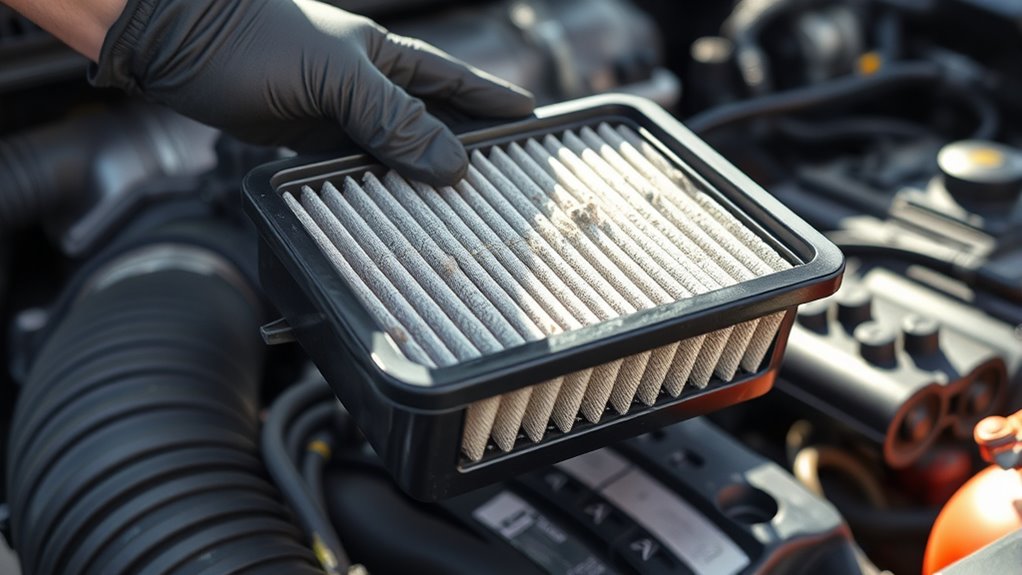
Knowing the signs of clogging is essential because a dirty air filter can greatly impact your vehicle’s performance. When the filter becomes clogged, it restricts airflow to the engine, leading to reduced fuel efficiency, sluggish acceleration, and even rough idling. You might notice a drop in power or an increase in fuel consumption, which are clear indicators that your air filter is no longer filtering properly. A visible inspection can reveal dirt, debris, or dust accumulation that signals it’s time for a change. If the filter looks dark, clogged, or covered with debris, don’t wait—replace it promptly to prevent further engine issues.
Changing your engine air filter is straightforward and can often be done without professional help. Start by locating the air filter housing—usually a black plastic box secured with clips or screws. Carefully open it, remove the old filter, and compare it with a new one to verify size and fit. Before installing the new filter, give the housing a quick wipe-out to remove any loose dirt. Insert the new filter, making sure it fits snugly and that the edges seal properly. Then, close the housing securely. Doing this regularly not only improves airflow but also prolongs your engine’s lifespan by preventing contaminants from entering the combustion chamber.
It’s a good habit to check your air filter during routine oil changes or every few months, especially if you notice changes in engine performance. Remember, a clean air filter helps your engine breathe better, which boosts efficiency and extends its lifespan. Ignoring signs of clogging can lead to more serious problems, like increased wear and tear on engine components, costly repairs, and decreased fuel economy. By staying proactive and replacing your air filter when needed, you’re maintaining your vehicle’s health and ensuring it runs at its best. Regular maintenance like this doesn’t take much time but offers notable benefits for your car’s performance and longevity. Additionally, understanding the air filter lifespan can help you plan timely replacements and avoid unexpected breakdowns.
engine air filter replacement kit
As an affiliate, we earn on qualifying purchases.
As an affiliate, we earn on qualifying purchases.
Frequently Asked Questions
How Often Should I Check My Engine Air Filter?
You should check your engine air filter every 12,000 to 15,000 miles, but this can vary based on your driving conditions. Regular inspections are part of your maintenance schedule, especially if you drive in dusty or polluted environments. Keep an eye out for visible dirt or debris, and replace the air filter when it reaches the end of its lifespan to maintain peak engine performance and fuel efficiency.
Can I Change the Air Filter Myself?
Absolutely, you can change the air filter yourself! Did you know that over 60% of car owners avoid DIY maintenance? With a little effort, you can save money and improve your vehicle’s performance. Just make sure you select the right filter for your car model. Changing your engine air filter is straightforward—simply locate it, remove the old one, and install the new filter, and you’ll be good to go!
What Signs Indicate My Air Filter Needs Replacement?
You’ll notice your air filter needs replacement if your engine runs roughly, stalls, or has reduced acceleration. A dirty filter can also cause decreased fuel efficiency and sluggish engine performance, impacting the air filter lifespan. Check for visible dirt, dust, or debris on the filter itself. If it looks clogged or discolored, it’s time to replace it to maintain peak engine efficiency and prevent strain on your vehicle’s components.
Will a New Air Filter Improve My Car’s Performance?
A fresh air filter can boost your car’s performance, proving that “an ounce of prevention is worth a pound of cure.” Replacing it within the recommended air filter lifespan guarantees your engine breathes efficiently. Although the air filter cost is relatively low, neglecting it can lead to reduced fuel economy and power. So, yes, a new air filter helps your car run smoothly and saves you money in the long run.
Are There Different Types of Engine Air Filters?
Yes, there are different types of engine air filters. You’ll find filters made from various filter materials like paper, foam, and cotton, each offering different levels of filtration and airflow. Filter shapes also vary, including rectangular, round, and panel designs, to fit different engine compartments. Choosing the right filter depends on your vehicle’s specifications and driving needs, ensuring peak performance and protection for your engine.
Conclusion
Changing your engine air filter is like giving your car a gust of fresh air—it keeps everything running smoothly. I once neglected mine, and my car struggled, like a person trying to breathe through a clogged mask. Regularly swapping it out can boost your engine’s efficiency by up to 10%. Think of it as tending to your car’s lungs; a simple step that keeps your ride healthy and reliable for miles to come.
Fall Picks
fall essentials
As an affiliate, we earn on qualifying purchases.