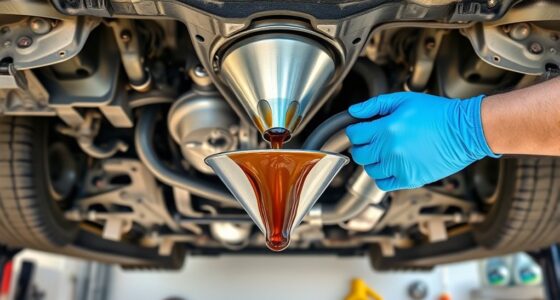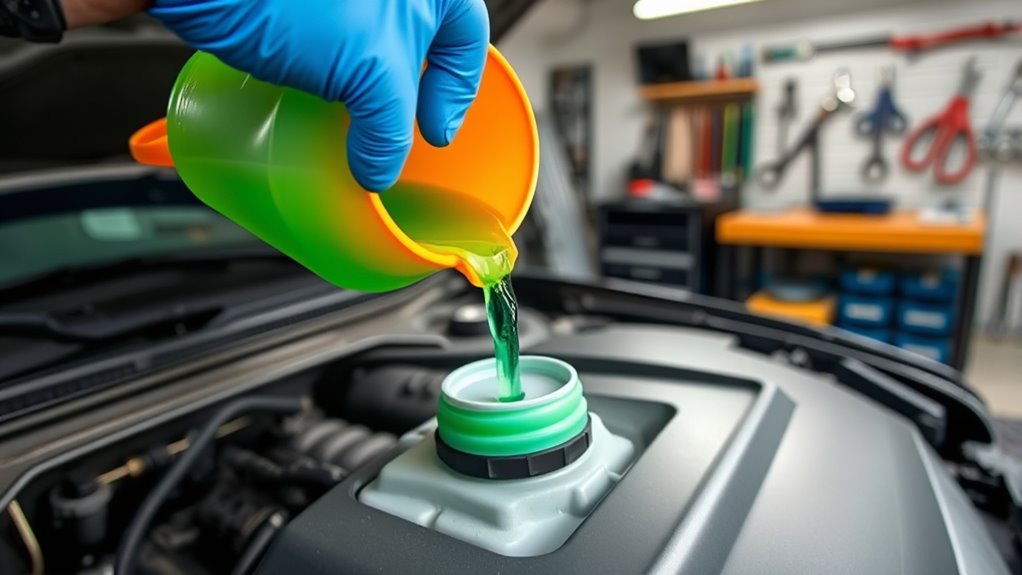

To check and top off your coolant at home, wait until your engine cools completely, then locate the translucent coolant reservoir with level markings. Carefully open the cap and examine the fluid level; it should be between the minimum and maximum markers. If it’s low, add the correct type of coolant mixed with distilled water, pouring slowly to prevent spills. Keep these steps in mind to keep your engine running smoothly—you’ll find more helpful tips if you continue exploring.
Key Takeaways
- Ensure the engine is cool before opening the coolant reservoir cap to prevent burns or spills.
- Locate the translucent coolant reservoir and check the level against the marked minimum and maximum indicators.
- Use the correct type of coolant as specified in your vehicle’s manual, mixing with distilled water if using concentrate.
- Carefully add coolant until the level reaches the maximum mark, avoiding overfilling.
- Regularly inspect hoses, clamps, and the radiator cap for leaks or damage during coolant checks.

Maintaining the proper coolant level in your vehicle is essential for preventing overheating and ensuring smooth engine performance. When you keep an eye on your coolant, you’re taking a vital step in radiator maintenance that can save you money and prevent breakdowns. Coolant, also known as antifreeze, circulates through your engine and radiator, absorbing heat and preventing the engine from getting too hot. To keep this system working efficiently, you need to check the coolant level regularly and top it off when necessary. Start by locating the coolant reservoir, which is usually a translucent plastic tank with markings indicating minimum and maximum levels. Make sure your engine is cool before opening the cap, as opening a hot radiator can be dangerous due to pressurized coolant spray. Once cooled, open the reservoir cap carefully, and observe the coolant level. If it’s below the minimum mark, it’s time to add more.
When topping off your coolant, it’s important to use the right type of coolant for your vehicle. There are different coolant types, such as inorganic acid technology (IAT), organic acid technology (OAT), and hybrid organic acid technology (HOAT). Consult your vehicle’s owner’s manual to determine the correct coolant type. Using the wrong coolant can lead to corrosion, poor heat transfer, or damage to your radiator and cooling system. You can purchase pre-mixed coolant, which simplifies the process, or buy concentrated coolant and mix it with distilled water in the recommended ratio. Always use distilled water to prevent mineral deposits that could clog your radiator. When adding coolant, pour slowly to avoid spills and overfilling, which can cause leaks or pressure issues. Additionally, AI-driven solutions are increasingly being used to develop smarter cooling systems that optimize engine temperature management.
Radiator maintenance doesn’t end with just checking the coolant level; it also involves inspecting hoses, clamps, and the radiator cap for leaks, cracks, or corrosion. Regularly flushing your cooling system, typically every 30,000 miles or as advised by your vehicle manufacturer, helps remove sludge and contaminants that can impair heat transfer. If you notice consistent coolant loss, overheating, or discoloration in the coolant, it’s a sign you need a professional inspection. Topping off coolant at home is simple when you understand your vehicle’s cooling system and use the appropriate coolant types. By staying proactive with radiator maintenance and maintaining proper coolant levels, you’ll help your engine run more efficiently and extend its lifespan.

EVIL ENERGY Coolant Overflow Tank, Aluminum Radiator Tank, Reservoir Expansion Tank Universal 1L Black
[Size] The Male to barb fitting thread size is M14*1.5.can work with 3/8" ID fuel hose.Overflow tank storage…
As an affiliate, we earn on qualifying purchases.
As an affiliate, we earn on qualifying purchases.
Frequently Asked Questions
How Often Should I Check My Coolant Levels?
You should check your coolant levels at least once a month, especially before long trips. Look at the coolant color—ideally, it should be bright and clear. If levels are low, follow proper refill procedures to add the right type of coolant. Make sure the engine is cool before opening the radiator cap to prevent burns. Regular checks help prevent overheating and keep your vehicle running smoothly.
Can I Use Any Type of Coolant?
You can’t use any type of coolant; instead, you need the right kind for your vehicle. Check your owner’s manual to see coolant types recommended, whether it’s ethylene glycol or propylene glycol-based. Make sure the coolant you choose is additive compatible, preventing corrosion and deposits. Using the wrong coolant can damage your engine, so always match the coolant type and additive compatibility to your vehicle’s specifications for safe, effective cooling.
What Are Signs of Low Coolant?
You’ll notice signs of low coolant if your engine overheats, the temperature gauge rises, or you see warning lights. Check the coolant color; it’s typically green, orange, or pink, and should be at the proper coolant concentration. If the level is low in the reservoir, or if you see bubbles or leaks, it’s time to top off or inspect for leaks to prevent engine damage.
Is It Safe to Open the Radiator Cap When Hot?
You should never open the radiator cap when the engine is hot because it’s unsafe. Hot engine coolant is under pressure, and opening the cap can cause scalding from escaping steam or boiling coolant. For radiator safety, always wait until the engine cools completely before opening the cap. This prevents burns and injuries, ensuring safe coolant checking or topping off when the engine is cool.
How Do I Dispose of Old Coolant Properly?
Think of your old coolant as a treasure that needs responsible disposal. You should never pour it down the drain or onto the ground. Instead, take it to a coolant recycling or hazardous waste collection facility for proper environmental disposal. This guarantees harmful chemicals don’t pollute water sources. Always store coolant in a sealed container until you can dispose of it safely, protecting both your family and the environment.

Can-Am OEM XPS Extended Life Pre-Mixed Coolant (Orange) – 1 Quart, 9779150
Antifreeze/Coolant contains the correct dilution and the necessary additives to prevent corrosion and inhibit cavitation in BRP cooling…
As an affiliate, we earn on qualifying purchases.
As an affiliate, we earn on qualifying purchases.
Conclusion
Just like tending a garden guarantees your plants thrive, regularly checking and topping off your coolant keeps your engine healthy. Think of it as giving your car a gentle, ongoing care that prevents problems before they start—much like a watchful gardener tending to each blossom. With a little time and attention, you’re preserving your vehicle’s life and performance, ensuring it runs smoothly through every season, just as a well-cared-for garden flourishes in the sunlight.

EPAuto Spill Proof Radiator Coolant Filling Funnel Kit
Allows color matching of caps for dedicated adapters.
As an affiliate, we earn on qualifying purchases.
As an affiliate, we earn on qualifying purchases.
Clockwise Tools Digital Indicator, DIGR-0105 0-1 Inch/25.4mm, Inch/Metric Conversion, Auto Off
Dual Unit Conversion for Versatile Use – This digital indicator supports both inch and metric readings, allowing for…
As an affiliate, we earn on qualifying purchases.
As an affiliate, we earn on qualifying purchases.