
To fix minor paint scratches, start by cleaning the area thoroughly with soap and water, then dry it with a microfiber cloth. For surface scratches, apply a polishing compound or scratch remover according to the instructions, buffing gently to blend the blemish. If the scratch is deeper, carefully apply matching touch-up paint and let it dry completely. Finishing with a light buff and a coat of wax helps protect your repair. Keep going to learn some tips for perfect results.
Key Takeaways
- Clean the scratched area thoroughly with soap and water, then dry with a microfiber cloth.
- Determine if the scratch is superficial or deep to choose the appropriate repair method.
- For light scratches, use a polishing compound or scratch remover to buff the area gently.
- For deeper scratches, carefully apply matching touch-up paint and let it dry completely.
- Finish by lightly buffing the area and applying wax or sealant to protect the repair and restore shine.

Minor paint scratches can be frustrating, but luckily, fixing them is often a simple process you can do yourself. The key is to act quickly before the scratch worsens or dirt settles into it. First, assess the damage to determine if it’s a light surface scratch or deeper. For minor scratches that haven’t penetrated the clear coat, you can usually restore your car’s appearance with some basic tools and materials. One of the most important steps is ensuring proper color matching. You want to use touch-up paint that matches your vehicle’s exact color to prevent uneven patches or noticeable differences. Check your car’s paint code, usually found on the door jamb or under the hood, and purchase a touch-up kit that corresponds to that code. This will help guarantee the repair blends seamlessly with the rest of your vehicle’s finish.
To prevent future scratches, adopting good scratch prevention habits is essential. Be mindful when parking or steering through tight spaces, avoiding contact with potential hazards like shopping carts, branches, or other vehicles. Regularly washing and waxing your car adds a protective layer to the paint, making it less vulnerable to minor scratches. A clean, waxed surface reduces friction and helps prevent debris from embedding into the paint during everyday driving. Also, consider using a car cover if you park outside often; it shields your vehicle from environmental factors that can cause scratches, such as hail or falling objects.
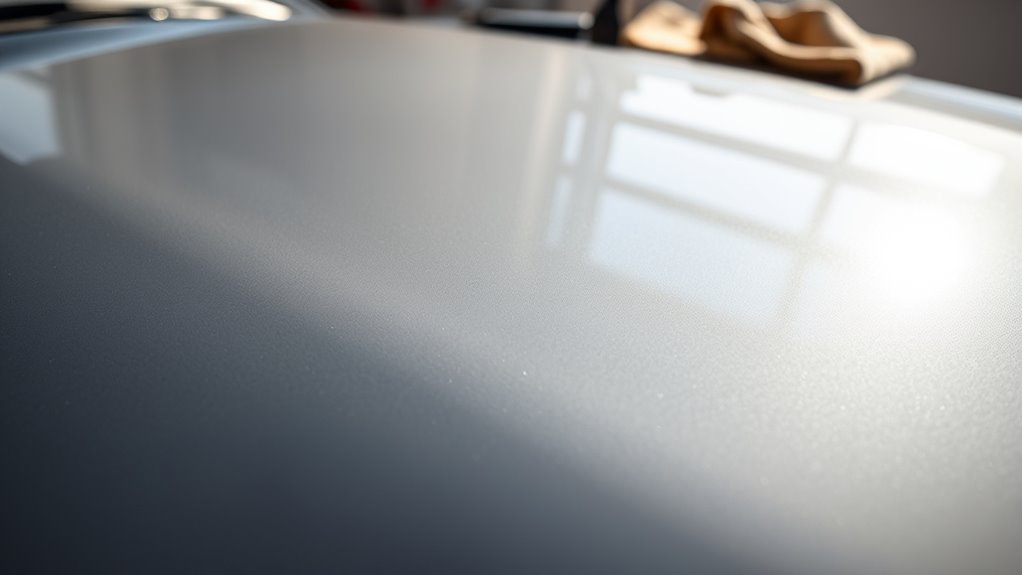
When fixing minor scratches, start by cleaning the area thoroughly with soap and water, then dry it with a microfiber cloth. If the scratch is very superficial, a polishing compound or scratch remover might suffice. Apply the product following the manufacturer’s instructions, usually by gently buffing the area with a soft cloth. For deeper but still minor scratches, carefully apply the touch-up paint with a fine brush or applicator, filling the scratch precisely. Allow it to dry completely, then lightly buff the area to blend the repair with the surrounding paint. Finish by applying a layer of wax or sealant to reinforce the protection and maintain the shine. Additionally, understanding the importance of proper paint application can significantly improve the durability and appearance of your repair, especially considering color accuracy and how it affects the final look.

Carfidant Scratch Repair and Swirl Remover – Car Paint Scratch Remover & Restorer Kit with Buffer Pad – Polishing & Waxing Kits – Compound for Vehicles Paint Repair – 8.4 fl. Oz.
EASY SCRATCH and SWIRL REPAIR – If your car has light scratches, swirls, or other marks – you…
As an affiliate, we earn on qualifying purchases.
As an affiliate, we earn on qualifying purchases.
Frequently Asked Questions
Can I Fix Scratches Without Professional Help?
Yes, you can fix scratches without professional help. Start by cleaning the area thoroughly, then apply touch-up paint matching your car color to fill in the scratch. Once dry, use polishing techniques to blend the repair with the surrounding paint, restoring your car’s appearance. With patience and careful work, minor scratches become less noticeable, saving you time and money while maintaining your vehicle’s look.
How Long Does a DIY Scratch Repair Last?
A DIY scratch repair can last anywhere from a few months to several years, depending on your paint touch-up skills and the protective coatings you use. To maximize longevity, carefully prep the area, apply quality touch-up paint, and finish with a clear protective coating. While some scratches might reappear over time, proper maintenance and sealing help make sure your repair stays vibrant and protected longer, giving your car a fresh look.
What Tools Are Essential for Minor Scratch Repair?
You’ll need essential tools like a paint touch-up pen or brush to precisely match your car’s color. Sanding techniques are vital for smoothing out the area before applying touch-up paint, ensuring a seamless finish. Keep fine-grit sandpaper and polishing compounds handy for prepping and final polishing. These tools help you achieve a professional look, making minor scratches less noticeable and prolonging your repair’s durability.
Will Fixing Scratches Affect My Car’s Resale Value?
Fixing scratches can help preserve your car’s resale value, especially if you opt for paintless repair or DIY safe methods. These approaches minimize damage and keep the original paint intact, attracting buyers. However, poorly done fixes might reduce value, so prioritize proper techniques and safety precautions. When you address scratches carefully, you maintain your car’s appearance and appeal, making it more attractive to future buyers.
Are There Any Risks of Damaging the Paint Further?
Yes, there are risks of damaging your paint further if you’re not careful. If you use excessive pressure or abrasive materials, you can thin the paint thickness or worsen underlying damage, making the scratch more noticeable or causing rust. Always test your repair method on a small area first, and consider consulting a professional if you’re unsure. Proper technique helps prevent additional harm and keeps your car looking its best.

White Car Paint Touch Up Pen, Color Accurate Touch Up Paint for Cars, Professional Automotive Scratch Repair, Lasting Auto Scratch Remover, Fast Dry, Easy to Use, Safe and Washable, Versatile Use
Effective Car Scratch Remover – Our white car paint touch up pen, made with premium materials and advanced…
As an affiliate, we earn on qualifying purchases.
As an affiliate, we earn on qualifying purchases.
Conclusion
Remember, a little patience and care can turn your car’s scratches into a thing of the past. Don’t rush the process—taking your time guarantees the best results. As the saying goes, “A stitch in time saves nine,” so addressing those minor scratches now prevents bigger issues later. With these simple steps, you’ll keep your car looking fresh and shiny, just like new. Keep at it, and your car will thank you for the effort!

USANOOKS Microfiber Cleaning Cloth Grey – 12 Pcs (12.5"x12.5") – High Performance – 1200 Washes, Ultra Absorbent Microfiber Towel Weave Grime & Liquid for Streak-Free Mirror Shine – Car Washing Cloth
10x GRIP-ROOT WEAVE – TRAP MORE, WORK LESS: Ultra-absorbent microfiber towels for car Grip Root weave works like…
As an affiliate, we earn on qualifying purchases.
As an affiliate, we earn on qualifying purchases.

Meguiar’s Ultimate Compound, Pro-Grade Car Scratch Remover for Paint Correction, Removes Swirls and Defects While Restoring Gloss and Shine, Christmas Gifts for Car Guys, 15.2 Oz
BUFF OUT IMPERFECTIONS: Meguiar's Ultimate Compound removes scratches, swirls & oxidation for a clear, perfect finish
As an affiliate, we earn on qualifying purchases.
As an affiliate, we earn on qualifying purchases.