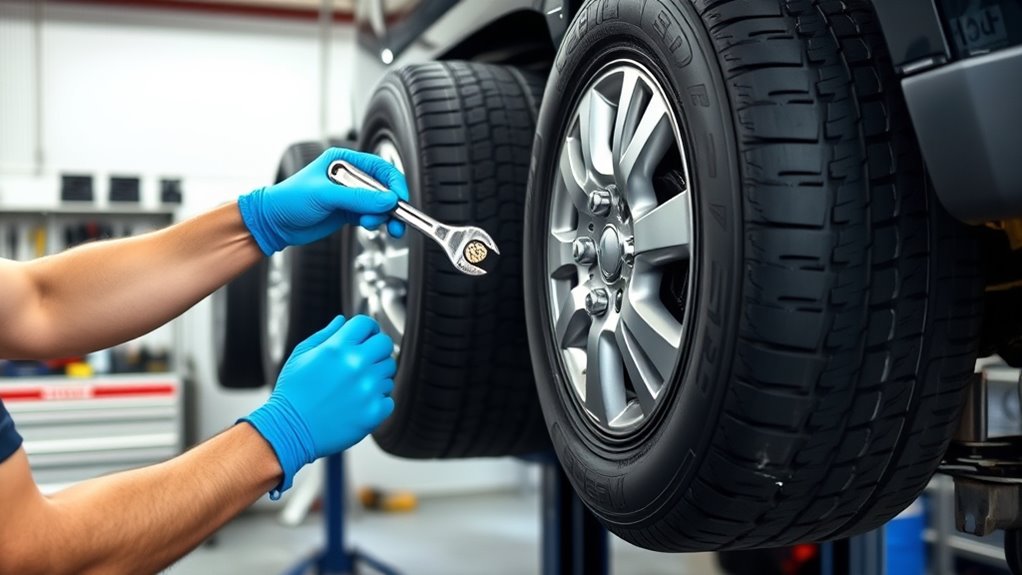

To rotate your tires properly, first check your vehicle owner’s manual for the recommended pattern and interval, usually every 5,000 to 8,000 miles. Safely lift your vehicle with jack stands, remove the wheels, and inspect for uneven wear or damage. Follow the specified rotation pattern, tightening the lug nuts in a star pattern with proper torque. Afterward, double-check everything and consider balancing and aligning your wheels for the best results. Keep going to learn more tips.

Get business pricing on garage and car supplies
- Business-only prices and quantity discounts
- Tax-exempt purchasing
- Multiple users, one account, clear invoices
Key Takeaways
- Consult your vehicle’s owner’s manual for the recommended rotation pattern and interval.
- Safely lift the vehicle using proper jacking points and secure with jack stands before removing wheels.
- Follow the manufacturer’s recommended pattern, tightening lug nuts in a star pattern at proper torque.
- Check for uneven tire wear, and consider balancing and alignment to promote even tread and extend tire life.
- After re-mounting, verify lug nut tightness, lower the vehicle carefully, and perform a test drive for signs of issues.
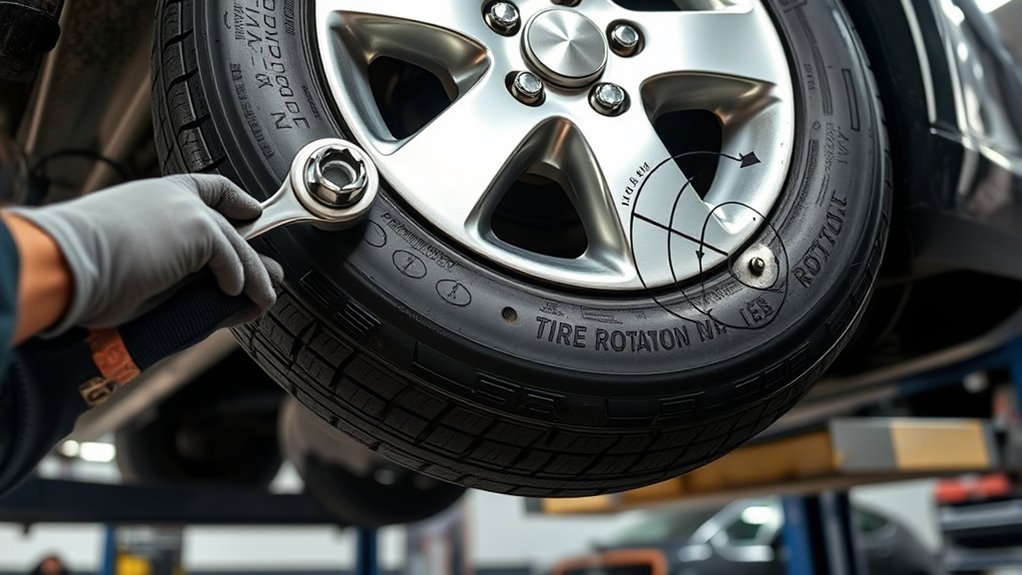
Rotating your tires is a simple yet fundamental maintenance task that helps guarantee even wear and extends the life of your tires. When you rotate your tires, you’re not just flipping them around; you’re ensuring that each tire wears evenly, which improves safety, performance, and fuel efficiency. To do this properly, you need to understand the significance of tire balancing and wheel alignment, as both play an essential role in your vehicle’s handling and tire longevity.
Before you start, check your vehicle’s owner’s manual for the recommended tire rotation pattern and interval, typically every 5,000 to 8,000 miles. These guidelines guarantee you don’t miss any critical steps that could impact your tires’ lifespan. When you jack up your car, make sure to use proper lifting points and secure the vehicle with jack stands. Once elevated, remove the wheels with a suitable wrench, and inspect the tires for signs of uneven wear or damage. If you notice uneven tread wear, it might be time for a wheel alignment, which corrects steering and suspension angles. Proper wheel alignment ensures that your tires wear evenly and your vehicle handles correctly, preventing premature tire wear and improving ride comfort.
As you rotate the tires, it’s important to consider tire balancing. Over time, tires can develop uneven weight distribution, leading to vibrations and uneven wear. Balancing your tires involves adding small weights to the wheel to guarantee they spin smoothly. If you feel vibrations while driving or notice uneven tread wear after rotation, getting your tires balanced can prevent further issues and improve ride quality. When re-mounting the wheels, tighten the lug nuts in a star pattern to guarantee even pressure and secure fitment. Proper torque is essential to avoid wheel wobble or damage.
Additionally, regular automotive repair assessments and services can help catch issues early and keep your tires in optimal condition. Once the tires are back on, double-check the lug nuts for tightness, lower the vehicle carefully, and perform a test drive. Pay attention to any vibrations or unusual noises, which could indicate that the tires are not properly balanced or that the wheel alignment needs to be checked again. Routine tire rotation, combined with periodic tire balancing and wheel alignment checks, keeps your tires in prime condition. This not only extends their lifespan but also enhances your safety on the road. Keeping these maintenance tasks in mind will save you money in the long run and guarantee a smoother, more reliable driving experience.
As an affiliate, we earn on qualifying purchases.
Frequently Asked Questions
How Often Should I Rotate My Tires for Optimal Performance?
You should rotate your tires every 5,000 to 8,000 miles for ideal performance. Regular rotations help guarantee even tread wear and maintain proper tire pressure, which improves fuel efficiency and safety. Check your vehicle’s owner’s manual for specific recommendations. Keep an eye on tread wear patterns and tire pressure between rotations to catch issues early, extending tire life and ensuring your vehicle runs smoothly.
Can I Rotate My Tires Myself or Should I Hire a Professional?
You can definitely rotate your tires yourself or hire professional services, depending on your comfort level. If you enjoy DIY tips, gather the necessary tools, follow step-by-step instructions, and take your time to guarantee a proper rotation. However, if you prefer peace of mind and expert care, professionals can handle it quickly and efficiently. Both options work; choose what best fits your skills and schedule.
What Tools Are Necessary for a Proper Tire Rotation?
To rotate your tires properly, you need a few essential tools. First, a lug wrench to loosen and tighten the lug nuts securely. Also, check your tire pressure before and after rotation to ensure peak performance and safety. Some people prefer a torque wrench for precise tightening, but a standard lug wrench usually suffices. Having these tools on hand makes the process smoother and safer for you.
How Do I Know if My Tires Need Balancing After Rotation?
You’ll know your tires need balancing after rotation if you notice uneven tire wear patterns or vibrations while driving. Pay attention to balancing indicators like a vibrating steering wheel or seat at certain speeds, which suggest imbalance. If you see uneven wear or experience vibrations, it’s a good idea to have your tires balanced to ensure smooth driving and extend tire life. Regular checks keep your ride safe and comfortable.
Are There Specific Rotation Patterns for All Vehicle Types?
Yes, there are specific rotation patterns for different vehicle types. For example, front-wheel drive vehicles often use a forward cross pattern, while rear-wheel drive vehicles may need a different approach. All-wheel drive vehicles might require a specialized rotation pattern to prevent uneven tire wear. Always check your vehicle’s owner’s manual for the recommended rotation pattern tailored to your specific vehicle type to guarantee ideal tire lifespan and safety.
Conclusion
Now that you know how to rotate your tires properly, you’re all set to keep your ride smooth and safe. Remember, regular rotations can extend tire life and improve performance—like a trusty steed in a modern-day joust. Don’t forget to check your owner’s manual for specific intervals. With a little bit of effort, you’ll avoid the fate of the Titanic’s iceberg, and your tires will thank you for it!
Halloween Picks
halloween
As an affiliate, we earn on qualifying purchases.