To jump-start a car safely, make sure you have an emergency kit with jumper cables, gloves, and safety glasses. Turn off both vehicles, connect the positive (red) cables first from the dead battery to the good one, then attach the negative (black) cable to an unpainted metal surface on the dead vehicle. Start the donor car, then the dead one, and carefully remove the cables in the reverse order. Follow these steps and tips for a secure boost, and discover more to keep yourself safe.
Key Takeaways
- Always wear safety glasses and gloves to protect against sparks and acid leaks during jump-starting.
- Ensure both vehicles are off, parked close but not touching, and connect jumper cables in the correct order.
- Attach positive (red) cables first, then negative (black) cables, grounding on an unpainted metal surface on the dead vehicle.
- Start the donor vehicle, wait a few minutes, then attempt to start the dead vehicle; remove cables in the proper sequence afterward.
- Keep the engine running for 15-20 minutes post-jump to recharge the battery and inspect for battery health regularly.
When your car’s battery dies, jump-starting it can get you back on the road quickly—if done correctly. Before you attempt to jump-start, it’s smart to have an emergency kit in your vehicle. An emergency kit typically includes jumper cables, gloves, safety glasses, and a flashlight. Having these items ready means you won’t have to scramble for supplies when you’re stranded. Proper battery maintenance is also key to preventing unexpected failures. Regularly checking your battery’s terminals for corrosion and ensuring the connections are tight can extend its life and reduce the likelihood of being stranded.
Having an emergency kit and maintaining your battery helps prevent breakdowns and keeps you safe on the road.
When you’re ready to jump-start, first park the donor vehicle close enough for the jumper cables to reach both batteries, but make sure the vehicles aren’t touching. Turn off both engines and remove the keys. Open the hoods and locate the batteries. If your vehicle’s battery is covered with a plastic shield, remove it carefully. Before connecting the cables, examine the batteries for cracks or leaks, and avoid jump-starting a damaged or leaking battery. Wearing your safety glasses and gloves is recommended to protect against potential sparks or acid leaks.
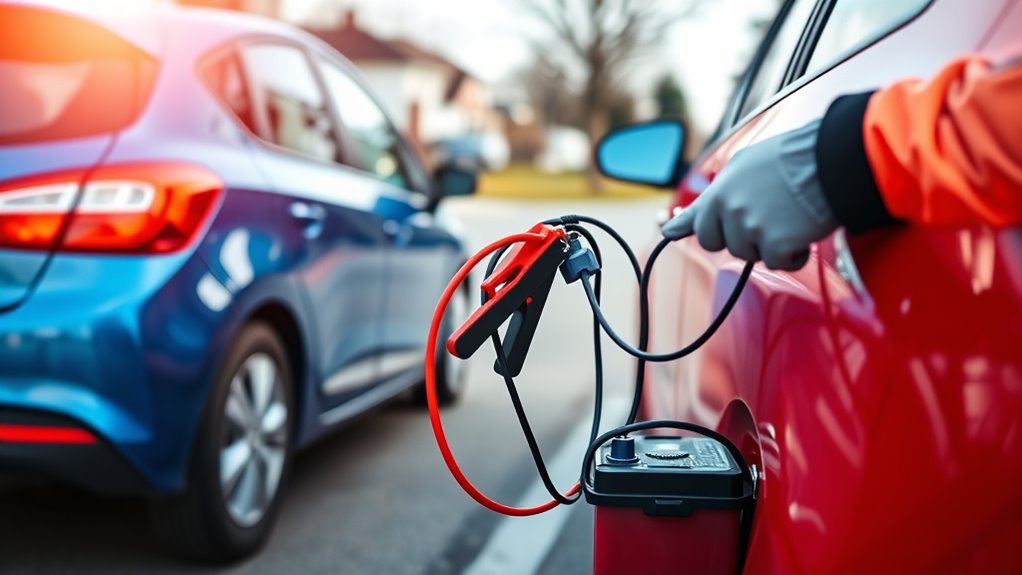
Connect one end of the red (positive) jumper cable to the positive terminal of the dead battery. Then, attach the other end of the red cable to the positive terminal of the good battery. Next, connect one end of the black (negative) cable to the negative terminal of the good battery. Finally, attach the other end of the black cable to an unpainted metal surface on the vehicle with the dead battery—preferably a clean, unpainted bolt or engine block away from the battery itself. This grounding step helps prevent sparking near the battery, reducing the risk of explosion.
Start the donor vehicle and let it run for a few minutes. Then, try to start your car. If it doesn’t turn over immediately, wait a few more minutes and try again. Once your car starts, remove the jumper cables in the reverse order of connection—first the black cable from your vehicle, then the black from the donor, followed by the red cables. Keep your engine running for at least 15-20 minutes to allow the alternator to recharge the battery. Proper battery maintenance is essential to keep your vehicle reliable and prevent future issues.
After successfully jump-starting, it’s wise to schedule a battery check and consider your battery’s health and maintenance. Regularly inspecting your battery and connections can prevent future issues, ensuring your vehicle remains reliable. Remember, if your battery keeps dying or shows signs of weakness, it might be time for a replacement rather than just a jump-start. Proper battery maintenance and having an emergency kit prepared are essential steps to keep you safe and prepared on the road.
car jumper cables with safety gloves
As an affiliate, we earn on qualifying purchases.
As an affiliate, we earn on qualifying purchases.
Frequently Asked Questions
Can I Jump-Start a Car With a Different Battery Type?
You shouldn’t jump-start a car with a different battery type because of battery compatibility and voltage differences. Using incompatible batteries can damage your vehicle’s electrical system or cause safety hazards. Always check that both batteries have the same voltage and similar chemistry, like lead-acid. If in doubt, consult your vehicle’s manual or a professional to avoid risking damage or injury. Proper caution guarantees a safe and effective jump-start.
How Long Should I Leave the Jumper Cables Connected?
Think of jumper cables as a bridge reconnecting a stranded car to power. You should leave the cables connected for about 5 minutes, allowing the dead battery to recharge enough to start your vehicle. During this time, avoid excessive battery maintenance or using the wrong jumper cable types, which can cause damage. Once your engine turns over, disconnect cables in reverse order—this guarantees a smooth, safe restart.
Is It Safe to Jump-Start a Car in the Rain?
Yes, it’s generally safe to jump-start a car in the rain if you take weather safety precautions. Make sure both cars are turned off, and avoid touching metal parts during connection. Use insulated gloves if possible and keep the jumper cables away from moving parts. Being prepared for emergencies means knowing how to handle these situations safely, even in bad weather, so stay cautious and maintain awareness of your surroundings.
What Should I Do if My Car Doesn’T Start After Jumping?
If your car still won’t start after jumping, it might be a battery health issue or another problem. First, check if the battery is old or damaged; a weak or dead battery may need replacing. Consider alternative solutions like calling roadside assistance or using a portable jump starter. If these don’t work, have a mechanic inspect your vehicle to diagnose further issues, ensuring you stay safe and prevent damage.
Can I Jump-Start a Hybrid or Electric Vehicle?
Jump-starting a hybrid or electric vehicle is like trying to jump-start a sealed box—it’s risky and often impossible without proper tools. You shouldn’t attempt it yourself because hybrid safety protocols and electric vehicle systems are complex. Instead, call roadside assistance or a professional. They have the right equipment and knowledge to handle electric vehicle batteries safely, preventing damage or injury. Never try to jump-start an EV without expert guidance.
emergency car jump starter kit
As an affiliate, we earn on qualifying purchases.
As an affiliate, we earn on qualifying purchases.
Conclusion
Now that you know how to jump-start a car safely, you’re ready to face the unexpected. But what if it doesn’t work the first time? Will you be prepared for the next challenge? Remember, staying calm and following the steps is your best bet. Keep your tools handy, and don’t forget—sometimes, a little patience is all it takes. The road ahead might be unpredictable, but you’re now better equipped to handle whatever comes your way.
automotive safety glasses for jump-starting
As an affiliate, we earn on qualifying purchases.
As an affiliate, we earn on qualifying purchases.
car battery terminal cleaner
As an affiliate, we earn on qualifying purchases.
As an affiliate, we earn on qualifying purchases.