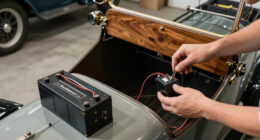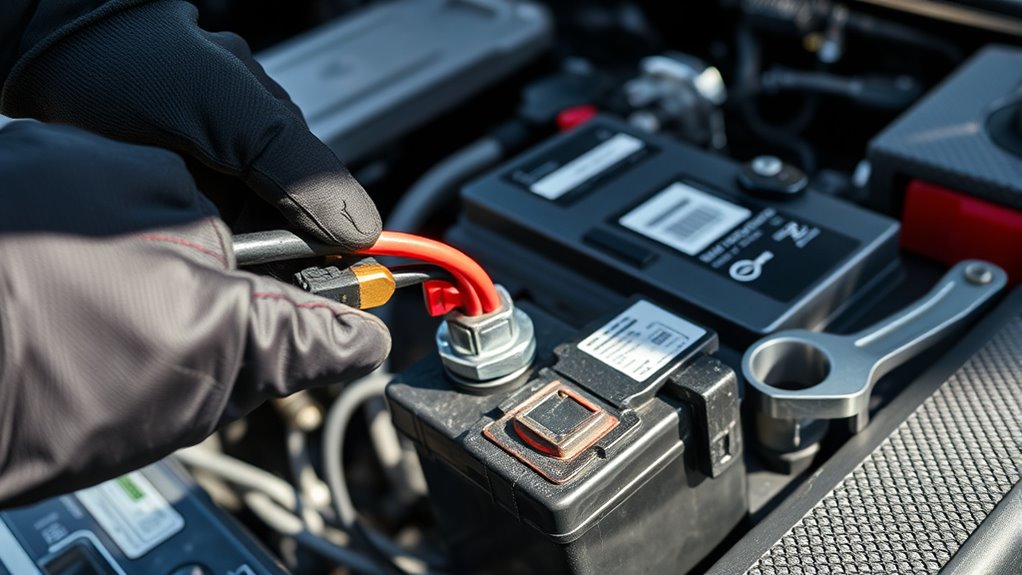

To replace a dead car battery, first turn off your vehicle and wear safety gear. Locate the battery, note the positive and negative terminals, then disconnect the negative cable followed by the positive. Carefully remove the old battery and compare it with the new one for size and terminal placement. Install the new battery, connect the positive terminal first, then the negative, and tighten all connections. For detailed steps and precautions, keep exploring to make certain a safe and successful replacement.
Key Takeaways
- Ensure the vehicle is off, on a flat surface, and all electrical components are turned off before beginning.
- Disconnect the negative (black) terminal first, then the positive (red) terminal to prevent short circuits.
- Carefully remove the old battery, compare it with the new one for size and terminal placement, and clean the tray and terminals.
- Install the new battery by connecting the positive terminal first, then the negative, and tighten all connections securely.
- Start the vehicle to verify proper operation and check for any warning lights or issues.

When your car fails to start and the headlights seem dim, it’s a clear sign that your battery might be dead. Recognizing the signs of battery failure is vital for timely car battery maintenance. If you notice that your engine is slow to turn over, or if your dashboard lights flicker or are unusually dim, these are strong indicators that your battery could be on its last legs. Additionally, if your vehicle has trouble starting after sitting overnight or if you hear a clicking sound when turning the key, these are signs you shouldn’t ignore. Regularly checking your battery’s health can help prevent unexpected breakdowns, and understanding these warning signs guarantees you know when it’s time for a replacement. Proper maintenance and awareness can extend your battery’s lifespan and improve your vehicle’s overall performance.
Before diving into the replacement process, make sure your vehicle is parked on a flat surface, and turn off all electrical components. It’s also wise to wear gloves and safety glasses, as car batteries contain acid and can be hazardous. To begin, locate your car’s battery—usually found under the hood, secured with a clamp or bracket. Once located, identify the positive terminal marked with a plus (+) sign and usually covered with a red cap, and the negative terminal marked with a minus (−) sign, often black. To prevent accidental short circuits, disconnect the negative terminal first using a wrench, then the positive terminal. Carefully lift the old battery out, being mindful of its weight, as car batteries tend to be heavy.
Next, compare the replacement battery with the old one to guarantee compatibility. Look for the correct size, capacity, and terminal placement. Before installing the new battery, clean the terminal connectors and battery tray with a wire brush to remove corrosion. Place the new battery into the tray, making sure the terminals are correctly aligned. Attach the positive terminal first, tightening it securely, then connect the negative terminal. Double-check all connections to ensure they are tight and free of corrosion. Once everything is securely in place, start your vehicle. If it starts smoothly and runs well, you’ve successfully replaced your dead car battery.
Being aware of reliable brand reputation and authentic products can help avoid issues with counterfeit or subpar batteries, ensuring your vehicle’s safety and performance.

EZRED BMK1914 5-Piece Battery Maintenance Kit
- Complete Battery Maintenance Set: Includes essential tools for battery service
- Portable Roll-Up Storage Case: Durable, easy-to-carry tool organizer
- High-Quality Hand Tools: Wide selection of reliable tools for various tasks
As an affiliate, we earn on qualifying purchases.
As an affiliate, we earn on qualifying purchases.
Frequently Asked Questions
How Can I Tell if My Battery Is Truly Dead?
You can tell if your battery is truly dead by performing battery testing or electrical diagnostics. If your car struggles to start, the lights are dim, or you notice a clicking sound, these are signs. Use a multimeter to check voltage—below 12.4 volts indicates a weak or dead battery. For accurate results, have a professional conduct thorough electrical diagnostics, which can confirm whether your battery needs replacing or if there’s another issue.
Is It Safe to Jump-Start a Dead Battery?
Sure, jump-starting a dead battery is safe if you follow proper battery safety and understand jump start risks. Ironically, trying to revive your car can be riskier if you skip precautions. Always use the correct cables, connect them properly, and avoid sparks. Remember, if you’re unsure, it’s better to seek professional help—because a little caution now prevents bigger problems later. Safety first keeps your day running smoothly.
What Tools Do I Need to Replace a Car Battery?
You’ll need basic tools like a wrench or socket set to disconnect and remove the battery terminals and hold-down clamp. Wear gloves and eye protection for safety. After replacing the battery, use proper charging techniques if needed to guarantee it’s fully charged. Remember to dispose of the old battery responsibly at a recycling center. Double-check all connections, tighten them securely, and make sure the new battery is seated properly before starting your vehicle.
How Long Does It Take to Replace a Car Battery?
On average, replacing a car battery takes about 15 to 30 minutes. You’ll want to be quick and careful—disconnect the dead battery, then install the new one, ensuring proper placement. Remember, a battery’s lifespan can vary, so consider alternative solutions like jump-starting or using portable chargers if you’re pressed for time. With a little patience and preparation, you’ll power up your vehicle promptly and efficiently.
Can I Replace the Battery Myself or Should I Hire a Professional?
You can definitely replace the battery yourself with some DIY tips, but if you’re unsure or uncomfortable, hiring professional services is a good idea. Replacing a car battery isn’t too complicated, and many online guides can help you through the process. However, if you encounter any issues or safety concerns, it’s smarter to let a professional handle it, ensuring proper installation and avoiding damage.
Conclusion
Now that you’ve replaced your dead car battery, you’re ready to hit the road with confidence, knowing you’ve handled the task yourself. You’ve disconnected the old, removed the dead, and installed the new; you’ve checked the connections, secured the terminals, and tested the start. With each step completed, you’ve taken control, saved time, and avoided stress. Remember these steps for future maintenance, and keep your vehicle running smoothly, ensuring every journey begins with a reliable, energized battery.