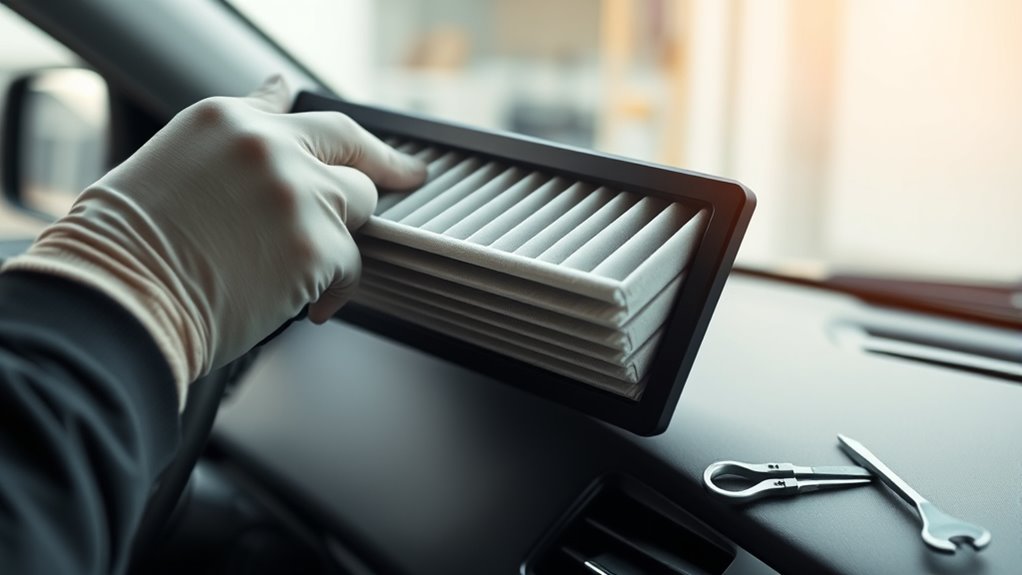

Replacing your cabin air filter is a straightforward task that keeps your car’s air fresh and clean. First, locate the filter—usually behind the glove compartment or under the dashboard—by consulting your owner’s manual. Carefully remove the old, dirty filter and check its condition. Install the new filter, ensuring the airflow direction is correct. Regular replacement improves air quality and HVAC efficiency. Keep going if you want to learn more about how to make this easy switch.
Key Takeaways
- Locate the cabin air filter behind the glove compartment or under the dashboard, as per your vehicle’s manual.
- Check the filter regularly (every 12,000-15,000 miles or yearly) for signs of dirt, clogging, or odors.
- Remove the old filter carefully, noting airflow direction for proper installation of the new one.
- Replace the filter with a compatible, high-quality filter, ensuring correct airflow direction.
- Regular replacement improves air quality, HVAC efficiency, and prevents future airflow or odor issues.

Your cabin air filter plays an essential role in maintaining clean air inside your vehicle, but over time, it can become clogged with dust, pollen, and pollutants. When that happens, the air quality inside your car drops, making your drives less comfortable and potentially affecting your health. A dirty filter restricts airflow, forcing your HVAC system to work harder and reducing its efficiency. To keep the air fresh and guarantee your system functions at its best, it’s important to replace your cabin air filter at regular intervals. Not only does this improve air quality, but it also extends the filter’s lifespan, so you get the most out of it before needing a replacement.
Knowing when to change your cabin filter isn’t always straightforward, but a good rule of thumb is to check it every 12,000 to 15,000 miles or at least once a year. If you often drive in dusty or polluted environments, you might need to replace it more frequently. Signs that your cabin air filter needs changing include a musty smell, decreased airflow from the vents, or a noticeable increase in dust settling on your dashboard and seats. If you notice reduced air circulation or persistent odors, it’s a clear indicator that your filter has become clogged and is no longer doing its job effectively. Regular replacement also helps maintain air quality, which is vital for your comfort and health.
Replacing your cabin air filter is a simple task that you can often do yourself, saving you time and money. Most filters are accessible behind the glove compartment or under the dashboard, and you’ll need only basic tools to swap it out. Before starting, consult your vehicle’s owner’s manual for specific instructions on locating and removing the filter. Once you’ve found the filter, remove it carefully and check its condition. If it’s visibly dirty or clogged, it’s time for a new one. When installing the new filter, make sure it’s positioned correctly, following the airflow direction indicated on the filter itself. Proper installation ensures maximum filtration efficiency and helps maintain good air quality inside your vehicle.

Cabin Air Filter Kit Fits for 2007-2014 GMC Chevy Silverado Sierra Tahoe Yukon Avalanche Suburban Cadilac Escalade,Replaces# 22759208 259-200 22759203 103948 Cabin Air Filter Retrofit Kit
【Replaces Number】22759208,259-200,22759203,103948
As an affiliate, we earn on qualifying purchases.
As an affiliate, we earn on qualifying purchases.
Frequently Asked Questions
How Often Should I Replace My Cabin Air Filter?
You should replace your cabin air filter every 15,000 to 30,000 miles, or about once a year, to maintain good air quality inside your vehicle. Regular filter maintenance ensures your HVAC system works efficiently and keeps pollutants out. If you notice reduced airflow, musty odors, or increased allergies, it’s time to check and replace the filter sooner. Keeping up with filter maintenance helps you breathe easier and improves overall comfort.
Can a Dirty Cabin Filter Affect My Vehicle’s AC Performance?
A dirty cabin filter can subtly hinder your vehicle’s AC performance, making it harder to cool and circulate air effectively. This impacts air quality, leaving stale or musty odors that reduce comfort. You might also notice increased allergy symptoms due to trapped dust and pollen. Regularly replacing your cabin filter guarantees peak airflow, improves allergy relief, and keeps the air inside fresh, creating a more pleasant driving experience.
Are There Different Cabin Air Filters for Specific Car Models?
Yes, there are model-specific filters for your vehicle, designed to fit precisely and guarantee ideal performance. You can find these filters at dealerships or choose from aftermarket options that match your car’s make and model. Using the right filter helps maintain air quality and prevents issues with your AC. Always check your vehicle’s manual or consult with a professional to select the correct model-specific filter or reliable aftermarket alternative.
What Are the Signs That My Cabin Air Filter Needs Replacing?
You’ll notice poor air quality inside your car, such as musty smells or increased dust, which signals your cabin air filter needs replacing. If you experience reduced airflow from vents or strange odors, it’s time for filter maintenance. Regularly checking and replacing your cabin air filter guarantees clean air, keeps your AC working efficiently, and maintains a healthier driving environment for you and your passengers.
Is It Safe to Drive With a Clogged Cabin Air Filter?
Yes, it’s safe to drive with a clogged cabin air filter, but it’s not ideal. A dirty filter can reduce air quality and pollen filtration, making your driving less comfortable and potentially aggravating allergies. Over time, it may also strain your vehicle’s HVAC system. To stay safe and comfortable, consider replacing the filter promptly to maintain good air quality and effective pollen filtration.
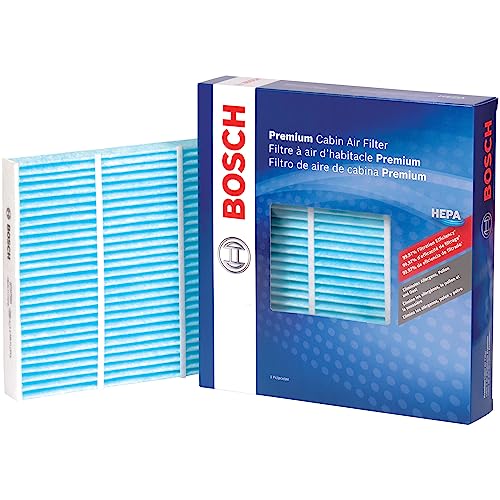
BOSCH 6091C HEPA Cabin Air Filter – Compatible with Select Buick Enclave, Encore GX; Cadillac XT4, XT5; Chevrolet Camaro, Cruze, Impala, Malibu, Silverado, Traverse; GMC Sierra, Terrain, Yukon + More
Bosch HEPA Premium Cabin Air Filters are designed and tested to meet High Efficiency Particulate Air (HEPA) standards…
As an affiliate, we earn on qualifying purchases.
As an affiliate, we earn on qualifying purchases.
Conclusion
Replacing your cabin air filter is a simple step that can improve your in-car air quality and keep you comfortable. Did you know that a dirty filter can reduce airflow by up to 15%, forcing your AC system to work harder? Regularly changing it can save you money and improve your health. So, take a few minutes to swap out that filter—you’ll breathe easier and enjoy a fresher, more comfortable ride every time.

Spearhead HEPA Breathe Easy Cabin Filter, Up to 99.97% Filtration of 0.3 Micron Particles w/No Airflow Reduction (BE-157H)
Replacement for 2019–2022 Avalon, 2018–2024 Camry, 2019 Corolla (2.0L L4 ONLY), 2019 Corolla (1.8L L4 – BE-285 ONLY),…
As an affiliate, we earn on qualifying purchases.
As an affiliate, we earn on qualifying purchases.

FRAM Fresh Breeze Cabin Air Filter Replacement for Car Passenger Compartment w/ Arm and Hammer Baking Soda, Easy Install, CF10134 for Honda Vehicles, white
VEHICLE APPLICATIONS: HONDA ACCORD; 2006-2015 HONDA CIVIC; 2012-2015 HONDA CROSSTOUR; 2007-2016 HONDA CR-V; 2005-2017 HONDA ODYSSEY; 2019-2022 HONDA…
As an affiliate, we earn on qualifying purchases.
As an affiliate, we earn on qualifying purchases.